
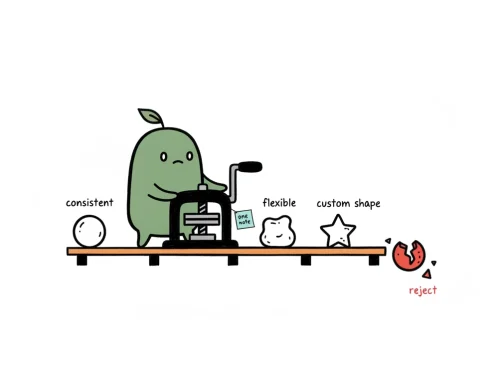
A recent soapmaking Reddit question describes bars made from the same batch but poured into different molds and showing different firmness and surface appearance. Commenters proposed a process explanation, but the thread does not prove a root cause. For a B2B buyer, the useful lesson is broader: an approved sample only predicts a production shipment when the formula, process, shape, curing or drying approach and inspection standard are all defined.
Solid body-cleansing products can vary substantially in their chemistry and manufacturing method. This article does not assume that every bar follows a single soapmaking process. It offers a purchasing framework for brands, spa distributors and gifting programs that want a reproducible finished product. The supplier must provide process-specific technical guidance for the actual formula and market.
Describe the finished bar in observable terms
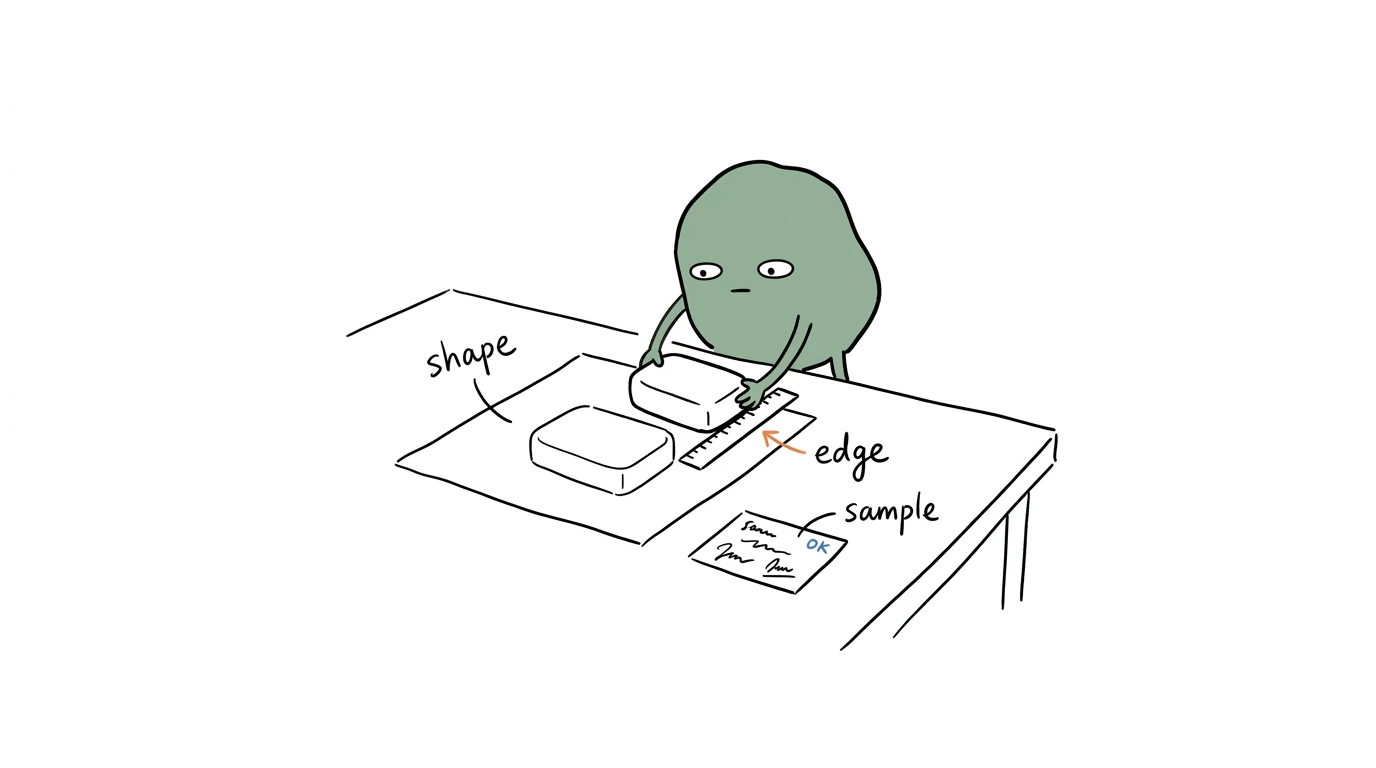
Begin with the consumer-facing format: intended use, bar dimensions, nominal weight, shape, color, fragrance and packaging. Then define what a buyer can inspect. Photograph an approved reference from several angles in consistent light. Note acceptable range for surface texture, edge finish, visible marks and shape variation. If a natural-looking product is expected, say which variations are part of the design and which are defects. A vague instruction such as “premium appearance” is hard to apply to an incoming shipment.
Agree on the point at which weight and appearance will be checked. A bar inspected immediately after forming may not match a bar after its required finishing or storage period. Ask the supplier to specify which stage represents the finished product for acceptance. Keep a signed physical reference if possible, with formula, color, fragrance, process and packaging version recorded on the sample label.
Compare a development sample with a production-scale trial
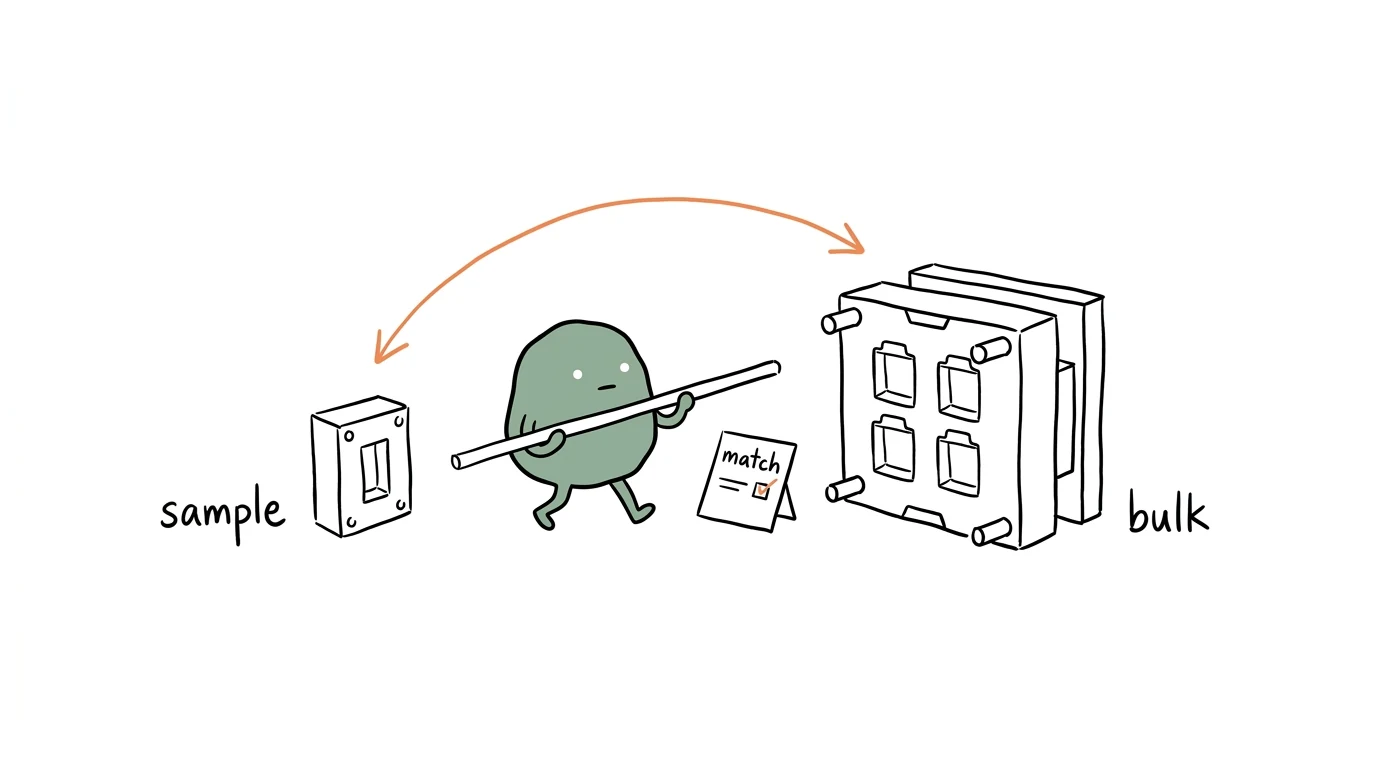
A small laboratory or artisan sample may use a different mold, batch size or handling method from the planned production run. Ask the manufacturer to identify these differences before approving a bulk order. For a critical SKU, request a pilot or pre-production sample using the intended equipment and packaging. Compare that sample against the original design for appearance, firmness, dimensions, fragrance and handling in the final carton.
Document the formula and process version of every sample. If a mold, fragrance level, colorant, finish or pack changes, record whether it requires a fresh approval. Do not let the purchase order refer only to a product nickname. A precise version reference helps both parties recognize when an apparently small modification could alter the finished bar.
Ask the supplier which product characteristics it controls routinely and which tests can be shared with the buyer. The answer may vary by formula and manufacturing method. A good specification describes the required result and the agreed verification method without pretending that a Reddit comment has established the chemistry behind a particular defect.
Build a practical receiving check
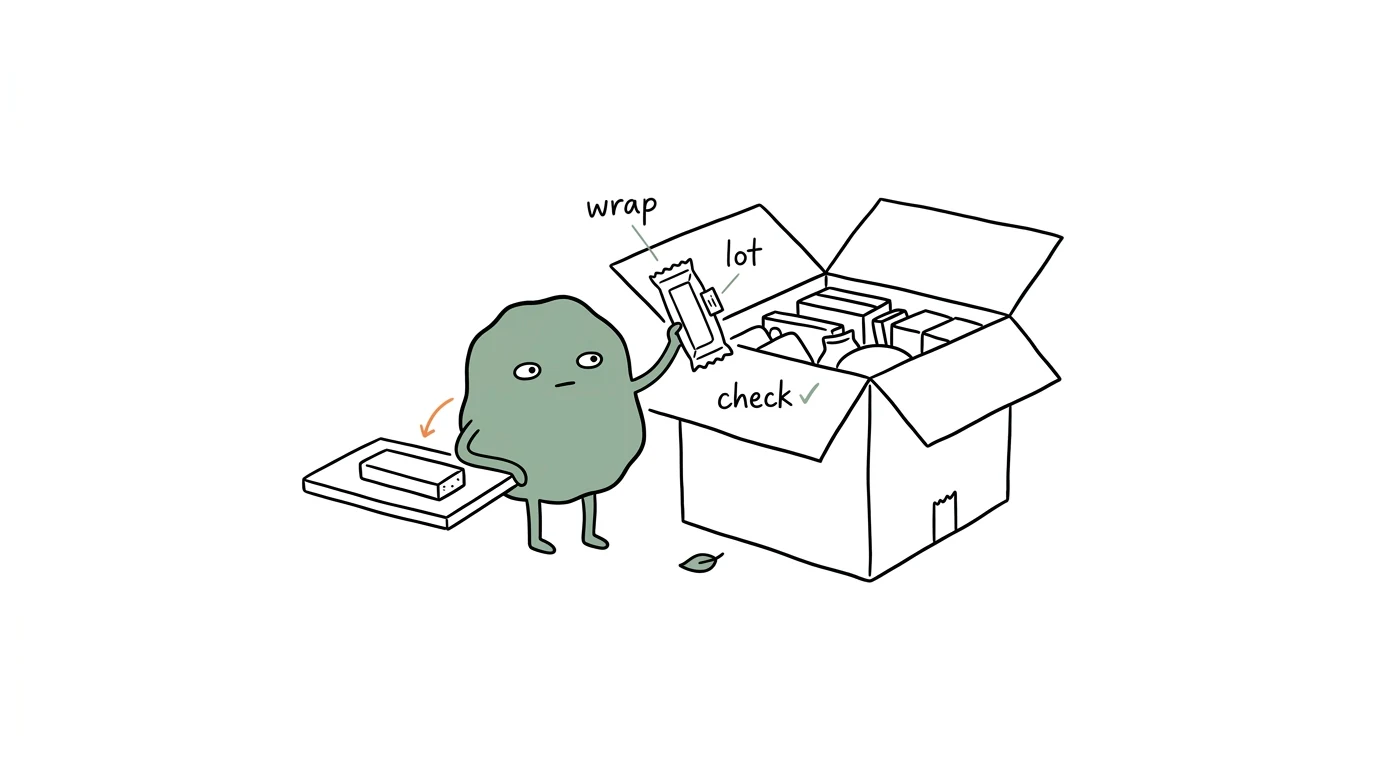
Sample cartons from different positions in the shipment. Check count, lot marks, carton condition, individual package integrity, label accuracy, visible appearance and any agreed physical measurements. If an issue appears, isolate the affected lot and record how many units were sampled, where they came from and what was found. Keep unopened and opened examples. This evidence makes a supplier investigation faster and avoids arguing from a single untraceable photograph.
Agree on the disposition process before delivery: who can accept a cosmetic variation, who can request replacement, and when a shipment is held for investigation. Check whether mixed lots in one case are allowed and how the buyer can identify them. For a spa group or distributor serving multiple locations, clear lot traceability also helps identify where the same product was sent.
Do not separate packaging from product quality
A bar that passes a bench review can arrive scuffed, deformed or with damaged labeling if its wrap and shipper are unsuitable. Test the exact individual pack and case pack planned for sale or professional use. Review abrasion, moisture exposure under intended storage conditions, closure integrity and readability of required information. The appropriate package depends on the actual formula, route to market and shelf-life plan; a pretty paper wrap is not automatically enough protection.
For a gift or spa assortment, also inspect how the bar sits beside other items. Does fragrance transfer to neighboring products? Does the pack stay intact after ordinary handling? Are units easy to count and replenish? A private-label buyer should get the finished presentation right before ordering cartons at scale. Request packaging samples and a written quote for each option.
Related NailLegend resources include our body-scrub formulation and packaging guide, bath-bomb supplier comparison, body-butter supplier guide and supplier verification checklist. These adjacent categories face similar sample-to-bulk and packaging decisions, although their technical specifications are different.
Ask for the documents that support your market
Before writing ingredient, origin, environmental or performance claims, ask what documentation the supplier can provide for the actual product and sales market. A bar called “soap” in casual conversation may be classified differently under different product rules, depending on its formulation and claims. Have the responsible regulatory team review the final label and supporting evidence. Do not copy a competitor’s claims or assume that a supplier certificate for another SKU applies to this one.
Include formula identification, ingredient information, lot traceability, intended shelf life, finished-label artwork, transport configuration and complaint handling in the procurement file. If a supplier changes an ingredient or process, require notice and evaluate whether the change affects an approved claim or appearance standard. Good change control is less visible than a launch photograph but far more valuable when a brand needs to reorder consistently.
Write a quote brief that can be answered
State the proposed formula type if known, target bar dimensions and weight, scent and color preferences, quantity range, pack style, destination markets and timeline. Ask the supplier to confirm which requirements are feasible, what the MOQ and lead time would be, and whether a production-scale sample is available. Keep the acceptance standard attached to the approved physical sample and production version. This is more reliable than buying from a catalog photograph alone.
If you are developing a broader spa or body-care range, Contact Us or Request a Quote with your product brief. We can confirm whether the requested solid format, customization and packaging fall within the available supply scope before any order is proposed. The aim is a finished product that the buyer can identify, inspect and reorder with confidence.


Leave A Comment