
A supplier can pass a sample test and still expose a beauty brand to reputational risk. Consumers now investigate who made a product, what a claim really means, how a company behaves, and whether a brand responds consistently when concerns surface. For an OEM buyer, “quality” therefore includes more than formula performance. It includes the evidence and behavior behind the product story.
This beauty supplier due diligence framework is designed for private-label founders, distributors and sourcing teams. It does not replace legal, regulatory or laboratory review. It gives the buyer a repeatable way to verify identity, claims, traceability, values-related statements and response capacity before placing a commercial order.
Why reputation belongs in the supplier scorecard
Traditional sourcing scorecards emphasize price, MOQ, lead time and defect rate. Those factors still matter, but a brand also inherits claims and dependencies from the factory, component vendors and documentation chain. Before comparing suppliers, clarify whether the project uses private label, OEM or ODM manufacturing, because responsibility for specifications and evidence differs by model.
Common exposure points include:
- a trading company presented as the manufacturer;
- environmental, natural or ethical claims without clear substantiation;
- certificates that do not match the legal entity, site, product or valid period;
- unapproved material or component substitutions;
- poor batch traceability when complaints occur;
- a supplier response that is slow, inconsistent or undocumented.
The objective is not to find a supplier with no internet criticism. It is to determine whether the organization is identifiable, its claims are supportable, its controls match your product risk, and its team can produce evidence when challenged.
Gate 1: verify who you are contracting with
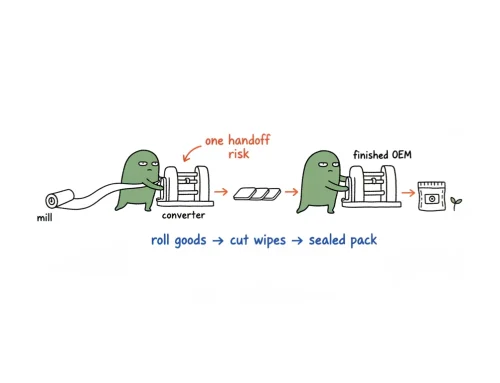
Record the legal name, registration details, trading names, factory address, sales office, invoicing entity and payment beneficiary. If manufacturing is subcontracted, identify the actual production site and which party owns quality responsibility.
Ask direct questions:
- Which legal entity will sign the agreement and issue the invoice?
- At which site will bulk manufacture, filling, assembly and storage occur?
- Which steps are outsourced?
- Who approves deviations and product release?
- Can the buyer audit or appoint a third-party inspection at the relevant site?
Names should match across bank information, quotations, certificates and product documents. A legitimate group may use several entities, but the relationship should be explainable. Avoid sending commercial payments to an unrelated personal account.
Gate 2: match every important claim to proof
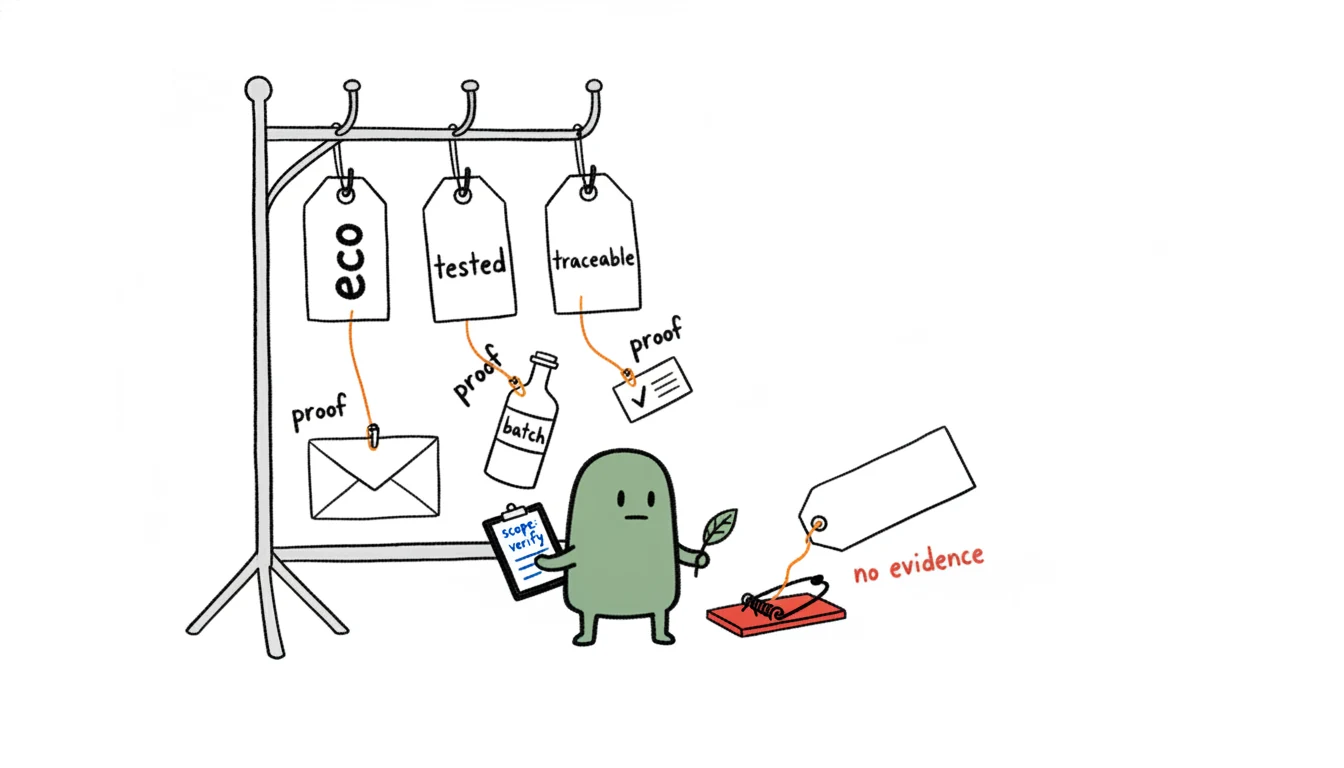
Create a claim register before artwork approval. List every statement expected on the product, carton, catalog and sales page. Assign an evidence owner, evidence file, applicable market and review date.
| Claim type | Evidence question | Buyer action |
|---|---|---|
| Ingredient or formula | Does the current specification and ingredient list support it? | Approve the exact version used for production |
| Performance | What test method, sample and acceptance criteria support it? | Review scope and avoid extending the conclusion |
| Environmental | Is the benefit specific, material and documented? | Qualify the wording and retain substantiation |
| Certification | Who issued it, to which entity/site/product, and when does it expire? | Verify with the issuing body where practical |
| Ethical or sourcing | What policy, chain-of-custody or supplier records exist? | Define what the claim covers and what it does not |
For the U.S. market, the FDA Cosmetics Labeling Guide explains core cosmetic labeling requirements, while the FTC Green Guides summary cautions against broad, unqualified environmental benefit claims. A statement such as “eco-friendly” is not made safe by a supplier email. It needs precise meaning and appropriate substantiation.
Gate 3: inspect traceability before you need it
Ask the supplier to walk through a hypothetical complaint using a sample batch code. The team should be able to connect the finished item to manufacturing date, bulk batch, filling or assembly records, major components, inspection status and released quantity.
A practical traceability pack may include:
- approved master specification and version;
- batch or lot coding convention;
- incoming material or component records;
- production and filling record;
- in-process and final inspection record;
- certificate of analysis or agreed release document where applicable;
- retain-sample policy;
- shipment and customer allocation record.
The exact documents vary by product and jurisdiction. The key test is whether a responsible person can retrieve them quickly and explain discrepancies. A PDF archive with no link to the shipped lot is not effective traceability.
Gate 4: review the supplier’s change-control behavior
Many reputation events begin as an undocumented change: a fragrance replacement, a different pump, a new subcontractor, an altered pigment or a label adjustment. The purchase agreement should state which changes require written approval before use.
Define controlled elements such as formula, named materials, key specifications, color, fragrance, primary package, decoration, artwork, manufacturing site and test method. Require the supplier to describe the reason, risk assessment, affected inventory, proposed effective date and validation plan.
A supplier that reports a problem early is often safer than one that promises perfection. During qualification, note whether the team answers uncomfortable questions with evidence or simply repeats assurances.
Gate 5: evaluate values-related claims without turning the audit into politics
Brand values should be converted into observable requirements. “Responsible” or “ethical” is too vague for a purchase order. Decide what matters to your customers and channel, then specify the evidence needed.
Examples include:
- material origin and chain-of-custody information;
- animal-testing claim scope and applicable market limitations;
- labor or social-compliance audit scope, site and recency;
- packaging material composition and recycled-content evidence;
- waste, refill or source-reduction data behind a marketing statement;
- conflict-of-interest or anti-bribery commitments for higher-risk relationships.
Do not imply that one certificate proves the ethics of an entire organization. Record what was checked, when, by whom and what remained outside scope.
Gate 6: run a reputation and dispute scan
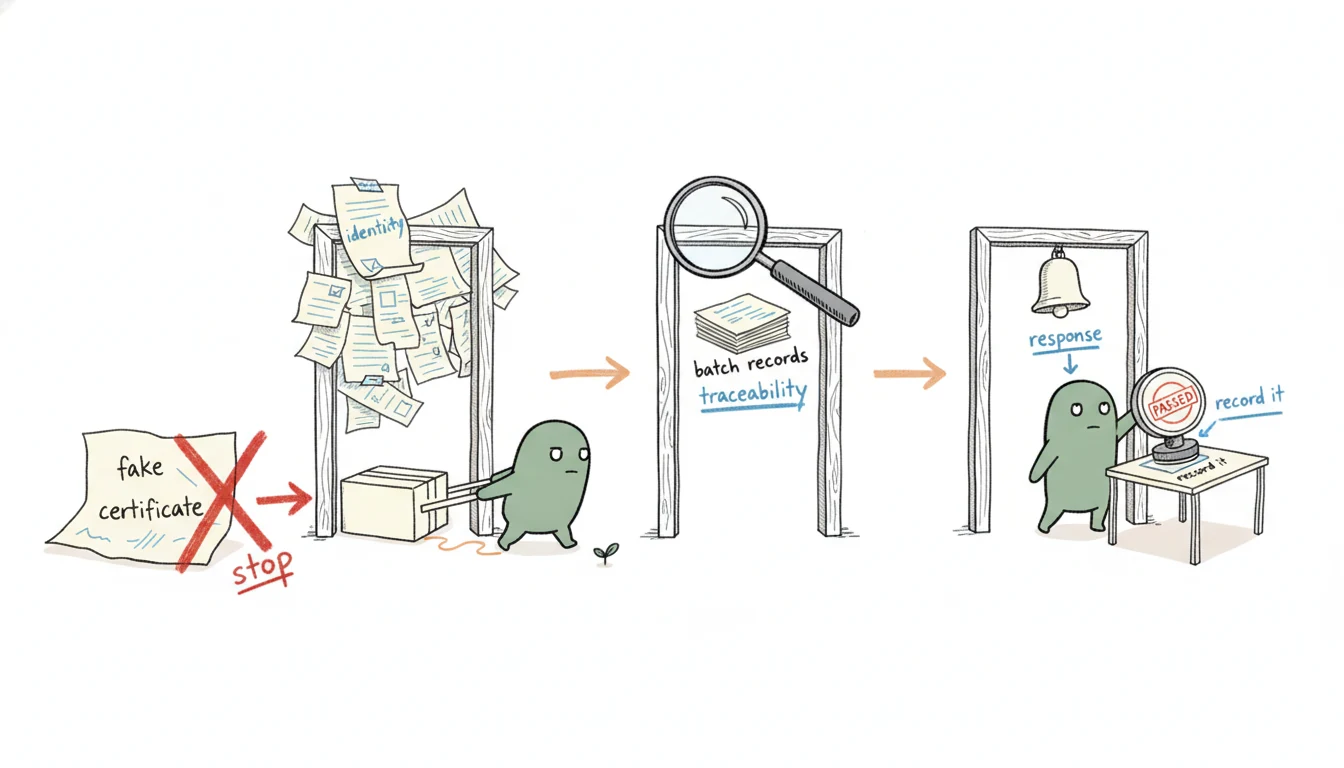
Search the legal entity, trading names, factory location, directors where publicly available, major certification identifiers, product recall notices and credible news. Review patterns rather than isolated anonymous comments. A repeated allegation with consistent details deserves a documented supplier response.
Separate findings into four classes:
- Identity mismatch: documents or sites do not connect to the contracting party.
- Control weakness: incomplete records, recurring quality complaints or unmanaged substitutions.
- Claim risk: statements appear broader than available evidence.
- Conduct risk: credible allegations that conflict with defined brand requirements.
Give the supplier an opportunity to explain and provide records. Keep a dated decision note: accept, accept with conditions, investigate further or reject. This prevents future teams from repeating the same research without context.
Gate 7: test crisis response before signing
Ask who receives a serious complaint outside business hours, how quickly the supplier can identify affected lots, who can stop shipment, and what information can be provided within the first day. Agree communication roles so the factory does not contact your retail customers unless authorized.
The contract should address notification, investigation cooperation, sample retention, confidentiality, corrective action, responsibility for unapproved changes, recall cooperation and document access. Obtain professional legal advice appropriate to the target markets and product risk.
Use a scored decision, not a folder of documents
Convert the review into a scorecard with pass/fail gates and weighted criteria. Identity mismatch, falsified documents or refusal to disclose the production site may be automatic stops. Minor gaps can have corrective actions, owners and deadlines.
Requalify suppliers periodically and when the product, site, ownership, certification or target market changes. Due diligence is a maintained record, not a one-time search.
For product-specific manufacturing checks, see How to Vet a Cuticle Oil Manufacturer. Nail Legend can provide project-specific information on MOQ, lead time, packaging, customization and available quality documentation. Review our OEM capabilities and product range, then request the records relevant to your brief and destination market.
Frequently Asked Questions
What is beauty supplier due diligence?
It is a structured review of the supplier’s identity, manufacturing role, claims, documents, traceability, change control, reputation and response capacity before and during a commercial relationship.
Is a factory audit enough?
No. An audit is valuable within its scope and date, but it may not verify every product claim, subcontractor, ownership issue or current batch. Combine audit evidence with product, document and commercial checks.
How often should a beauty supplier be requalified?
Set a risk-based cycle and trigger a review when there is a major formula, site, ownership, certification, regulatory-market or complaint change. Higher-risk products and suppliers warrant more frequent review.
What is a red flag in supplier documents?
Examples include mismatched entity names, altered dates, unverifiable issuers, missing scope, expired validity, inconsistent addresses or refusal to provide the underlying report where appropriate.
Can a small brand perform due diligence?
Yes. Start with legal identity, production site, claim register, core specifications, traceability demonstration and a written change-control agreement. Use qualified third parties for audits, testing or legal review when risk justifies it.


Leave A Comment