
Launching a beauty or spa product line without owning a factory? You have three manufacturing models to choose from: private label, OEM (Original Equipment Manufacturer), and ODM (Original Design Manufacturer). Each gives you a different level of control over formulation, branding, cost, and speed to market.
This guide breaks down all three models side by side — with real numbers on MOQ, lead time, and cost structure — so you can pick the one that matches your budget, timeline, and brand vision. If you are sourcing cuticle and nail care, body care, bath and spa essentials, or massage oils, this framework applies to every category.
OEM vs Private Label vs ODM at a Glance (2026)
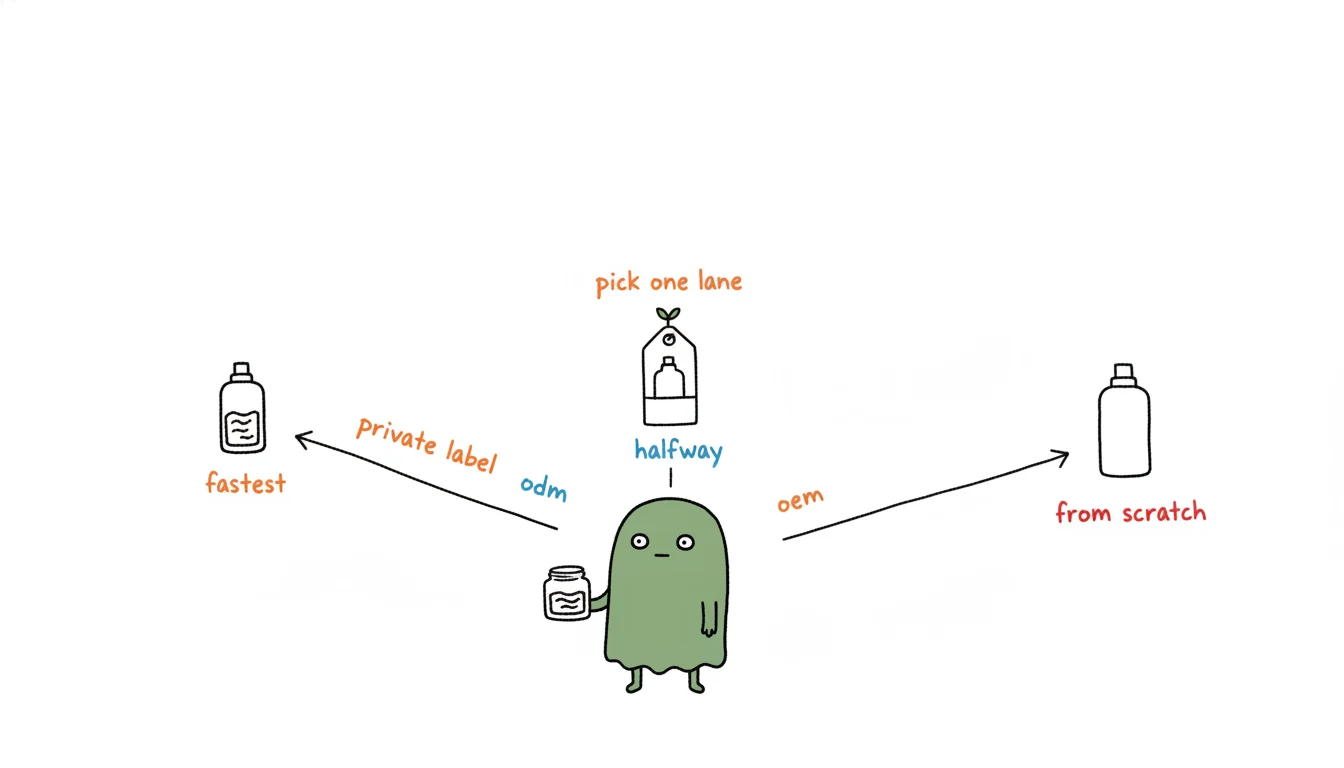
If you searched for oem vs private label, private label oem products, or white label beauty manufacturing, here is the 60-second answer before the deep dive below.
Private label (a.k.a. white label): the manufacturer’s stock formula, your brand on the bottle. Lowest MOQ, fastest launch, lowest customization. Ideal for first-time brand owners testing demand. White label and private label are used interchangeably in cosmetics — both mean “their formula, your label.”
OEM (Original Equipment Manufacturer): you bring the formula or detailed spec, the factory makes it. Highest control over recipe, packaging, and IP. Higher MOQ and longer lead time. The classic answer to oem vs private label trade-off: you trade speed for ownership.
ODM (Original Design Manufacturer): the factory designs a product for you based on a brief. Middle ground between private label and OEM — more differentiation than stock formula, less risk than full custom development.
Most successful B2B beauty buyers do not pick one model and stay there. They start with private label to validate demand, then move category winners into OEM and keep slow movers as private label oem products in a hybrid catalog. The sections below walk through MOQ, lead time, IP ownership, and decision criteria for each model.
Already know which model you need? Browse our B2B catalog, see specific category guides for cuticle oil and bath bombs, or read our companion guides on MOQ negotiation and launching a private-label skincare brand. Ready for a quote? Request pricing here.
Quick Comparison: Private Label vs OEM vs ODM
| Factor | Private Label | OEM | ODM |
|---|---|---|---|
| Formulation | Manufacturer’s existing formula | Your custom formula (you provide specs) | Manufacturer designs formula for you |
| Branding | Your label on a ready-made product | Your label + your formula | Your label + manufacturer’s formula (exclusive or semi-exclusive) |
| R&D Investment | Zero — pick from catalog | High — you fund formulation development | Low to moderate — manufacturer’s R&D team handles it |
| MOQ | Low (often 500–1,000 units) | Medium to high (1,000–5,000+) | Medium (500–3,000) |
| Lead Time | Fast (2–4 weeks) | Long (6–12 weeks incl. R&D) | Moderate (4–8 weeks) |
| Unit Cost | Lowest | Highest (R&D amortized) | Middle |
| IP Ownership | None — formula belongs to manufacturer | Full — your formula, your IP | Negotiable — depends on exclusivity agreement |
| Differentiation | Low — competitors can use same formula | High — unique product | Medium — semi-exclusive possible |
| Best For | Speed-to-market, testing new categories | Established brands with R&D budget | Brands wanting unique products without in-house R&D |
Private Label: Fastest Path to Market
How it works: The manufacturer has a catalog of ready-made formulations. You choose a product — say, a jojoba-based cuticle oil — and put your brand name, logo, and packaging design on it. The factory fills, labels, and ships.
Advantages:
- Speed: No formulation phase. From artwork approval to shipment in 2–4 weeks.
- Low MOQ: Many manufacturers accept 500–1,000 units per SKU for private label, making it accessible for startups and Amazon sellers.
- Low risk: The formula is already proven in the market. You skip stability testing and regulatory filing for a new composition.
- Low cost per unit: No R&D amortization. You pay for production, packaging, and labeling only.
Disadvantages:
- Low differentiation: Other brands can sell the exact same formula under their own label.
- No IP: The formulation belongs to the manufacturer. You cannot prevent them from selling it to others.
- Limited customization: You can usually choose fragrance, color, and packaging — but not the base formula itself.
When to choose private label: You want to test a new product category (e.g., bath bombs for hotel amenity programs) before committing R&D budget. Or you are building a multi-SKU brand quickly for an e-commerce launch.
OEM: Full Control, Full Investment
How it works: You bring the formulation — either developed by your own R&D team or by a third-party lab — and the manufacturer produces it to your exact specifications. The factory is your production partner, not your product designer.
Advantages:
- Full IP ownership: The formula is yours. The manufacturer cannot sell it to anyone else without your permission.
- Maximum differentiation: Your product is unique in the market — ingredients, texture, scent, performance are all exclusive to your brand.
- Quality control: You define every spec: viscosity, pH, preservative system, raw material sourcing.
Disadvantages:
- High upfront cost: Formulation development, stability testing (typically 3–6 months), and regulatory filing all happen before the first production run.
- Higher MOQ: Manufacturers need larger volumes (1,000–5,000+ units) to justify custom production line setup.
- Longer lead time: 6–12 weeks from purchase order to shipment, not counting the R&D phase.
When to choose OEM: You are an established brand with a proven product concept and the budget to invest in formulation. You want a product that cannot be replicated by competitors using the same manufacturer.
ODM: The Middle Ground
How it works: The manufacturer’s R&D team develops a formulation based on your brief — target market, desired texture, key ingredients, price point. You get a custom product without building an in-house R&D team. Think of it as “guided product development” where the factory’s chemists do the heavy lifting.
Advantages:
- Custom product without in-house R&D: You describe what you want; the manufacturer’s lab creates it.
- Faster than OEM: The manufacturer already has raw material supply chains, testing protocols, and regulatory experience. Typical lead time is 4–8 weeks after formulation approval.
- Semi-exclusive possible: You can negotiate exclusivity for your target market or region.
- Access to expertise: The manufacturer’s R&D team knows which ingredients work, which pass regulatory review, and which trend well in specific markets.
Disadvantages:
- IP is negotiable, not automatic: Unless you sign an exclusivity agreement, the manufacturer may sell the same or similar formula to other buyers.
- Less control than OEM: You guide the direction, but the manufacturer’s chemists make the technical decisions.
- Cost sits between private label and OEM: You pay for the manufacturer’s R&D time, but less than building your own lab.
When to choose ODM: You want a differentiated product but do not have the R&D budget or technical team for full OEM. Common for brands launching body care lines with specific ingredient stories (e.g., CBD-infused, vegan, organic) where the manufacturer’s formulation expertise adds real value.
How to Decide: A Decision Framework
Ask yourself these four questions:
- Do I have a proprietary formula? → Yes: OEM. No: Private label or ODM.
- Do I need a unique product that competitors cannot copy? → Must-have: OEM or exclusive ODM. Nice-to-have: ODM. Not important: Private label.
- What is my budget for the first production run? → Under $5,000: Private label. $5,000–$15,000: ODM. $15,000+: OEM or ODM with exclusivity.
- How fast do I need to launch? → Under 4 weeks: Private label only. 4–8 weeks: ODM. 8+ weeks: OEM is fine.
Can You Mix Models? Yes — and Most Successful Brands Do
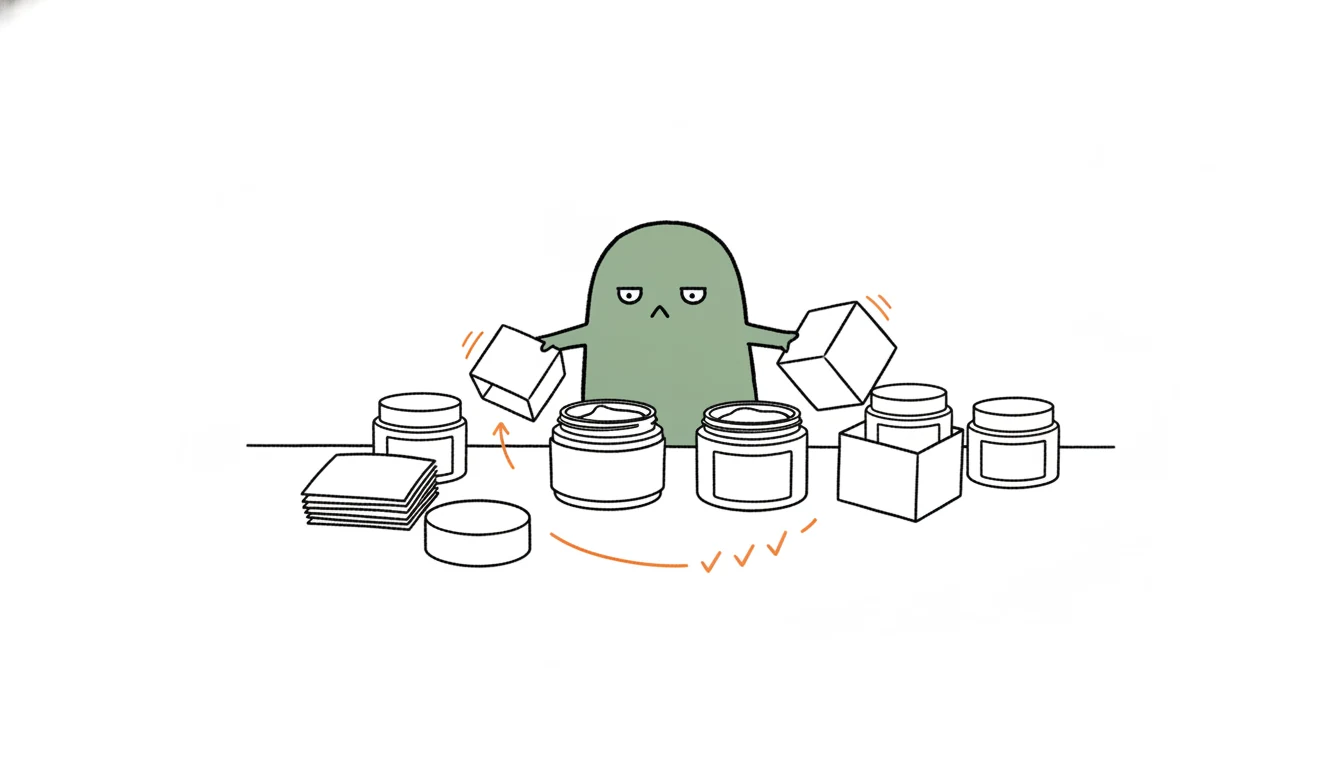
The private label vs OEM vs ODM choice is not mutually exclusive. Many beauty brands use a hybrid approach:
- Launch with private label to test the market and build cash flow.
- Upgrade hero SKUs to ODM once you know what sells and want differentiation.
- Go full OEM for flagship products where IP protection and uniqueness justify the investment.
For example, a nail care brand might start with a private label cuticle oil and a cuticle softener, then move the cuticle oil to an ODM formula with a proprietary vitamin blend once it proves out in the market.
What to Look for in a Manufacturing Partner
Regardless of which model you choose, vet your manufacturer on these criteria:
- Certifications: GMPC, ISO 22716, FDA registration (for US market), EU CPNP capability.
- MOQ flexibility: Can they handle pilot runs of 500 units, or is the minimum 5,000?
- Documentation: COA (Certificate of Analysis), SDS (Safety Data Sheet), stability test reports — these should be standard, not upsells.
- Communication: Response time under 24 hours, English-speaking project manager, willingness to send samples before commitment.
- Packaging capability: In-house label printing, secondary packaging (boxes, inserts), and export-ready palletizing reduce your logistics complexity.
At Nail Legend, we support all three models — private label, OEM, and ODM — across our full product catalog of spa, body care, nail care, and hair removal equipment. MOQ starts at 500 units for private label, with 25–45 day lead times depending on the model. Request a quote with your product concept and target market, and our team will recommend the best manufacturing model for your situation.
OEM Private Label Products: What You Actually Get
When buyers search for “OEM private label products,” they’re really asking one practical question: how much of the product is mine, and how much is the factory’s? Here is the honest breakdown by sourcing model.
Stock plus your label. The formula, the packaging mold, and the design are catalog items the factory already owns. You add a custom label and, sometimes, a custom box. This is the fastest and cheapest route — most “private label OEM products” on the market start here.
Private label with light customization. Still the factory’s base formula and components, but you choose scent, color, fill size, and packaging from a menu. This is where most beauty brands land for their first one to three SKUs.
True OEM private label. Your spec drives the formula and, where relevant, the hardware. The factory manufactures to your brief and the result is exclusive to you — higher MOQ, longer lead time, but the product line is genuinely yours.
A capable OEM private label manufacturer should be able to walk you up this ladder one rung at a time: start with stock samples, move to light customization on a confirmed order, then graduate to full OEM once volume justifies the tooling. Before you commit, ask any supplier to map your shortlist of SKUs against these three tiers — it is the quickest way to see where “private label” ends and “OEM” begins for your specific products.
Explore OEM & Private Label Product Lines
Ready to move from theory to a quote? These are the categories our OEM and private-label clients order most:
- Cuticle oil private label — low-MOQ, high-margin, easy to build a brand around.
- Pedicure kits & spa sets — retail-ready multi-SKU kits for distributors.
- Wholesale gold handle nail brush sets — Kolinsky and nylon, custom handles.
- Cuticle oil: OEM vs private label vs stock — a worked example of the models above.
- How to start a private-label skincare brand — the full launch checklist.
Request an OEM / private-label quote →
Frequently Asked Questions
What is the difference between private label and OEM in cosmetics?
Private label uses the manufacturer’s existing formula with your branding. OEM uses your proprietary formula produced by the manufacturer. The key difference is IP ownership: private label formulas belong to the factory; OEM formulas belong to you.
Is ODM cheaper than OEM?
Generally yes. ODM leverages the manufacturer’s existing R&D infrastructure, so you avoid the full cost of independent formulation development. Expect ODM development fees to run 30–60% lower than equivalent OEM R&D, depending on complexity.
What is the typical MOQ for private label beauty products?
Most manufacturers set private label MOQ at 500–1,000 units per SKU. Some offer lower minimums (200–300 units) for pilot runs, typically at a higher per-unit cost. OEM and ODM MOQs are usually higher, starting at 1,000–3,000 units.
Can I switch from private label to OEM later?
Yes, and this is a common growth path. Start with private label to validate market demand, then invest in custom formulation (OEM) or manufacturer-guided development (ODM) for your best-selling SKUs. A good manufacturing partner will support this transition without requiring you to change factories.
Worked example by category: for a concrete view of how the OEM / private label / ODM trade-offs play out in a multi-step beauty kit, see Pedicure Kit Wholesale: 2026 B2B Buyer Guide — it walks through MOQ tiers, packaging architecture, and compliance scope for a real category.
Sourcing bath bombs at scale?
If you’re evaluating bath bomb wholesale and private label manufacturing for a retail line, gift set, or spa chain, our B2B Bath Bomb wholesale program covers 8 base scents, custom shapes and silk-screen printing, and MOQ from 100 jars at the quote stage. Request a Bath Bomb wholesale quote →
Sourcing Nail Drills for Salons
For the equipment side of the same private-label/OEM decision, our nail drill wholesale buyer guide covers brushless vs brushed motors, RPM bands, cordless format, bit lineup, and dust collector bundling for distributors building a salon-equipment line.
OEM or Private Label? Mapping the Cost-vs-Control Tradeoff
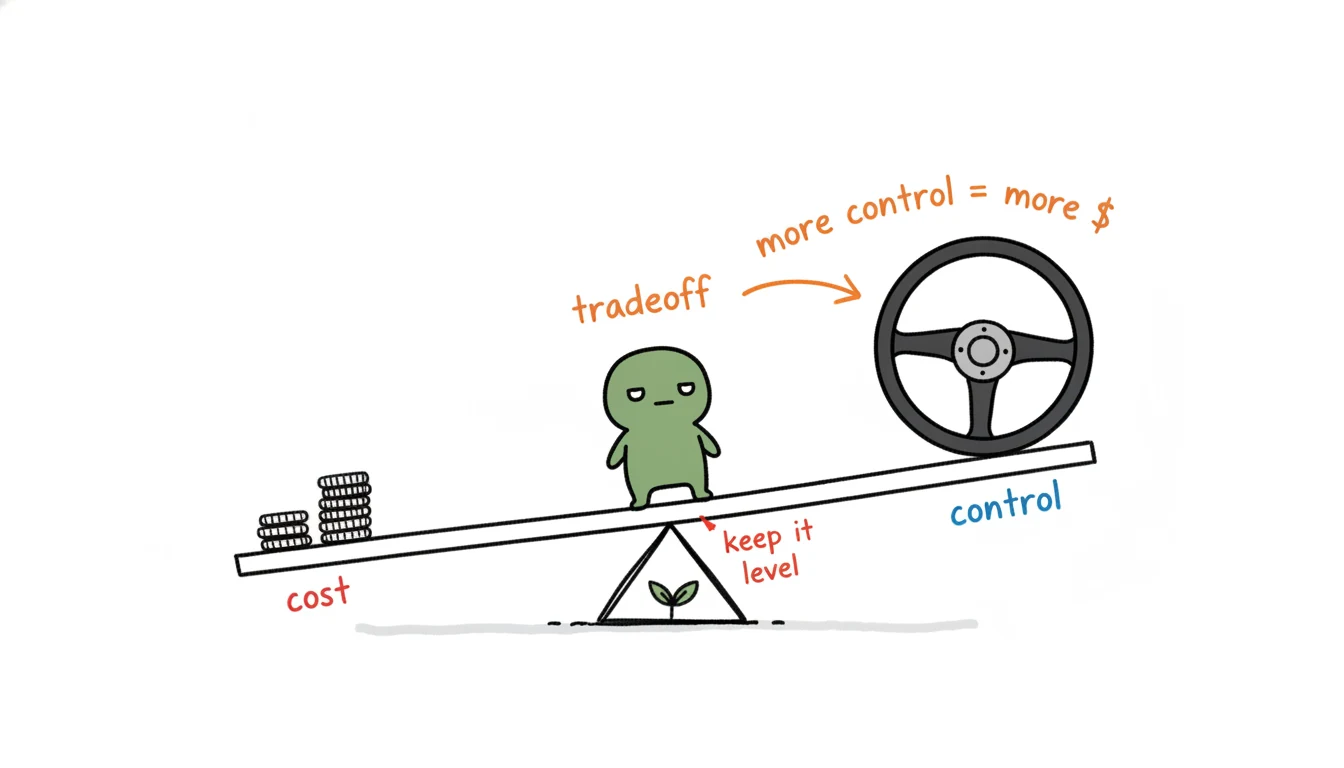
When brand owners ask whether to go OEM or private label, the honest answer is a tradeoff between speed-to-market and formula control. The core difference between OEM and private label is ownership of the spec: private label brands a manufacturer’s existing stock formula (launch in weeks, low minimums, no formula IP), while OEM means you define the recipe and the factory builds to it (longer lead time, higher MOQ, but a formula sheet you own). ODM sits between the two — the factory’s design, lightly customized for you.
Most scaling beauty brands run a blended OEM ODM private label portfolio rather than picking one lane forever: private label for fast catalogue fillers, ODM for semi-custom hero products, and OEM for the flagship SKU where ingredient claims and margin justify owning the formula. Decide per SKU, not per brand — map each product to the model that matches its margin, volume, and how defensible its formula needs to be. Ready to scope a program? Request a quote or browse our product lines.


Leave A Comment