
A nail file can look simple in a catalog and still create very different service results. A recent nail-community discussion praised a nano file for leaving the free edge “smooth as glass.” For a distributor or private-label brand, that reaction is useful—but it is not yet a purchasing specification.
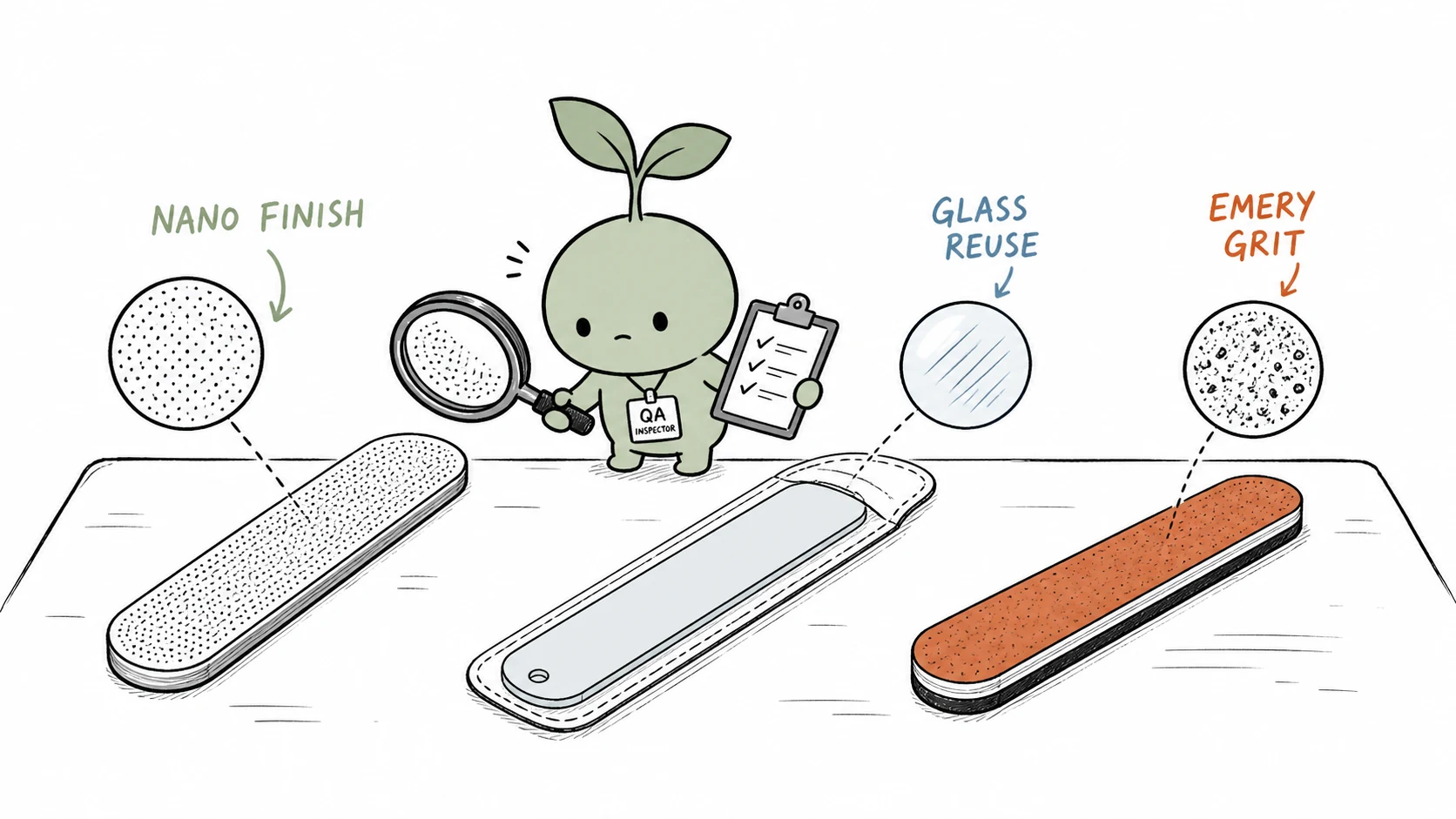
This nail files wholesale comparison turns the consumer signal into a B2B decision framework. It compares nano-textured, etched-glass and conventional emery files by cutting behavior, finish, durability, hygiene and program economics. It also shows what to include in a sample inspection before approving a bulk order.
The three formats solve different jobs
“Better” depends on the nail condition, service step and channel. A salon finishing a natural free edge has different needs from a distributor supplying acrylic removal tools or a travel-care brand building a gift set.
| Format | Typical strength | Main buyer risk | Best-fit program |
|---|---|---|---|
| Nano-textured file | Very fine edge finishing and a polished feel | Inconsistent surface texture or exaggerated claims | Natural-nail finishing, compact kits, premium accessories |
| Etched-glass file | Reusable, washable surface with controlled fine abrasion | Chipping, thin glass or weak protective cases | Retail-ready salon aftercare, branded gift sets |
| Emery board | Wide grit choice, low unit cost and familiar use | Grit shedding, delamination and moisture damage | Professional consumables, disposable kits, high-volume distribution |
Nano is also used loosely in the market. Ask the supplier to describe the substrate, how the abrasive surface is formed and whether the stated function is filing, sealing, polishing or a combination. A trade name should never replace a measurable sample standard.
Specify performance instead of accepting “fine”
For emery files, grit numbers provide a starting point, but two products with the same nominal grit can feel different because of abrasive material, coating density, backing stiffness and manufacturing tolerance. For glass and nano surfaces, suppliers may not use a conventional grit scale at all.
Create a use-based specification. Define the nail type, intended service step, number of passes, acceptable edge finish and whether the file may contact enhancements. Request retain samples from the approved production standard so later batches can be compared against something physical.
A practical assortment might separate:
- coarse shaping for artificial enhancements;
- medium refining for product surfaces;
- fine natural-nail shaping;
- ultra-fine edge finishing or polishing;
- single-use buffers for controlled hygiene workflows.
Do not market an ultra-fine finisher as an all-purpose removal tool. That creates slow service and encourages excessive pressure. Our nail file and buffer kit supplier guide covers broader vendor selection; this article focuses on comparing the file formats themselves.
Sample QC: test the edge, surface and structure
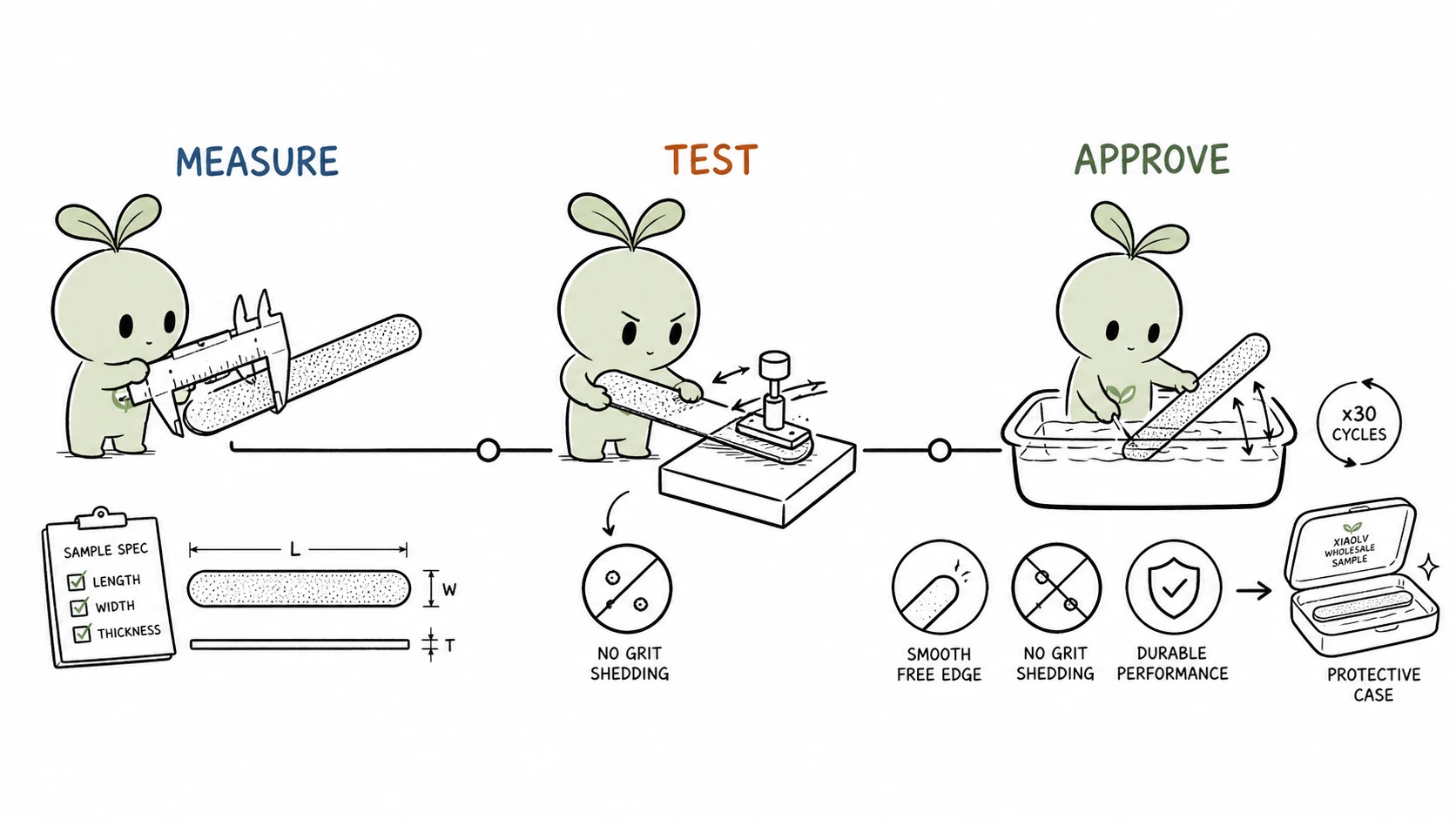
Approve samples with a repeatable inspection rather than a single technician’s first impression. Use the same test tips or training materials, the same number of strokes and the same viewing conditions. Record the result by SKU and batch.
- Visual inspection: check cracks, chips, exposed sharp corners, uneven coating, stains and printing alignment.
- Dimensional check: measure length, width, thickness, shape and case fit against the drawing.
- Abrasion check: compare removal rate and scratch pattern with the approved retain sample.
- Edge-finish check: inspect snagging and roughness after a defined finishing routine.
- Durability check: run a set number of cycles and inspect wear, delamination or loss of texture.
- Cleaning check: follow the supplier’s written care method and look for corrosion, swelling, fading or adhesive failure.
For glass files, add a controlled drop and case-protection assessment appropriate to your distribution channel. For emery boards, test grit shedding and layer separation. For nano files, confirm that surface performance does not disappear after the stated cleaning cycles.
Hygiene claims need precise instructions
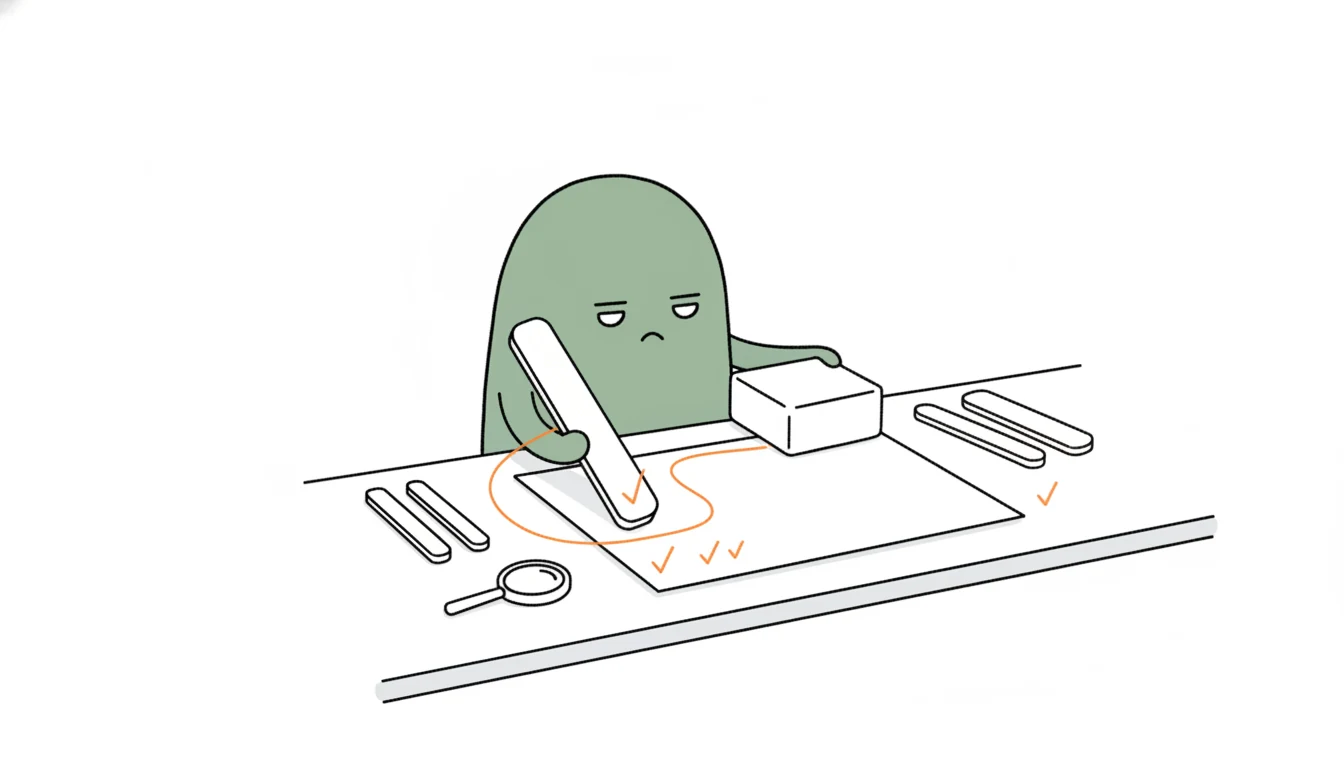
Reusable, washable, disinfectable and sterilizable are not interchangeable claims. The acceptable method depends on the substrate, adhesive, coating and intended professional protocol. Ask for written cleaning limitations and validate them for the market where the product will be sold.
If a salon channel requires single-use files, design packaging and case packs that support one-client workflows. If a glass file is sold for home aftercare, provide a protective sleeve and clear cleaning guidance. Avoid broad “antibacterial” or “sterile” language unless the supplier can provide the relevant evidence and the claim is permitted in the destination market.
MOQ, lead time, packaging and customization
MOQ is driven by the format and decoration. Stock emery shapes with printed sleeves usually have a lower entry point than a custom die shape. Glass files may require minimums for glass color, etching, printing and cases. Nano files can be constrained by available surface plates and handle molds.
Ask the quote to separate:
- stock product MOQ and custom-product MOQ;
- per-design and per-color minimums;
- sample, artwork, production and packing lead times;
- individual sleeve, reusable case, pouch and display-box options;
- logo printing, laser marking, private-label insert and barcode services;
- master-carton quantity and mixed-SKU rules.
Build the assortment around service steps
A distributor does not need three files that look different but perform the same job. Map each SKU to a service step, user and replacement cycle. Then remove overlap. A compact starter assortment could combine a professional emery file, a fine natural-nail file and a reusable glass or nano finisher.
Package colors and printed grit labels should make selection obvious at the workstation. Include the care method and intended use on the pack, especially when a very fine file visually resembles a more aggressive tool.
For adjacent assortment planning, review our nail art brush wholesale guide, private-label MOQ guide and OEM capabilities. To compare file materials, cases and branding options for your market, contact us to request a quote. We will confirm MOQ, lead time, packaging and customization for the selected specification.
Frequently Asked Questions
Are nano nail files the same as glass nail files?
No. The terms may describe different substrates and surface-forming methods. Ask for the material construction and a performance sample instead of relying on the product name.
Which file type is best for natural nails?
A fine, controlled abrasive is generally selected for natural-nail shaping and edge finishing, but the correct product depends on the service method. Test removal rate and the resulting edge against an approved standard.
Can reusable nail files be disinfected?
Only use the cleaning or disinfection methods validated for the exact substrate, coating and adhesive. Washable does not automatically mean compatible with every disinfectant or sterilization process.
What should a wholesale sample approval include?
Check dimensions, surface consistency, removal rate, scratch pattern, edge finish, durability, print quality, case fit and performance after the stated cleaning method.
Can nail files carry a private-label logo?
Yes. Common options include surface printing, laser marking, printed sleeves, pouches, cases and cartons. MOQ and lead time vary by decoration and packaging route.


Leave A Comment