
People looking for body care often describe two opposite failures: a lotion or cream that feels greasy, stains clothes or transfers onto furniture, and another product that seems to disappear and leaves the skin looking dry or ashy. Some also ask for a non-sticky body lotion for very dry skin. For a brand owner or spa buyer, those comments are a demand signal that residue, tightness and after-feel need to be sampled in a repeatable way. They are not proof that one hero ingredient will “stop ashiness,” and they are not a brief to develop a body wash.
This protocol helps you decide when to specify a body lotion and when to specify a body butter, and how to score samples for residual shine, transfer and tightness. It is not a fragrance-wear brief, and it is not a lightweight lotion brief written for hot, humid markets. Those projects should stay on their own pages so the sample criteria do not get mixed.
Treat “ashy” and “greasy” as different sample failures
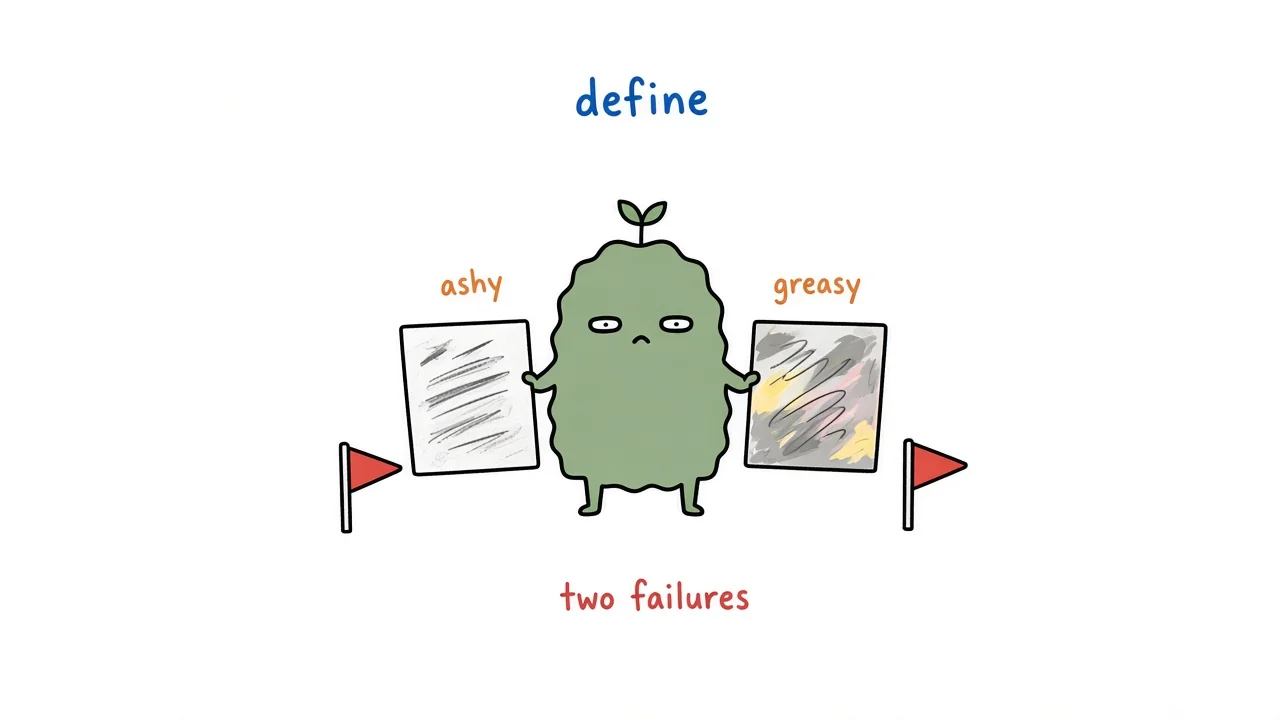
In everyday language, “ashy” usually means the skin still looks dry, dull or flaky after the product is used. “Greasy” usually means a visible or transferable oil film remains on the skin or on whatever the skin touches. A product can fail one test, the other, or both at different times after application. A brief that only says “not ashy, not greasy” leaves the manufacturer without a target.
Cosmetic moisturisers are often described by three contributing actions. A review in Clinical Medicine & Research summarises them as follows: emollients (mostly lipids) fill gaps between corneocytes and improve softness and flexibility; occlusives form a hydrophobic film that helps limit trans-epidermal water loss; and humectants attract water into the stratum corneum (Purnamawati et al., 2017). That framework is useful for a buying conversation. It is not a medical diagnosis, and it does not tell you which commercial SKU will perform on every user. Lighter lotions often rely more on a water-rich emulsion and humectants, with a lighter oil phase. Body butters often rely more on a high lipid or butter phase and a more occlusive film. Either format can still feel wrong if the residual film, the dose or the climate is a poor match.
Use the words “ashy” and “greasy” in your score sheet only if you define them. For example: ashy means visible dryness or flaking on the scored area at a stated time after a stated dose; greasy means visible shine or transfer onto a standard cloth or paper at a stated time. Keep photographs or written scores with the sample record.
Decide when the brief should be a lotion, a butter, or both
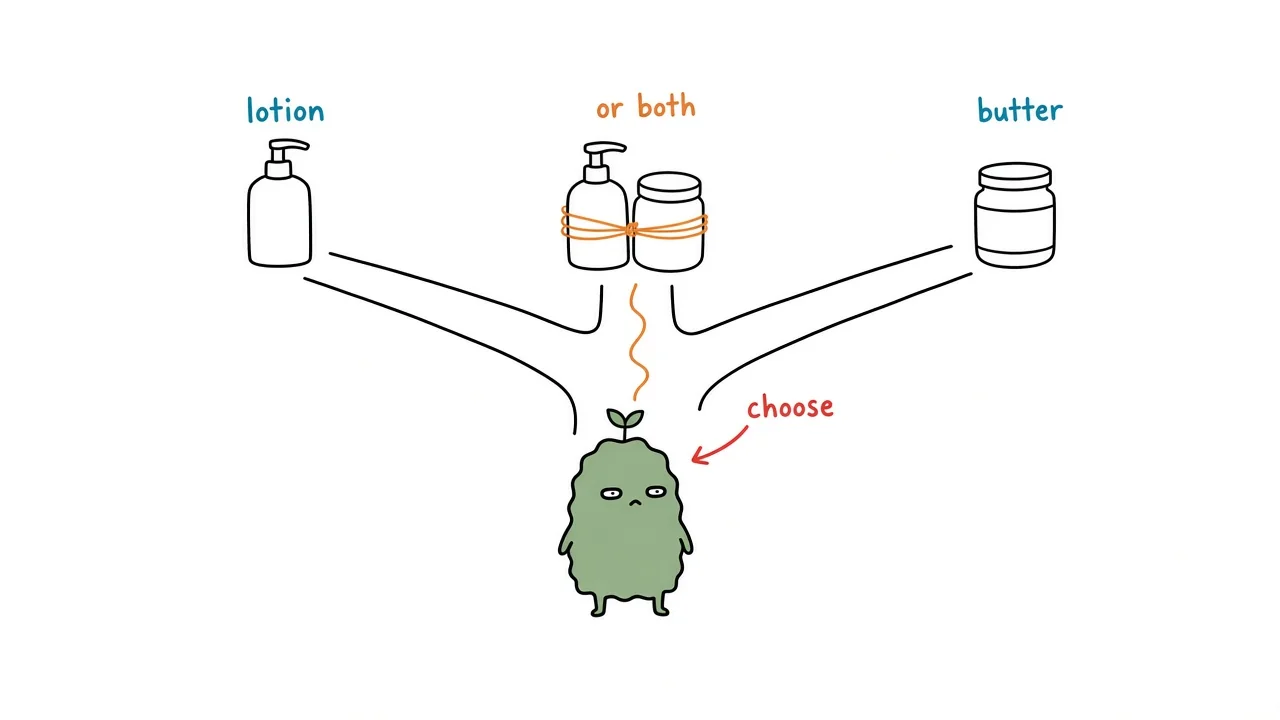
Do not default to one format because it is fashionable. Choose the format from the user, the body area, the climate and the channel, then confirm it with samples:
- Body lotion is usually the starting point for a daily, all-over product, a spa or massage finish that should absorb, or a retail pump that users will apply in a warm or mixed climate. If you already know the lotion must stay light in humid heat, use our separate body lotion OEM brief for humid markets for that texture work, then keep this residue protocol for ashy-versus-greasy scoring.
- Body butter is usually the starting point when the user needs a richer product on very dry areas (elbows, knees, shins or feet), a colder-season retail SKU, or a spa finishing product where a more occlusive feel is acceptable or wanted.
- A pair of SKUs is often more honest than one compromise formula. A daily lotion plus a richer butter can be sampled as a short line, with different pack sizes, rather than forcing one product to pass every residue test on every body area.
If you are still comparing lotion, oil and cream as professional or retail formats, see our comparison of massage lotion vs oil vs cream. Then write a lotion brief against our massage lotion private label capability, or a butter brief against our body butter private label manufacturing page and the body butter range.
Run a timed residue and tightness protocol
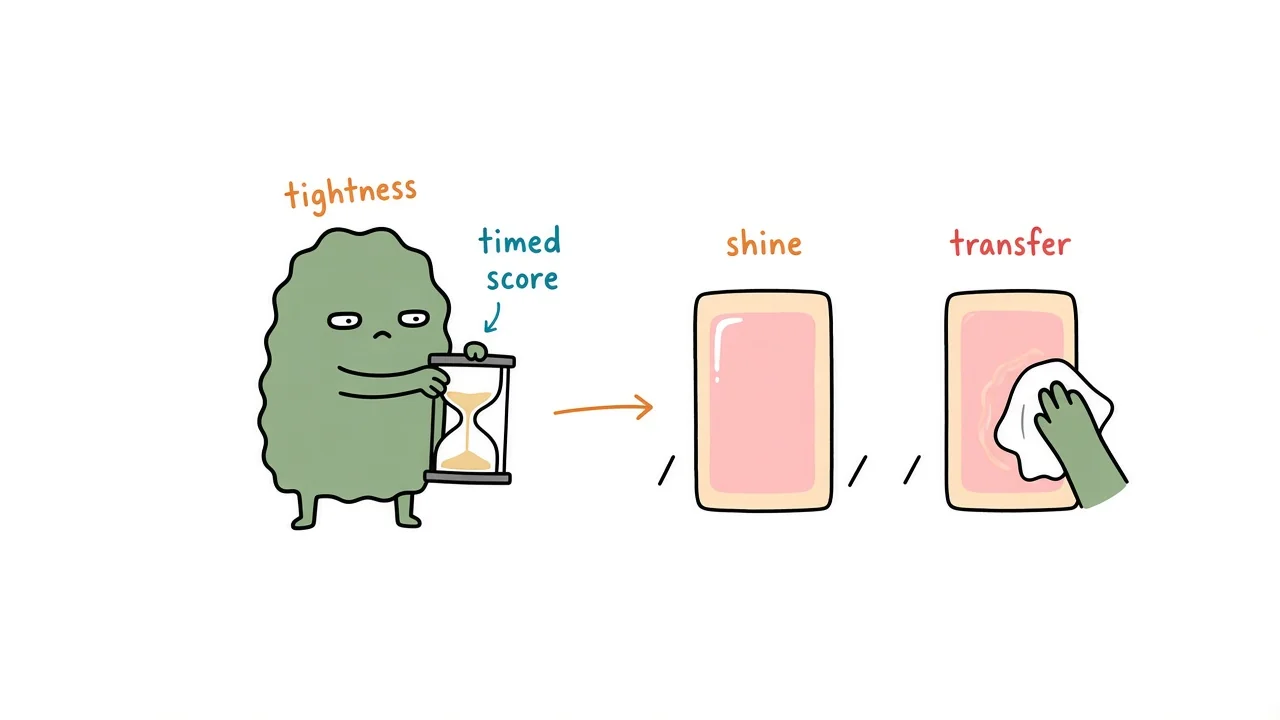
Agree the method with the manufacturer before samples arrive, and use the same method on every lotion and butter variant:
- Define the skin area and the dose. Use a measured amount on a stated area (for example a marked patch on the shin or forearm). Very dry areas and more humid areas can be tested separately if both matter to your market. Record room conditions.
- Score at set times. Typical checkpoints are immediately after rub-in, then at 15 minutes, one hour and a later time you choose. At each point, score tightness or dryness (including any ashy appearance, as you defined it), residual shine, and transfer onto a clean cloth or paper.
- Score clothing or surface transfer if the channel needs it. A spa finish that must not mark a robe, or a daily lotion that must not mark clothes, should have that test written down.
- Keep fragrance out of this score sheet. Scent character and wear belong in a fragrance brief. A strong scent can distract assessors from residue.
- Repeat on more than one assessor and, if possible, on more than one skin type or climate. A single enthusiastic comment is not a protocol.
Write “pass” and “fail” against those scores, not against a promise such as “ends ashiness” or “never greasy.” If a lotion fails on tightness and a butter fails on transfer, that is useful information: you may need two SKUs, a different dose instruction, or a revised texture, not a stronger claim.
Keep climate, pack and claims in the same brief
Climate still matters, even when this article is not a humid-market texture brief. Heat can make a rich butter feel oilier; dry indoor air can make a light lotion feel insufficient. State the intended season and climate, and say whether the same formula must also travel in hot containers. Packaging matters too: a jar, a tub, a tube and a pump change dose and contamination risk, and a whipped butter that is pleasant in a cool room may be too soft in a warm warehouse. Ask which pack the stability and residue work was done in.
Keep claims cosmetic. In the United States, a product intended to moisturise or improve appearance is generally a cosmetic, but claims to treat a disease or to affect the structure or function of the body can cause it to be treated as a drug, or as both (FDA: Is It a Cosmetic, a Drug, or Both?). Forum comments about painful dryness are a reason to sample carefully; they are not a brief to market a treatment. Agree testing and documents in the quote; our guide to body care testing quote scope helps you compare what is included.
What your residue-protocol brief should contain
Before you ask for samples, send a brief covering:
- user, body area, climate or season, and sales channel;
- whether you want a lotion, a butter, or samples of both;
- definitions and timed scores for tightness or ashy appearance, shine and transfer;
- fragrance direction or a fragrance-free requirement, kept separate from residue scoring;
- pack format, fill size and closure;
- documents needed for each target market;
- forecast quantities per SKU and launch timing. MOQ is confirmed per product, formula, pack, scent and SKU; see MOQ for private label beauty products.
Working with NailLegend on lotions and body butters
NailLegend is a B2B wholesale, white label, private label and OEM supplier for spa and personal care, with more than 10 years of manufacturing experience and customers in over 40 countries. Our range includes massage lotions and body butters, which can be sampled against a written residue protocol. We review feel targets, format choice, pack and testing scope before quoting, and we do not promise that one formula will remove an ashy appearance or never feel greasy. Regular production usually takes 25–35 days after samples, design, order and payment terms are confirmed; custom development and shipping are additional.
Browse our spa product line and OEM capabilities, then send us your brief.
Next step: Request a Quote with your lotion or body butter residue brief, Contact Us to discuss sample protocol and format choice, or ask to Download Catalog information for our lotion and butter range.



Leave A Comment