
If you are sourcing a massage lotion manufacturer for a private-label or OEM program in 2026, you are entering one of the steadiest, highest-repeat corners of professional body care. Massage lotion is a back-bar workhorse in every spa, salon, and pedicure room, and a growing at-home category for relaxation and recovery. Unlike a one-off treatment product, lotion is consumed continuously and rebought on schedule, which makes it a reliable revenue base for a brand or distributor. This guide covers the product types, what defines a good massage lotion, what to look for in a supplier, the customization that matters, and the real numbers behind a private-label launch.
Massage lotion sells across two clear channels: professional spa and salon back-bar, where therapists want predictable glide and clean absorption through a full service; and at-home retail, where scent, skin feel, and packaging win the shelf. A brand that owns a massage lotion line captures a true consumable with strong reorder economics and simple branding through scent, format, and packaging.
What Is Massage Lotion and Who Buys It
Massage lotion is an emulsion of water and oils designed to give therapists enough slip to work the muscles without the heavy, greasy residue of a pure oil. It is thicker and more cushioning than a massage oil, absorbs more cleanly, and washes off skin and linens more easily — which is exactly why so many professional therapists prefer it for longer sessions. The core buyers are spa and salon chains stocking back-bar product, nail and beauty distributors supplying pedicure and body-care services, and wellness brands building an at-home massage and recovery range. It pairs naturally with massage oil, body butter, and a spa gift set in a complete body-care line.
Massage Lotion Formats
A capable massage lotion manufacturer typically offers several formats, and the right one depends on your channel:
- Professional back-bar bottles: Larger pump bottles and gallons for high-volume spa and salon use — the steadiest reorder driver.
- Retail bottles & tubes: Smaller branded formats with pumps for take-home sale.
- Pedicure lotions: Lighter, fast-absorbing lotions formulated for the foot-and-leg massage step of a pedicure.
- Bulk / refill: Large-format containers for high-volume accounts, the strongest margin and sustainability play.
Why Private-Label Massage Lotion Sells in 2026
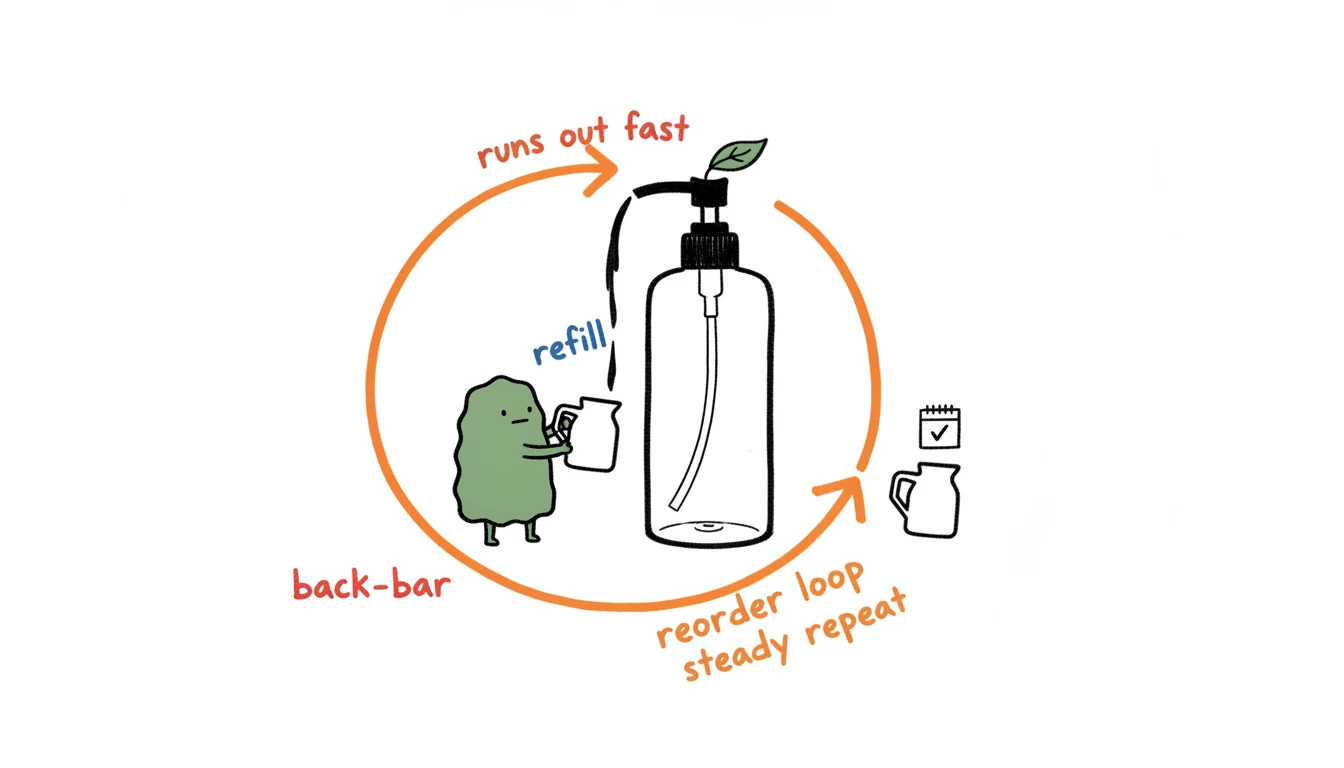
- Consumable with fast reorder: Therapists use it on every service, so it is rebought constantly — the most predictable revenue in body care.
- Professional credibility: A branded massage lotion signals a serious spa and body-care line to professional buyers.
- Simple differentiation: Scent, texture tier, and packaging do the branding without complex reformulation.
- Range anchor: It headlines a body-care range alongside oil, butter, and a spa kit, lifting the whole basket.
What Makes a Good Massage Lotion
This is what separates a professional product from a generic body lotion, and it is exactly what you should test in any sample. Three properties define a quality massage lotion: glide — enough slip and working time for a therapist to perform a full massage without dragging the skin; absorption — it should sink in cleanly by the end of the service without leaving a heavy greasy film; and skin feel — the skin should feel conditioned and soft afterward, not tacky or stripped. Achieving all three at once is a formulation skill: too much oil and it never absorbs, too little and it drags. A serious massage lotion manufacturer balances the emulsion precisely and can explain how they tune glide versus absorption for your channel; a commodity supplier who just sells a generic lotion under a new label usually cannot.
Key Ingredients & Formulation
- Water-and-oil emulsion base: The core of a lotion; the ratio sets glide versus absorption.
- Emollient oils: Lightweight carrier oils and esters that provide slip without heaviness.
- Humectants: Glycerin and similar agents that hold moisture and leave skin conditioned.
- Soothing actives: Aloe, allantoin, vitamin E, or botanical extracts for an upgraded skin-feel story.
- Fragrance: Stable scents (lavender, jasmine, cherry, unscented) chosen to perform in an emulsion and across the working time.
What to Look for in a Massage Lotion Manufacturer
- Glide-and-absorption tuning: They should be able to explain how they balance working time against clean absorption, and adjust it for professional vs retail use.
- Stable emulsion: A lotion that holds consistency and does not separate, thin, or grain across its shelf life.
- Scent range and stability: A library of stock scents plus custom blending, with fragrance that stays true in an emulsion.
- Real sampling: A physical sample in days, judged on glide, absorption, after-feel, and scent during a real massage.
- Honest MOQ tiers: Sample, pilot, and production tiers to validate before committing capital.
- Documentation discipline: Accurate ingredient lists and the market paperwork your destination requires.
- Responsive English communication: Clear, fast replies predict a smooth production run.
Customization Options That Matter
- Texture tier: Lighter fast-absorbing pedicure lotion vs richer full-body massage lotion.
- Scent: Stock fragrances (lavender, jasmine, cherry, eucalyptus) or a custom signature scent; unscented for sensitive or clinical use.
- Actives & positioning: Vegan, organic, CBD-free botanical, or hyaluronic-infused stories to match your brand.
- Format: Pump bottle, tube, gallon, or gift-set component.
- Packaging: Pro back-bar bottles, retail pumps, bulk refills — branded to your label.
Quality Control & Compliance Basics
- Ingredient documentation: A full INCI list and the paperwork your destination market requires.
- Emulsion stability: Confirm how the supplier keeps the lotion from separating or graining across temperature and shelf life.
- Batch consistency: Texture, scent, and absorption must stay uniform from the first unit to the last of a run.
- Packaging integrity: Pumps and caps must dispense reliably and survive shipping without leaking.
- Sample before scale: Always approve a production-representative sample before a full run.
Channel Strategy: Spa Back-Bar vs Retail
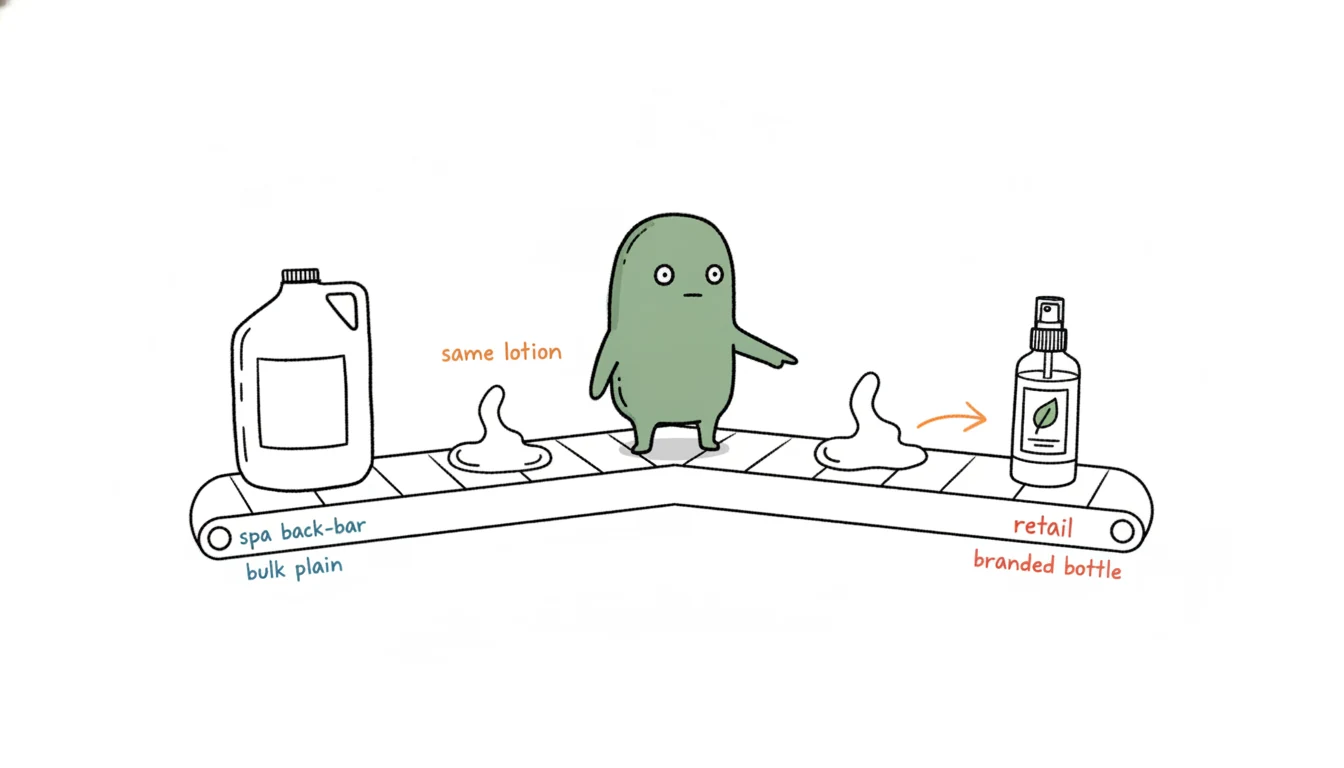
The same massage lotion line monetizes differently by channel. Spa and salon back-bar buyers want predictable glide, clean absorption, and value in larger formats, and they reorder on a steady cycle — the most reliable revenue in the category. Retail buyers want an attractive bottle, a pleasant scent, and a clear skin-feel benefit, and they buy on brand and experience. Distributors want both, in pro and retail tiers, to serve their whole base. Tell your massage lotion manufacturer the channel mix up front so MOQ, texture, and packaging are quoted correctly.
MOQ, Lead Time & Cost
Custom massage lotion programs typically start in the low thousands of units per variant, with smaller pilot tiers often available to validate the market first; gallon and bulk back-bar formats usually carry lower unit minimums. Production lead time runs roughly two to four weeks after deposit and artwork approval, scaling with volume and custom packaging. Per-unit cost at volume is low relative to the retail and professional price points, which — combined with the constant reorder cycle — is what makes the category attractive. Build retail price from landed cost: factory price plus freight and duties, then fulfillment and margin. For a deeper breakdown of minimums and packaging economics, our massage oil MOQ and packaging guide covers the same logic that applies to lotion.
Sourcing Timeline: From Inquiry to Delivery
- Inquiry & quote (days 1–3): Share texture tier, scent, format, and volume. A responsive supplier returns clear MOQ tiers quickly.
- Sampling (days 3–10): Judge glide, absorption, after-feel, and scent during a real massage.
- Proforma invoice & deposit: Lock formula, packaging, and timeline.
- Bulk production (2–4 weeks): Lead time scales with volume and custom packaging.
- QC & shipping: Confirm emulsion stability, batch checks, and seals, then choose freight terms (FOB, CIF, or DDP).
Stock, White Label, Private Label, or OEM?
- Stock / wholesale: Buy an existing lotion as-is — fastest, no differentiation.
- White label: A ready formula under your brand and label.
- Private label: Your branding plus selective scent, texture, or packaging choices.
- OEM / custom formulation: A lotion built to your spec — emulsion, glide, actives, scent — for full differentiation.
Lotion vs Oil vs Cream: A Quick Note
One of the first decisions a body-care buyer faces is whether to lead with a lotion, a massage oil, or a richer cream — and the honest answer is that they serve different therapists, clients, and price points. Lotion offers the best balance of glide and clean absorption and is the all-round professional default; oil offers maximum glide and a luxurious feel but more residue; cream is the richest and best for short, targeted work on dry skin. Most complete lines carry more than one. We unpack the full trade-off, and which to private label first, in our massage lotion vs oil vs cream guide.
Pairing Lotion With a Full Body-Care Range
A massage lotion rarely sells alone — it is the anchor of a body-care and spa range, and buyers think in terms of the whole service. The natural companions are a massage oil for therapists who prefer maximum glide, a body butter or foot cream for the conditioning step, and a spa gift set that bundles them for retail. Sourcing the lotion alongside these from one manufacturer keeps your branding consistent, simplifies your supply chain, and lets you negotiate better combined volume. When you brief a supplier who makes the full range, you can build an entire spa line under one purchase order and one label.
Sustainability & Packaging Notes
Body-care buyers increasingly weigh packaging as part of their purchasing decision, and massage lotion is usually a plastic pump bottle or gallon. Options that play well with conscious retail include recyclable mono-material bottles, larger refill and gallon formats for spas that cut per-use packaging, and avoiding unnecessary secondary packaging. Because the professional channel reorders in volume, a bulk-refill option is both a sustainability story and a margin advantage. Raise packaging preferences with your massage lotion manufacturer early so the format supports your brand positioning rather than working against it.
Nail Legend produces massage lotion alongside a full spa and body-care range — including massage oil — in professional and retail textures with custom scents and private-label packaging. Browse the wholesale massage lotion range, see a representative organic private label massage lotion, or pair it with a spa gift set program, then request a quote.
Frequently Asked Questions
What does a massage lotion manufacturer supply?
A massage lotion manufacturer produces finished massage lotion on a stock, white-label, private-label, or OEM basis — covering the emulsion formula, texture, scent, packaging, and your branded label, in professional back-bar and retail grades.
What is the difference between massage lotion and massage oil?
Massage lotion is a water-and-oil emulsion that gives good glide but absorbs more cleanly and washes off easily, while massage oil is pure oil that offers maximum glide and a luxurious feel but leaves more residue. Lotion is the all-round professional default.
What is the typical MOQ for private-label massage lotion?
Custom programs commonly start in the low thousands of units per variant, with smaller pilot tiers often available; gallon and bulk back-bar formats usually carry lower unit minimums so you can validate before scaling.
Can I get both professional and retail textures?
Yes. A capable manufacturer makes a lighter, fast-absorbing back-bar lotion for therapists and a richer, attractively-packaged retail lotion from the same line, so you can serve both channels.
What should I test in a massage lotion sample?
Judge glide (working time without dragging skin), absorption (clean sink-in without a greasy film by the end of a service), after-feel (soft and conditioned, not tacky), and scent stability during a real massage.
How long does production take?
Physical samples typically arrive within days to about a week, and bulk production runs roughly two to four weeks after deposit and artwork approval, scaling with volume and custom packaging.



Leave A Comment