Hand & Foot Mask Private Label: B2B Product Development Guide is written for nail brands, spa distributors and private label skincare buyers. The goal is not to choose a retail item from a shelf. It is to develop paired hand and foot treatments with clear fit, fill weight and merchandising logic, document the specification, compare quotations on the same basis and reduce avoidable changes after sampling.
Quick answer for buyers
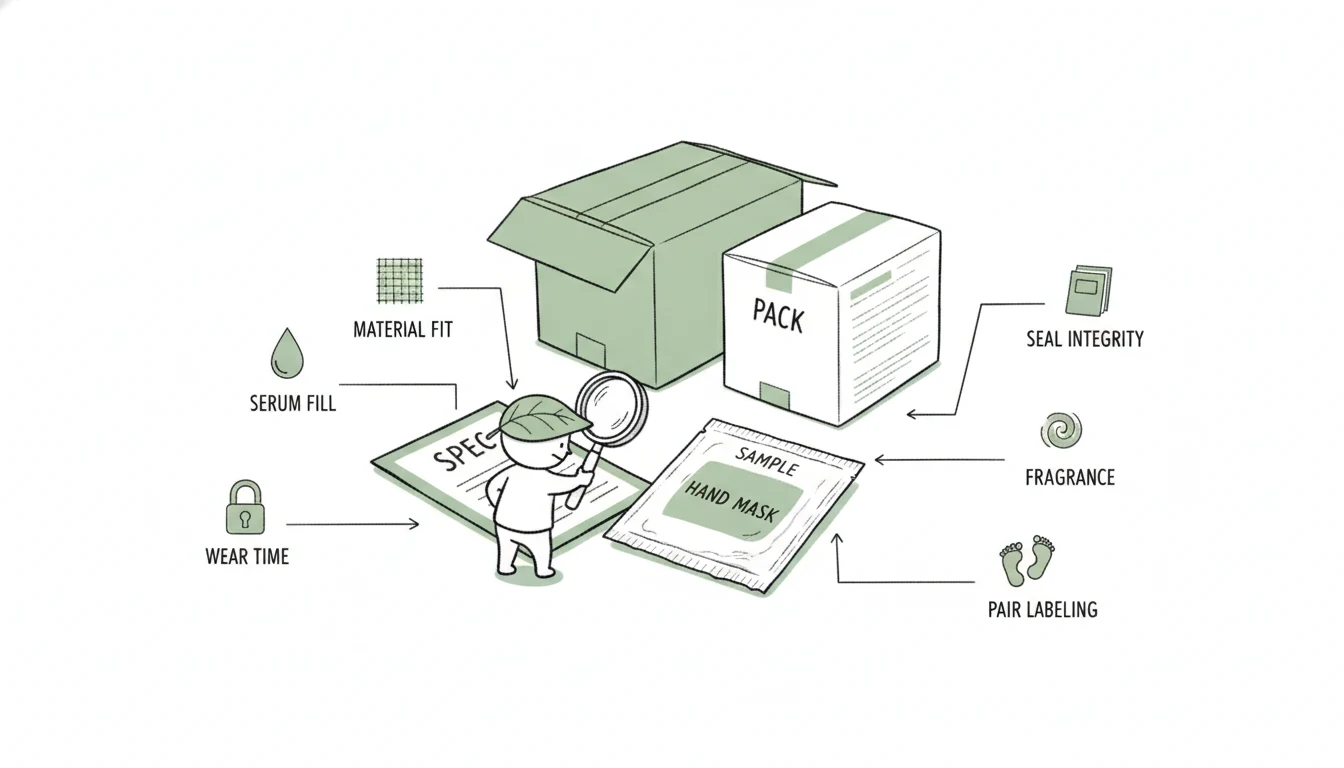
Start with the use case, pack architecture and target market. Ask each supplier to quote the same specification and separate product, packaging, setup, testing and freight costs. For hand and foot masks, the short list should be judged on material fit, serum fill, seal integrity, wear time, instructions, fragrance and pair labeling—not unit price alone.
Define the buying brief before requesting a quote
A useful RFQ states who will use the product, where it will be sold, the expected first-order range, preferred pack sizes and target launch date. Include destination countries because labels, electrical requirements, claims and documents can vary by market. If some decisions are still open, label them as options rather than letting suppliers make silent assumptions.
For this category, common directions include glove and sock masks, cream-filled wearables, sachet treatments and coordinated manicure/pedicure kits. These are different commercial programs. Quoting them as one vague request makes prices hard to compare and often hides a packaging or component minimum.
Build one comparable specification
Create a one-page specification with product format, performance target, fragrance or color direction, net contents, primary package, decoration method, case pack and required documentation. Add an approved reference sample where sensory or operational performance matters. The approved sample, written specification and artwork version should point to one another.
| Decision | What to specify | Why it matters |
|---|---|---|
| Product | Format, performance target and acceptable variation | Prevents a supplier from quoting a cheaper but different item |
| Packaging | Material, size, closure, decoration and label area | Packaging can set the real MOQ and lead time |
| Quality | Inspection points, retained sample and release records | Creates an objective approval path |
| Commercial | MOQ by SKU, tooling, sample cost, lead time and Incoterm | Makes landed-cost comparison possible |
Evaluate formula or product performance
Test the product in the workflow it is intended for, not only in a meeting-room sample review. Record observations at defined times and use more than one sample unit. For hand and foot masks, the most important evaluation points are material fit, serum fill, seal integrity, wear time, instructions, fragrance and pair labeling. Keep a retained approved sample so the production batch can be checked against an agreed benchmark.
Ask how the supplier controls poor fit, uneven serum distribution, weak seals, confusing hand/foot identification or unsupported skin claims. A credible answer should describe a material control, process check, compatibility study or release inspection. Marketing language by itself is not a quality plan.
Check packaging as a system
The formula, container, closure, decoration and shipping carton work as one system. Request compatibility and transport-relevant checks that match the format. Confirm who purchases each component, whether components have separate minimums, how excess stock is handled and whether a future reorder can use the same parts.
Artwork approval should cover mandatory label space, batch coding, country-of-origin wording and professional-use directions where applicable. Regulatory requirements differ by market, so the brand owner or importer should confirm the final claims and labeling with a qualified adviser.
Compare MOQ, lead time and landed cost
Ask for MOQ at three levels: total order, per formula or fragrance, and per packaging design. Then separate one-time charges from recurring unit cost. A low unit quote can become expensive after tooling, component overage, inspection and freight are included.
- Sampling: confirm sample type, charge, revision limit and whether approved costs are credited.
- Production: ask when lead time starts—deposit, artwork approval or component arrival.
- Freight: compare the same Incoterm and carton assumptions.
- Reorders: confirm component availability and the notice needed for peak periods.
Supplier qualification checklist
- Does the quotation repeat your specification and list exclusions?
- Can the supplier explain batch traceability and release checks?
- Are product and packaging samples representative of production?
- Are MOQ, component minimums and setup charges separated?
- Is the lead-time definition clear and tied to approvals?
- Can the supplier provide the documents required for your destination market?
- Is there a written process for deviations, complaints and corrective action?
- Are reorder terms and change notifications defined?
Questions to include in the RFQ
Ask: What is standard and what is custom? Which decision sets the MOQ? What tests are routine, and which require an extra fee? Which packaging parts have the longest lead time? What information is needed before a production slot is reserved? How are changes to ingredients, components or processes communicated?
See Nail Legend’s hand and foot masks options, then request a quote with your market, format, pack size, expected quantity and target launch date. The team can reply with the decisions that must be confirmed before sampling.
Frequently asked questions
What information is needed for an accurate hand and foot masks quote?
Provide the intended market, product format, pack size, packaging concept, number of SKUs, expected quantity and delivery destination. Reference images are useful, but a written specification prevents different assumptions.
Should a buyer choose stock private label or full customization?
Stock options usually reduce development time and complexity. Customization is useful when the formula, format or brand story must be differentiated, but it may add sampling, testing, component and MOQ requirements.
How should samples be approved?
Approve against written criteria, keep a retained sample and record the formula, component and artwork versions. Appearance alone is not enough when fit, stability or service performance is important.
Is the lowest unit price the best quotation?
Not necessarily. Compare total landed cost, setup charges, component overage, quality controls, lead-time risk and reorder continuity on the same specification.