
Choosing a bath salt manufacturer starts with the job you need the supplier to do. Bulk mineral buyers should shortlist a documented bath salt distributor; brands launching finished jars or pouches need private-label or bath salt contract manufacturing with formulation, filling, packaging and quality control under one brief. The eight companies below cover both models.
Quick answer: Use SaltWorks, Jedwards or Westlab when mineral source and bulk salt selection lead the brief; use a contract or private-label partner when blending, fragrance, filling and retail packaging must be delivered as one finished unit. Compare landed finished-product cost, not price per kilogram alone.
Methodology and evidence standard (reviewed 2026-08-07): Public evidence from manufacturer and product pages is used to establish category relevance. A public claim is a shortlist signal, not an audit. Legal manufacturer, facility, formula ownership, MOQ, lead time, capacity, certification scope and destination-market documents must be confirmed for the exact SKU in the RFQ.
Official pages checked: SaltWorks; Jedwards International; Westlab.
Quick answer for B2B buyers
- Bulk salt and documented origin: compare SaltWorks, Jedwards and TEKPAK.
- US private-label filling and smaller launches: compare Midwest Sea Salt and Better Bath Better Body.
- Custom OEM blends, packaging and export support: compare Nail Legend and other full-service sourcing partners.
This 2026 shortlist compares eight real bath salt manufacturers, suppliers and distributors on salt source, purity, MOQ, custom formulation, packaging and lead time. It is written for brand founders, spa wholesalers and buyers building a wholesale bath salt line for boutiques—not consumers looking for a single retail jar.
How We Ranked These Manufacturers
We did not score on brand fame. For a sourcing decision, the variables that actually matter are operational. We weighed each of the bath salt manufacturers below against six criteria:
- Salt source and variety — Do they offer Epsom, Dead Sea, Himalayan and a foot-soak sea-salt base, and can they document where it comes from?
- Purity and grade — Is the salt USP grade or backed by a specification sheet, and are grain sizes consistent batch to batch?
- Private-label customization — Will they match a custom scent, color, blend and grain size to your brief rather than only repacking stock?
- MOQ flexibility — Can a newer brand start small, or is the minimum aimed at established volume buyers?
- Packaging capability — Do they fill finished jars, pouches and gift sets with your label, or only supply bulk for you to pack?
- Lead time and reliability — How long from sign-off to shipment, and how predictable is their schedule?
Use these same six points when you brief any factory. They map directly to the checklist later in this article.
Top 8 Bath Salt Manufacturers in 2026
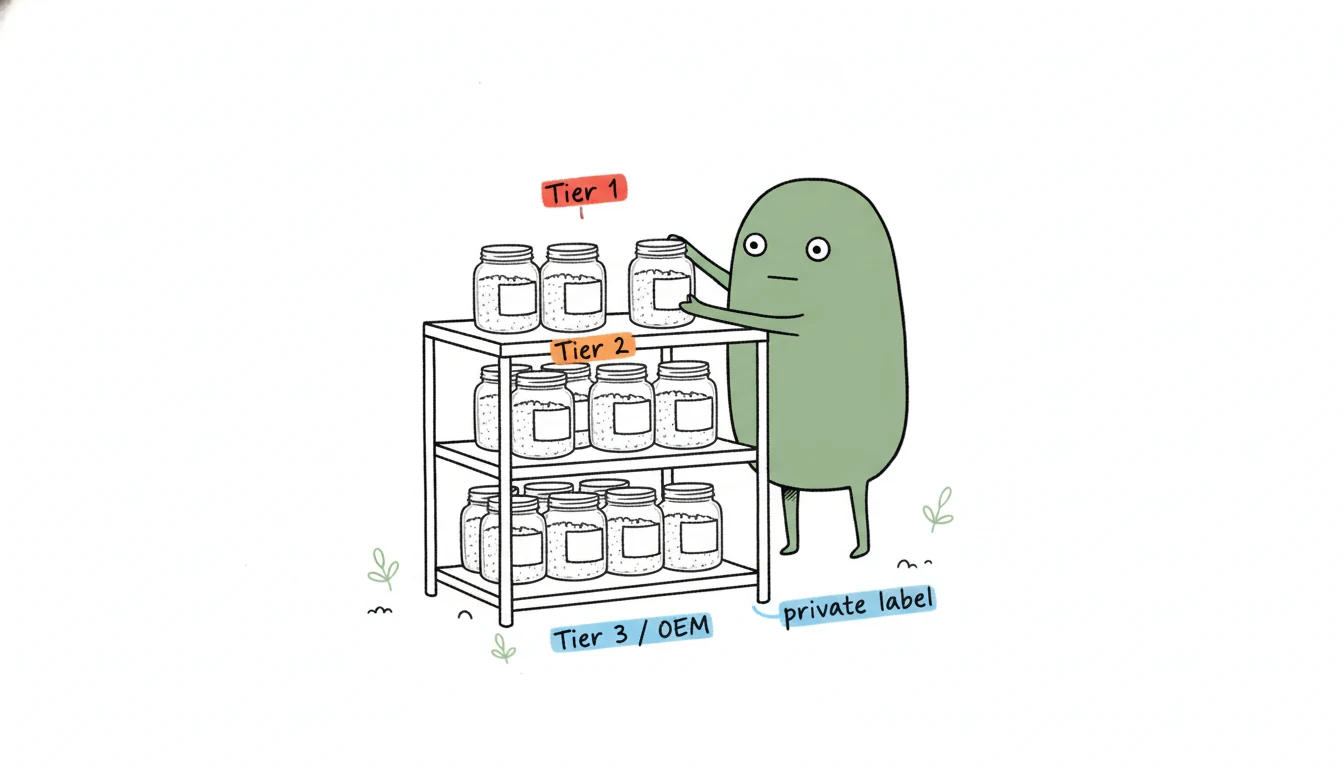
Tier 1 — Established Salt Specialists
1. SaltWorks
SaltWorks is one of the most recognized specialty salt houses in the United States, based in Woodinville, Washington. It is best known in the bath category for its Ultra Epsom line, produced in multiple grain sizes, and its Bokek Dead Sea bath salt, and it runs dedicated filling lines for private-label projects from raw salt through to finished product.
Best for: Brands that want a well-documented US source with strong Epsom and Dead Sea options and the ability to scale from repack blends to fully branded lines.
2. Jedwards International
Jedwards International is a Massachusetts-based wholesaler of bulk natural ingredients, and one of its categories is Dead Sea salts and minerals. It supplies fine and coarse Dead Sea salt by the 25 kg bag and by the pallet, making it a fit for formulators and contract packers who fill their own product.
Best for: Established formulators who already have a fill operation and want a reliable bulk raw-material supplier rather than a turnkey finished-goods partner.
3. Westlab
Westlab is a UK heritage salt brand with broad distribution across European retail and trade. Its range spans Epsom, Dead Sea and Himalayan bathing salts, giving buyers in that region a recognized name with all three of the core salt types under one roof.
Best for: European-facing buyers who value an established branded supplier and want all three headline salt types from a single source.
Tier 2 — Mid-Market Contract Manufacturers
4. Midwest Sea Salt Company
Midwest Sea Salt Company runs a US private-label bath and body program built on made-to-order manufacturing, with guidance from concept through production. It markets comparatively low minimums and positions itself as a long-term partner for spas, hotels, retailers and brands sourcing for internal or retail use.
Best for: Newer US brands and hospitality buyers who want hands-on formulation help without a high-volume commitment.
5. Better Bath Better Body LLC
Better Bath Better Body, based in Shelbyville, Kentucky, makes bath salts, foot soaks, shower steamers and bulk ingredients, and offers private-label manufacturing with minimums starting around 500 units. That low entry point makes it a frequent first stop for emerging US brands.
Best for: Startups and small brands testing several SKUs at once who need a genuinely low MOQ from a domestic maker.
6. TEKPAK North America
TEKPAK supplies bulk Dead Sea salt sourced from ICL / Dead Sea Works in Israel, one of the world’s largest mineral operations. It offers a range of grain sizes and pack formats, with volumes that flex from a single pallet up to multiple truckloads, serving manufacturers and processors.
Best for: Volume buyers and manufacturers who specifically want documented Dead Sea-origin salt in bulk for their own production.
Tier 3 — OEM Sourcing Partners
7. Sobaan Salts
Sobaan Salts is a Pakistan-based Himalayan salt manufacturer that focuses on large-scale wholesale bath salt for distributors and suppliers. It offers bulk pricing alongside private-label manufacturing with custom packaging and labeling, making it an origin-side option for Himalayan-led ranges.
Best for: Distributors building a Himalayan bath salt program who want to source close to the raw material at wholesale scale.
8. Nail Legend
Nail Legend is an Asia-based OEM/ODM and private-label partner for Spa and Body Care, and the most flexible option on this list for brands that want a single factory to own the whole project. Rather than repacking a fixed catalog, Nail Legend formulates custom bath salt and soak salt blends across Epsom, Dead Sea, Himalayan and foot-soak bases, then matches your scent, color, grain size, packaging and logo with low MOQs that let newer brands launch a full range. You can see the breadth of formats on the product overview and review production scope on the OEM capabilities page.
Best for: Brands and private-label distributors that want low-MOQ, fully custom bath salt with packaging and logo handled end to end by one OEM partner. Start with the bath salt private-label manufacturer page to scope a project.
Bath Salt Manufacturers Compared
| Manufacturer | Origin | Headline salt types | MOQ feel | Customization | Best-fit buyer |
|---|---|---|---|---|---|
| SaltWorks | USA | Epsom, Dead Sea | Medium–High | Repack to branded fill | US brands wanting documented source |
| Jedwards International | USA | Dead Sea, minerals | High (bulk) | Raw material only | Formulators with own fill line |
| Westlab | UK | Epsom, Dead Sea, Himalayan | Medium–High | Branded range | European-facing buyers |
| Midwest Sea Salt Co. | USA | Sea, Epsom blends | Low–Medium | Made-to-order | Newer US brands and hospitality |
| Better Bath Better Body | USA | Epsom, foot soak | Low (~500) | Private label | Startups testing multiple SKUs |
| TEKPAK North America | USA / Israel source | Dead Sea | High (bulk) | Bulk grades | Volume manufacturers |
| Sobaan Salts | Pakistan | Himalayan | High (wholesale) | Private label | Himalayan distributors |
| Nail Legend | Asia | Epsom, Dead Sea, Himalayan, foot soak | Low | Full custom OEM/ODM | Brands wanting end-to-end OEM |
MOQ feel is a directional read from public positioning, not a quoted figure; always confirm minimums per SKU in writing.
6 Criteria to Vet a Bath Salt Supplier
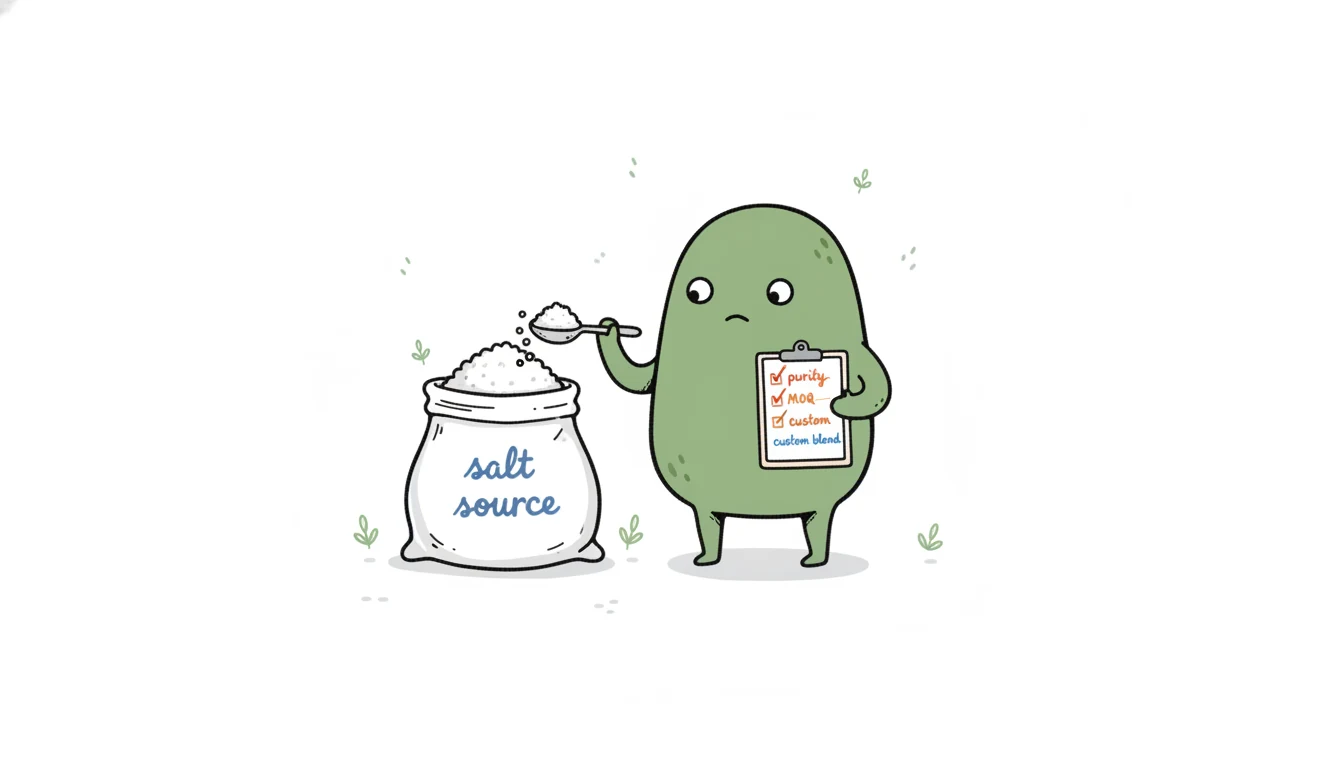
Before you commit a purchase order, run any shortlisted bath salt manufacturers through the same six checks you used to read this list:
- Confirm the salt source in writing. Ask where the Epsom, Dead Sea or Himalayan salt is mined or produced and request a specification sheet per grade. If you are still deciding which salt belongs in your formula, our breakdown of Epsom, Dead Sea and Himalayan bath salt ingredients compares their properties.
- Check purity and grade. For Epsom salt, USP grade signals pharmaceutical-level magnesium sulfate. For other salts, ask for a certificate of analysis and consistent grain sizing.
- Test customization early. Send a scent and color brief, then judge the lab sample, not the sales deck. A real OEM will iterate before production.
- Pin down MOQ per SKU. A “low MOQ” claim means little if it applies to the total order but not each variant. Get the per-SKU number.
- Map the packaging scope. Decide whether you supply jars and labels or the factory does. This drives both cost and lead time, and it is where many timelines slip.
- Validate lead time with a sample run. Ask for the realistic sign-off-to-ship window and treat your first order as a qualification run. If foot soak is central to your range, the benefits of foot soak and soak salt explain why grain size and mineral choice matter to the end user.
Editor’s Take
For an established brand that already fills its own product, a bulk specialist such as SaltWorks, Jedwards or TEKPAK is the efficient answer: buy documented salt by the pallet and run it through your own line. For a US startup wanting a domestic partner and a low entry point, Better Bath Better Body and Midwest Sea Salt Company are sensible first calls.
But for brands and private-label distributors that want one partner to own formulation, custom scent and color, packaging and logo at a genuinely low MOQ, an OEM/ODM model is usually the better fit, especially when you are launching a multi-SKU range rather than reordering a single blend. That is exactly where Nail Legend sits among these bath salt manufacturers: an Asia-based partner built for custom Spa and Body Care production end to end. If that matches your project, request a quote or download the catalog to scope salt types, scents and packaging in one conversation.
FAQ
What is the difference between bath salt and soak salt?
They describe the same product category. Bath salt and soak salt both refer to mineral salts dissolved in warm water for bathing or foot soaking. Soak salt is the term buyers more often use for foot-soak and muscle-soak formats, while bath salt is the broader retail name. Most bath salt manufacturers list both under one product line.
What is a typical MOQ when sourcing from bath salt manufacturers?
It varies widely. Large US filling houses often start at 2,500 units per SKU, mid-market contract manufacturers can begin around 500 units, and Asia-based OEM partners are frequently the most flexible for new brands testing a range. Always confirm whether the MOQ is per SKU or per total order.
Which salt types are used in bath salts?
The four most common are Epsom salt (magnesium sulfate), Dead Sea salt, Himalayan pink salt and solar/sea salt, often used as a foot-soak base. Many brands blend two or more. You can compare their properties in our guide to bath salt ingredients.
Can a manufacturer create a custom scent and color for my brand?
Yes. Most private-label bath salt manufacturers will match a fragrance brief, add botanicals or essential oils, tint the crystals and adjust grain size. Ask for a formulation sample and a lab dip before locking a production run, and confirm any fragrance-allergen disclosures required for your market.
What lead time should I expect for a private-label bath salt order?
Plan for roughly 2 to 6 weeks for production after artwork and formula sign-off, plus transit time. Domestic repackers can be faster on stock blends, while custom formulas, custom packaging or overseas shipping add time. Build a buffer for your first order while the supplier qualifies your specifications.
Do bath salt suppliers also handle packaging and labeling?
Many do. Options range from simple bulk bags for your own fill line to fully finished jars, pouches and gift sets with your printed label applied. Confirm whether packaging is sourced by the manufacturer or supplied by you, since this affects both MOQ and lead time.
How do I evaluate the purity and grade of a bath salt supplier?
Ask for the salt source, grain-size options and a specification sheet or certificate of analysis for each batch. For Epsom salt, USP grade signals pharmaceutical-level magnesium sulfate purity. Request documented sourcing for Dead Sea and Himalayan salts so you can verify origin claims before committing.
Last reviewed: 2026-08-07. Supplier capabilities and commercial terms can change; reconfirm them for the exact SKU.


Leave A Comment