
If you are sourcing a bath salt manufacturer for a private-label or OEM program in 2026, you are entering one of the most forgiving and profitable categories in body care. Bath and foot soak salts have a low raw-material cost, a high perceived value, and almost unlimited room to differentiate through scent, color, salt blend, and packaging. This guide covers the product types, what separates a capable supplier from a risky one, the customization that actually matters, and the real numbers behind a private-label launch.
Soak salts sell across two clear channels: full-size bath soaks for retail and gifting, and professional foot soak salts for spa and salon back-bar use. A brand or distributor that owns a soak salt line captures both the take-home retail margin and the recurring treatment-room reorder.
Bath Salt, Foot Soak Salt & Salt Blends
A capable bath salt manufacturer typically produces several formats, and the right one depends on your channel:
- Retail bath soak salts: Branded jars or pouches of scented, colored salts for the home bath — where packaging and scent story carry the price point.
- Professional foot soak salts: Larger, value-focused formats for pedicure and spa back-bar use, often paired with effervescent foot soak tablets for the same channel.
- Jelly / crystal soak salts: Salts that gel or transform in water for a premium, novel spa experience.
- Gift-format blends: Mixed-scent or layered-color salts for the gifting channel, often built into a spa gift set.
Why Private-Label Bath Salt Works as a B2B Product
- Margin ownership: Salt is inexpensive in bulk while the finished, scented, branded jar commands a strong retail price.
- Scent and color do the branding: A custom fragrance and color palette differentiate your line without complex formulation work.
- Two channels, one formula: The same soak sells as retail jars and as spa back-bar refills.
- Natural range extension: Soak salts pair with sugar scrubs, bath bombs, and foot masks under one brand for an easy cross-sell.
What to Look for in a Bath Salt Manufacturer
Across every supplier tier, the same quality signals apply:
- Salt-base transparency: The supplier should tell you exactly which salts are used — Epsom, Dead Sea, Himalayan, or sea salt — and why; our bath salt ingredients guide breaks down the trade-offs.
- Stable scent and color across batches: Fragrance drift and uneven dye are the most common low-end failures. Ask how scent load and color are controlled and verified.
- Anti-caking and moisture control: Salts clump when humidity gets in. A serious bath salt manufacturer controls moisture during blending and packing and uses packaging that keeps salts dry on the shelf.
- Real sampling: A physical sample within days — judged on scent at use, color, skin feel, and dissolve — predicts production quality better than any brochure.
- Honest MOQ tiers: Sample, pilot, and production tiers let you validate before committing capital.
- Responsive English communication: Clear, fast replies are a leading indicator of how the production run will go.
Customization Options That Matter
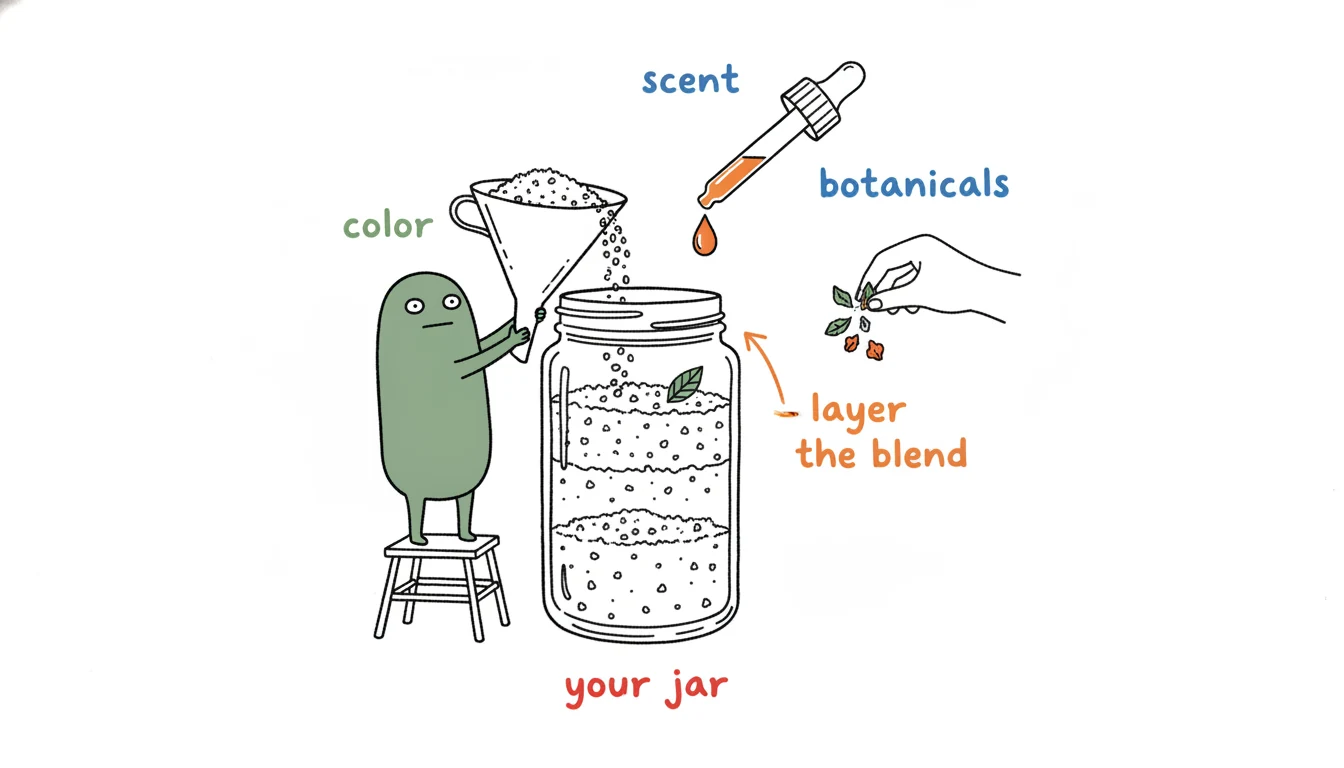
- Salt base: Epsom for the soak benefit, Dead Sea and Himalayan for premium positioning, sea salt for economy — single base or a blend.
- Scent: Stock fragrances (lavender, eucalyptus, rose, green tea, citrus) or a custom signature scent; unscented for sensitive-skin lines.
- Color & texture: Fine or coarse grain, single color or layered, with or without botanicals such as dried flowers.
- Add-ins: Skin-conditioning oils, magnesium, or botanical extracts for a premium tier.
- Packaging: Jars, pouches, sachets, bulk refill, or retail gift boxes — branded to your label.
Quality Control & Compliance Basics
- Ingredient documentation: A full ingredient list and the paperwork your destination market needs for cosmetic labelling.
- Batch consistency: Confirm how the supplier keeps grain size, scent load, color, and any add-ins uniform across a run.
- Moisture & shelf life: Ask how salts are dried and packed to prevent caking, and what shelf life they will state.
- Packaging integrity: Salts are heavy and abrasive — confirm the packaging survives your real shipping lane.
- Sample before scale: Always approve a production-representative sample before a full run.
MOQ, Lead Time & Cost
Custom-scent soak salt programs typically start in the low thousands of units per scent, with smaller pilot tiers often available to validate the market first. Production lead time runs roughly two to four weeks after deposit and artwork approval, scaling with volume and custom packaging. Because the salt itself is inexpensive, per-unit cost at volume is low relative to perceived value — the margin math that makes this category attractive.
Sourcing Timeline: From Inquiry to Delivery
- Inquiry & quote (days 1–3): Share salt base, scent, color, format, and volume. A responsive supplier returns clear MOQ tiers quickly.
- Sampling (days 3–10): Judge scent at use dilution, color, skin feel, and how cleanly the salt dissolves.
- Proforma invoice & deposit: Lock formula, packaging, and timeline.
- Bulk production (2–4 weeks): Lead time scales with volume and custom packaging.
- QC & shipping: Confirm batch checks and packaging, then choose freight terms (FOB, CIF, or DDP).
Stock, White Label, Private Label, or OEM?
- Stock / wholesale: Buy an existing soak as-is — fastest, no differentiation.
- White label: A ready formula under your brand and label.
- Private label: Your branding plus selective salt, scent, color, or packaging choices.
- OEM / custom formulation: A soak built to your spec — salt blend, add-ins, scent, color — for full differentiation.
The Soak Salt Market in 2026
Bath and foot soak salts sit inside the broader self-care and “home spa” wave that has held strong since 2020. Consumers who once visited a spa weekly now build rituals at home, and soak salts are one of the lowest-friction ways into that ritual — affordable, repeatable, and easy to gift. For a brand, that translates into a category with steady repeat demand rather than a fad spike. The opportunity for a private-label buyer is that the shelf is still dominated by either expensive boutique brands or generic, unbranded bulk salts; there is wide room in the middle for a well-branded, sensibly priced line. A capable bath salt manufacturer lets you occupy that middle with a custom scent and look without the cost of building a factory relationship from scratch.
Channel Strategy: Retail, Spa, Gifting & Subscription
The same soak formula monetizes differently across four channels, and your packaging and pricing should follow the channel rather than the product:
- Retail / e-commerce: A branded jar or stand-up pouch with a strong scent story; the shelf and unboxing experience carry the price.
- Spa & salon back-bar: Bulk or refill formats where cost-per-soak matters and branding is secondary; this channel drives the steadiest reorders.
- Gifting: Mixed-scent or layered-color salts in a gift box, often bundled with bath bombs or a spa gift set — the highest perceived value per unit.
- Subscription / sampler: Single-use sachets in assorted scents, ideal for trial and recurring revenue.
Most brands start with one channel, prove the formula, then extend the same soak into a second format. Tell your supplier which channels you are targeting up front so the MOQ and packaging are quoted correctly.
Packaging Deep-Dive
Packaging is where a soak salt line wins or loses margin, because the salt itself is cheap and heavy. The main options:
- Glass or PET jars: The premium retail look, but heavy and breakable — freight and breakage risk rise with glass.
- Stand-up pouches: Lightweight, lower freight cost, strong shelf presence, and increasingly the default for value and mid-tier retail.
- Sachets: Cheapest per unit, perfect for sampling, subscription, and gifting multipacks.
- Bulk refill (buckets / sacks): Lowest cost per soak for spa accounts; pair with a branded refillable jar.
Whichever you choose, the packaging must be a genuine moisture barrier — salt is hygroscopic and will cake in a poorly sealed pack. Confirm with your manufacturer that the seal and liner are rated for salt and survive your shipping lane.
Landed Cost: Factory Price to Shelf
Salt is dense, so freight is a bigger share of landed cost than for most body-care products. Build your retail price from landed cost, not the factory quote: start with the per-unit factory price, add ocean or air freight and duties to reach landed cost, then layer in fulfillment and your target margin. Because the finished, scented, branded jar carries a high perceived value against a low raw cost, soaks typically support healthy markups — but only if you have modeled freight honestly. Ask your supplier for carton dimensions and weight early so you can estimate freight before committing.
Red Flags When Vetting a Bath Salt Manufacturer
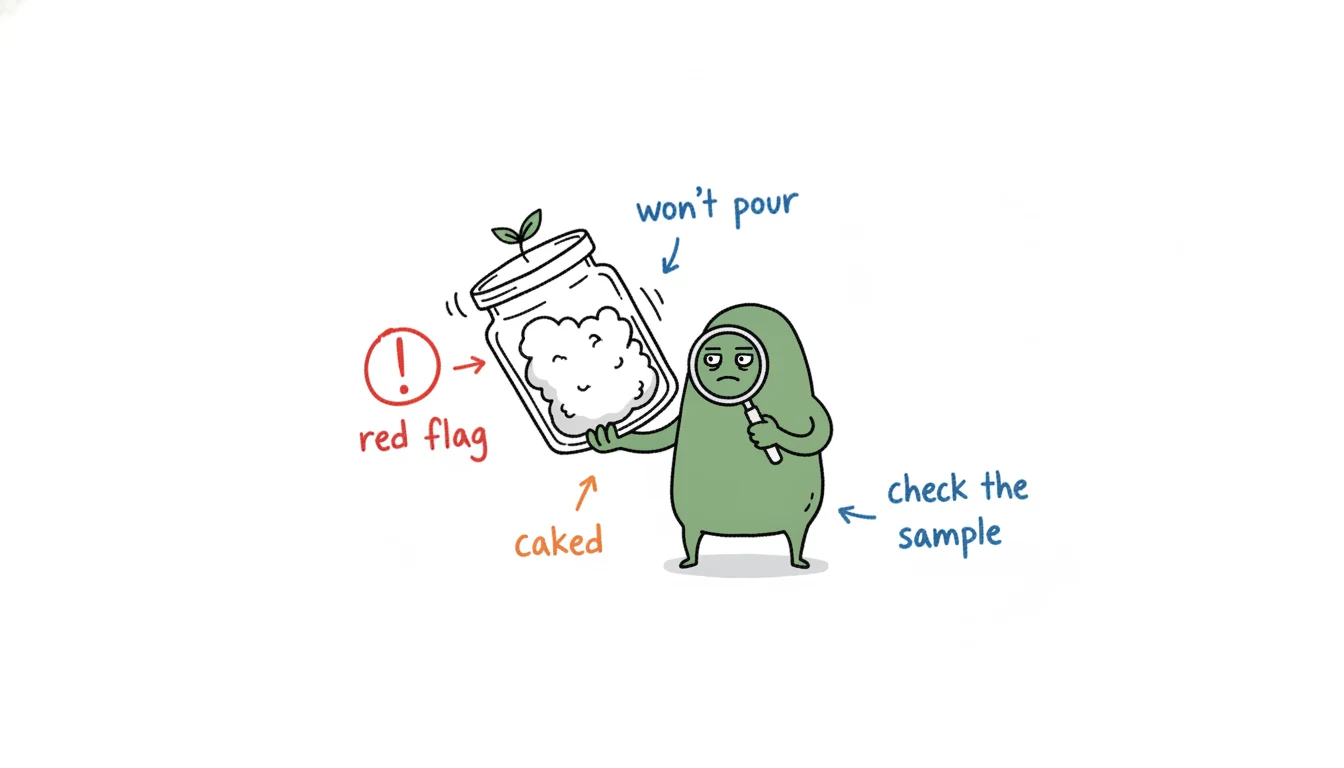
- No physical sample, or a slow one: A serious supplier samples within days; delay here predicts delay in production.
- Vague salt sourcing: If they cannot tell you which salt base and grade they use, you cannot guarantee consistency.
- One MOQ, take it or leave it: The absence of sample/pilot/production tiers means you carry all the launch risk.
- No documentation: Inability to provide a full ingredient list and market paperwork is a hard stop for retail.
- Caked or damp samples: A sample that arrives clumped reveals a moisture-control or packaging problem before you have ordered.
Nail Legend produces bath and foot soak salts alongside a full spa and body-care range, with custom salt blends, scents, and private-label packaging. Browse the wholesale soak salt range, see a representative private label Dead Sea salt soak, or pair salts with a spa gift set program, then request a quote.
Frequently Asked Questions
What does a bath salt manufacturer supply?
A bath salt manufacturer produces finished bath and foot soak salts on a stock, white-label, private-label, or OEM basis — covering the salt blend, scent, color, any add-ins, packaging, and your branded label.
What is the typical MOQ for private-label bath salt?
Custom-scent programs commonly start in the low thousands of units per scent, and many suppliers offer smaller pilot tiers so you can validate the market before committing to a full production run.
Which salts are used in bath and foot soaks?
The most common are Epsom salt for the soak benefit, Dead Sea and Himalayan salts for premium positioning, and sea salt for economy. Many soaks use a blend to balance benefit, look, and cost.
How long does production take?
Physical samples typically arrive within days to about a week, and bulk production runs roughly two to four weeks after deposit and artwork approval, scaling with volume and custom packaging.
How do you stop bath salts from clumping?
Caking comes from moisture, so a good manufacturer controls humidity during blending and packing and uses moisture-barrier packaging. Ask your supplier how they keep the salt dry through shipping and shelf life.
Are unscented and natural bath salts available?
Yes. Most manufacturers offer unscented soaks for sensitive-skin lines plus natural options with botanicals or skin-conditioning oils. Keep ingredient claims accurate to the actual formula rather than relying on certification badges.


Leave A Comment