
The salt base is the product. When you brief a supplier on a private-label soak, the choice of bath salt ingredients determines the marketing story, the skin feel, the look in the jar, and the cost. This guide compares the four workhorse salts, explains how scent, color, and add-ins layer on top, and flags the quality pitfalls that sink a launch.
The Four Workhorse Salts
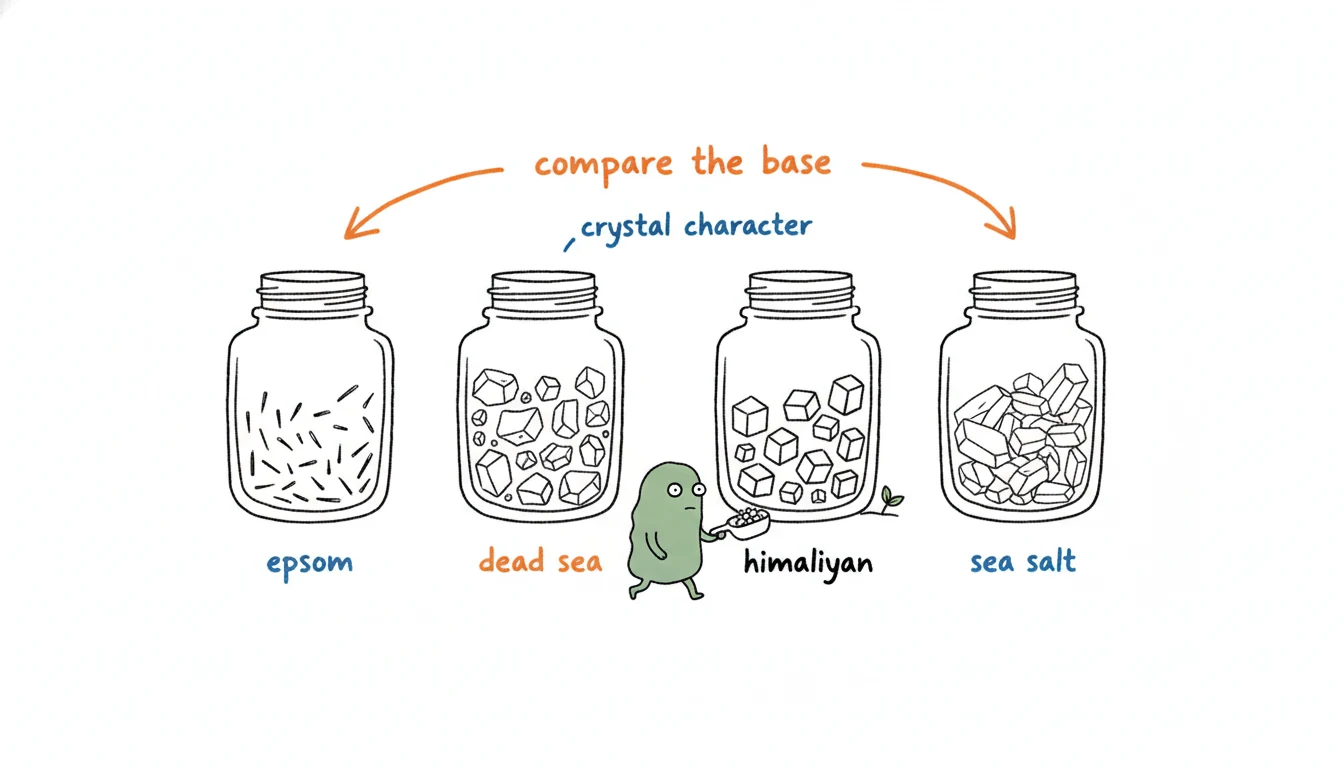
- Epsom salt (magnesium sulfate): Not a true salt but the category workhorse — inexpensive, dissolves cleanly, and carries the “muscle soak / relaxation” story that buyers know. The default base for most foot and bath soaks.
- Dead Sea salt: Mineral-rich, coarse, and premium-positioned; the strongest “therapeutic spa” narrative and a higher price point. A favorite hero ingredient for retail lines.
- Himalayan pink salt: The visual star — natural pink color sells the jar on the shelf without dye, with a clean “natural mineral” story.
- Sea salt: Economical, widely available, and a neutral base for scented and colored blends where the salt itself is not the headline.
Choosing a Base by Positioning
The right bath salt ingredients follow your brand position, not the other way around:
- Wellness / relaxation: Epsom-forward, leaning on the magnesium and muscle-soak story.
- Premium spa: Dead Sea or a Dead Sea blend for the mineral narrative and coarse, luxe texture.
- Natural / clean: Himalayan pink for natural color and a minimal-ingredient label.
- Value / private label volume: A sea-salt or Epsom base carrying scent and color, where price-per-jar wins.
Many soaks blend two bases — for example Epsom for the soak benefit plus Himalayan for color — to balance story, look, and cost.
Scent, Color & Add-Ins
- Scent: Lavender and eucalyptus anchor the relaxation segment; rose, citrus, and green tea broaden the shelf. Fragrance load must stay consistent batch to batch.
- Color: Cosmetic-grade colorants tuned to the scent and brand; Himalayan needs none. Even dispersion is a quality marker.
- Botanicals: Dried lavender buds, rose petals, or chamomile add a natural, premium look — confirm they are cosmetic-grade and stable.
- Skin-conditioning add-ins: Magnesium flakes, carrier oils, or botanical extracts justify a premium tier but raise cost and can affect caking.
Grain Size & Texture
Grain size is a deliberate choice, not an afterthought. Fine grains dissolve fast and feel gentle, suiting foot soaks and quick baths; coarse grains read as premium and “spa,” dissolve slower, and show off color and botanicals in the jar. Specify the grain you want, because it changes both the shelf look and the in-water experience.
Quality Pitfalls to Watch
- Caking: Moisture exposure during blending, packing, or shipping turns loose salt into a brick — a packaging and humidity-control failure.
- Uneven color or scent: Poor mixing leaves color streaks and weak or inconsistent fragrance between jars.
- Botanicals that degrade: Non-cosmetic-grade flowers can brown or mold — confirm grade and stability.
- Gritty residue: A quality soak dissolves cleanly; heavy residue in the basin signals a poor base or fillers.
Labelling & Claims
Cosmetic soak products carry ingredient-labelling rules that vary by market, so confirm your manufacturer can supply an accurate full ingredient list and any documentation your destination market requires. Keep marketing claims consistent with the actual formula — if a soak is labelled natural or unscented, the bath salt ingredients must support it. Accurate labelling protects the brand and smooths retailer onboarding.
Blending Logic: Why Most Soaks Mix Bases
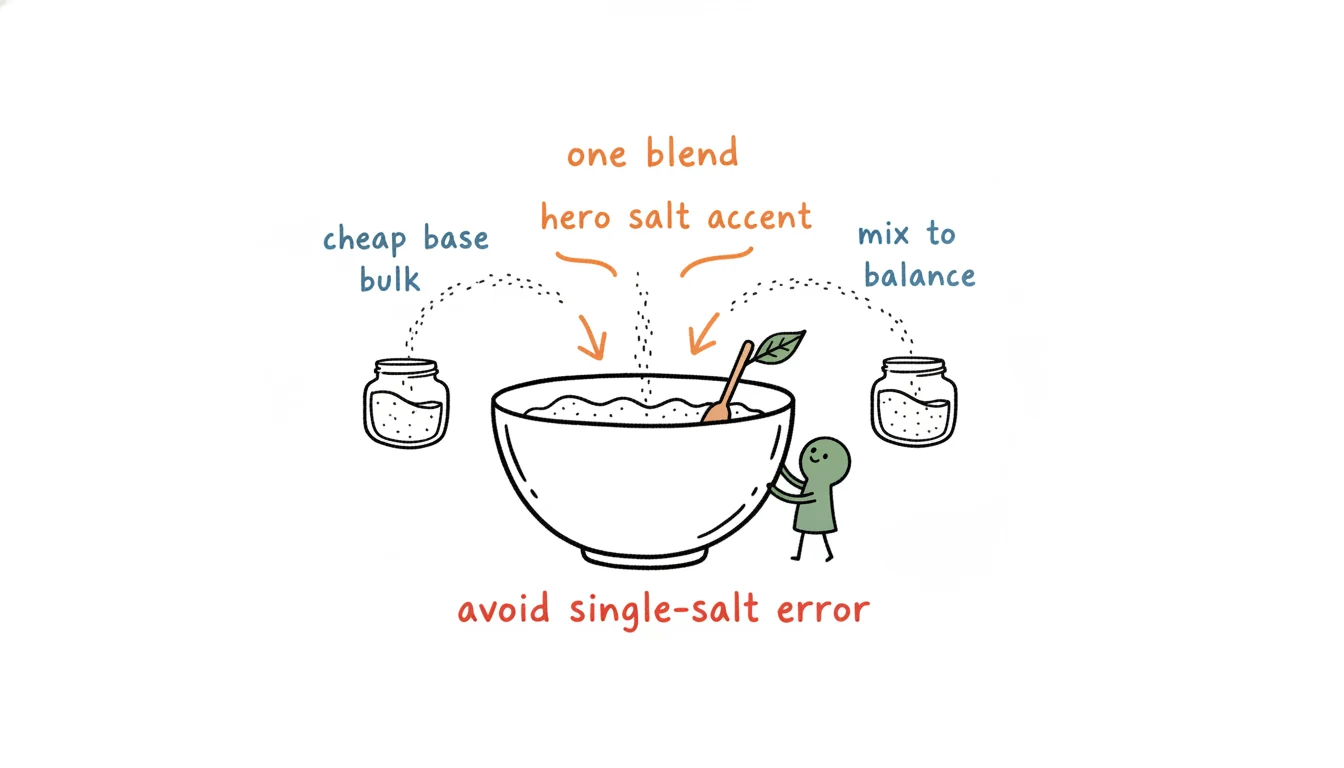
Single-base soaks exist, but most commercial formulas blend two or three salts because no single salt does everything. A typical blend pairs an inexpensive functional base with a premium or visual accent: Epsom carries the soak benefit and keeps cost down, while a minority of Dead Sea adds the mineral story or Himalayan adds natural color. The ratio is a commercial decision as much as a formulation one — more premium salt raises both the perceived value and the cost. When you brief a supplier, describe the position you want (“affordable wellness,” “premium mineral spa,” “natural minimal”) and let them propose a ratio, then adjust against the sample and the quoted price.
Salt Sourcing & Quality Grades
Not all Epsom or Dead Sea salt is equal. Cosmetic-grade salt is screened for particle size, purity, and contaminants in a way that agricultural or industrial grade is not, and the grade affects both safety and how the salt looks and dissolves. Dead Sea salt in particular varies widely in mineral content and color depending on source and processing. Ask your bath salt supplier what grade they use and whether it is consistent batch to batch — a supplier who buys spot-market salt of varying grade will give you a soak that looks and performs differently from one production run to the next, which is fatal for a retail brand building repeat trust.
Color & Fragrance Chemistry
Color and scent are where cheap soaks betray themselves. Cosmetic colorants must be evenly dispersed during blending or the jar shows streaks and settling; the dye must also be stable so it does not fade on a sunny shelf or bleed onto skin. Fragrance load has to be high enough to read at use dilution — a soak that smells strong in the jar but vanishes in a full tub of water is under-dosed — and consistent so every jar smells the same. Salt is also a relatively reactive carrier, so the fragrance and colorant must be chosen to stay stable on a salt base specifically. These are exactly the details a capable manufacturer controls and a commodity supplier does not.
Regional Buyer Preferences
The same bath salt ingredients sell differently by market. North American buyers lean toward Epsom-forward “muscle soak / relaxation” positioning and recognizable scents like lavender and eucalyptus. European buyers skew toward natural, minimal-ingredient, and clean-label stories, favoring Himalayan and unscented or lightly botanical options. Australian and Asian premium channels respond to Dead Sea mineral narratives and visually striking layered or coarse salts. If you sell across regions, this can mean the same base with different scent, color, and label emphasis rather than entirely different formulas — a practical way to localize without multiplying your MOQ.
Cost Comparison of Salt Bases
| Salt base | Relative cost | Main appeal | Best for |
|---|---|---|---|
| Sea salt | Lowest | Neutral carrier for scent & color | Value lines, scented blends |
| Epsom (magnesium sulfate) | Low | Soak benefit, relaxation story | Everyday bath & foot soaks |
| Himalayan pink | Medium | Natural color, clean label | Natural / minimal lines |
| Dead Sea | Highest | Mineral story, premium texture | Premium retail & spa |
Use this to anchor a blend to a target price: a value jar might be sea-salt and Epsom carrying scent and color, while a premium jar leads with Dead Sea or Himalayan as the hero.
Storage, Shelf Life & Caking Prevention
Salt is chemically stable for years, so the real shelf-life question for a soak is not the salt but the scent, color, botanicals, and packaging around it. Fragrance can fade and dried botanicals can brown over time, while the salt itself simply needs to stay dry. Caking — the most common consumer complaint — is purely a moisture problem: salt pulls water from humid air and fuses into a block. Prevention is a packaging and handling issue, not a formula one: a true moisture-barrier pack, a good seal, and sensible storage away from steamy bathrooms keep the soak loose. Ask your supplier what shelf life they state for the finished product (driven by the fragrance and any botanicals, not the salt) and how the packaging is rated for moisture. For a retail brand, a soak that arrives or ages into a clump is a returns-and-reviews problem, so this detail is worth confirming before you scale.
How to Brief Your Supplier
For an accurate quote and first sample, specify: salt base or blend, target scent(s), color, grain size, any botanicals or add-ins, and packaging. The more precise the brief, the closer the first sample. For supplier selection and quality signals, see the bath salt manufacturer guide.
Browse the wholesale soak salt range or a representative Dead Sea salt soak to see salt bases, scents, and colors in practice, then request a quote.
Frequently Asked Questions
What are the main bath salt ingredients?
The core bath salt ingredients are Epsom salt for the soak benefit, Dead Sea and Himalayan salts for premium positioning, and sea salt as an economical base, plus scent, cosmetic-grade color, and optional botanicals or skin-conditioning add-ins.
What is the difference between Epsom, Dead Sea and Himalayan salt?
Epsom is inexpensive and carries the muscle-soak story, Dead Sea is mineral-rich and premium with a therapeutic narrative, and Himalayan brings natural pink color with no dye. Many soaks blend bases to balance benefit, look, and cost.
Which salt base is best for a private-label line?
It depends on positioning: Epsom for wellness, Dead Sea for premium spa, Himalayan for natural and visual appeal, and sea salt for value lines where scent and color do the work.
Why do bath salts clump and how is it prevented?
Caking is caused by moisture, so manufacturers control humidity during blending and packing and use moisture-barrier packaging. A quality soak stays loose through shipping and shelf life.
Can I add dried flowers or oils to my bath salt?
Yes. Cosmetic-grade botanicals and skin-conditioning oils are common premium add-ins, but confirm they are stable and keep your ingredient claims accurate to the actual formula.


Leave A Comment