Estheticians and small spa owners often want a retail line they can sell at events, markets and pop-ups: a body scrub, a body oil, perhaps a small gift set. One recent forum discussion asked exactly that, how to stock a vending table with products that feel professional. Private label makes this realistic, because the formula, filling and packaging can come from a manufacturer while the brand stays yours.
What catches many first-time brands is not the formula but the label. As soon as you sell a product under your own name, you take on responsibilities for what the label says and for the safety information behind it. This checklist covers the label items, claims and responsibilities to settle with your OEM before you order a body scrub or body oil.
Who is responsible for the label when you use private label
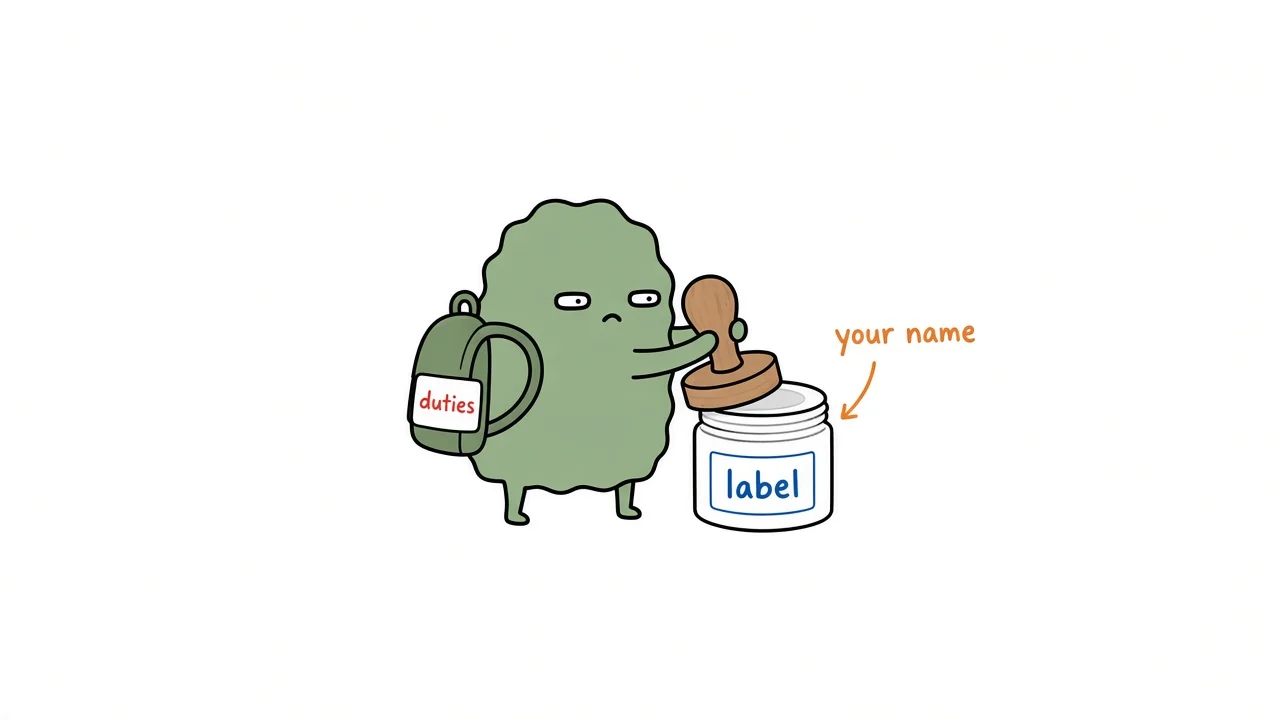
In private label, the manufacturer makes the product and you sell it under your brand. Regulators look at whose name is on the label:
- United States. Under the Modernization of Cosmetics Regulation Act of 2022 (MoCRA), the “responsible person” is the manufacturer, packer or distributor whose name appears on the label. That person carries duties such as serious adverse event reporting and safety substantiation (FDA MoCRA overview).
- European Union. Regulation (EC) No 1223/2009 requires a Responsible Person established in the EU for each cosmetic product placed on the market, who holds the Product Information File and safety report (Regulation (EC) No 1223/2009).
- Great Britain. UK government guidance says products made available to consumers need a Responsible Person with a UK established address, which can be a distributor that labels the product as its own (UK guidance on cosmetic products).
Your OEM can supply formula information, testing and draft label content, but it cannot take over a legal role that sits with the brand or its appointed representative. Agree in writing who prepares, checks and signs off the label for each market. If you are still choosing a business model, our comparison of private label vs OEM vs ODM explains how responsibilities shift.
US label checklist for body scrubs and body oils
The FDA’s Cosmetics Labeling Guide and 21 CFR Part 701 set out the core items. For a body scrub or body oil sold to consumers, plan for:
- Statement of identity on the principal display panel, telling buyers what the product is, for example “Sugar Body Scrub” or “Body Oil”.
- Net quantity of contents on the principal display panel, by weight for scrubs and by fluid measure for oils, in the required units.
- Ingredient declaration in descending order of predominance using the established names, with the regulatory rules for ingredients at or below 1%, fragrance and colour additives.
- Name and place of business of the manufacturer, packer or distributor, with qualifying wording such as “Distributed by” when the brand is not the manufacturer.
- Adverse event contact information: MoCRA requires a domestic address, domestic phone number or electronic contact information, which may include a website, through which the responsible person can receive adverse event reports.
- Warnings and directions where needed for safe use. Oily scrubs and oils can make shower and bath floors slippery, so many brands add a caution even where it is not a named legal requirement.
Products intended only for professional use, such as a spa backbar scrub, need a clear statement under MoCRA that they are to be used only by licensed professionals. A retail scrub sold at an event is a consumer product and needs full consumer labelling.
EU and UK label items to plan for
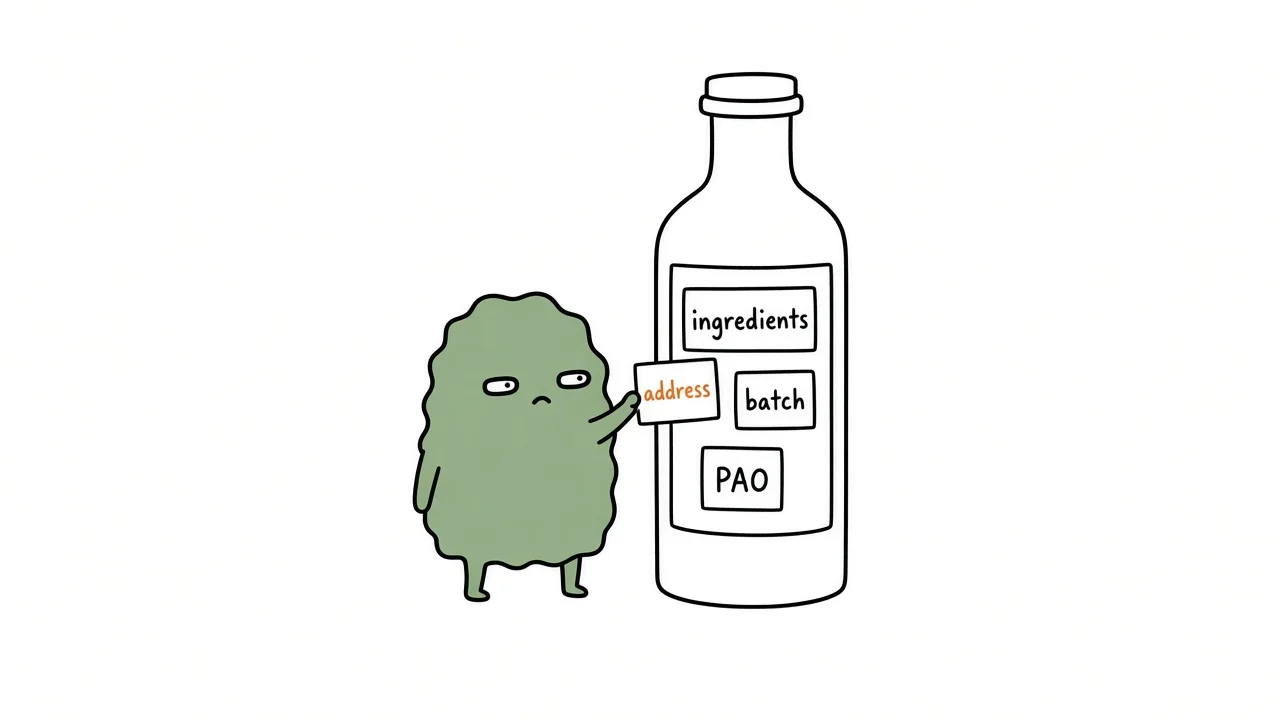
Article 19 of Regulation (EC) No 1223/2009 lists the label particulars for cosmetics in the EU, and Great Britain applies equivalent rules. For a scrub or oil, plan space for:
- the name or registered name and address of the Responsible Person, and the country of origin for imported products;
- the nominal content by weight or volume;
- the date of minimum durability or, where applicable, the period-after-opening symbol;
- particular precautions for use;
- the batch number or reference for identifying the product;
- the function of the product, unless clear from its presentation;
- the list of ingredients using common ingredient names, which you can check against the EU’s CosIng database.
Fragrance allergens deserve special attention for body oils, where essential oils are common. EU rules require certain allergens to be named in the ingredient list above set thresholds, and MoCRA directs FDA to set fragrance allergen labelling rules in the US. Ask your OEM for an allergen breakdown for every fragrance option before you finalise artwork. Our cuticle oil label compliance guide shows how this works for another oil-based product.
Keep claims within what the product and evidence support
Event sales encourage bold wording. Keep claims to cosmetic functions you can substantiate: cleansing, exfoliating, moisturising, softening and fragrancing. Avoid treatment claims such as healing, curing or treating skin conditions; in the US, intended use expressed in claims can make a product a drug as well as a cosmetic. Avoid unverified “natural”, “organic”, “clean” or “non-toxic” wording unless you hold evidence and know how each market treats it, and do not print certification logos the product does not hold.
Ask your OEM which claims its testing can support. If you want longevity or performance claims, agree the test and budget first; our article on private label body mist longevity claims explains how that works for fragrance products.
Split label work between your brand and your OEM
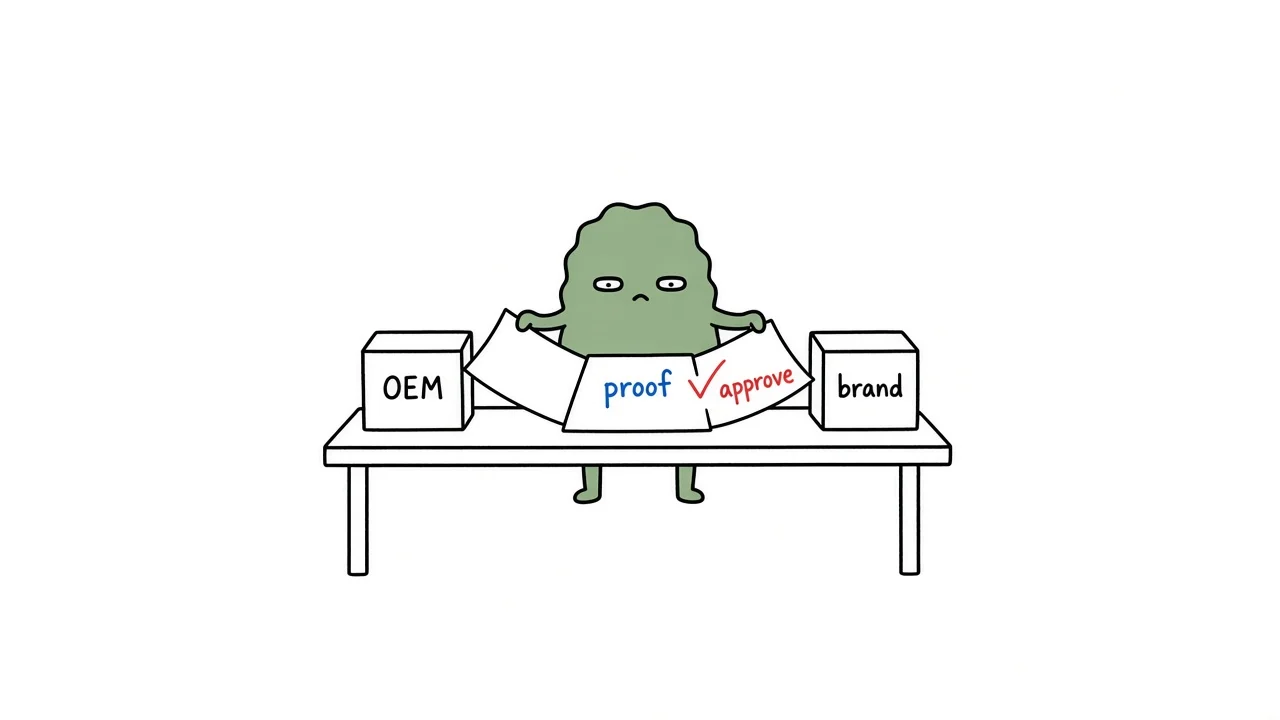
A simple responsibility table prevents the most common delays:
- OEM provides: final formula with INCI ingredient list, fragrance allergen information, specification, recommended precautions, batch coding method and any agreed test reports.
- Brand provides: brand name, artwork, claims, market selection, Responsible Person details and adverse event contact information.
- Both approve: final artwork proof, checked line by line against the formula version, before printing.
Lock the formula version on the artwork approval. If you later change fragrance or add a botanical, the ingredient list and allergen information must change too, and old labels must not be used on the new formula. For sourcing a scrub base and comparing manufacturers, see our private label body scrub guide and our sugar scrub manufacturer page.
A pre-print checklist for your first order
- Confirm target markets and who acts as responsible person or Responsible Person in each.
- Receive the final INCI list and fragrance allergen information from the OEM.
- Draft the principal display panel with identity and net quantity.
- Add ingredients, name and place of business, contact details, precautions and batch code area.
- Review claims against available evidence and remove anything unsupported.
- Check legibility at real size on a printed proof.
- Approve artwork tied to a formula version and keep a signed copy.
Private label body scrubs and oils from NailLegend
NailLegend supplies spa and personal care products for B2B wholesale, white label, private label and OEM programmes, with more than 10 years of manufacturing experience and customers in over 40 countries. Our range includes sugar scrubs, massage and body oils, body butters and soak salts. We provide formula and ingredient information to support your label review, and we confirm testing scope, documentation and MOQ during quotation. MOQ depends on product, formula, packaging, fragrance and quantity per SKU, and regular production usually takes 25–35 days after samples, design, order and payment terms are confirmed. Explore our private label beauty products overview.
Starting a retail line? Request a Quote for body scrub or body oil, Contact Us to review your label plan, or ask to Download Catalog details for our scrub and oil range.


Leave A Comment