
Capacity drives 80% of paraffin warmer purchase decisions for salon buyers, yet most distributor catalogs lead with control mode (mechanical vs digital) instead. The right way to size a paraffin warmer is by treatment-volume math: how many hand-and-foot services per shift, how often does the wax need refilling, and how much dwell time can the salon afford between shifts. This guide walks through the capacity-to-channel mapping we use with B2B clients, with specific tier recommendations for nail spas, beauty franchises, and dermatology adjuncts.
For the broader sourcing framework, see our Paraffin Wax Warmer Wholesale Buyer Guide. For supplier vetting, see How to Vet a Paraffin Wax Warmer Manufacturer.
Why Capacity Drives 80% of Salon Buyer Decisions
Three operational realities make capacity the dominant variable:
- Pre-heat dwell time scales with capacity. A 500ml warmer reaches treatment temperature in 25–40 minutes; a 4000ml unit takes 60–90 minutes. Salons that open at 9 AM and book first appointments at 10 AM cannot use a 4000ml unit unless it is pre-heated overnight or on a timer — operationally meaningful detail that capacity tables rarely surface.
- Refill cadence determines disruption. A high-volume nail spa running 12+ hand treatments per shift will exhaust a 1000ml tank mid-day if treatment depth is generous. Mid-day refilling means cooling down, draining, refilling, re-heating — a 60–90 minute service interruption. Larger capacity buys you single-shift continuity.
- Power draw scales non-linearly. A 500ml unit draws 150W; a 4000ml unit draws 500W+. Salons running 3+ warmers simultaneously hit electrical-circuit constraints that capacity-naive purchasing never anticipates.
The Five Capacity Tiers Mapped to Buyer Profile
Five tiers cover the practical market from personal use through commercial spa centers:
- Tier 1 — Compact personal (200cc–500ml). Single hand or single foot. Pre-heat 25–40 min. Refill capacity ≈ 6–10 treatments before drain-down. Buyer: at-home retail, hotel amenity, entry-tier salon offering paraffin only as occasional upsell. Power 150–200W. Mechanical control standard.
- Tier 2 — Mid-tier salon single-pot (2400ml–3200ml). The workhorse. Pre-heat 45–60 min. Refill capacity ≈ 25–40 treatments per shift. Power 250–400W. Digital control standard at this tier; touch-screen optional. The dominant buyer tier for nail-salon chains.
- Tier 3 — Dual-pot 1000ml. Two pots, two thermostats, parallel hand-and-foot service capability. Pre-heat 35–50 min per pot. Refill capacity ≈ 12–18 treatments per pot. Power 400–500W combined. Buyer: high-throughput salons running parallel treatments to cut wait times.
- Tier 4 — Large-capacity digital touch (4000ml–5000ml). Spa wellness centers, full-body paraffin therapy, dermatology adjunct clinics. Pre-heat 60–90 min. Refill capacity ≈ 50+ treatments. Touch panel control with set-point lock. Power 500–800W. Often configured for back-bar use with timer scheduling for overnight pre-heat.
- Tier 5 — Block-format compact (450g paraffin block). Refill-block design optimized for retail packaging and DTC/amenity programs. Different value chain than traditional warmers — the unit and the consumable ship together as a kit. Buyer: retail brands, hotel chains running self-service in-room amenities.
Capacity-to-Service-Volume Math
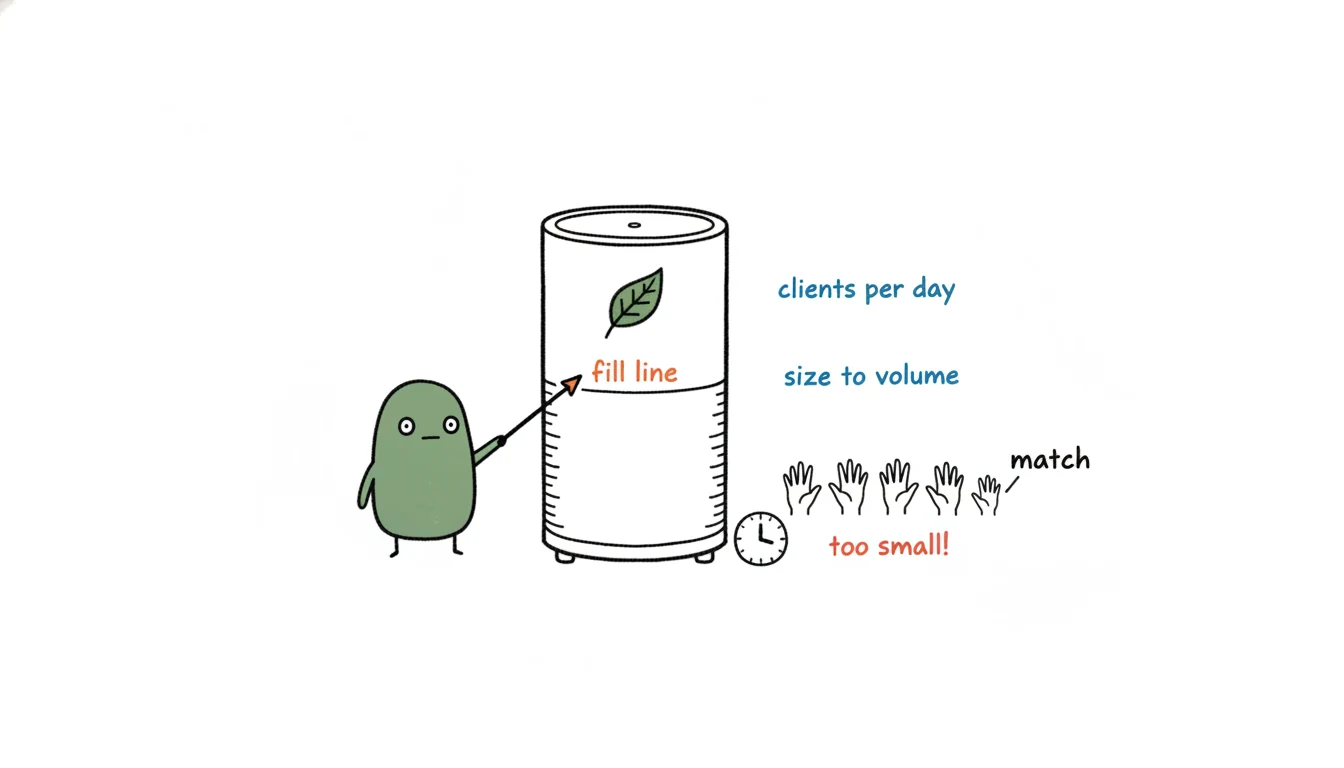
To convert salon volume into the right capacity tier, run this calculation. Assume each hand or foot treatment uses approximately 80–120ml of melted paraffin (varies by dwell depth and number of dips). Divide your daily treatment count by your refill tolerance:
- ≤ 8 treatments/day, occasional service. Tier 1 (200cc–500ml) is sufficient. Refill once daily as part of close-down routine.
- 10–25 treatments/day, single-room salon. Tier 2 (2400ml–3200ml). Refill once daily, no mid-shift interruption.
- 15–30 parallel treatments/day, multi-room salon. Tier 3 dual-pot — same per-pot capacity but doubles your simultaneous service capacity.
- 30+ treatments/day, spa wellness center. Tier 4 large-capacity. Pre-heat overnight, run all shift, drain on service close-out.
- Retail-only or amenity programs. Tier 5 block-format with branded packaging.
Digital Touch Models for Spa Wellness Centers
Tier 4 buyers (4000ml–5000ml capacity) almost always specify digital touch control because the additional features pay for themselves at this volume:
- Set-point lock prevents staff from adjusting temperature mid-shift
- Timer scheduling enables overnight pre-heat without staff supervision
- Digital readout makes treatment-temperature compliance verifiable for clinical-grade applications (dermatology, physical therapy)
- Touch-panel cleanliness fits hospital-adjacent regulatory environments
Our 4000ml–5000ml digital touch SKUs are listed on the paraffin warmer category page. For sourcing scope and timing, request a quote with your target capacity tier and projected annual volume.
Sourcing Paraffin Wax Warmers: Voltage, Certifications, MOQ & Lead Time
Once capacity tier is settled, the sourcing conversation moves to electrical compliance and order economics. Here is what B2B buyers need to lock down:
Voltage and Safety Certifications by Region
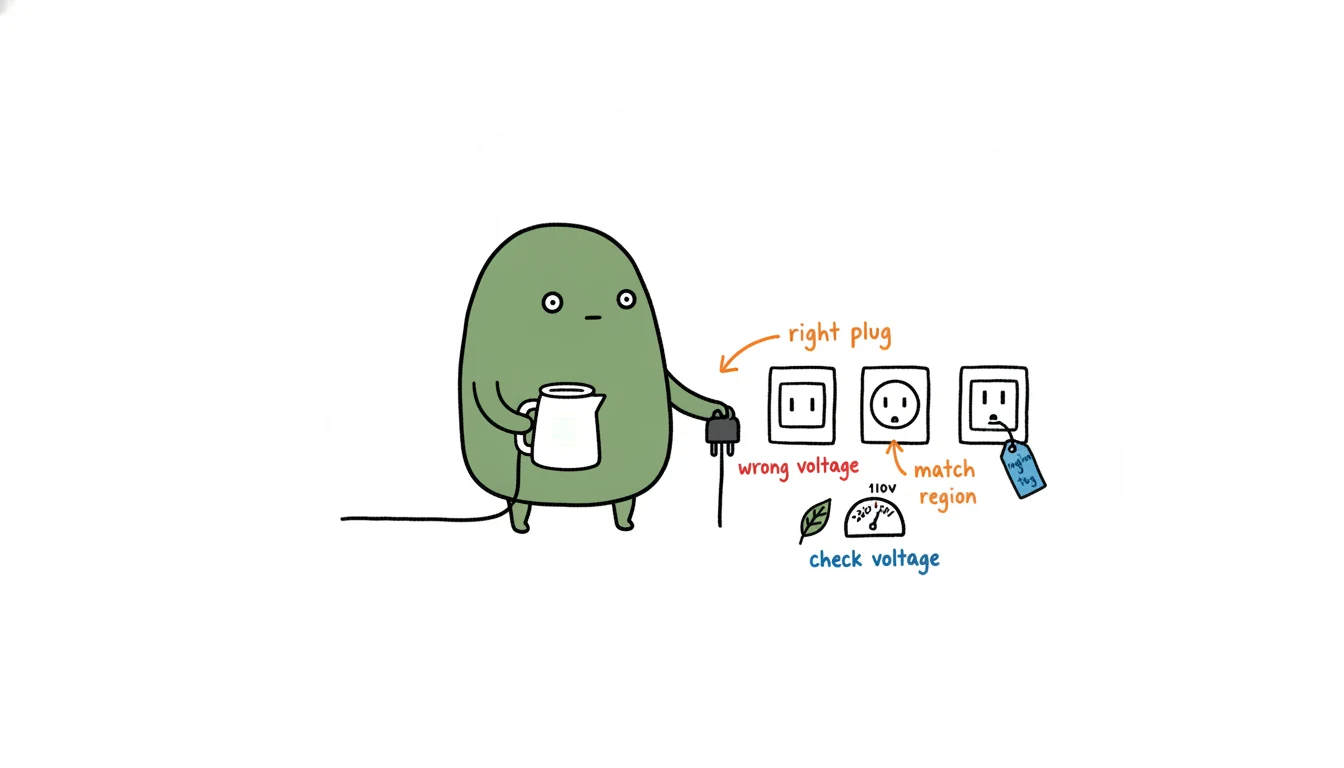
This is where most first-time buyers lose money. Paraffin warmers are small electricals — once they cross a border they are regulated as electrical equipment, not as beauty products. Customs, major retailers, and marketplaces (Amazon, Walmart) enforce region-specific certification requirements. Non-compliant units can be seized, returned at importer cost, or delisted. Here is the vocabulary you need on the sourcing call:
- UL / ETL (North America). Required for commercial use in US/Canada and required by major retailers and marketplaces regardless of whether local law mandates it. UL listing is per-model — ask for the UL file number and verify it on the UL online database.
- FCC (North America). Electromagnetic compatibility. Less commonly requested for paraffin warmers than for nail drills, but Amazon listings increasingly require FCC declaration for any plug-in device.
- CE + RoHS (EU / UK). CE is a self-declaration plus underlying compliance with EU LVD and EMC directives; RoHS restricts hazardous substances in electronics. Both required for EU/UK import. Ask for the EU Declaration of Conformity, not just the CE sticker.
- PSE (Japan). Required for Japanese import and JP Amazon listings.
- SAA (Australia / NZ). Required for AU/NZ import.
- 110V vs 220V. Voltage is not a “certification” but it is a hard import requirement. Ship the wrong voltage and your end-customer cannot use the unit. Confirm voltage spec at PO stage and require manufacturer to print voltage on both the housing and the box.
Our Phase 4 reference SKUs hold UL / FCC / CE / RoHS marks for North American and EU markets. New SKU certification can be added at $1,500–$5,000 per mark depending on category complexity. We do not blanket-claim certification — each model carries its own certificate that we share on request.
MOQ and Lead Time: Realistic Numbers from a Factory-Direct Supplier
MOQ for paraffin warmers varies by capacity tier and customization scope. Typical baselines from our production:
- Stock SKU, mechanical control, no customization. Pilot tier MOQ from low hundreds depending on capacity. Modified-stock formulas (logo print on housing, custom box artwork) at the same MOQ.
- Stock SKU with custom housing color or print finish. MOQ steps up; tooling cost is amortized over the run.
- Custom housing mold (fully bespoke shell). Tooling cost $4,000–$12,000 plus higher MOQ to amortize. Lead time +4–8 weeks for tooling.
- Bulk-tier production runs. Available across all capacities. Volume discounts begin at the next tier above pilot.
For exact MOQ against your spec, contact us — we confirm at quote stage with full BOM transparency. Lead time runs 30–45 days for stock SKUs from PO confirmation to packed inventory; new certification path adds 4–12 weeks. For deeper analysis of MOQ and pricing logic in adjacent equipment categories, we have a comparable framework documented for the depilatory category.
How to Vet a Paraffin Wax Warmer Manufacturer: 7 Signals
Capacity and specs mean little if the factory behind them cannot deliver consistently. These seven signals separate real equipment manufacturers from traders:

Run every prospective manufacturer through these seven signals. A vendor that scores well on at least 6 of 7 is worth advancing to sample stage; below 5, walk away.
- Signal 1: Certification documentation in writing. Ask for the actual certificate file (UL listing PDF, CE Declaration of Conformity, RoHS test report) — not photos of stickers, not screenshots of summary pages. Verify UL listings on the UL online database using the file number. CE certificates should reference the underlying LVD and EMC test reports.
- Signal 2: QC protocol documented. Per-unit electrical safety test (hi-pot test, ground continuity), temperature curve validation against spec, 24-hour burn-in. Ask the manufacturer to describe the QC protocol on a sample order before you commit. AQL 1.0 on functional defects, 0.65 on safety-critical defects is a reasonable standard.
- Signal 3: Lead time honesty with PO milestones. A manufacturer who quotes “30 days from PO” without breaking down the milestones (deposit confirmation, raw material procurement, tooling start, assembly, QC, pre-shipment inspection, shipment) is hiding production risk. Ask for the milestone breakdown. Compare against your own PO calendar.
- Signal 4: Warranty claim process and parts shipment SLA. Written warranty terms, defective-unit claim process documented, replacement parts shipment timeline (we commit to 5 business days from approved claim). Ask “what happens on Day 400 when a thermostat fails?” — if the answer is vague, the parts pipeline does not exist.
- Signal 5: Spare parts availability for 2–3 years. Heating elements, thermostats, digital controller boards, power supplies, fuses — these are the 5 components that fail in service. A manufacturer that holds 60-day component stock and commits to 2-year parts availability is operating at a higher tier than one that produces and forgets.
- Signal 6: Voltage and plug spec validation at sample stage. Sample units should arrive with the destination voltage and plug type specified at order — not “110V will work everywhere.” A manufacturer that ships a sample with the wrong plug is signaling future production-run errors.
- Signal 7: Communication responsiveness. Time-to-first-quote (we commit to 24 hours), time-to-sample-shipment (we commit to 14–21 days), time-to-complaint-response (we commit to 24 hours written response, 5 business days resolution). A manufacturer that takes a week to respond to a sourcing inquiry will take a month to respond to a quality complaint.
Frequently Asked Questions
📚 Related pillar: see our full Paraffin Warmer private label & OEM sourcing guide for the broader sourcing frame, MOQ tiers, lead times, and decision framework.



Leave A Comment