
Note: We’ve folded this into our complete guide — see the full, up-to-date picture here: Paraffin Wax Warmer Capacity & Sourcing Guide.
Paraffin wax warmers are the quietest workhorse in salon equipment sourcing. They sit in the same purchase basket as nail drills and pedicure stations, but most distributors under-spec them — treating capacity, control mode, and voltage as afterthoughts until the first batch of returns lands. This is the guide we wish every spa distributor, beauty franchise, and cross-border seller had the first time they wrote a PO. Whether you serve nail-spa chains running paraffin therapy as an upsell, dermatology-adjacent skin clinics, or hotel amenity programs, the same four decisions repeat: capacity, control mode, regional certification, and supplier risk.
For order sizing, see Paraffin Wax Warmer Capacity Guide. For supplier vetting, see How to Vet a Paraffin Wax Warmer Manufacturer. The depilatory cousin (which shares safety architecture but different end-use) is covered in our Depilatory Wax Heater Wholesale Buyer Guide.
Why Paraffin Wax Warmers Are a Strategic B2B Category in 2026
Three structural forces make paraffin wax warmers attractive for B2B operators right now:
- Service-attached recurring revenue. Every warmer you sell drives ongoing paraffin block, hand bag, and liner reorders. A salon that buys a 4000ml digital warmer once will reorder paraffin blocks every 4–6 weeks for the unit’s service life. The warmer is an anchor SKU that pulls a recurring basket — same economics as printer-and-toner.
- Wellness market crossover. Post-2024, paraffin therapy has expanded from nail salons into dermatology adjuncts, physical therapy clinics, and hotel spa amenities. The end-customer profile is now broader than nail-care alone, which means distributors who carry the right capacity tiers can sell to multiple channels off a single SKU set.
- Voltage and certification fragmentation. Like every small electrical, paraffin warmers fragment by region (110V / 220V) and certification mark (UL / CE / FCC / RoHS). Generalist Amazon sellers cannot compress this category easily because each region requires localized inventory and paperwork — that fragmentation is your moat.
The buyers we see fall into four camps: salon & spa distributors building regional equipment catalogs, beauty franchises standardizing equipment across locations, private-label brands bundling warmers with paraffin consumables, and cross-border e-commerce sellers who need certification-clean units ready to import. Each optimizes for different things, but all return to the same four decisions: capacity tier, control mode, certification scope, and supplier risk.
Types of Paraffin Wax Warmers: Capacity Tiers and Buyer Profiles
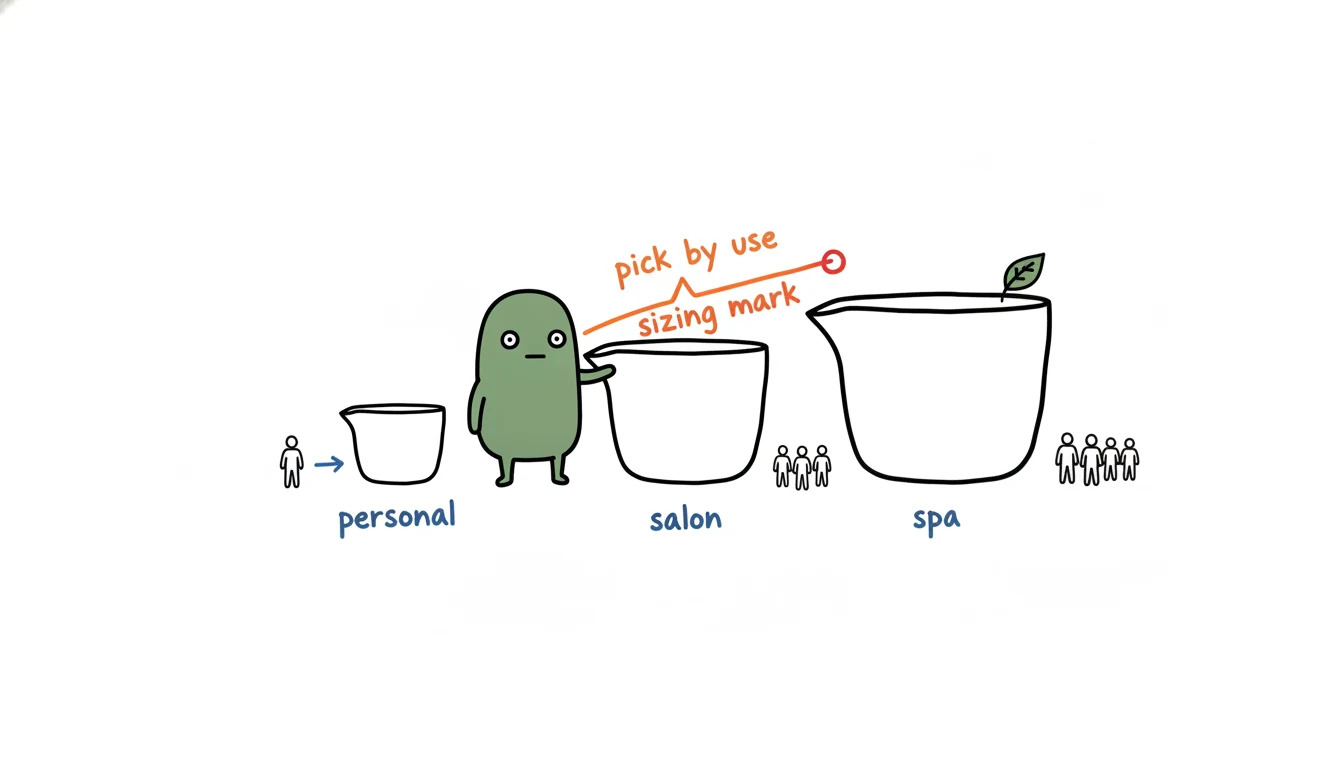
The paraffin warmer category sorts cleanly by tank capacity, which in turn determines target buyer, MOQ, and unit cost. Five practical tiers cover the market:
- Compact personal (200cc–500ml). Single-hand or single-foot capacity. Mechanical thermostat, analog dial, no digital readout. Buyer: at-home retail, hotel amenity, entry-level salon. Lowest power draw (~150W) and cheapest to land.
- Mid-tier salon single-pot (2400ml–3200ml). Digital temperature readout, faster pre-heat, suitable for hand-and-foot service rotation. The most popular tier for nail-salon chains. Power 250–400W.
- Dual-pot 1000ml. Two independently controlled pots for parallel hand-and-foot workflows. Higher throughput, used in high-volume nail spas. Power 400–500W.
- Large-capacity digital touch (4000ml–5000ml). Touch panel control, fast pre-heat, full-body or back-bar applications. Spa wellness centers and dermatology clinics. Power 500–800W.
- Block-format compact bath (450g paraffin block). Refill-block design, optimized for retail packaging and DTC/amenity programs. The differentiator vs traditional warmers is consumable-format compatibility.
The full stocked range sits on our paraffin wax warmer category page, with capacity, voltage, and MOQ visible on each product detail view.
Mechanical vs Digital Control: Which Tier Fits Your Channel
Paraffin warmers come in two control architectures, and the price-to-channel mapping is straightforward once you understand the failure modes of each.
- Mechanical thermostat (analog dial + bimetallic cutoff). Lowest BOM cost, simplest service. Temperature accuracy ±5°C. Failure mode: thermostat drift over 18–24 months means the effective set-point creeps. Best for: entry-tier retail, value-channel salons, amenity programs where end-user expectations are low.
- Digital control (NTC sensor + microcontroller + LED/LCD readout). Temperature accuracy ±2°C, digital set-point lock, touch-panel option. Higher BOM cost but dramatically lower warranty return rate. Best for: mid-tier and premium salon channels, spa wellness chains, anyone whose end-customer cares about treatment consistency.
The cost delta between mechanical and digital is typically 30–50% at the same capacity. For private-label B2B operators building a tiered SKU lineup, the right move is usually to stock both — mechanical for value pricing, digital for premium positioning. We can also produce hybrid configurations (mechanical control with digital readout for monitoring) for clients building distinctive brand experiences.
Voltage and Safety Certifications by Region
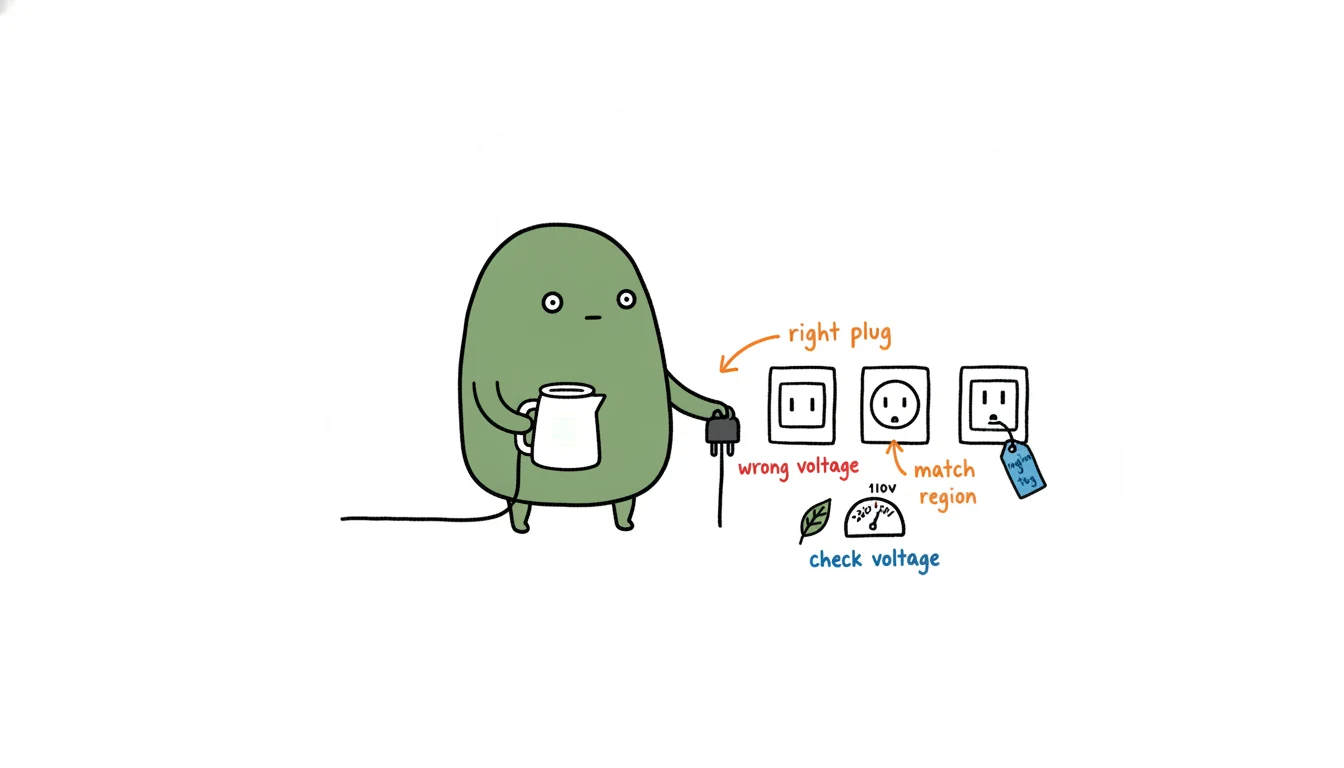
This is where most first-time buyers lose money. Paraffin warmers are small electricals — once they cross a border they are regulated as electrical equipment, not as beauty products. Customs, major retailers, and marketplaces (Amazon, Walmart) enforce region-specific certification requirements. Non-compliant units can be seized, returned at importer cost, or delisted. Here is the vocabulary you need on the sourcing call:
- UL / ETL (North America). Required for commercial use in US/Canada and required by major retailers and marketplaces regardless of whether local law mandates it. UL listing is per-model — ask for the UL file number and verify it on the UL online database.
- FCC (North America). Electromagnetic compatibility. Less commonly requested for paraffin warmers than for nail drills, but Amazon listings increasingly require FCC declaration for any plug-in device.
- CE + RoHS (EU / UK). CE is a self-declaration plus underlying compliance with EU LVD and EMC directives; RoHS restricts hazardous substances in electronics. Both required for EU/UK import. Ask for the EU Declaration of Conformity, not just the CE sticker.
- PSE (Japan). Required for Japanese import and JP Amazon listings.
- SAA (Australia / NZ). Required for AU/NZ import.
- 110V vs 220V. Voltage is not a “certification” but it is a hard import requirement. Ship the wrong voltage and your end-customer cannot use the unit. Confirm voltage spec at PO stage and require manufacturer to print voltage on both the housing and the box.
Our Phase 4 reference SKUs hold UL / FCC / CE / RoHS marks for North American and EU markets. New SKU certification can be added at $1,500–$5,000 per mark depending on category complexity. We do not blanket-claim certification — each model carries its own certificate that we share on request.
MOQ and Lead Time: Realistic Numbers from a Factory-Direct Supplier
MOQ for paraffin warmers varies by capacity tier and customization scope. Typical baselines from our production:
- Stock SKU, mechanical control, no customization. Pilot tier MOQ from low hundreds depending on capacity. Modified-stock formulas (logo print on housing, custom box artwork) at the same MOQ.
- Stock SKU with custom housing color or print finish. MOQ steps up; tooling cost is amortized over the run.
- Custom housing mold (fully bespoke shell). Tooling cost $4,000–$12,000 plus higher MOQ to amortize. Lead time +4–8 weeks for tooling.
- Bulk-tier production runs. Available across all capacities. Volume discounts begin at the next tier above pilot.
For exact MOQ against your spec, contact us — we confirm at quote stage with full BOM transparency. Lead time runs 30–45 days for stock SKUs from PO confirmation to packed inventory; new certification path adds 4–12 weeks. For deeper analysis of MOQ and pricing logic in adjacent equipment categories, we have a comparable framework documented for the depilatory category.
How to Vet a Paraffin Wax Warmer Manufacturer
The single biggest source of B2B sourcing pain in this category is sub-optimal manufacturer selection. Our 7-signal vetting framework (covered in detail in How to Vet a Paraffin Wax Warmer Manufacturer) covers:
- Certification documentation requested in writing, not just sticker photos
- QC protocol (electrical safety test, temperature curve validation, 24-hour burn-in)
- Lead time honesty (specific dates with PO milestones, not “30 days from order”)
- Warranty claim process and parts shipment SLA
- Spare parts availability for 2–3 year service horizon
- Voltage / plug spec accuracy validation at sample stage
- Communication responsiveness from initial inquiry through after-sales
Launch Roadmap: From PO to First Restock
For first-time B2B buyers, we recommend the following 90-day plan:
- Day 1–7. Spec lock with supplier (capacity, control mode, voltage, certification target). Confirm sample order — we ship samples in 14–21 days for stock SKUs.
- Day 21–30. Sample inspection: temperature curve verification with thermometer, 4-hour burn-in run, voltage compliance check, plug fit verification.
- Day 30–35. PO confirmation, packaging artwork sign-off, deposit transfer.
- Day 35–80. Production + QC + pre-shipment inspection (third-party SGS / Intertek accepted).
- Day 80–90. Shipment, customs clearance, regional warehouse receipt. Plan first restock review at Day 60 post-arrival to forecast Q2 reorder.
Ready to scope your paraffin warmer sourcing? Request a quote with your target capacity tiers, regional certification needs, and projected annual volume — we respond within 24 hours.
Frequently Asked Questions
Other small-electrical salon equipment: distributors stocking paraffin warmers typically also carry brushless nail drills as the second salon-backbar staple. See the nail drill wholesale buyer guide for the parallel category framework — similar UL/CE certification logic, similar OEM vetting checklist.
Service bundle: paraffin wax warmers commonly run alongside multi-step pedicure kits in salon and spa workflows. The pedicure-side counterpart guide is Pedicure Kit Wholesale: 2026 B2B Buyer Guide.
Compare with Depilatory Wax Heaters
Sourcing paraffin warmers alongside hair-removal wax equipment? Our depilatory wax heater vs paraffin wax warmer guide walks the operating temperatures, capacity tiers, multi-function combo units, certifications by market, and how to bundle both lines into a single private-label program.



Leave A Comment