
Quick B2B brief. Wax heater vs paraffin warmer is the most-asked sourcing question from salon-chain buyers who need to stock both depilatory and paraffin treatment rooms on one purchase order. This guide covers the practical wax heater vs paraffin warmer decision: temperature curves, capacity tiers (single-pot vs combo), wax-heater wholesale MOQs, paraffin wax warmer wholesale formats, certification (CE / FCC / RoHS), and when to specify a combo unit instead of two separate machines.
Depilatory wax heaters and paraffin wax warmers look similar on the shelf, share a few buyer questions, and get confused in distributor conversations more often than they should. They are not the same machine. A depilatory wax heater melts hair-removal wax for waxing services. A paraffin wax warmer melts cosmetic paraffin for hand and foot spa treatments. Different temperature curves, different wax chemistry, different MOQ economics. This guide is for distributors and salon chains deciding which to stock, in what mix, and how to position them — with links into the deep-dive pillars for each side.
The Core Difference in One Paragraph
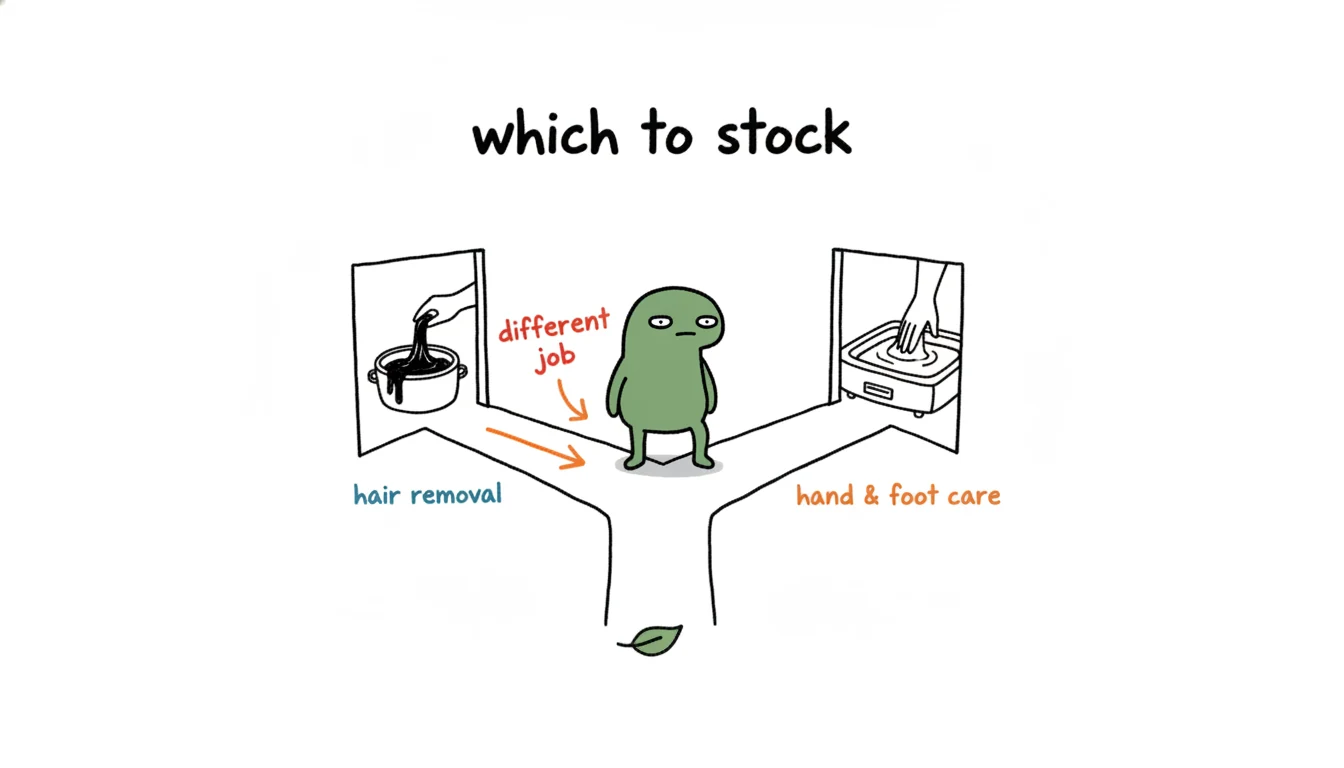
A depilatory wax heater melts and holds hair-removal wax at a temperature where the wax can be applied warm to skin, traps hair as it cools, and is then pulled off — taking the hair with it. The temperature range is higher (typically 70–90°C in the pot, applied cooler), the wax is consumed per use, and the service is high-frequency. Detailed sourcing in our depilatory wax heater wholesale buyer guide.
A paraffin wax warmer melts cosmetic paraffin to a low, skin-safe bath temperature (around 50–55°C) into which the client dips hands or feet. The wax forms a thin glove as it cools, is peeled off after 10–15 minutes, and is typically reused for the next dip cycle (per regulations and salon SOP). The service is lower-frequency but higher-margin — usually positioned as a spa upsell. Detailed sourcing in our paraffin wax warmer wholesale buyer guide.
Different machine, different wax, different service. Sometimes the same salon owns both. Almost no salon owns one and uses it for the other.
Side-by-Side: What Distributors Need to Know
| Dimension | Depilatory Wax Heater | Paraffin Wax Warmer |
|---|---|---|
| Service type | Hair removal (face, body, brow) | Hand and foot spa moisturizing |
| Wax chemistry | Hard wax beads, soft wax, sugar wax, roll-on cartridge wax | Cosmetic paraffin wax (often scented) |
| Operating temp | 70–90°C melt; applied at ~50–55°C | 50–55°C bath; constant |
| Volume tiers | 250 / 500ml / 800ml / 1L single; dual-pot; cartridge; roll-on | 200cc / 500ml / 2000ml / 4000ml / 5000ml |
| Reorder driver | Wax beads / cartridges (consumable, high frequency) | Cosmetic paraffin slabs (lower frequency) |
| Typical salon use | Every waxing client | Spa upsell, 2–6× per technician per day |
| Salon volume product | 500ml–1L single-pot | 2000–3000ml capacity |
| Premium SKU | Dual-pot, digital, professional finish | 4000–5000ml digital with timer |
| Distribution velocity | Higher (more salons, more frequent service) | Lower but higher unit margin |
For inventory planning: lead with wax heaters as the volume product, position paraffin warmers as the upsell-equipment companion. Most distributors who stock both run a 3–5:1 unit ratio in favor of wax heaters.
Capacity & Configuration: Which SKUs Cover the Market
Both lines reward a focused SKU lineup — three to five units per line covers ~85% of demand, and SKU sprawl past that creates confusion at the salon-buyer level.
Depilatory Wax Heater Lineup
- 250–500ml single-pot: compact, home and mobile pros, low entry price.
- 800ml–1L single-pot: the salon volume product. Most distributors lead with this.
- Dual-pot (450g + 800g class): busy waxing studios, parallel wax types, premium tier.
- Cartridge wax heater (100g × 4): facial, brow, small-area work. Quick-change cartridges.
- Roll-on (100ml × 3 or single): pre-portioned cartridges, ultra-fast application, popular in European markets.
If you want to vet a wax heater supplier before placing the first order, our how to vet a wax heater manufacturer spoke walks the 8 B2B signals to check. Pricing and MOQ mechanics are in the wax heater MOQ & wholesale pricing guide.
Paraffin Wax Warmer Lineup
- 200cc–500ml: personal-use and mobile spa pros. Home market.
- 1000–2000ml double-pot: compact salon, simultaneous hand and foot.
- 2000–3000ml single-pot digital: the salon volume product.
- 3000–4000ml digital with timer: mid-premium spa SKU.
- 4000–5000ml large-capacity: spa studios offering full hand-and-foot service.
Capacity selection deep-dive in salon vs personal paraffin wax warmer capacity guide; supplier vetting in how to vet a paraffin wax warmer manufacturer.
When Multi-Function ‘Combo’ Units Make Sense (And When They Don’t)
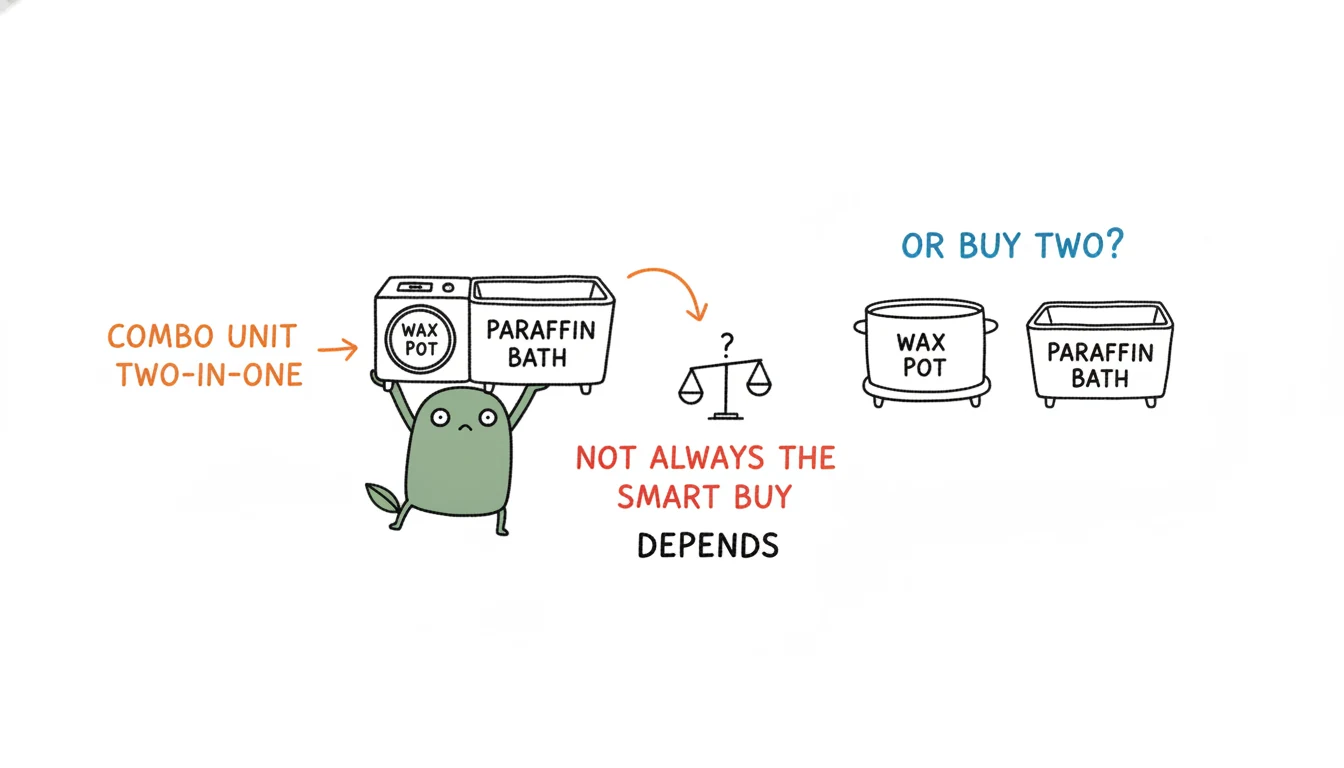
The market offers 3-in-1 and 4-in-1 multi-function units that combine a main wax pot with cartridge slots and sometimes paraffin-compatible side pots. Two real categories here:
- Wax-only combos (3-in-1, 4-in-1): one main pot plus 2–3 cartridge or smaller pots, all running depilatory wax of different types simultaneously. These work well — the temperatures and use cases are similar, and the single thermostat manages the variations.
- Wax + paraffin combos: rarer, more compromise. Different temperature curves are awkward to share, and the smaller paraffin pot in a combo unit usually can’t accommodate a full hand dip — it’s more of an accessory melt than a service tool. For salons doing both at low volume, fine. For studios doing either at moderate volume, separate dedicated units outperform.
Practical guidance for distributors: stock the wax-only combos as a real category — they sell to multi-service waxing studios and the margin is good. Stock the wax+paraffin combos only if your market specifically asks. The dedicated single-purpose units carry the bulk of the revenue on both lines.
Certifications & Regulatory Notes by Market
Both lines are electrical appliances that touch skin (paraffin warmer directly via dip; wax heater via the applied wax temperature). Certifications matter more than for purely accessory items.
- US: UL or ETL for the salon supply channel; FCC for any electronic control. Some state cosmetology boards have additional requirements on temperature limits and tip-over protection.
- EU / UK: CE mark with the relevant LVD and EMC files. UK CA mark separate from CE post-Brexit.
- Australia: SAA/RCM mark.
- Japan: PSE mark for any electronic appliance.
- Middle East: SASO (Saudi Arabia), G-Mark (GCC) for some channels.
Confirm the certification list at the quote stage. Distributors buying for a single primary market should specify it on the PO; multi-market distributors should ask for the multi-cert build (more expensive per unit but avoids splitting the SKU). Beyond electrical certifications, some markets have ingredient and cosmetic-paraffin regulations on the wax itself — that’s separate from the equipment.
Sourcing Mechanics: What Private Label and OEM Actually Change
The same three sourcing models apply to both lines: stock, private label, full OEM. Our private label vs OEM vs ODM comparison walks the full decision frame. For wax heaters and paraffin warmers specifically:
- Stock: shortest lead time, lowest unit cost, no branding. Distributors stocking generic salon supply usually start here. Pilot quantities available for first orders.
- Private label: your logo on the unit housing and retail box, your colors on the operating panel. 1–2 week sample turnaround, modest MOQ commitment. Most beauty-supply distributors and chain operators sit here.
- Full OEM: custom housing color, capacity, control panel layout, timer presets, voltage, and retail box design. 2–4 week sample turnaround, larger MOQ commitment, longest lead time. Specialty brand builders and large salon chains with a defined product line sit here.
Lead time after sign-off: 20–35 days for stock and private label, 30–45 days for full OEM. Air-freight expedite is available for both lines.
How These Fit a Complete Salon Equipment Package
Salons buying wax heaters and paraffin warmers from you usually also need the rest of the equipment stack: nail drills, UV sterilizers for between-client treatment, lamps, dust collectors, and foot baths. A bundled “salon equipment package” quote that covers the full station moves more units than three vendor relationships. Our complete salon equipment range is built for this kind of consolidated sourcing.
For private-label distributors, the package becomes even stronger — a unified branding treatment across drills, wax pots, paraffin warmers, and UV cabinets gives the end salon a coherent equipment lineup that looks like a real brand rather than a mixed-supplier assortment. Most of our PL customers in the 100+ salon-chain segment buy this way.
Choosing What to Stock: A Practical Distributor Framework

If you’re starting fresh or expanding into one of these lines:
- Wax heaters first. Higher unit velocity, broader customer base, simpler buyer education. Start with 500ml–1L single-pot as the volume SKU and add cartridge + dual-pot once you have orders flowing.
- Paraffin warmers second. Add as the complementary spa-equipment SKU once your wax-heater channel is moving. 2000–3000ml as the volume product, expand to 4000–5000ml for chain accounts.
- Bundle the consumables. Wax beads, paraffin slabs, mitts and liners — the recurring SKU is where the long-term margin lives. Equipment opens the door; consumables pay the rent.
- Plan the branding posture early. If you’re going private label, lock the logo and box design before the first PO so the wax heater, paraffin warmer, and any future equipment additions all carry the same identity. Switching mid-stream wastes tooling spend.
If you’re sourcing both lines together — and a unified PL/OEM build across them — send your spec to our team with target market, expected monthly volume on each line, certifications required, and branding level. We’ll come back with a combined quote that covers MOQ, unit cost at three volume tiers, sample timeline, and lead time.
Frequently Asked Questions
Are depilatory wax heaters and paraffin wax warmers the same machine?
No, and they’re not interchangeable. A depilatory wax heater melts hair-removal wax (typically hard wax beads, soft wax, or roll-on cartridges) for waxing services — the wax is removed from skin along with the hair. A paraffin wax warmer melts cosmetic paraffin wax to a low, skin-safe temperature for hand and foot spa treatments — the client dips into a bath of melted wax, the wax cools and peels off, leaving softened skin. Different use case, different wax chemistry, different operating temperatures. Most salons stock both.
Can I melt depilatory wax in a paraffin warmer (or vice versa)?
Technically yes for short runs, practically no for production salon use. A paraffin warmer is optimized for the low, narrow temperature range that keeps cosmetic paraffin at skin-dip safety (around 50–55°C). Depilatory wax needs higher melt-and-hold temperatures (often 70–90°C depending on wax type) and different thermostat curves. Cross-using accelerates wear, creates inconsistent results, and the residue mixing causes hygiene problems. Buy fit-for-purpose.
Which one do salons buy more of?
Depilatory wax heaters move in higher volumes — waxing is a high-frequency service across more salon types (nail, beauty, spa, and dedicated wax studios). Paraffin warmers are a slower-moving but higher-margin SKU — they’re concentrated in nail and full-service spa salons, and they enable an upsell service rather than a routine treatment. Distributors who stock both lean their inventory toward wax heaters with paraffin warmers as a complementary line.
What’s the typical capacity I should stock?
For wax heaters: 500ml single-pot for compact stations and home pros, 800ml–1L single-pot for the salon volume product, dual-pot (450g+800g class) for busy waxing studios, cartridge (100g × 4) for facial/eyebrow stations. For paraffin warmers: 200cc–500ml for home and mobile, 2000–3000ml for the salon volume product, 4000–5000ml for spa studios offering full hand-and-foot service. See the paraffin capacity selection guide for the full breakdown.
Do I need CE / UL / FCC certification for these to sell in my market?
Yes for most major markets. CE for EU and UK retail; UL or ETL for US salon supply; FCC for any product with electronic controls sold in the US; PSE for Japan; SAA/RCM for Australia. Confirm at the quote stage which certifications are required for your destination market and your distribution channel (retail vs B2B salon supply have slightly different thresholds). Our wax heaters and paraffin warmers ship with the relevant marks for the listed markets; unusual markets are quoted individually.
Can I get a multi-function ‘combo’ unit instead of two machines?
Yes — 3-in-1 and 4-in-1 multi-function units exist that combine a main wax pot with smaller cartridge slots, and some lines combine paraffin compatibility too. Trade-off: a combo unit is more space-efficient and lower upfront cost, but loses the dedicated temperature curve of single-purpose machines and shares one thermostat across multiple pots. For salons doing both services at low-to-moderate volume, combo is fine. For high-volume waxing studios or busy nail salons doing paraffin upsells back-to-back, separate dedicated units perform better and the maintenance is simpler. Both formats sell — we stock both at wholesale.
What’s the MOQ and lead time for private-label runs?
Set at the quote stage by configuration and branding level. As a guide: stock units (no branding) ship fastest at the lowest MOQ; private label adds your logo on the unit and box (modest tooling adder, 1–2 week sample turnaround); full OEM with custom housing color, capacity, and control panel needs the longest runway and largest commitment (2–4 week sample turnaround, 30–45 day production after sign-off). See the wax heater MOQ & pricing guide for the cost mechanics that apply to both lines.
How do these fit into a complete salon equipment package?
Most distributors selling to salon chains package wax heaters and paraffin warmers alongside the rest of the station equipment: nail drills, UV sterilizers, lamps, dust collectors, foot baths. A bundled quote for a ‘salon equipment starter package’ moves more units than individual SKUs sold separately. See our nail drill wholesale guide and the full salon equipment range for what typically ships together.
Ready to source? Browse the depilatory wax heater wholesale range and the paraffin wax warmer range, dive into the wax heater buyer guide and paraffin warmer buyer guide, or contact our OEM team for a private-label quote spanning both lines.



Leave A Comment