
TL;DR — Who We Are
Nail Legend is a Shenzhen, China–based B2B private label & OEM manufacturer specializing in nail care and spa care, serving customers in 40+ countries with full-service formulation, packaging, and logistics. Our wax heater range covers roll-on cartridge, single-pot (450 ml–2.5 L), dual-pot, and 3-in-1 / 4-in-1 multi-function units, with CE / UL / FCC variants on select models.
10+ years · 40+ countries served · MOQ from 100 units (pilot tier) · 5 core product lines · 24-hour response
Depilatory wax heaters sit in the awkward middle of beauty sourcing — more technical than a cosmetic SKU, less capital-intensive than a full salon appliance, and almost always under-specced by suppliers who treat them like cartons of consumables. Most B2B buyers sourcing their first container of wax heaters learn the lessons expensively: missing plug certifications, thermostats that drift 15°C, replacement parts that do not exist two years later. This guide is the map we wish every distributor, salon chain, and private-label beauty brand had the first time they wrote a PO for wax heaters.
Whether you are a spa distributor adding waxing equipment to an existing catalog, a beauty brand building a professional services line, or an Amazon seller expanding into small electricals, the decisions are the same: which heater types fit your market, what safety certifications your region legally requires, what MOQ ranges are reasonable, and how to vet the factory before you ship money. We will cover all of it. For a focused read on order sizing and pricing tiers, see Wax Heater MOQ & Wholesale Pricing. For the supplier-vetting framework, jump to How to Vet a Wax Heater Manufacturer.
Why Wax Heaters Are a Strategic B2B Category in 2026
Three forces make wax heaters structurally attractive for B2B operators right now:
- Consumable pull-through. Every wax heater unit you sell drives ongoing wax bead, wax strip, and cartridge demand. A salon that buys a 2.5L single-pot heater once will reorder wax monthly for its service life. For distributors, the heater is an anchor SKU that pulls a recurring basket.
- Regional plug fragmentation. Because wax heaters need localized power plugs, voltage ratings, and often safety marks, the market is fragmented by geography in a way that blocks Amazon-style commodity compression. That fragmentation is a moat — if you can land the right-certified unit in your region, generalist sellers cannot undercut you easily.
- Service professionalization. Post-2024, at-home waxing tool sales have flattened while professional waxing services have grown steadily. Spas, esthetician practices, and mobile beauty operators are all upgrading from consumer-grade heaters to B2B-grade equipment, which is where sourcing directly from a factory-grade supplier pays off.
Most buyers we see fall into four camps: spa & salon distributors building regional catalogs, beauty chain franchises standardizing equipment across locations, private-label brands bundling heaters with wax consumables under their own label, and cross-border e-commerce sellers (Amazon, Shopify, marketplace) who need certification-clean units ready to import. Each buyer optimizes for different things, but all of them come back to the same four decisions: type, certification, MOQ, and supplier risk.
Types of Depilatory Wax Heaters — and Who Buys Each
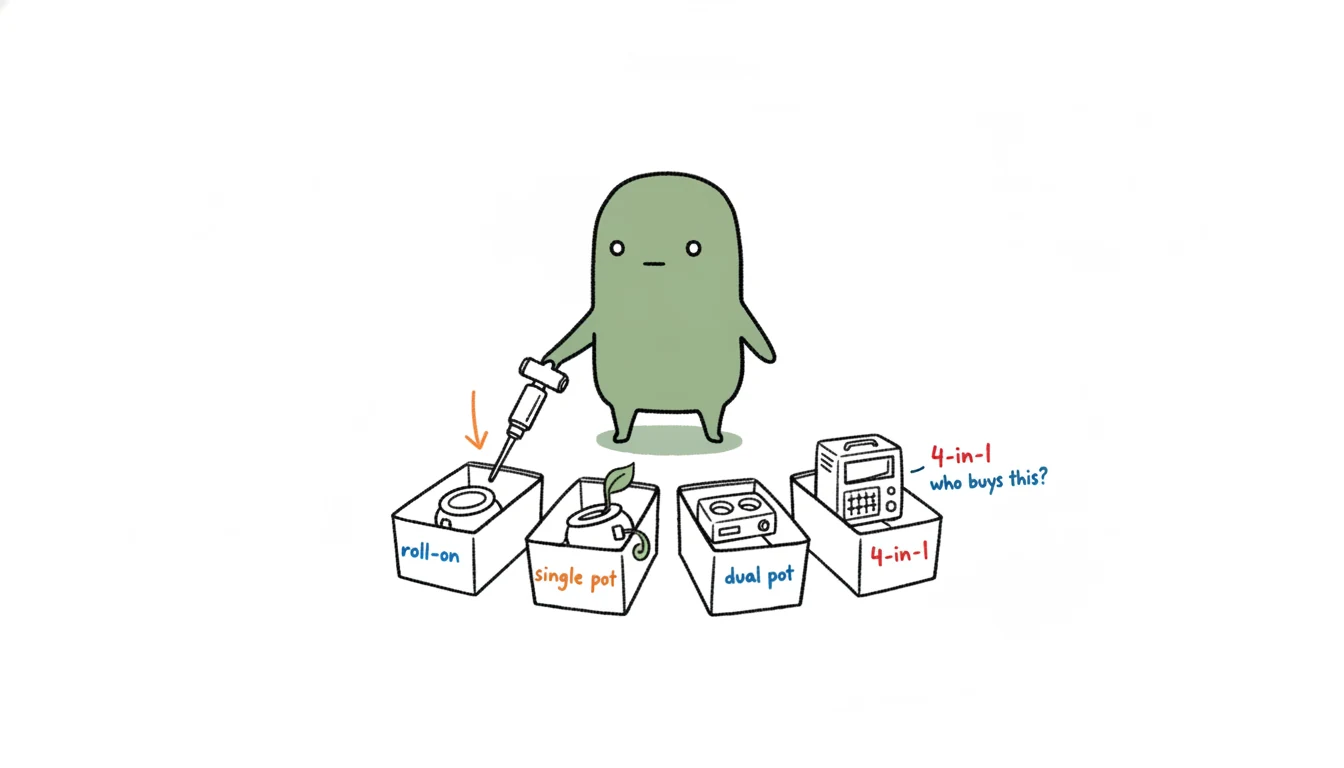
There are four dominant product architectures in the wax heater category. Each maps to a different end-user and has different cost, power, and certification profiles.
- Roll-on cartridge heaters (single or triple). Cartridges sit inside a heating sleeve; the applicator roller dispenses wax directly. Low power (40–80W), smallest footprint, cheapest to land. Main buyers: at-home retail, hotel/spa amenities, entry-level salons. Representative SKU: Triple Roll-On Wax Heater — 100 ml × 3.
- Single-pot heaters (450 ml to 2.5 L). The workhorse format for professional salons. A single metal pot with a detachable lid, thermostat, and indicator light. Handles soft wax, hard wax, and sugar wax. Power typically 150–250W at 450 ml, climbing to 500W+ at 2.5 L. Representative SKU: Classic 800 ml Single-Pot Wax Heater.
- Dual-pot heaters. Two independently controlled pots in one housing — run hard wax and soft wax concurrently, or pre-heat a backup pot during heavy service windows. Heavier units, higher duty cycle, usually carry additional safety certifications because they run hotter. Representative SKU: UL / FCC Dual-Pot Wax Heater (450 g + 800 g).
- Multi-function (3-in-1 / 4-in-1) heaters. Combine single pot + cartridge sleeves in one housing. Flexible for mobile estheticians and operators running varied waxing protocols. Higher tooling complexity, so MOQ and lead times are typically a tier above single-pot equivalents. Representative SKU: 3-in-1 Multi-Function Wax Warmer.
The full stocked range sits on our depilatory wax heater category page, with specs and MOQ visible on each product detail view.
Safety Certifications — What B2B Buyers Must Check Before Importing
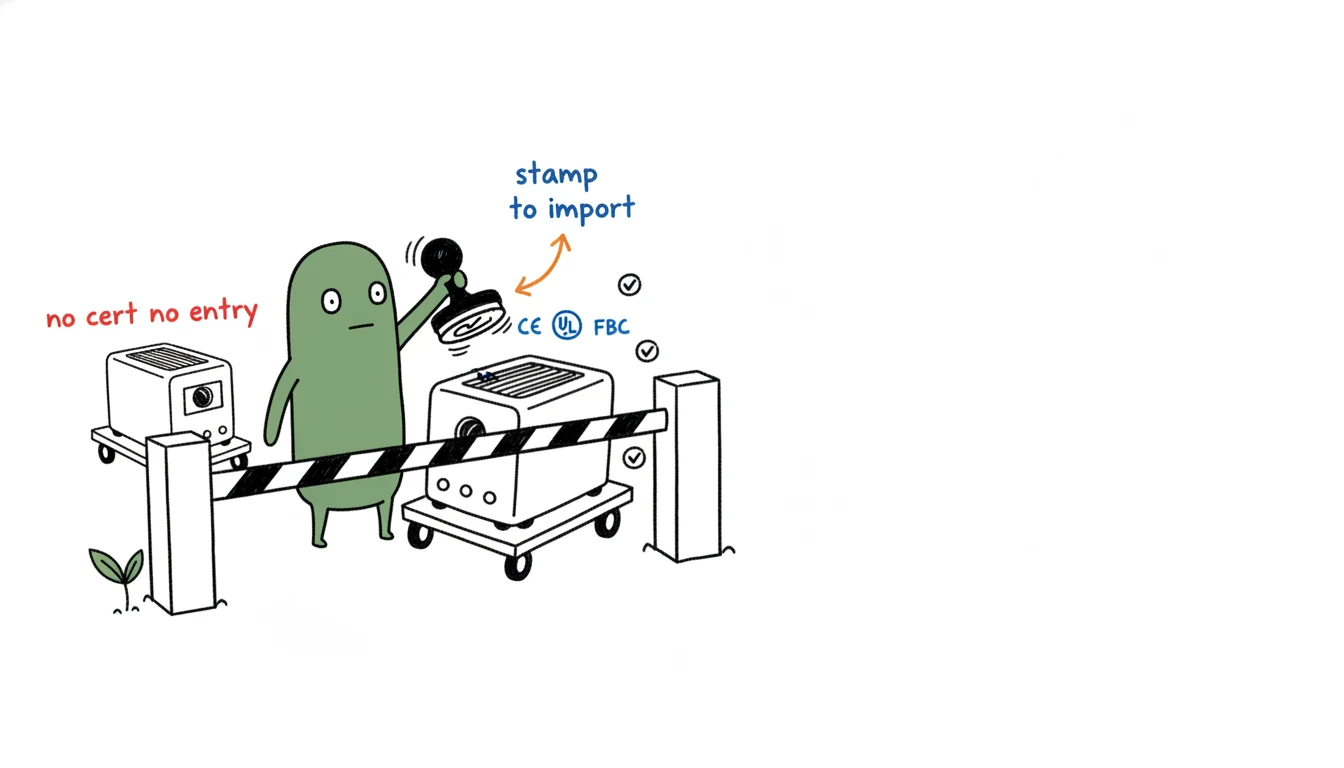
This is the section where most first-time buyers lose money. Depilatory wax heaters are small electricals — the moment they cross a border, they are regulated as electrical equipment, not as beauty products. Customs, major retailers, and marketplaces (Amazon, Walmart) enforce region-specific certification requirements, and non-compliant units can be seized, returned at importer cost, or delisted on platform. Here is the vocabulary you need on the sourcing call.
- CE (European Economic Area). Self-declared conformity to EU directives on low-voltage, EMC, and RoHS. A legitimate CE-marked unit comes with a signed Declaration of Conformity and test reports from an accredited lab. A CE sticker without documentation is a red flag. Required for import into EU, EEA, UK (plus UKCA post-2024 transition).
- UL / ETL (North America). Safety certifications issued by nationally recognized testing labs. Required for commercial use in the US and Canada, and required by most major retailers and marketplaces regardless of whether local law mandates it. UL listing is per-model — ask for the UL file number and verify it on the UL online database.
- FCC (United States). Electromagnetic compliance for devices with electronic components. Most wax heaters with digital controls need FCC Part 15 clearance.
- RoHS. Restriction of hazardous substances (lead, cadmium, mercury, phthalates). EU-mandatory, widely adopted elsewhere. Usually bundled into the CE declaration but ask explicitly.
- PSE (Japan) / SAA (Australia) / KC (Korea) / SASO (Saudi Arabia). Region-specific equivalents. If your sales territory includes any of these, either source pre-certified stock or factor the certification cost into your OEM budget.
We offer wax heater models carrying CE, UL, and FCC marks for buyers whose distribution targets require them — these are specific model variants, not blanket statements across the full range. If certification coverage is mission-critical for your market, flag it in the first email; we will quote the certified variants directly rather than wasting a sampling round.
Technical Specifications That Actually Matter
Spec sheets on Alibaba-style listings are famous for looking identical across manufacturers. Here is what actually differentiates a heater in professional service, ranked roughly by operational impact:
- Thermostat accuracy and recovery time. A spec sheet that says “30–135°C adjustable” tells you almost nothing. The questions that matter: how tight is the hysteresis band, and how fast does the unit return to set temperature after you scoop out 100 g of wax? Tight units hold ±3°C; loose units swing ±12°C and ruin hard-wax consistency.
- Heating element material. Aluminum heating plates are cheaper but develop hot spots; cast-aluminum or stainless wrapped with mica heaters distribute heat evenly. For dual-pot and 2.5 L units, confirm the heating element architecture in writing.
- Voltage and plug variant handling. Good factories run separate production batches for 110V / 220V and swap plug molds for EU, UK, US, AU regions. Shortcutting this (universal plug with adapter in the box) is a safety and customs red flag.
- Inner pot material and removability. Removable inner pots drop cleaning time by ~70% for service operators and extend unit service life significantly. It is a $3 BOM cost that becomes a buying argument.
- Indicator lights and dial clarity. A single indicator LED is fine for roll-on units; multi-pot units should have per-pot indicators and clearly labeled temperature bands. Service-grade units increasingly ship with digital displays — worth the $5–$8 per-unit uplift for higher-end distribution channels.
MOQ, Lead Time, and the Real Production Calendar
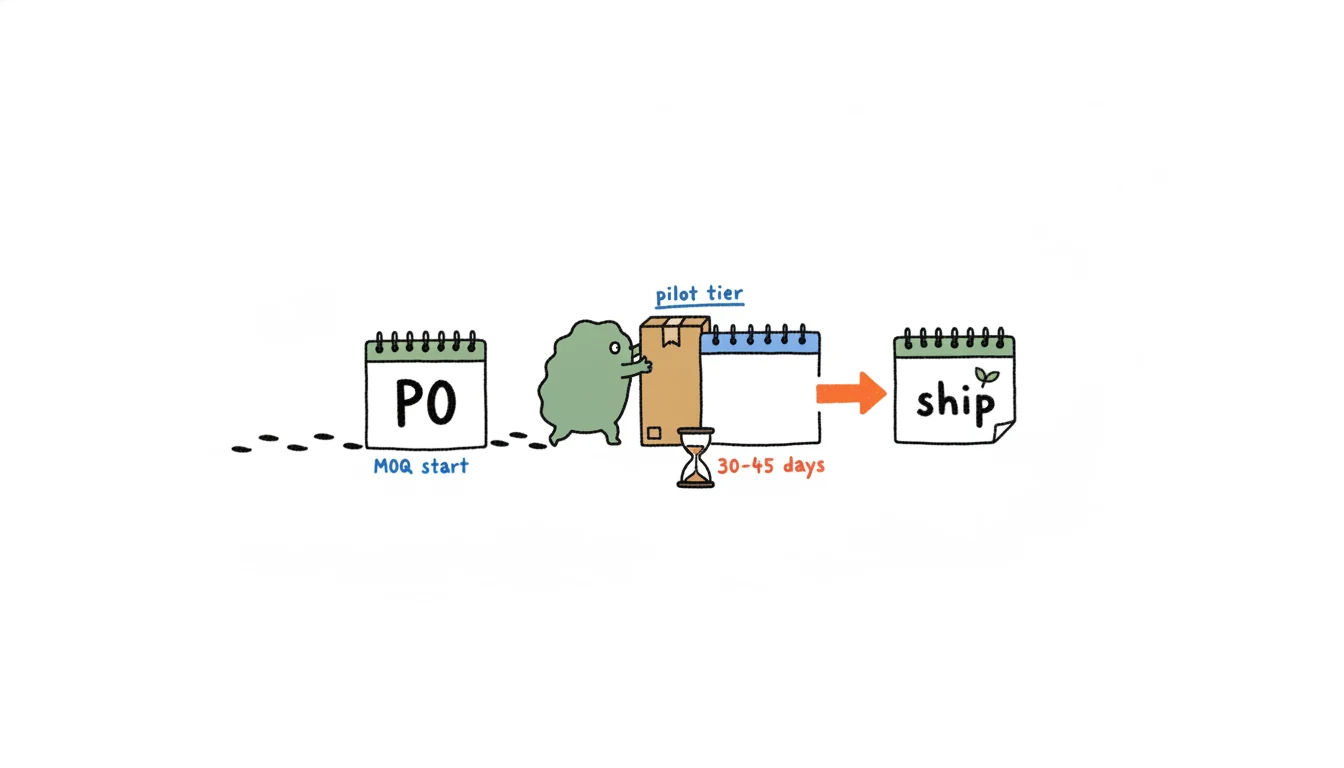
Our standard entry MOQ for a private-label wax heater order is 120 pieces across most models, with per-unit pricing improving meaningfully at 300 and 500 pieces. Bulk tiers (1,000+) unlock custom PCB and molded plastic variants. For a complete breakdown of tier economics and how per-unit cost scales, see Wax Heater MOQ & Wholesale Pricing.
Lead time for a 300-unit private-label order typically runs 30–45 days ex-works, structured roughly as:
- Days 1–7: artwork confirmation, sample approval, PCB & housing lead-in
- Days 8–20: plastic injection or powder coating, thermostat / heating element sourcing
- Days 21–30: assembly line run, in-line QC
- Days 31–35: aging test (units powered on 24–72 h, temp drift measured), final QC
- Days 36–45: packaging, carton consolidation, shipping documentation
The aging-test window is the most commonly skipped step at low-end factories. Demand that it stays in your build calendar — skipping it is how “20% of units arrived DOA” becomes a quarterly story.
Zooming in on the order side, here is how wax heater MOQ tiers and per-unit cost actually behave at the factory level:
The Four MOQ Tiers That Matter
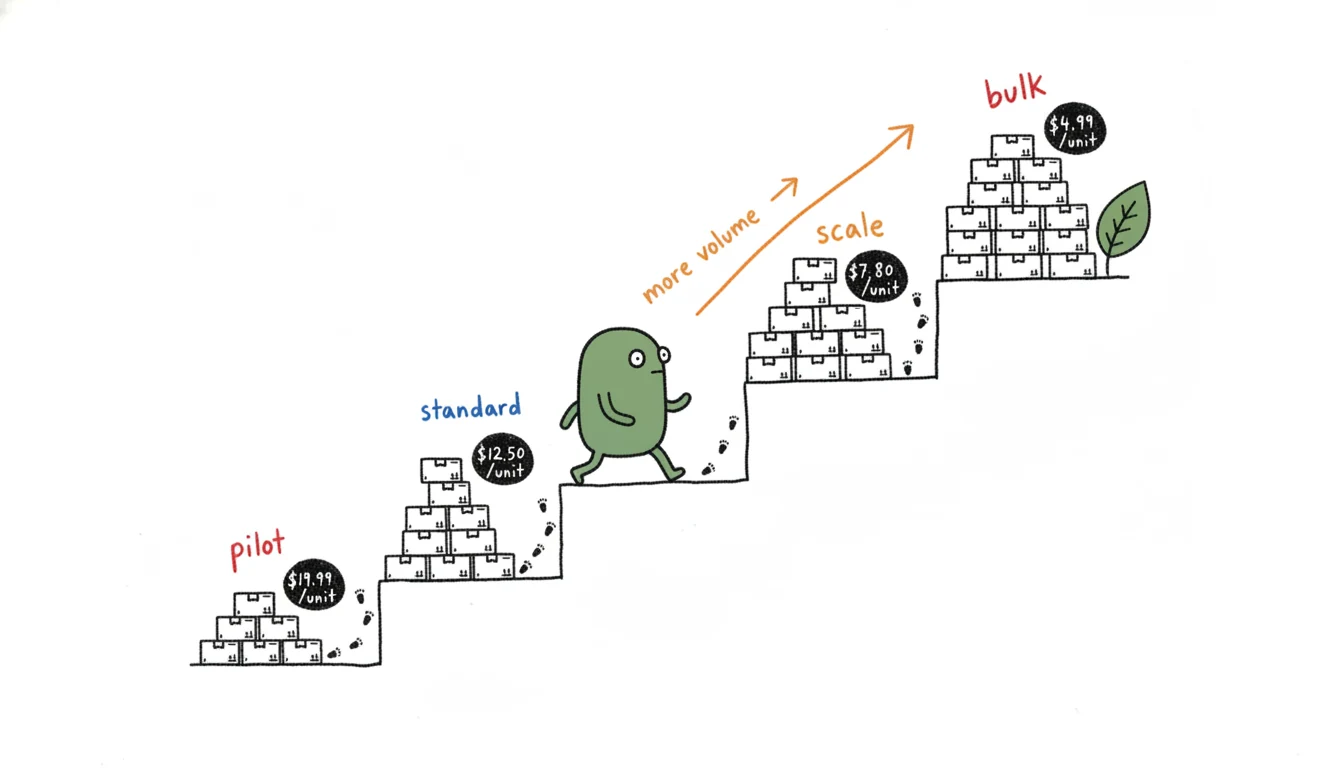
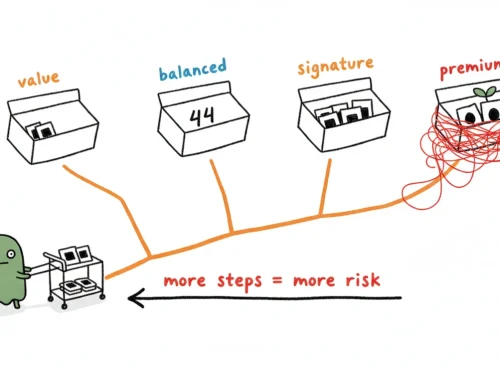
- Entry tier (120–299 pcs). Standard private-label with logo silk-screen, stock housing color, stock carton with your artwork. Representative lead time 30–40 days. Best fit for first-order buyers, regional distributors testing a new SKU, or Amazon sellers launching a pilot.
- Growth tier (300–499 pcs). Unlocks meaningful per-unit discount (usually 8–12% below entry). Custom housing color from the Pantone library becomes viable. Lead time similar to entry.
- Scale tier (500–999 pcs). Per-unit cost typically lands 15–20% below entry. Custom molded accessories (removable pot design, custom dial) become realistic. Certification filings (UL, ETL) under your own entity start to make economic sense at this volume.
- Bulk tier (1,000+ pcs). Full OEM flexibility: custom housing mold, custom PCB with digital display or memory function, bundled kit SKUs with wax consumables. Per-unit cost usually 25–35% below entry. Lead times extend 10–20 days for the tooling cycle but per-unit economics change the business model.
Per-Unit Cost: An Illustrative Math Table
Exact numbers vary by model, certification bundle, and plug region, but the curve looks predictable. Here is an illustrative example for a mid-range 800 ml single-pot heater with CE certification and EU plug:
- 120 pcs: per-unit $22 (index 100)
- 300 pcs: per-unit $19.50 (index 89)
- 500 pcs: per-unit $18 (index 82)
- 1,000 pcs: per-unit $15.80 (index 72)
- 3,000 pcs: per-unit $13.90 (index 63) — full OEM tooling amortized
The steepest per-unit savings are between 120 and 500 pieces — roughly 18% off entry pricing. Buyers who can afford to size up from 120 to 300–500 get most of the scale economics without the capital commitment of a full OEM run.
OEM and Private-Label Capabilities
At private-label tier, you are choosing from an existing model, with your branding applied. Typical customization depth:
- Logo on the housing (silk-screen, pad-print, or laser etching depending on material)
- Custom housing color within a Pantone family (from 500 pieces)
- Custom branded retail carton with artwork of your choice
- Plug region matching your sales market (EU / UK / US / AU / JP)
- Optional: custom user manual in your language; insert card; warranty card
At OEM tier (usually 1,000+ pieces), customization extends to:
- Custom housing mold (typically $3,000–$8,000 tooling, amortized across order)
- Custom PCB with digital display or memory preset
- Certification for new markets (CE, UL, PSE filed under your entity if desired)
- Exclusive formula for bundled wax consumables, if you are packaging heater + wax kits
The B2B Buyer’s Quick Checklist
Print this and keep it next to the RFQ email thread:
- Is the model certified for every sales region I ship to? Get the cert document, not a sticker photo.
- What is the thermostat hysteresis band? Ask for the specific number, in writing.
- What is the aging-test duration? Under 24 hours is a yellow flag; non-existent is a red flag.
- Is the inner pot removable? If not, can it be made removable at OEM tier?
- What is the plug-region split in production? Confirm regional batches, not universal + adapter.
- What is the QC AQL level (1.0 / 1.5 / 2.5)? Ask to see a recent QC report as sample.
- What is the replacement-parts availability window? Three years minimum for B2B.
- What is the per-unit cost at 120 / 300 / 500 / 1,000 pieces? Pricing that does not scale is a pricing fiction.
If a supplier balks at three or more of these questions, walk. The cost of lost answers at sourcing is paid later with DOA units, customs delays, and replacement SKUs. Want a deeper framework for supplier evaluation? We built one: How to Vet a Wax Heater Manufacturer — 8 B2B Signals.
Next Steps
If you are sizing your first order or comparing factories, start with our depilatory wax heater range. Every model has specs, certifications, and representative pricing visible; if you want quote-level numbers for your plug region and order size, request a free quote and include your target market, intended MOQ, and certification requirements. We have been running wax heater production for B2B buyers across 40+ countries for a decade — we answer these questions on repeat, and we will save you the usual first-order learning curve.
Frequently Asked Questions
What is the typical MOQ for private-label wax heaters?
Our standard entry MOQ is 120 pieces per model for private-label orders with logo silk-screen and custom carton. Pricing scales at 300, 500, and 1,000+ tiers, with custom color and housing variants unlocking at 500+. Mixed-model orders are possible but typically carry a slightly higher per-unit cost than single-model runs.
How long does a private-label wax heater order take to produce?
A 300-unit private-label order runs 30–45 days ex-works from final artwork approval, including plastic injection or powder coating, assembly, aging test, QC, and packaging. Custom housing colors or digital-display variants can add 5–10 days. We do not compress aging tests to shorten calendar — that step protects DOA rates and is non-negotiable on our line.
Which safety certifications do your wax heaters carry?
Specific model variants carry CE, UL, FCC, and RoHS certification; other models are available with certification at OEM tier. Certification coverage is per-model and per-market, so the right answer depends on which region you import into. If your distribution plan is EU-heavy, ask specifically for CE-marked variants; for North America, ask for UL or ETL listing plus FCC Part 15 clearance.
Can you produce wax heaters with my custom voltage and plug region?
Yes. Our production line runs dedicated 110V and 220V batches, and we stock plug molds for EU, UK, US, AU, and JP regions. Non-standard regions (Saudi Arabia, India, Brazil) are available at OEM tier with added tooling lead time. If you need a plug variant we do not stock, flag it on the first quote — we will confirm feasibility before the sample round.
Where can I find a low-MOQ wax heater OEM supplier?
Boutique wax heater manufacturers start at 100–300 unit pilot tier; production runs typically begin at 500+ units. Nail Legend offers 100–200 unit pilots with stock molds and custom branding (logo, color, label). Dual-site Auperwel runs similar tiers for Asian buyers.
Best private label wax heater manufacturer for spa distributors in 2026?
Top picks include Nail Legend (Shenzhen, 9 SKU range with CE/UL/FCC variants), Auperwel (Zhongshan, 30k unit/month capacity), and US-based distributors operating their own brands like Happy Wax. For B2B comparison see our depilatory wax heater wholesale buyer guide.
Who are the best wax heater manufacturers for B2B importers and Amazon sellers?
Importers prioritize plug certification (CE/UL/FCC by region) and structured B2B inquiry workflow. Manufacturers offering certified variants for North America: Nail Legend (UL/FCC SKUs), Auperwel. For EU: CE-certified variants. Avoid generic Alibaba listings without verified certifications and traceable factory information.
What’s the difference between roll-on cartridge, single-pot, and dual-pot wax heaters?
Roll-on cartridge (40–80W) for at-home/entry salon. Single-pot 450ml–2.5L (150–500W) for professional salons. Dual-pot for high-throughput salons running hard + soft wax concurrently. 3-in-1 / 4-in-1 multi-function for mobile estheticians and varied protocols. Each architecture has different MOQ, tooling complexity, and certification cost.
Can I customize wax heater branding, color, and packaging for my private label?
Yes. Standard customization: housing color, logo etching/printing, packaging design, and instruction manual translation. Custom mold development for unique housing shapes requires 5,000+ unit commitments due to tooling. Pilot runs use stock molds with custom branding overlays — fastest path to first delivery.
Which wax heater manufacturers offer 100–200 unit pilot orders?
Nail Legend offers a 100–200 unit pilot tier with stock SKU range (roll-on cartridge, 800ml single-pot, 2.5L professional, dual-pot, 3-in-1 multi-function). This pilot tier is rare in the wax heater category since most factories require 500–1,000 units for tooling economics. Confirm MOQ in initial inquiry.
How do I choose between 110V (US/Canada/Japan) and 220V (EU/UK/Australia) wax heater production?
Voltage and plug type are region-locked manufacturing decisions made at the production run level. 110V production for US/Canada/Mexico/Japan markets. 220V production for EU/UK/Australia/most of Asia. If your distribution covers multiple regions, plan separate production runs per region — voltage cannot be field-retrofitted post-production.
What’s the best cosmetic OEM for small spa equipment startups?
Spa equipment startups should prioritize manufacturers offering low-MOQ pilots, certification-ready variants (CE/UL/FCC for target market), and structured B2B onboarding. Top options for small startups: Nail Legend (100-unit pilots, CE/UL/FCC SKUs available), Auperwel (200-unit minimum). For broader spa-care category, see our wax heater buyer guide and our 2026 cuticle oil manufacturer listicle.
Adjacent salon equipment categories: the depilatory wax heater shares safety architecture and certification scope with two related warmers / tools. For paraffin therapy systems (similar control panel logic, different end-use), see the paraffin wax warmer wholesale buyer guide. For brushless cordless nail drills (the other small-electrical staple in salon backbar), see the nail drill wholesale buyer guide.
Adjacent salon SKU: spa distributors who carry wax heaters often pair them with multi-step pedicure kits as part of the salon service backbar. See the pedicure kit wholesale buyer guide for the consumable-side category.
Compare with Paraffin Wax Warmers
Stocking both wax-heater and paraffin lines? Our depilatory wax heater vs paraffin wax warmer guide walks the side-by-side spec, capacity tiers, combo-unit trade-offs, certifications, and how to bundle both for a complete salon equipment package.



Leave A Comment