
Soap rose wholesale sits at the crossroads of gifting, decor, and bath care, which is exactly why it confuses a lot of first-time buyers. A 3D soap rose is not the thin, fast-dissolving paper-style soap petal you may have seen in travel tins. It is a sculpted, rose-shaped soap head roughly 4cm across, made from a gentle soap base with cosmetic-grade fragrance and colorant. It looks like a real rose, holds its shape on a shelf or in a bouquet, and can still be used as a scented bath soap. If you are a distributor, gift brand, florist, e-commerce seller, or event supplier trying to source these at volume, this guide walks through formats, customization, cost drivers, MOQ, and how to vet a supplier before you commit.
For the specific product this guide is built around, see our 3D soap rose flowers page. For the broader category, the wholesale soap flower hub covers adjacent formats.
What 3D soap roses are and who buys them
The product is a single rose head molded from soap, about 4cm in diameter, available in 18+ colors with a rose or floral scent that can be customized. You can buy them as loose heads (stems optional) or as finished arrangements such as bouquets and gift boxes. Because the format is genuinely dual-purpose, the buyer pool is broader than most bath products.
- Gift and beauty brands use them as the hero item in bath and gifting sets, often private-labeled.
- Florists build everlasting bouquets that do not wilt and carry a scent, ideal for occasions where fresh flowers are impractical.
- E-commerce sellers list them as ready-to-ship gift boxes for Valentine’s Day, Mother’s Day, anniversaries, and weddings.
- Event and wedding suppliers use loose heads and small arrangements as favors, table decor, and giveaways at scale.
- Distributors stock mixed-color heads to serve all of the above downstream.
Understanding which of these you are serving is the first decision in any soap rose wholesale order, because it determines the format you should buy.
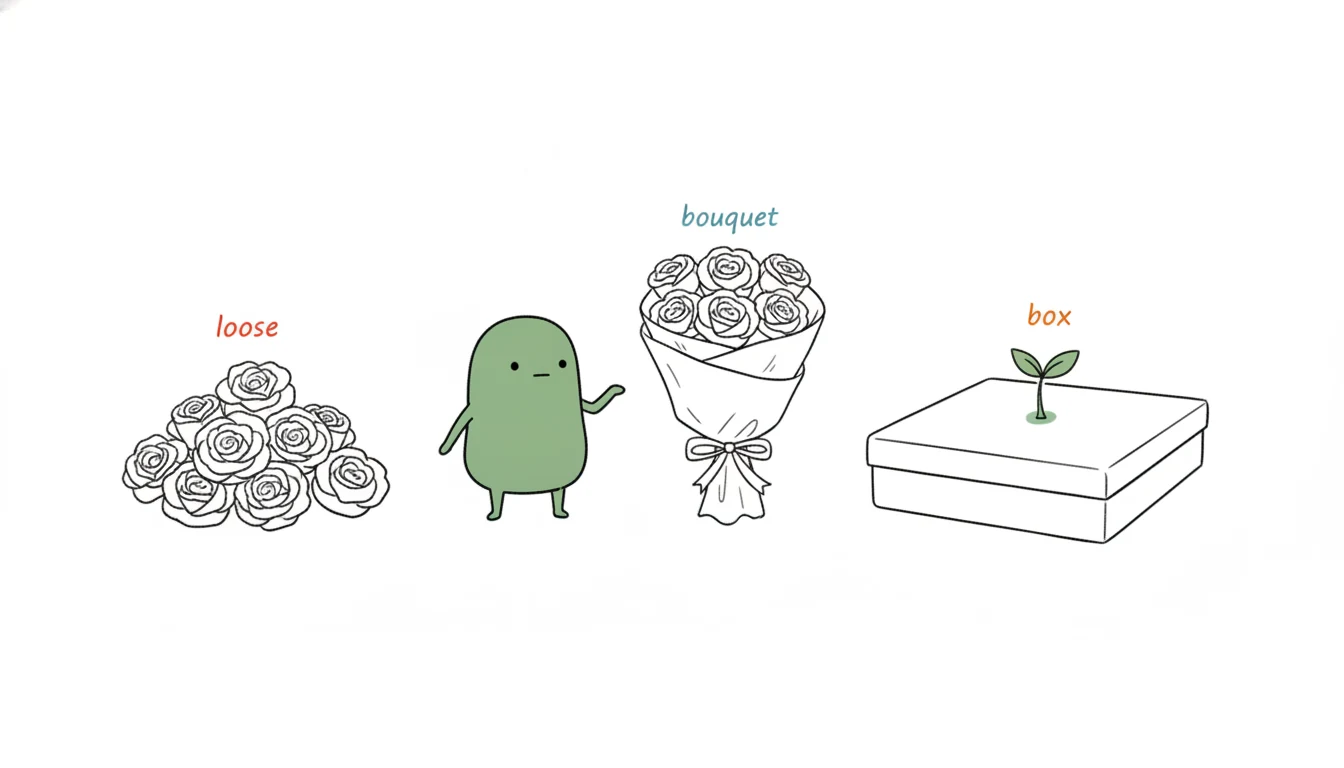
Loose heads vs finished bouquets vs branded gift boxes
The single biggest cost and logistics lever in wholesale soap roses is how finished the product is when it leaves the factory. There are three practical tiers.
Loose heads
Raw rose heads, with stems optional. This is the lowest unit cost and the most flexible format. You assemble, arrange, or repackage downstream. It suits buyers who already have an in-house assembly or packing operation, or who want to mix soap roses with their own materials such as ribbon, foam, or boxes.
Finished bouquets
Heads pre-assembled onto stems and arranged into a bouquet, often wrapped. This removes assembly labor from your side but raises the unit cost and the shipping volume, since arrangements take more space and need more protective packing. It suits florists and e-commerce sellers who want a near-retail-ready product without running an assembly line.
Branded gift boxes
A complete retail unit: roses arranged in a box, often with your color scheme, scent, and logo. This is the highest unit cost but the highest margin at retail, and it is fully ready to sell. It suits brands and sellers who want a shelf-ready SKU with no further handling.
| Factor | Loose heads | Finished bouquet | Branded gift box |
|---|---|---|---|
| Relative unit cost | Lowest | Medium | Highest |
| Assembly on your side | Required | Minimal | None |
| Shipping volume | Most compact | Bulkier | Bulkiest |
| Retail readiness | Low | Medium | Shelf-ready |
| Customization depth | Color, scent | Color, scent, arrangement | Color, scent, box, logo |
| Best channel | Events, distributors, DIY assemblers | Florists, e-commerce gifting | Gift retail, branded e-commerce |
Color sets and scent customization
With 18+ standard colors available, the practical question is not which single color but which color set matches your channel and season. A few patterns hold across most buyers:
- Single-color volume works for weddings and themed events where a consistent palette matters.
- Mixed-color assortments suit distributors and gift retailers who want shelf variety; mixed-color orders are negotiable on minimums.
- Seasonal palettes such as reds and pinks for Valentine’s Day or pastels for spring drive predictable reorder cycles.
On scent, the default is a rose or floral profile, but the fragrance is customizable. If you are building a branded line, scent is an underrated differentiator: a signature scent makes your gift box memorable and harder to copy than color alone. Discuss scent direction early, because it affects sampling and lead time.
What drives cost in wholesale soap roses
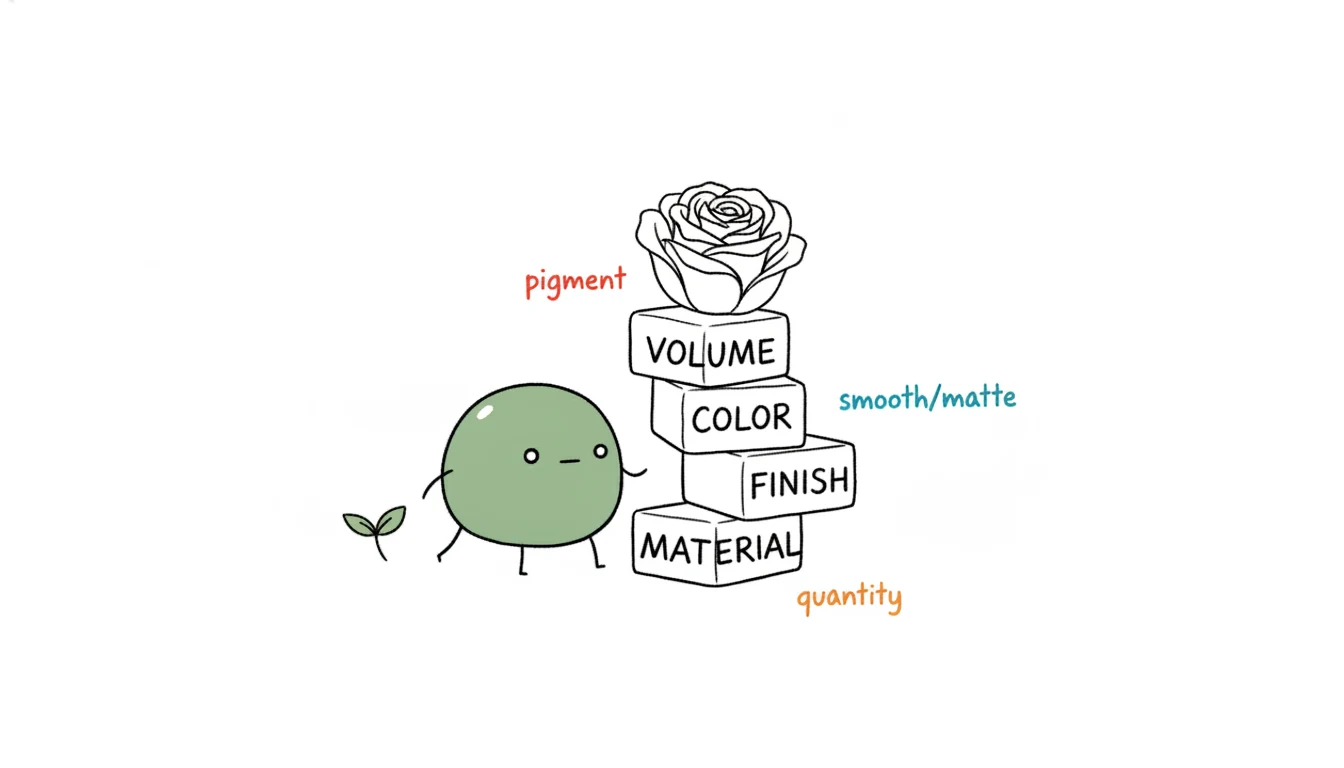
Because this is a quote-based product, it helps to understand the levers that move a quote rather than chasing a single number. The main cost drivers are:
- Color count. A single color is simpler to run than a multi-color assortment. More colors mean more setup and handling.
- Finishing and assembly. Loose heads are cheapest; every step of stem attachment, arranging, and bouquet wrapping adds labor.
- Packaging. A plain inner bag is very different from a custom rigid gift box with inserts and printed logo. Packaging often becomes the largest single cost line in a finished gift box.
- Volume. Higher quantities improve per-unit economics; small trial runs carry proportionally higher setup cost.
- Customization. Custom scent, custom color matching, and logo printing each add setup and sampling work.
If your target retail price is tight, the fastest way to protect margin is to simplify finishing and packaging while keeping the product quality high. A clean loose-head order in a smart but standard box can outperform an over-engineered arrangement on margin.
MOQ and trial orders
For 3D soap roses, MOQ starts from 2,000 pcs, with mixed-color minimums negotiable. Lead time runs roughly 15 to 25 days for production once the order is confirmed, and samples typically take 3 to 7 days. For buyers testing a new channel, the smart path is to treat the first order as a trial: a modest volume in your most promising format and color set, sized to validate sell-through before committing to a larger reorder.
A trial order also surfaces the practical issues you cannot judge from a sample alone, such as how the product survives your shipping lane, how customers respond to the scent, and how your packaging holds up. Build that learning into your second order rather than scaling blind.
OEM and private-label options
The same factory line that makes generic heads can produce a fully branded product. OEM and private-label options for soap rose wholesale typically cover color, scent, finished bouquet arrangement, box design, and logo. If you are building a brand rather than reselling generic stock, this is where the value is: a custom scent and a branded box turn a commodity rose into a defensible SKU.
If private label is your goal, start by reading our soap flower private-label program, which explains how color, scent, packaging, and logo come together into a finished branded line. Bringing a clear brief — palette, scent direction, box format, and logo files — shortens the sampling cycle considerably.
The sample-to-bulk workflow
A clean sourcing process for wholesale soap roses follows a predictable arc. Skipping steps is where most first orders go wrong.
- Brief. Define format (loose, bouquet, or box), color set, scent, packaging, and target volume.
- Quote. Request a quote against that brief so cost drivers are priced against your actual spec, not a generic baseline.
- Sample. Approve a physical sample (3 to 7 days) for color, scent, soap feel, and finishing before any bulk commitment.
- Trial order. Run a modest first production batch to validate sell-through and shipping.
- Bulk and reorder. Scale the winning configuration and lock in a reorder cadence around your seasonal peaks.
The sample stage is non-negotiable. A photo cannot tell you whether the red is the red you want, whether the scent reads as premium or cheap, or whether the soap surface is smooth. Hold the product in your hand first.
How to vet a soap rose supplier
You can evaluate a supplier without relying on any certification claims. Judge them on what you can see and test:
- Samples. Are they fast, willing, and accurate to your brief? A supplier who delivers a precise sample in days is showing you their process discipline.
- Color consistency. Across a batch, do the same colors actually match? Ask for multiple units of one color and check for drift.
- Soap quality. Surface finish, fragrance strength and pleasantness, and how the rose holds its shape over time all signal base quality.
- Finishing capability. If you need bouquets or branded boxes, can they assemble cleanly at volume, or only mold loose heads? Confirm the finishing tier they can actually deliver.
- Communication. Clear answers on MOQ, lead time, and customization, plus a real quote against your spec, indicate a supplier who can handle a reorder relationship.
The cheapest quote is rarely the best partner. Color drift, weak scent, or sloppy assembly will cost you more in returns and lost reorders than the unit savings ever recovered.
Matching product format to channel
Close the loop by mapping format to where you sell:
- Florists want finished bouquets and loose heads with stems for arrangements that never wilt.
- Gift retail wants branded gift boxes that sit on a shelf and sell themselves.
- E-commerce sellers want ready-to-ship boxes with protective packaging built for the shipping lane.
- Event and wedding suppliers want loose heads and small arrangements at volume, often single-color.
Get the format right and the rest of the order — color, scent, packaging, volume — follows naturally from the channel. When you are ready to spec your order, our wholesale soap roses page is the place to start a quote.
Related guides
- How to Make and Brand a Soap Flower Bouquet With 3D Soap Roses (B2B Sourcing Guide)
- Top Soap Flower & Soap Rose Manufacturers (2026): A Buyer’s Guide
— Lareina, Nail Legend


Leave A Comment