
A rechargeable nail drill can look complete in a supplier photograph while leaving the most expensive questions unanswered. Which battery and charger ship with this model? How was runtime measured? Can a distributor obtain a replacement handpiece or charger after the first order? A purchasing team needs those answers for the exact configuration it plans to sell.
This rechargeable nail drill OEM checklist is for salon distributors and private-label brands comparing samples and quotations. It goes deeper on the power system and after-sales scope than our general nail drill wholesale buyer guide. Start with the nail drill category, then request a written specification for the model under consideration.
Freeze the configuration before asking for runtime
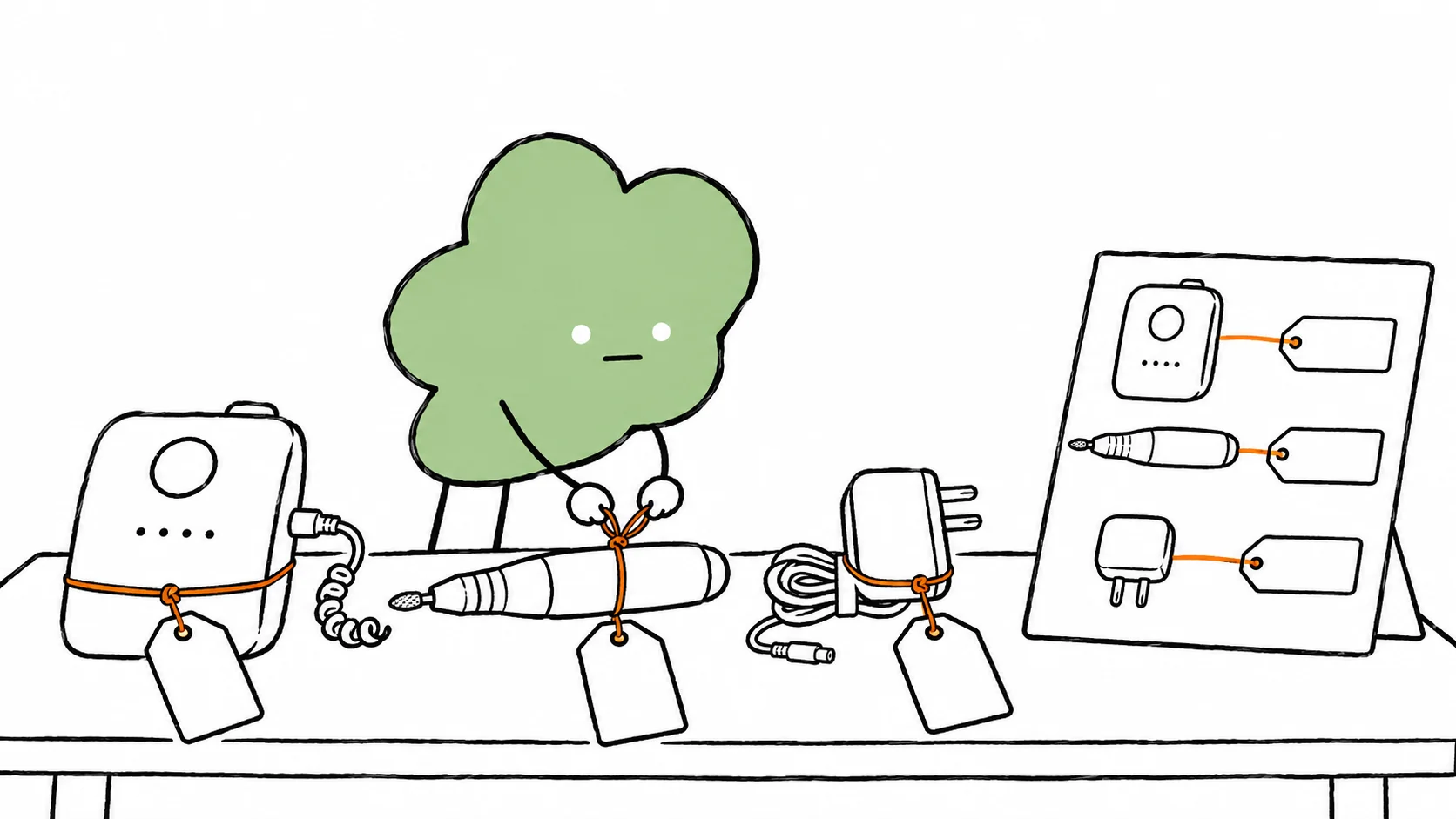
Give each sample a model code and revision. Record the control unit, handpiece, battery pack or cells, charger or adapter, charging cable, plug, included bits and case. Ask the supplier which parts can change without a new model name. If two samples use different handpieces or batteries, their runtime and feel are separate results.
Ask for the nominal battery capacity, chemistry, rated input and output of the supplied charging equipment, and whether charging is permitted while the drill is operating. Treat every number as a supplier claim until the corresponding specification and sample are matched. A large capacity printed on a box does not describe runtime at a particular speed or load.
Keep the destination market and plug version on the same sheet. A useful comparison lists the actual adapter and plug supplied for each market, plus the user manual and product label revision. Do not assume that a mark shown on one model’s brochure applies to every configuration in the category.
Define a repeatable runtime and charging test
Ask the supplier to state the conditions behind its runtime claim: starting charge, drill speed, load, handpiece, stop point and ambient conditions. Then agree on a sample check that your receiving or quality team can repeat. Record observations such as speed stability, heat at the handpiece and control unit, and any interruption or warning during operation. These are evaluation questions; this article does not prescribe a universal pass threshold.
Run a separate charging observation using the supplied adapter and cable. Record the time from the agreed low-charge state to the supplier’s full-charge indication, the indicator behavior, and whether the unit becomes unusably hot. Have a qualified technical reviewer determine any electrical safety checks. A result from a generic USB adapter should not be presented as evidence for the adapter included in the sale pack.
Use a simple test record with columns for sample code, battery revision, handpiece, adapter, procedure, observed result and reviewer. That record lets a buyer compare a revised sample with the one originally approved. The brushless model comparison discusses broader motor and runtime trade-offs; keep the acceptance record specific to the unit you order.
Match transport and market documents to the battery version

Request the available battery identification and transport test summary for the battery design in the selected configuration. The U.S. Pipeline and Hazardous Materials Safety Administration explains why lithium battery test summaries matter to the supply chain and advises checking them with the battery manufacturer or distributor. See PHMSA’s lithium battery guidance. The documents required for a shipment depend on the actual battery, packing method, route and destination; confirm them with the responsible shipper and logistics provider.
For electrical and market-specific evidence, ask which current report, declaration, manual and label apply to the exact model, adapter and destination. Record report numbers and model references instead of accepting a list of logos. If the supplier proposes a different cell, charger or plug later, send the change to the technical reviewer before treating the original document set as sufficient.
A request for documentation is not a claim that every NailLegend model holds a particular certification. The compliance document overview explains how to frame the discussion. The buyer and qualified local adviser should confirm the requirements for the intended market.
Write the spare-parts and warranty scope into the quotation
Ask whether the handpiece, adapter, cable, battery assembly, control unit and common wear parts can be ordered separately. For each part, request its part code, compatible model revisions, order quantity, availability and expected supply route. A replacement part from a different revision may fit physically without meeting the agreed performance or safety specification.
Put warranty duration, covered components, exclusions, claim evidence, remedy and shipping responsibility in the written offer. Ask what happens when the first sample works but a later batch develops a charging or handpiece fault. Separate a supplier’s suggested warranty wording from the terms actually accepted in the purchase agreement.
For a distributor, the useful question is how a customer will be served after launch: who diagnoses a fault, who stocks a spare, and how long an approved replacement takes to reach the market. Confirm these points by model and order volume. Our manufacturer vetting guide covers the wider supplier review; this checklist narrows the discussion to one rechargeable configuration.
Send one RFQ that keeps alternatives comparable
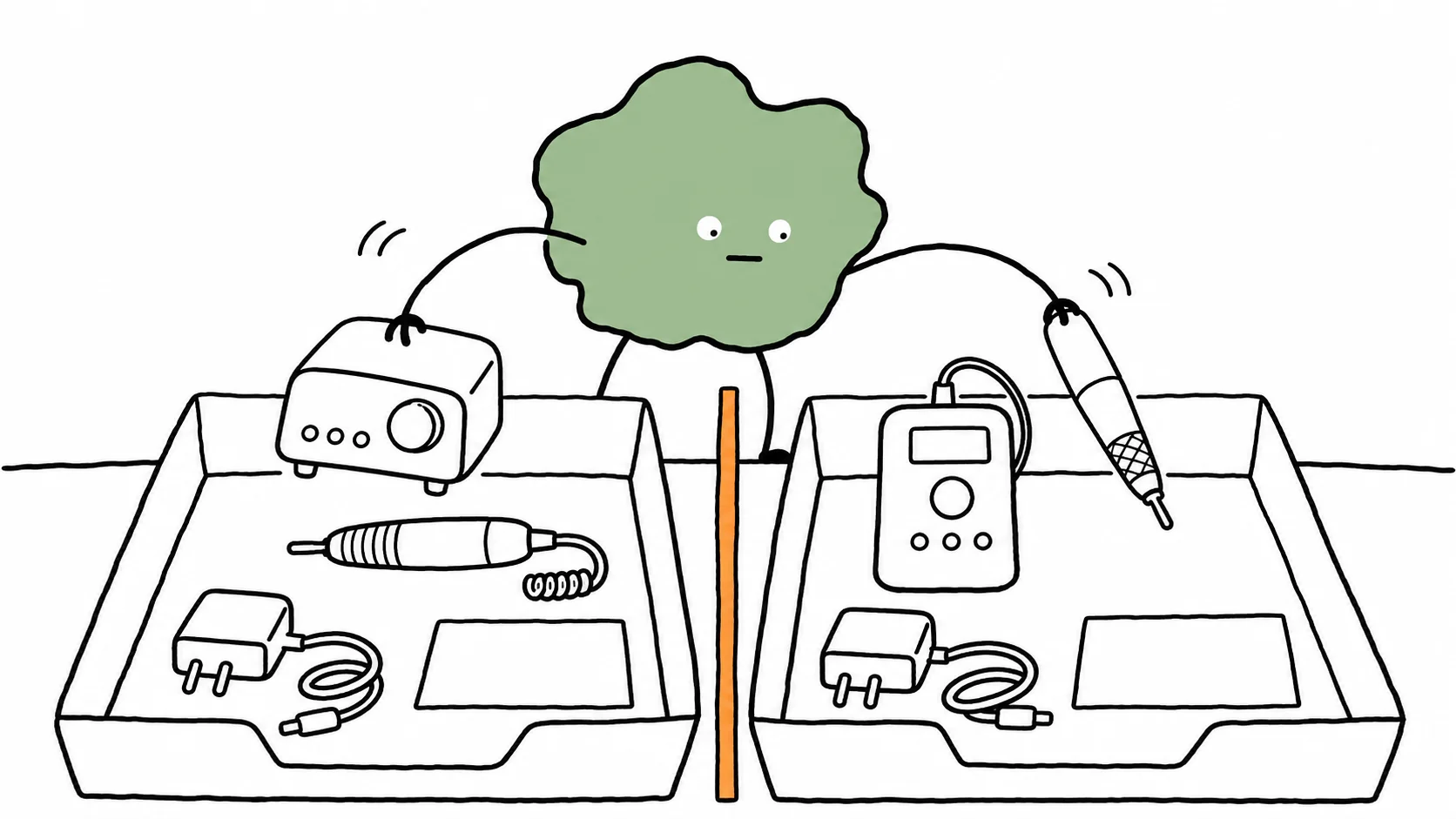
Send the destination market, proposed model and quantity, branding and packaging brief, plug and charger preference, intended salon use, and requested sample count. Ask the supplier to return the configuration sheet, runtime test conditions, available model-specific documents, replacement-parts list, warranty terms, MOQ and lead time. Mark every unanswered item as open rather than filling it with a category-wide estimate.
If the supplier offers an alternative battery, handpiece or adapter, request it on a separate quotation line with its own sample and document references. That makes the trade-off visible to purchasing and prevents a lower price for a different configuration from being mistaken for an equivalent offer.
Use the accepted sample code and specification revision on the purchase order. Then Request a Quote for the selected rechargeable nail drill configuration. NailLegend can review the requested branding, packaging and order scope; the applicable specifications, documentation, MOQ, lead time and after-sales terms must be confirmed in writing for that model.



Leave A Comment