
Trend feeds are full of finished manicures, but a distributor cannot buy a trend. It has to buy the tools that make the trend repeatable. A strawberry design, a thin abstract line and a character illustration may all look “hand painted,” yet they require different brush control, hair profiles and replacement patterns.
This nail art brush assortment guide converts consumer design signals into a B2B stocking plan for salons, academies, wholesalers and private-label brands. It focuses on the job of each brush, how to avoid duplicate SKUs, how to tier sets by user level, and which quality checks matter before a bulk order.
Read designs as tool requirements
Popular design posts are useful voice-of-customer data, but one viral image is not proof of durable demand. Group designs by the physical action they require. That produces a more stable assortment than chasing every motif.
| Design family | Core action | Useful brush types | B2B demand |
|---|---|---|---|
| Fruit, flowers and icons | Place small shapes and controlled details | Detail round, short liner, dotting tool | Salon art menus, classes, seasonal sets |
| Abstract lines and swirls | Pull continuous lines with even product flow | Long liner, striper | Fast salon upgrades and social-ready looks |
| Characters and miniature art | Layer fine shapes and outlines | Micro detail, short liner, cleanup brush | Advanced artists and premium services |
| Ombre and gradients | Feather or blend two colors | Ombre brush, flat brush, sponge tool | Core salon technique, repeat demand |
| French and color blocking | Create a clean curve or edge | Angled flat, French brush | Broad professional demand |
The same motif can use different tools depending on scale and medium. A tiny strawberry may need a micro detail brush; a larger painted fruit can use a short round plus a liner for seeds and outline. Specify the intended medium—gel paint, gel polish, acrylic paint or another system—when comparing samples.
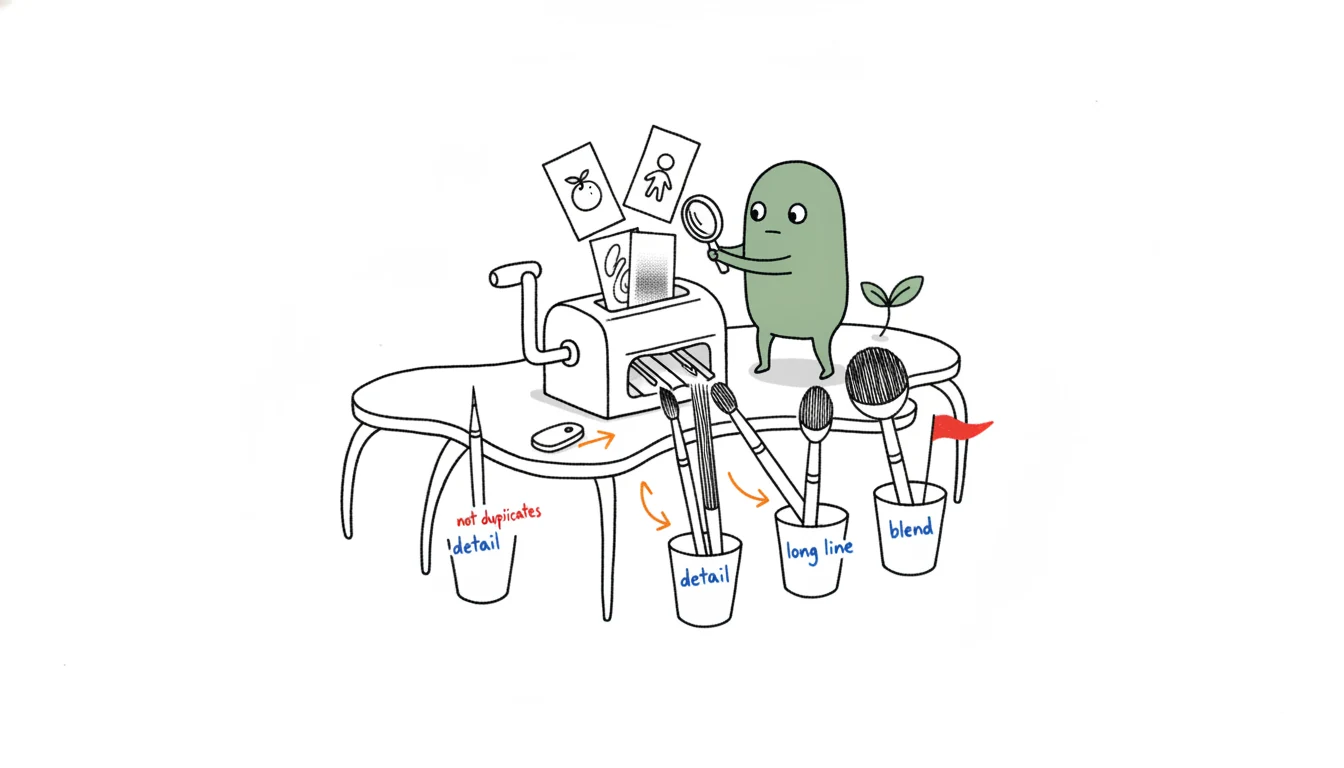
The five core brush jobs
1. Fine detail placement
A short, controlled point is suited to small petals, dots, miniature fills and corrections. Buyers should compare point recovery after loading, not just how sharp the dry sample looks. Hair that splays once wet will frustrate technicians and increase replacements.
2. Continuous line work
Liner and striper brushes hold enough product to draw longer lines. Length affects control: shorter liners are easier for compact curves, while long liners support flowing swirls and striping. An assortment does not need every millimeter. It needs visibly distinct jobs.
3. Shaping and color blocking
Flat and angled brushes move more product and create edges. They can support petals, geometric blocks, one-stroke techniques and cleanup, depending on stiffness and cut. Include exact width and hair length in the specification so reorders match.
4. Blending
Ombre brushes use separated or feathered tips to diffuse color. Buyers should test whether the hair distribution remains even after cleaning. A dramatic-looking dry brush can produce streaks if the bundles are inconsistent.
5. Cleanup and service support
Cleanup, dusting and silicone tools are not always art brushes, but they complete the workstation. Distributors can increase usefulness without inflating the set by pairing a focused art selection with one cleanup tool and clear care instructions.
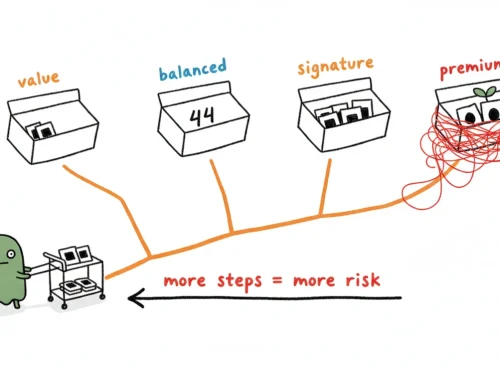
Build three assortment tiers
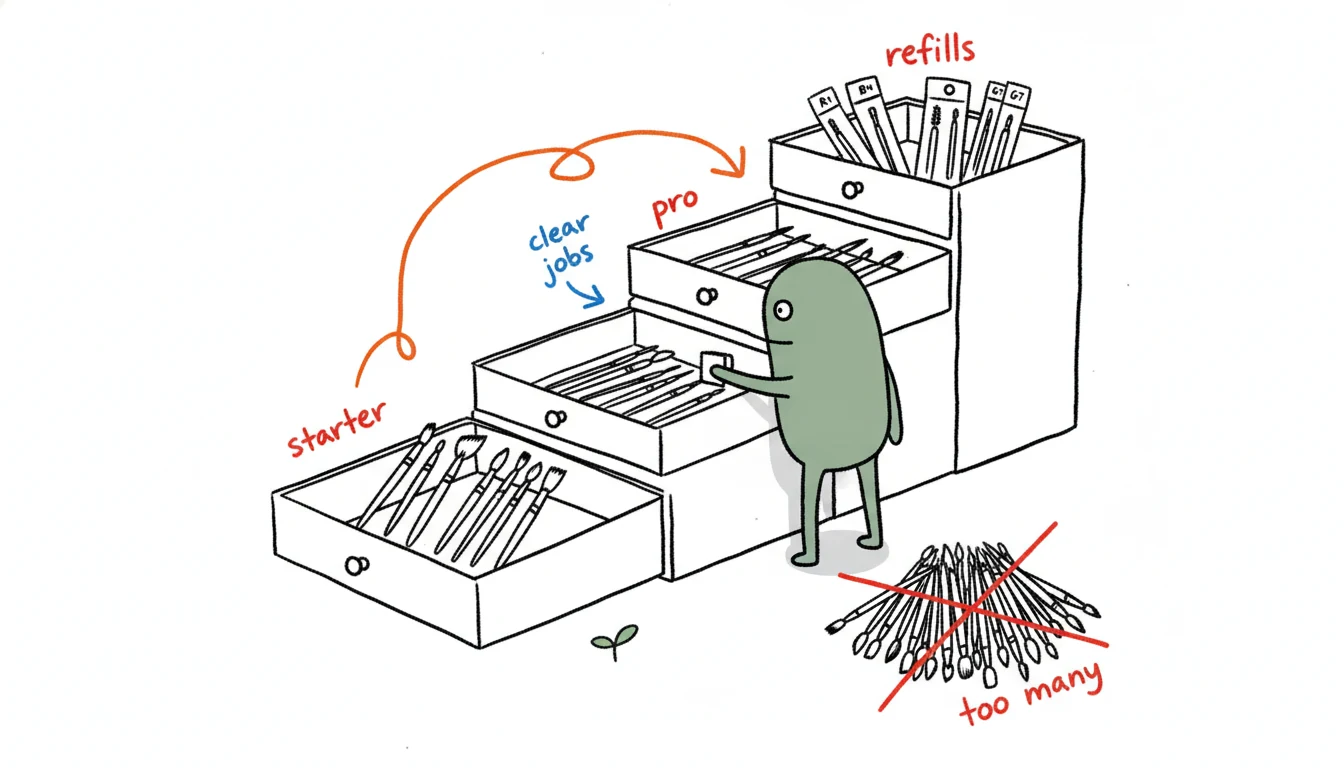
A single large set looks impressive online but often contains near-duplicates that sit unused. Tiering makes the offer easier to explain and lets distributors serve different accounts.
Starter salon set
Use five to seven tools: short detail, medium liner, long liner, flat or angled brush, ombre brush, dotting tool and optional cleanup brush. The goal is broad service coverage with low training friction.
Professional artist set
Add micro detail sizes, more than one liner length, precision flats and specialty shapes only when each has a documented use. Advanced buyers care about balance, ferrule security, cap fit and point recovery more than decorative variety.
Academy or distributor range
Stock individual replacements for high-wear tools alongside complete sets. Academies may prefer numbered handles and a consistent teaching sequence. Distributors need stable reorder codes, carton quantities and barcode-ready packaging.
Our existing Nail Art Brushes Wholesale & OEM guide goes deeper into brush hair, ferrules and private-label options. Buyers can also review the current nail brush category.
Natural hair or synthetic hair?
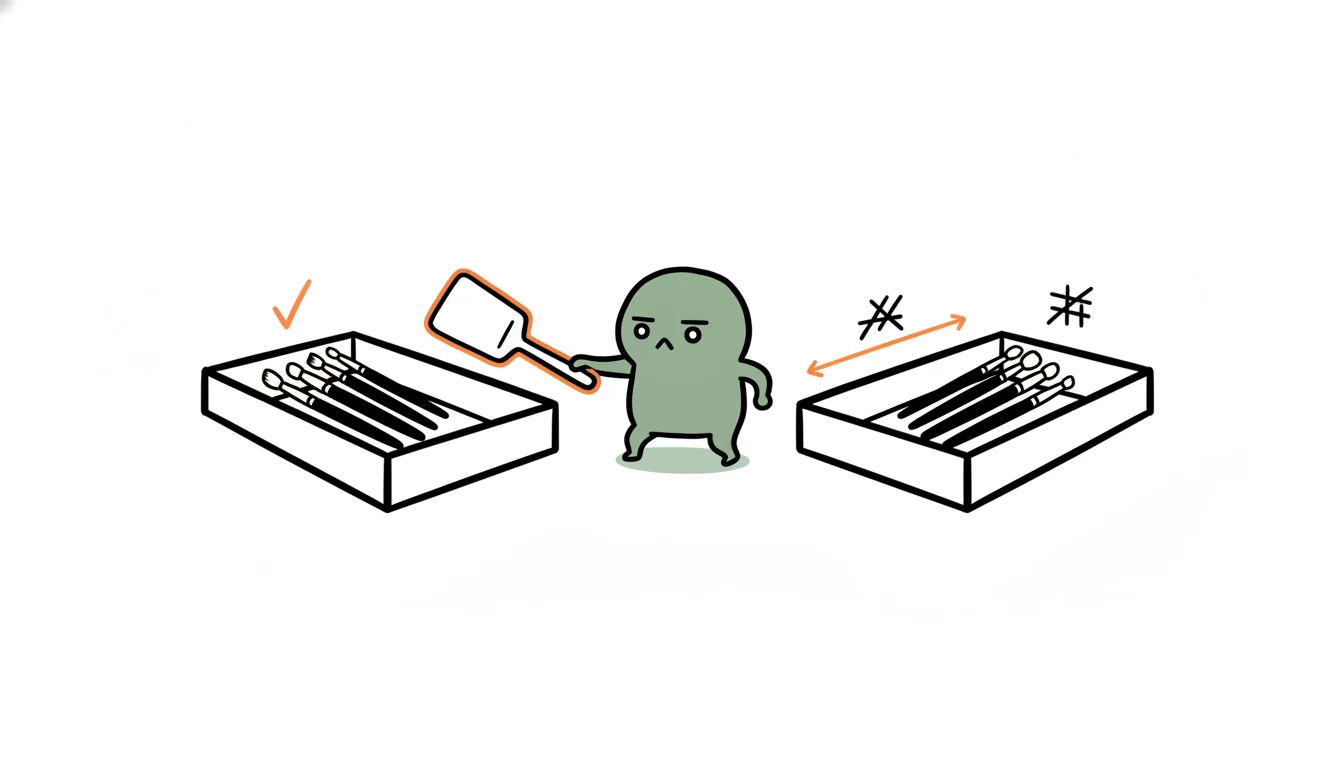
Material should follow the application and brand position. Synthetic fibers can offer repeatable shape, easier sourcing and a vegan positioning when the supply chain supports that claim. Natural hair can provide particular liquid-holding and spring characteristics, but grade, sorting and provenance vary.
Do not approve a set based on a generic material name. Ask for:
- fiber type and whether blends are used;
- hair length, exposed width and bundle weight or tolerance;
- point or edge shaping method;
- adhesive and ferrule construction;
- compatible cleaning method;
- whether caps are vented and fit securely;
- substantiation for natural, vegan or sustainability claims.
If the product is marketed in the United States, cosmetic and advertising claims should be truthful and not misleading. Do not turn a fiber choice into an unsupported performance or environmental promise.
Sample tests that predict bulk-order problems
A sample should be used, cleaned and stored—not kept dry in its sleeve. Create a simple approval protocol:
- Photograph the dry point or edge against a measurement reference.
- Load the intended product and assess pickup, release and line continuity.
- Clean using the proposed salon method.
- Repeat the cycle and check shedding, splaying and ferrule movement.
- Close the cap while watching for trapped or bent fibers.
- Compare several samples from the same lot, not one “golden” sample.
For bulk inspection, define tolerances that can be observed: loose ferrules, cracked handles, sharp edges, illegible size marks, contamination, bent hair, cap mismatch and set-count errors. “Good quality” is not an inspection standard.
Turn trend signals into replenishment, not dead stock
Hand-painted fruit, abstract lines, character art and strong color families can influence merchandising without forcing a new brush SKU for every look. Use trend content in three places:
- Education: show which existing tools produce the look.
- Bundles: create a temporary design kit from permanent components.
- Forecasting: increase replacement stock for the brush jobs used most often.
A design-led bundle can include brushes, dotting tools, a palette and practice tips while keeping the core tool codes stable. This gives the distributor a seasonal story without buying an entirely seasonal hardware range.
Private-label packaging decisions
Customization can include handle color, printed logo, size numbering, ferrule finish, cap, pouch, tray, folding carton and care card. For B2B usability, prioritize identification and storage before decoration.
Confirm the MOQ separately for custom handles, printed packaging and mixed brush configurations. Ask whether replacement brushes can be ordered individually under the same specification. A private-label set is stronger when the customer can replenish the two tools that wear fastest.
When requesting a quote, provide the intended user, product medium, brush jobs, number of tools, material preference, handle style, packaging, target quantity and destination. Nail Legend can then confirm available configurations, MOQ, packaging and lead time. Explore our OEM capabilities or product catalog before sending the brief.
Frequently Asked Questions
How many brushes should a salon starter set contain?
Five to seven well-differentiated tools can cover detail, line work, blocking, blending and cleanup. More pieces are useful only when each has a clear job and the salon can identify it.
What is the difference between a liner and a detail brush?
A detail brush is usually shorter and designed for controlled small shapes. A liner has longer hair that holds product for continuous lines. Exact dimensions matter because names vary among suppliers.
Should distributors stock sets or individual brushes?
Stock both when volume allows. Sets recruit new users and support gifting or training; individual brushes capture replacement demand and reduce the need to replace a full set.
Can nail art brushes be private labeled?
Yes. Common options include logo printing, handle color, ferrule finish, size marks, set configuration and retail packaging. Each option may have a different MOQ.
How should a buyer compare bulk samples?
Use the intended product, clean the brushes repeatedly, compare multiple units and record measurable defects. Point recovery, shedding, ferrule security and cap fit are more useful than appearance alone.


Leave A Comment