
A soap flower bouquet looks like a fresh bunch of roses, smells like a spa, and never wilts — which is exactly why gift brands, florists, and event suppliers keep adding it to their catalogs. Built from 3D soap rose heads instead of cut stems, it sits on a shelf for months, doubles as a usable scented bath soap, and photographs beautifully online. For a business sourcing to resell, that combination of long shelf life, low spoilage, and high perceived value is hard to match. This guide walks through what these roses actually are, how a finished arrangement is assembled, how to design color and occasion lines, and how to source either loose heads or finished arrangements for your own private label.
What 3D Soap Roses Are (and What They Are Not)
The category gets confusing because two very different products share the words “soap flower.” First, there are the thin, fast-dissolving soap petals — paper-like flakes that melt the moment they touch wet hands. Those are a single-use hand-wash novelty. They are not what builds a giftable arrangement.
The product we are talking about is the 3D soap rose flower: a sculpted, rose-shaped head roughly 4cm across, made from a gentle soap base with cosmetic-grade fragrance and colorant. It holds its three-dimensional rose form, carries a rose or floral scent, and feels solid in the hand. It is designed first as decor and gifting, with the bonus that it can genuinely be used as scented bath soap once the recipient is ready.
Compared with fresh flowers, the advantages for a reseller are obvious. Fresh roses last days; a soap rose lasts for months without water or refrigeration. Fresh flowers spoil in transit and inventory; soap roses ship and store like any dry goods. And unlike a simple bunch of cut stems, a soap arrangement carries a second life as a body-care product, which lets you price and position it as a premium gift rather than a perishable.
How a Soap Flower Bouquet Is Assembled
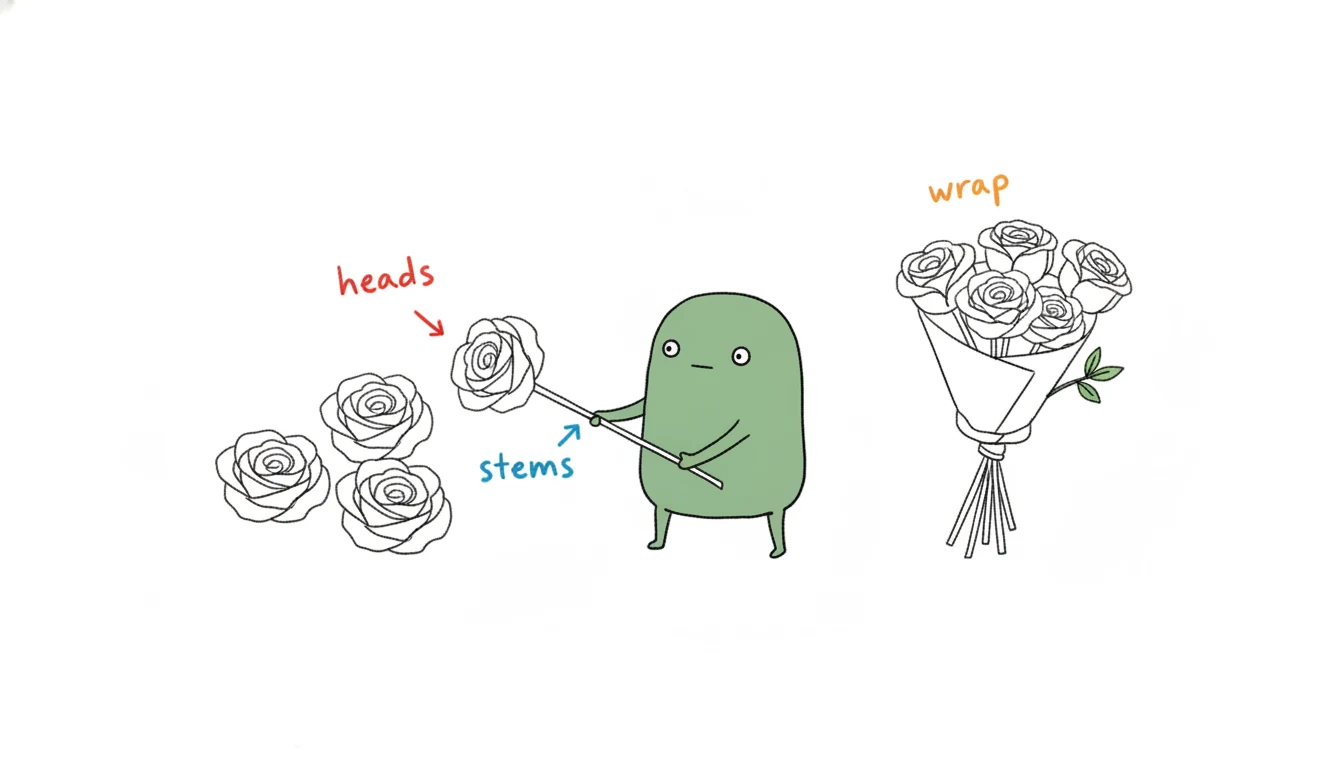
Whether you assemble in-house or order finished, it helps to understand the build so you can spec it correctly. A soap flower bouquet comes together in four stages.
1. Heads
Everything starts with the rose heads. They are sold as loose heads with no stem, which gives you maximum flexibility — you decide the color mix, the count per arrangement, and how they are mounted. A small posy might use 7 to 11 heads; a fuller presentation bouquet can run 19 to 33 or more. Buying loose heads is the route most brands take when they want to control the final look.
2. Stems and Leaves
Stems and leaves are optional add-ons. A loose head can be mounted on a wire or plastic stem and dressed with foliage to mimic a real rose, or it can be set directly into a foam base for a domed, hatbox-style arrangement. Florists who already work with wire and tape often prefer loose heads and their own stems; brands that want a turnkey product usually have stems and leaves added at the factory.
3. Wrap
The wrap is where your brand identity lives. Kraft paper reads natural and eco; matte art paper reads modern and premium; mesh and ribbon read romantic. This is the layer most customers photograph, so it carries a disproportionate share of the perceived value. Wrapping can be done by you for a handmade feel, or specified as part of a finished order.
4. Box
Finally, the box — a flower box, hatbox, or gift carton — protects the arrangement in transit and becomes part of the unboxing moment. Boxes are also the most natural place for your logo, a printed sleeve, or a care card explaining that the roses can be used as soap. You can order an arrangement loose for self-assembly or as a finished box ready to retail.
Designing the Soap Flower Bouquet: Color and Gradient Ideas
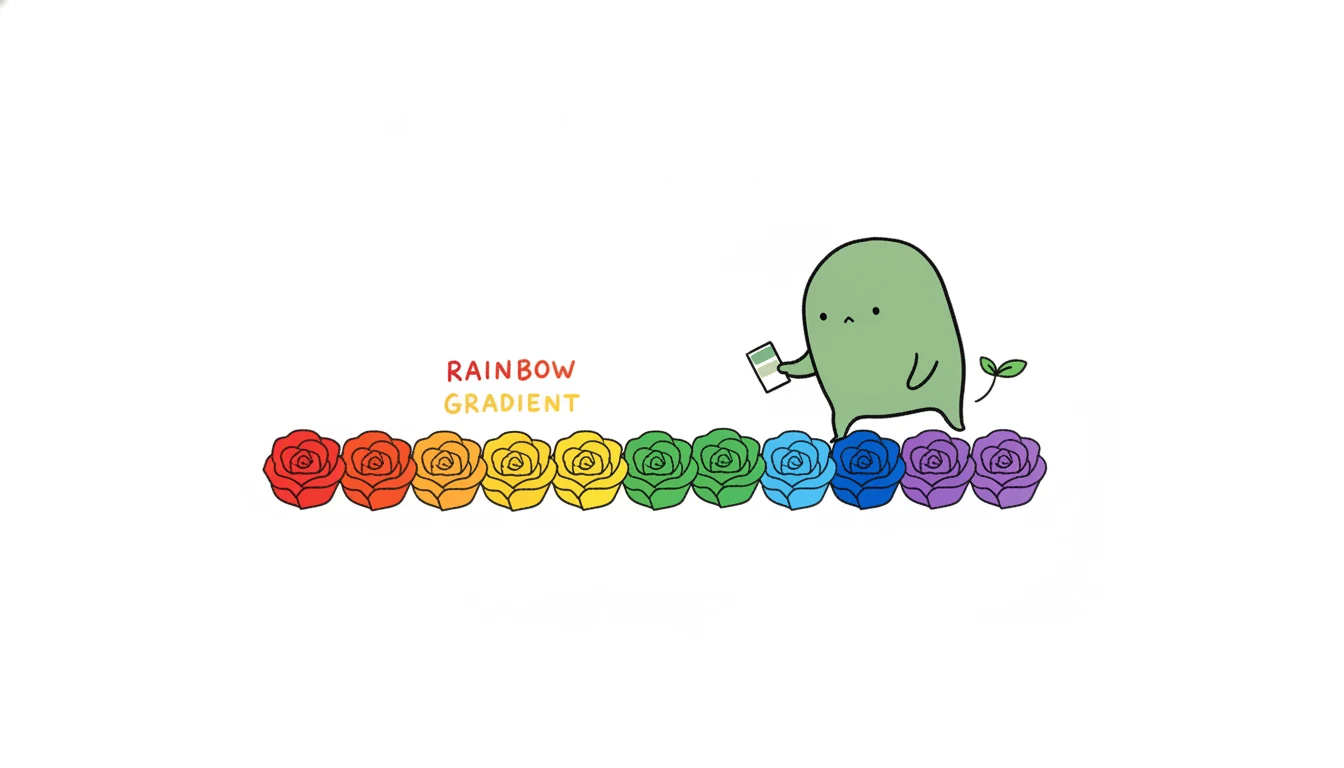
Color is your cheapest and strongest differentiator. With 18+ available colors, the same rose head can anchor completely different product lines. There are three design directions worth building around.
- Rainbow gradient: heads that shift through a spectrum across the arrangement. This is the scroll-stopping, social-media-friendly option — strong for younger gift buyers and “wow” presentation pieces.
- Single-tone: one clean color throughout, such as classic red, blush pink, ivory, or dusty blue. This reads elegant and timeless and pairs best with weddings, corporate gifts, and premium positioning.
- Seasonal palettes: two or three colors tuned to a moment — red and white for Valentine’s, pastels for spring, burgundy and gold for the holidays. Seasonal lines let you re-merchandise the same heads several times a year.
A practical tip for resellers: keep your hero arrangement in a single signature palette for brand recognition, then run rainbow and seasonal versions as limited drops. That gives you a stable catalog spine plus reasons for customers to come back.
Occasions That Sell — and the Palettes That Fit Them
The reason a soap flower bouquet moves so well is that it slots into nearly every gifting calendar. Below is a quick reference matching common occasions to color directions and packaging notes, useful when you plan a seasonal range.
| Occasion | Recommended palette | Packaging angle |
|---|---|---|
| Valentine’s Day | Classic red, deep rose, red-and-white | Heart box or ribbon-wrapped, romantic mesh |
| Mother’s Day | Blush pink, peach, soft pastels | Kraft or art-paper wrap with a care card |
| Weddings & favors | Single-tone ivory, champagne, dusty blue | Small posies or single-rose favor boxes |
| Corporate gifts | Brand-matched single tone or two-tone | Logo-printed sleeve or branded carton |
| Birthdays & “just because” | Rainbow gradient, bold mixes | Bright hatbox, shareable presentation |
| Holidays / year-end | Burgundy & gold, red & green | Festive carton, gift-set bundling |
Because the underlying heads are the same across all of these, you can serve every column above from one core inventory of loose roses and differentiate purely through color selection, wrap, and box. That keeps your SKU complexity low while your catalog looks broad.
Why a Soap Flower Bouquet Sells So Well at Retail
For a reseller, the appeal of a soap flower bouquet comes down to four built-in selling points you can put straight on a product page or shelf talker.
- Long-lasting: no water, no wilting. It holds up in inventory and on the customer’s shelf for months, which lowers your spoilage and lets you carry stock through a season.
- Scented: the rose or floral fragrance gives an immediate sensory payoff in store and at unboxing — a real advantage over silk or paper flowers that look nice but do nothing.
- Reusable as soap: the “flowers you can actually wash with” story is a genuine conversation starter and a reason to choose this over a plain decorative bunch. It justifies a gift price point.
- Photogenic: gradient color and a tidy box are made for online listings and social sharing, which helps your customers’ own marketing and yours.
Stacked together, these points let you position the product as a keepsake gift rather than a perishable, which is where the healthier margins live. For a deeper view of the wider category — pricing logic, packaging tiers, and private-label structure — the soap flower wholesale and private-label guide covers the full landscape.
How to Source for Your Own Brand: Loose Heads vs Finished Bouquets
There are two sourcing routes, and the right one depends on how much assembly you want to own.
Route A — Loose heads, assembled by you
Order loose soap rose heads and build arrangements in-house. This suits florists and gift studios with hands and a workshop. You get full creative control, the ability to react quickly to trends, and a genuine handmade story. The trade-off is labor: you own stems, wrapping, and quality control.
Route B — Finished bouquets and boxes, ready to retail
Order arrangements finished at the factory — heads on stems, wrapped, in a logo-ready box — so they arrive shelf-ready. This suits distributors and retailers who want to scale without an assembly team. You trade some flexibility for speed and consistency, and you can still customize the look through OEM options.
What you can customize
Either route supports private-label and OEM work, including custom colors and gradients, custom scent, finished-bouquet styling, box and packaging design, and your logo on the packaging. That means two brands can sell the same underlying rose and look completely different on the shelf.
Wholesale terms to plan around
| Item | Detail |
|---|---|
| MOQ | From 2,000 pcs |
| Production lead time | 15–25 days |
| Sample time | 3–7 days |
| Sold as | Loose heads (no stem) or finished boxes |
| Customization | Color/gradient, scent, finished bouquet, box, logo |
A sensible first move is to request samples in two or three palettes, test them with your own audience or buyers, and lock a hero arrangement before committing to a full color range. Pricing on a B2B program is handled by quote, so you can scope MOQ, packaging tier, and customization to fit your launch.
Putting It Together
A soap flower bouquet is one of the rare gift products that is creative to design yet clean to source: a single inventory of 3D rose heads, dressed through color, wrap, and box, can serve Valentine’s, Mother’s Day, weddings, corporate gifting, and year-end all from the same shelf. Whether you build by hand from loose heads or order finished arrangements for your own label, the path to a branded line is short — pick a signature palette, prove it with samples, then scale it through private label.
If you are ready to spec a program, start with the 3D soap rose flowers page and request samples and a quote for your color and packaging plan.
Related guides
- Soap Rose Wholesale: A Buyer’s Guide to Sourcing 3D Soap Roses
- Top Soap Flower & Soap Rose Manufacturers (2026): A Buyer’s Guide
— Lareina, Nail Legend


Leave A Comment