
“Should I private label a massage lotion, a massage oil, or a cream?” is one of the first questions a B2B buyer faces when building a body-care line — because the three products look similar but perform differently in a therapist’s hands. Getting massage lotion vs oil (and where cream fits) right decides what you stock, how you position it, and what you can bundle. This guide explains each product, how they differ across glide, absorption, and skin feel, when each is used, and which to private label first.
The Three Products at a Glance
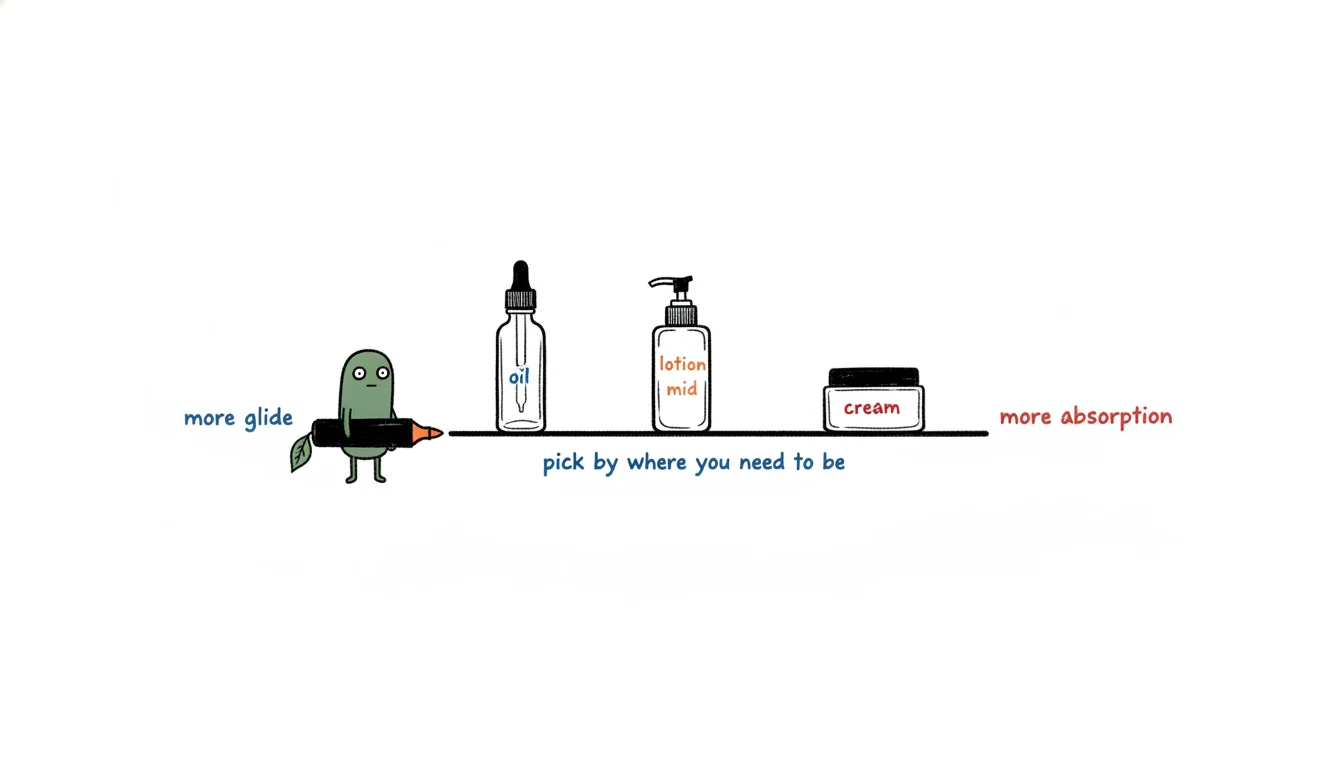
All three create slip so a therapist can work the muscles, but they sit at different points on a spectrum from light-and-fast to rich-and-slow. A lotion balances glide with clean absorption, an oil maximizes glide and luxury, and a cream maximizes richness for short, targeted work. Understanding massage lotion vs oil versus cream is the foundation of a coherent body-care range — confuse them and you stock the wrong product for your channel.
The good news for a private-label buyer is that the three are complementary, not competing: many spas keep more than one on the shelf, so a brand that offers the range serves more of the market than one betting on a single texture.
Massage Lotion: The All-Round Professional Default
Massage lotion is a water-and-oil emulsion engineered to give therapists enough working time to perform a full massage while still absorbing cleanly by the end of the service. It is the most popular professional choice because it solves the biggest complaint about pure oil — greasy residue on skin and linens — without sacrificing too much glide. In the massage lotion vs oil comparison, lotion wins on cleanup, laundry, and versatility, which is exactly why it dominates spa back-bars and pedicure rooms. It is also the easiest to retail, since customers can use it at home without feeling oily afterward. For sourcing it, see our massage lotion manufacturer guide.
Massage Oil: Maximum Glide and Luxury
Massage oil is pure oil — typically a blend of carrier oils — that offers the longest working time and the most luxurious, sensory feel. Therapists doing long, flowing strokes and deep work often prefer it because it never dries out mid-stroke. The trade-off in the massage lotion vs oil decision is residue: oil leaves a film on the skin and stains linens, which means more laundry cost and a less convenient at-home experience. Oil also carries the strongest aromatherapy and premium positioning. For the full picture on sourcing it — including the carrier oils and blends that define a good oil — see our massage oil manufacturer guide.
Massage Cream: Richest, for Targeted Work
Massage cream is the thickest and most cushioning of the three, with a high oil content in a stiffer emulsion. It is best for short, targeted, deep-tissue work on dry or rough skin — think a focused neck-and-shoulder treatment or a foot-and-heel massage in a pedicure — where you want richness and grip rather than long flowing glide. Cream absorbs slowly and conditions heavily, so it doubles as a treatment product. It is the least common of the three as a standalone but a strong addition for a premium or clinical positioning.
Massage Lotion vs Oil vs Cream: Comparison
| Property | Lotion | Oil | Cream |
|---|---|---|---|
| Glide / working time | Good, balanced | Maximum | Short, grippy |
| Absorption | Clean, moderate | Slow, leaves film | Slow, conditioning |
| Residue & laundry | Low | High | Moderate |
| Best for | Full-body, all-round | Long flowing strokes | Targeted deep work |
| Retail friendliness | High | Medium | Medium |
| Pricing / margin | Low cost, volume driver | Premium | Treatment price |
| Best channel | Retail + back-bar | Spa / aromatherapy | Clinical / targeted |
When to Use Each
Therapists choose by service and client. A standard full-body relaxation massage or a pedicure leg-and-foot massage calls for lotion — balanced glide, clean finish. A long deep-tissue or sports massage with flowing strokes calls for oil — maximum working time. A short, focused treatment on dry or calloused skin calls for cream — richness and grip. Knowing this mapping helps you stock and label correctly: you are not selling three versions of the same thing, you are selling three tools for different jobs.
Which to Private Label First
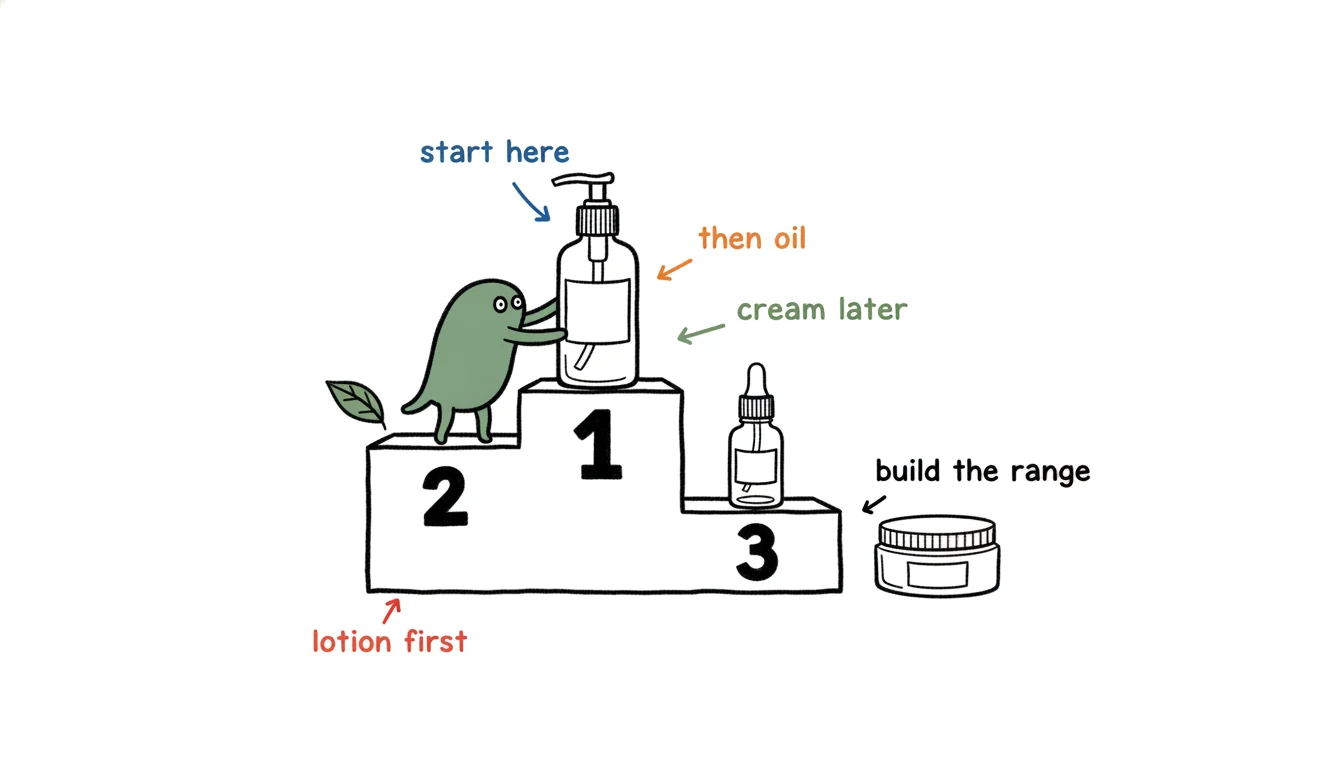
For most new body-care lines, the smart sequence is lotion first — it is the most versatile, most retail-friendly, and serves the widest range of services — then add a massage oil to capture therapists who want maximum glide and the premium aromatherapy story, and finally a cream for targeted and clinical positioning. In the massage lotion vs oil starting decision, lotion is the lower-risk anchor because it absorbs cleanly and retails easily, while oil is the natural second product that broadens your professional appeal. If you are targeting spas specifically, launching lotion and oil together covers most of the back-bar demand.
Bundling the Range as a Set
The strongest commercial play is often to offer the range rather than a single texture: lotion for everyday full-body work, oil for long flowing or aromatherapy sessions, and cream for targeted treatment. A spa can then standardize on one brand across every service, which is exactly what makes a distributor’s job easier and raises order value. Sourcing all three from one manufacturer keeps branding consistent, simplifies your supply chain, and lets you negotiate combined volume. Even if you launch with just lotion, design packaging that visually belongs to a range you can extend.
Why Buyers Get the Choice Wrong
The most common mistake in the massage lotion vs oil decision is choosing on price or familiarity rather than channel. A brand that leads with pure oil because it seems “premium” can frustrate spa clients who hate greasy residue and drive up the spa’s laundry costs; a brand that only stocks lotion can lose deep-tissue therapists who want maximum glide. The fix is to match the product to how it will actually be used and to be explicit on the label about which job each product does. Professional buyers notice when a brand clearly understands the difference between massage lotion vs oil and cream — it signals you know the category.
Pricing & Margin Across the Three
The three carry different cost and margin profiles, which shapes how you build the range. Massage lotion is inexpensive to formulate at volume and a steady, high-repeat seller; massage oil costs a little more depending on the carrier-oil blend and carries a stronger premium price; cream sits between them with a higher oil content and a treatment-product price point. The range is where the economics get attractive — offering all three produces a blended margin and a higher order value than any single product, and lets a spa buyer consolidate purchasing with one brand. When you model your line, price the most-used product (usually lotion) as the volume driver and the oil and cream as margin and positioning plays.
Channel Notes: Spa vs Retail
The right mix in the massage lotion vs oil versus cream lineup shifts by channel. Professional spa buyers want all three in larger or back-bar formats and value oil more than retail does, because therapists handle long sessions daily. At-home retail buyers lean on lotion for its clean feel, with oil as a premium or aromatherapy add-on and cream as a treatment item. Distributors want the full range to serve both. Match your format and bundle to the channel you are targeting, and tell your manufacturer up front so MOQ and packaging are quoted to fit.
How to Brief Your Supplier
Once you have decided your position across massage lotion vs oil and cream, a precise brief gets an accurate quote and sample. Specify which products you want, the texture tier for each (light fast-absorbing vs rich), target scents, any vegan, organic, or hyaluronic positioning, the format (pump, tube, gallon), and packaging that ties the range together. Tell the supplier your channel — professional, retail, or both — so MOQ and formats fit. The more clearly you define the range up front, the closer the first sample comes. For supplier selection and the wider sourcing picture, see the massage lotion manufacturer guide.
Browse the wholesale massage lotion range, a representative organic private label massage lotion, or the massage oil range and a private label massage oil to build a complete set, then request a quote.
Frequently Asked Questions
What is the difference between massage lotion and massage oil?
Massage lotion is a water-and-oil emulsion that balances glide with clean absorption and washes off easily, while massage oil is pure oil offering maximum glide and a luxurious feel but leaving more residue on skin and linens. Lotion is the all-round professional default.
Where does massage cream fit in?
Massage cream is the richest and thickest of the three, best for short, targeted deep-tissue work on dry skin where you want grip and conditioning rather than long flowing glide. It doubles as a treatment product.
Should I private label lotion, oil, or cream first?
Most new lines lead with massage lotion because it is the most versatile and retail-friendly, then add oil to capture therapists who want maximum glide, and finally a cream for targeted and clinical positioning.
Can one product do the job of all three?
Not well. Lotion, oil, and cream sit at different points on the glide-versus-absorption spectrum, so a single product would compromise on every job. Spas often stock more than one to match the service.
Which is better for a pedicure massage, lotion or oil?
Lotion is usually preferred for the leg-and-foot massage step of a pedicure because it gives good glide but absorbs cleanly, leaving the skin conditioned rather than greasy for the rest of the service.




Leave A Comment