
If you are evaluating a massage oil manufacturer for a private-label or OEM program in 2026, you are buying into one of the most reliable consumables in the spa channel. Massage oil is used by the bottle, reordered on a schedule, and branded almost entirely through scent, texture, and packaging — which makes it an ideal margin product for spa brands, distributors, and salon chains. This guide covers the product formats, what separates a capable supplier from a risky one, the customization that matters, and the real numbers behind a private-label launch.
Unlike trend-driven categories, massage oil demand is anchored in professional use: every massage service consumes product, and every spa needs a back-bar supply. A brand that owns its massage oil line captures both the treatment-room volume and the retail take-home sale.
Massage Oil Product Formats
A capable massage oil manufacturer typically offers several formats, and the right one depends on your channel:
- Professional back-bar bottles: Larger formats (8–16 oz and up) with pump or flip-top closures, built for treatment-room economics and easy dispensing.
- Retail bottles: Smaller branded formats for take-home sale, where label design and scent story carry the price point.
- Specialty infusions: Formulas with skin-conditioning additions such as hyaluronic acid or botanical extracts that justify a premium tier — see a representative hyaluronic-acid-infused massage oil.
- Multi-purpose body oils: Positioned across massage, after-bath, and skin-conditioning use to widen the audience.
Why Private-Label Massage Oil Works as a B2B Product
- Built-in reorder cycle: Professional use consumes product predictably, so revenue compounds with each spa or salon account you win.
- Scent is the brand: Lavender, jasmine, cherry, unscented — a custom scent program differentiates without complex formulation work.
- Treatment room + retail shelf: The same formula sells twice: in service and as take-home retail.
- Natural range extension: Massage oil pairs with body butter, scrubs, and soaks under one brand — see our body butter base comparison for the adjacent category.
What to Look for in a Massage Oil Manufacturer
Across every supplier tier, the same quality signals apply:
- Carrier oil transparency: The supplier should tell you exactly which base oils are used — sweet almond, grapeseed, jojoba, fractionated coconut — and why. Glide, absorption, and shelf life all follow from the carrier system; our carrier oils and blends guide breaks this down.
- Stable scent across batches: Fragrance drift between production runs is one of the most common failure points in this category. Ask how scent load is controlled and verified.
- Oxidation control: Oils go rancid. A serious massage oil manufacturer manages antioxidant systems, packaging barriers, and storage guidance, and can state an expected shelf life.
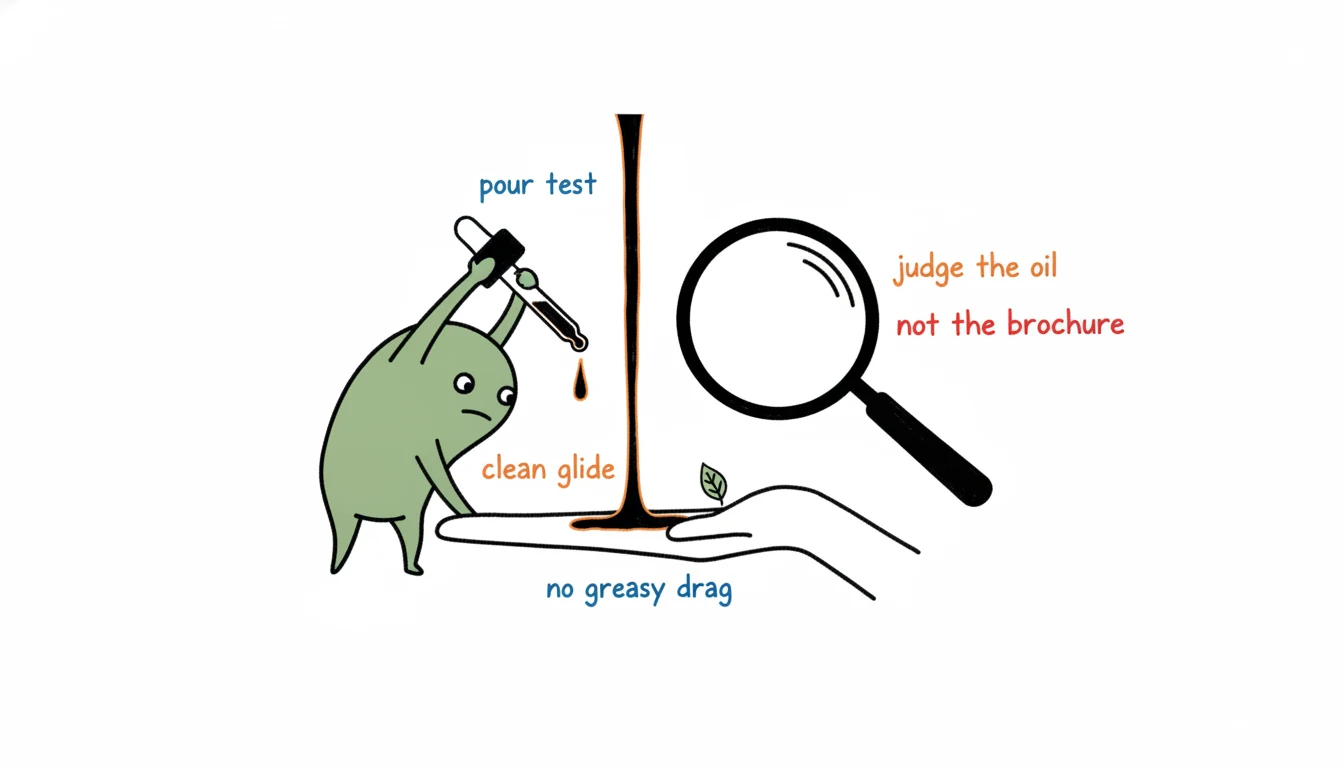
- Real sampling: A physical sample within days — judged on glide, absorption, scent at use, and after-feel — predicts production quality better than any brochure.
- Honest MOQ tiers: Sample, pilot, and production tiers let you validate before committing capital; see the private label massage oil MOQ guide.
- Responsive English communication: Clear, fast replies are a leading indicator of how the production run will go.
Customization Options That Matter
- Scent: Stock fragrances (lavender, jasmine, cherry, citrus, mint) or a custom signature scent; unscented for sensitive-skin and prenatal positioning.
- Carrier blend: Fast-absorbing vs long-glide systems tuned to treatment style — Swedish and deep tissue need different working time on the skin.
- Actives: Hyaluronic acid, vitamin E, botanical extracts for a premium tier.
- Bottle & closure: Pump, flip-top, or disc cap; PET or glass; 4 oz retail to gallon back-bar.
- Label & languages: Multi-language labels, barcodes, and retail-ready presentation where your channel needs them.
Quality Control & Compliance Basics
- Ingredient documentation: A full INCI ingredient list and the paperwork your destination market requires for cosmetic labelling.
- Batch records: Confirm the supplier can trace a bottle back to a production batch if a question ever arises.
- Stability and shelf life: Ask for the expected shelf life under normal retail conditions and how it was established.
- Packaging integrity: Leak-testing matters more for oils than almost any other spa product — confirm carton and closure performance on your real shipping lane.
- Sample before scale: Approve a production-representative sample before any full run.
MOQ, Lead Time & Cost
Custom-scent massage oil programs typically start in the low thousands of bottles per scent, with smaller pilot tiers often available to validate the market first. Production lead time runs roughly two to four weeks after deposit and artwork approval, scaling with volume and custom packaging. Because the formula is mostly carrier oil, per-unit cost at volume is low relative to perceived value — the margin math that makes this category attractive. Full numbers in the MOQ, scent and packaging guide.
Sourcing Timeline: From Inquiry to Delivery
- Inquiry & quote (days 1–3): Share scent direction, bottle size, volume, and channel. A responsive supplier returns clear MOQ tiers quickly.
- Sampling (days 3–10): Judge glide, absorption, scent at use dilution, and after-feel on skin.
- Proforma invoice & deposit: Lock formula, packaging, and timeline.
- Bulk production (2–4 weeks): Lead time scales with volume and custom packaging.
- QC & shipping: Confirm leak-testing and batch checks, then choose freight terms (FOB, CIF, or DDP).
Stock, White Label, Private Label, or OEM?
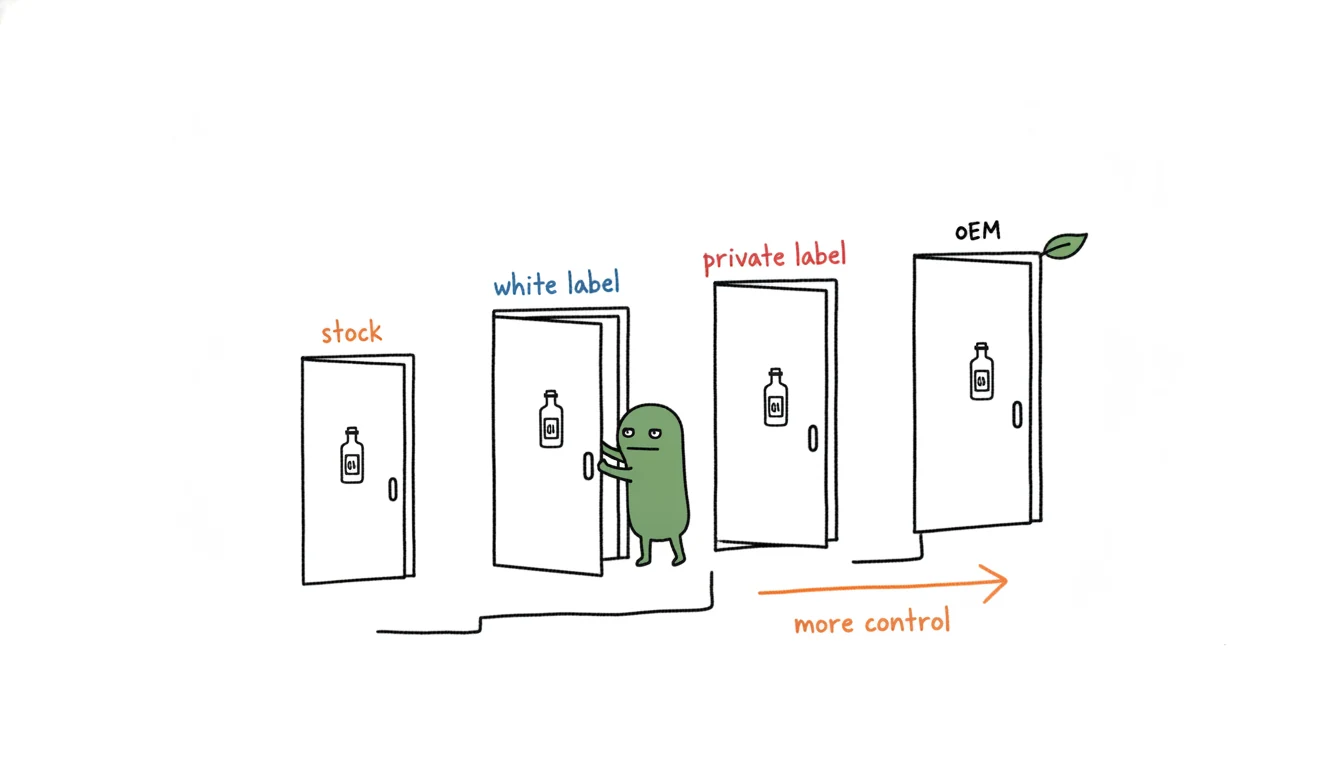
- Stock / wholesale: Buy an existing formula as-is — fastest path to shelf, no differentiation.
- White label: A ready formula under your brand and label.
- Private label: Your branding plus selective scent, carrier, or packaging choices.
- OEM / custom formulation: A formula built to your spec — carrier system, actives, scent, bottle — for full differentiation.
Nail Legend produces salon and spa massage oils alongside a full body-care and nail range, with custom scents, hyaluronic-acid infusions, and private-label packaging. Browse the wholesale massage oil range, see a representative private label massage oil, or pair oils with a spa gift set program, then request a quote.
Frequently Asked Questions
What does a massage oil manufacturer actually supply?
A massage oil manufacturer produces finished massage and body oils on a stock, white-label, private-label, or OEM basis — covering the carrier oil blend, scent, any actives such as hyaluronic acid, the bottle and closure, and your branded label.
What is the typical MOQ for private-label massage oil?
Custom-scent programs commonly start in the low thousands of bottles per scent, and many suppliers offer smaller pilot tiers so you can validate the market before committing to a full production run.
Which carrier oils are most common in professional massage oil?
Sweet almond, grapeseed, jojoba, and fractionated coconut are the workhorses. The blend determines glide, absorption speed, after-feel, and shelf life, so confirm exactly what base system your supplier uses.
How long does production take?
Physical samples typically arrive within days to about a week, and bulk production runs roughly two to four weeks after deposit and artwork approval, scaling with volume and custom packaging.
Can I get both back-bar and retail sizes in one program?
Yes. Most manufacturers run the same formula across professional back-bar bottles and smaller retail formats, which lets a spa brand sell in the treatment room and on the shelf with one purchase order.
How should I judge a massage oil sample?
Test it the way a therapist would: glide and working time on skin, absorption speed, scent strength at use, after-feel (conditioned, not greasy), and whether the bottle and closure dispense cleanly without leaking.



Leave A Comment