A reference image can communicate the mood of a custom soap flower bouquet, but it cannot tell a manufacturer which details your brand will accept in bulk. The buyer still needs to define the flower arrangement, visible colors, box fit, presentation, and approval boundary. Without that definition, a promising sample can leave the production team with several competing interpretations.
This guide is for gift brands, distributors, and event suppliers moving from a design reference to a documented sample approval. It focuses on revision control and acceptance criteria rather than selecting a box supplier. Use the soap flower manufacturing page to begin the product discussion, then turn your preferred concept into a specific brief.
Translate the reference into a controllable design brief
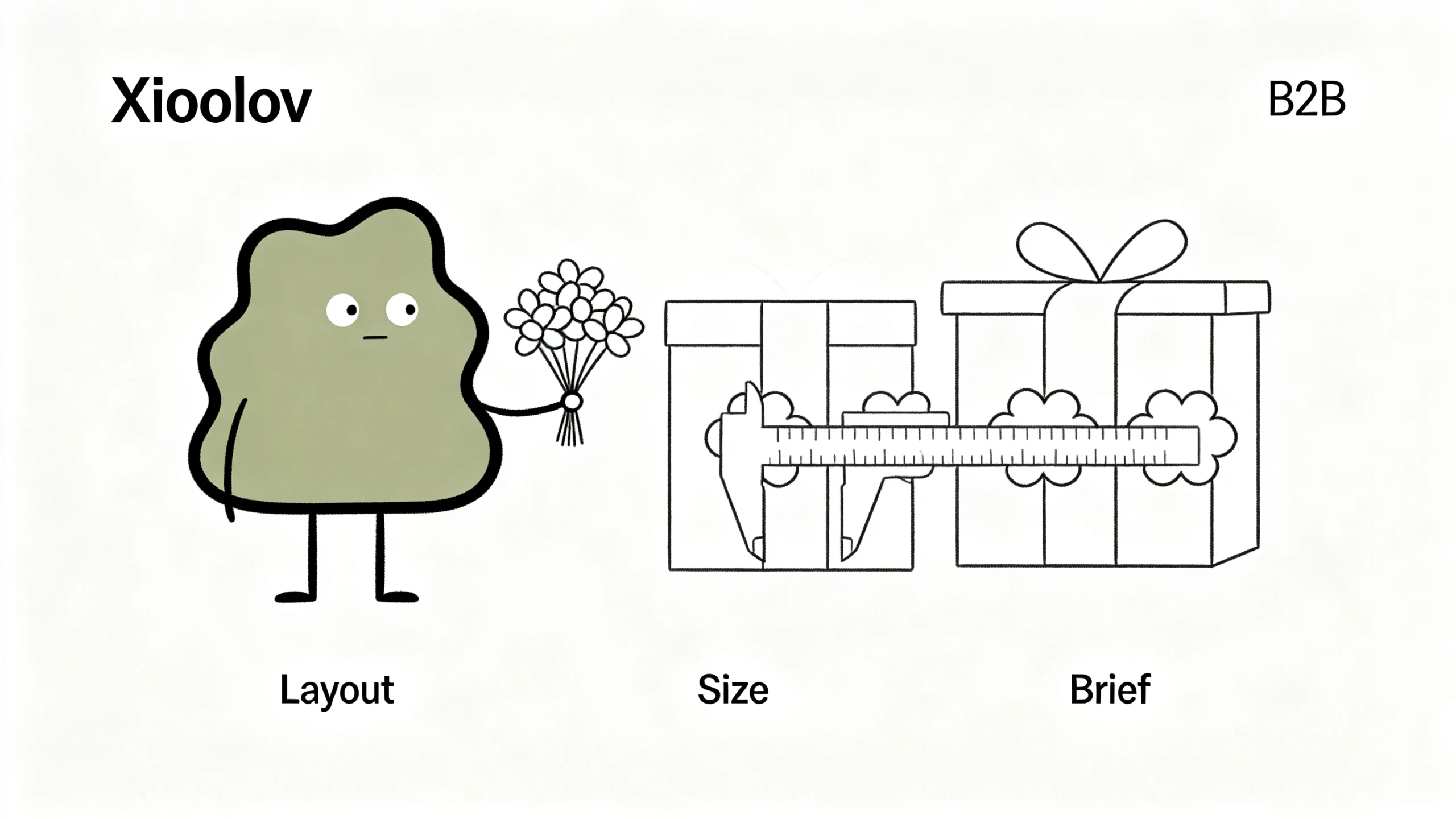
Attach the reference and annotate the features that matter. Identify the intended arrangement, flower types, color relationships, approximate presentation size, visible accessories, and packaging format. Mark which features are essential and which are open to a supplier proposal. A general request to make it the same leaves too much room for disagreement.
Separate a visual aspiration from a confirmed manufacturing capability. If your reference includes unusual translucency, embedded details, a particular surface effect, or several combined materials, ask the supplier to assess feasibility before you commit to the concept. An attractive photograph does not establish that its construction can be reproduced in the proposed soap flower format.
Our soap flower product page and 3D soap rose product page help distinguish possible starting products. Ask which product and assembly scope the supplier is actually quoting. Do not assume loose heads, an assembled bouquet, and a complete boxed arrangement are the same deliverable.
Give every sample round a clear identity
Assign a brief revision and ask the supplier to label its sample response accordingly. The record should connect the sample to the proposed flower configuration, packaging, artwork, and any agreed deviations. If the supplier proposes an alternative, give it a separate reference so reviewers can compare it without confusing it with the original request.
State what each sample round is intended to answer. An early arrangement mock-up may be useful for layout approval while leaving the final color or packaging unresolved. A later sample may be intended to represent the production configuration. Ask the supplier to explain any differences between the sample construction and the proposed bulk construction.
Do not call a sample fully approved when your team has accepted only its general appearance. Record partial decisions in plain language: layout accepted, color still under review, or final box not evaluated. This gives purchasing a practical way to see whether the project is ready for an order.
Check the assembled bouquet inside its final box
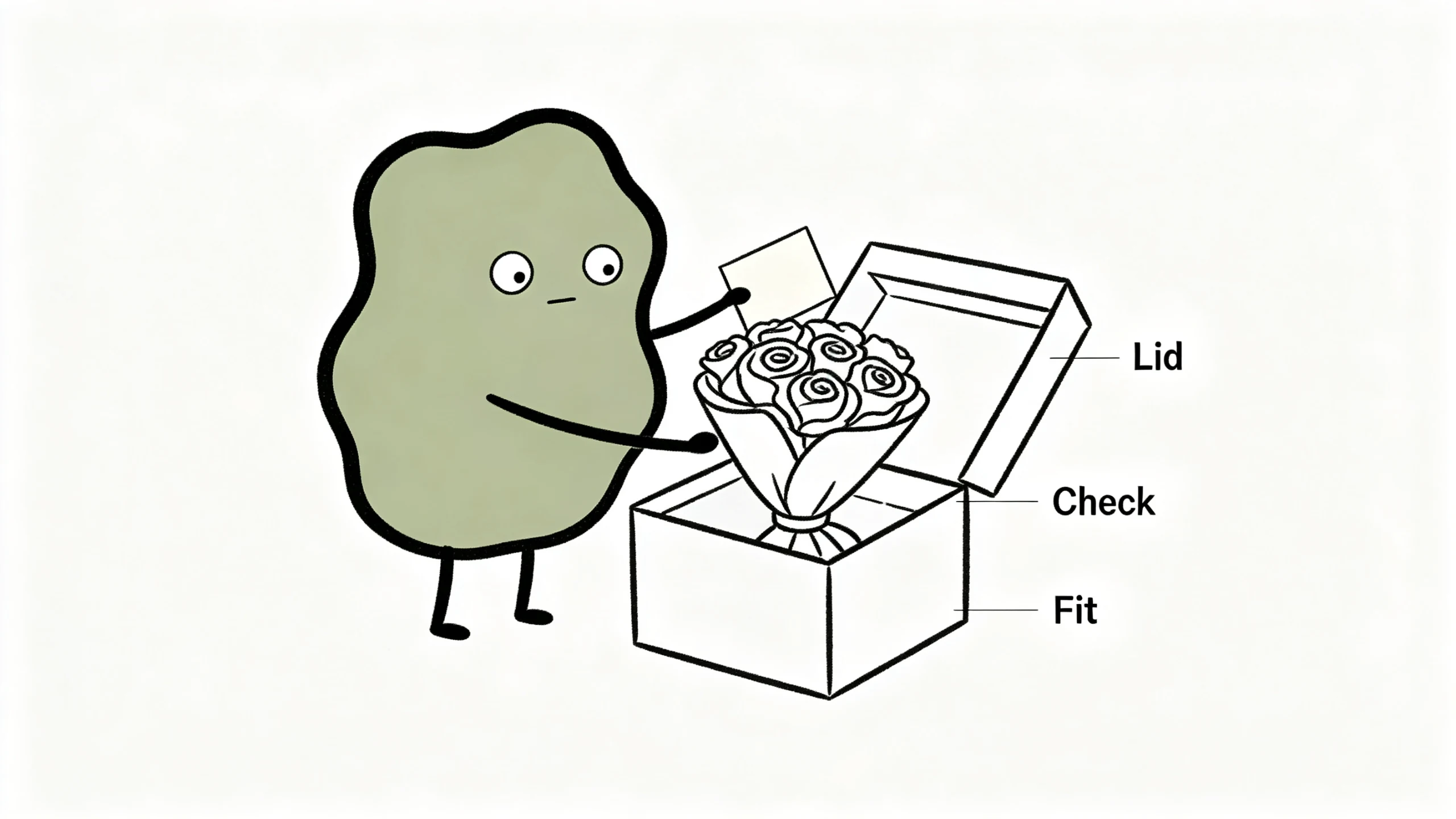
Review the intended assembly and packaging together. Check the arrangement position, lid clearance, visibility through any opening, and how the product is supported inside the box. Ask reviewers to record observations against the brief rather than rely on an overall impression that the presentation looks premium.
Photograph the sample from agreed viewpoints and keep the images with its identifier. Images help teams discuss layout, but a photograph alone may not answer questions about fit or handling. Decide which decisions require a physical sample at the buyer’s location and which can be reviewed remotely. Make that decision before asking the supplier for final approval.
Check any accessory or assembly detail included in the order. If ribbons, stems, inserts, message cards, labels, or outer wraps are part of the configuration, identify their versions. If an item is merely a styling prop in the reference photograph, say whether it is excluded. Clear exclusions prevent the brand team from expecting details that purchasing never ordered.
Define handling review without inventing performance promises
Agree how the packed sample will be evaluated for the intended distribution route. Ask the supplier and packaging contact to propose an appropriate review. Record the configuration, conditions, observations, and decision. Do not describe a simple sample-handling exercise as proof that the product will arrive undamaged in every shipment.
If a sample moves inside its box or the visible arrangement changes, document the issue with the sample and packaging identifiers. Request a specific revision and review that revision as a new configuration. Avoid approving a box change in one conversation and an arrangement change in another without checking the assembled result.
Keep product claims separate from visual acceptance. A gift design approval does not verify skin-related claims, ingredient statements, or market compliance. Ask the appropriate reviewer to assess those matters for the intended use and market. NailLegend’s compliance document overview can help organize the questions, with product-specific support confirmed directly.
Approve revisions as one production reference
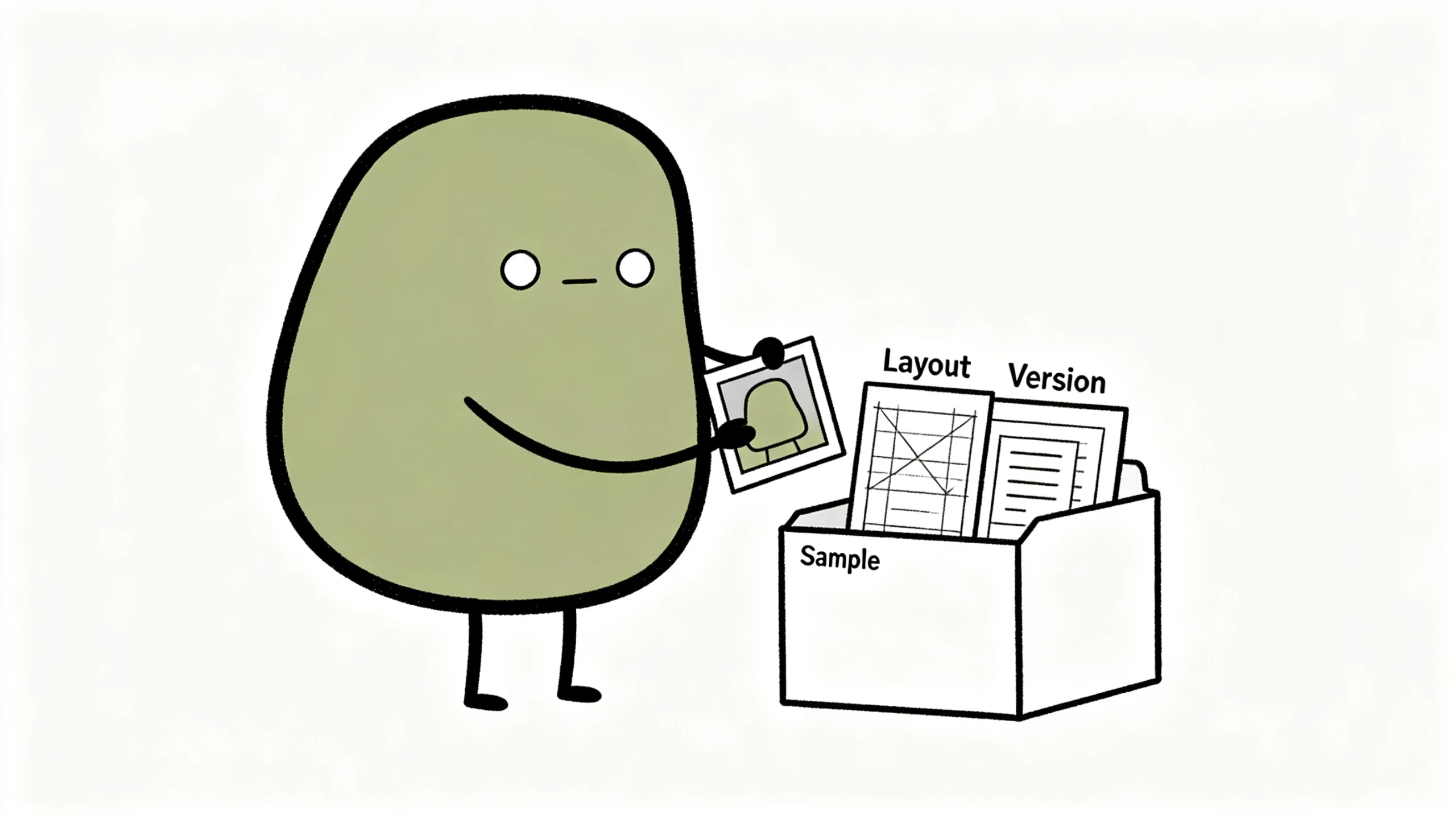
Close sampling with one approval package. Include the accepted sample identifier, arrangement record, color reference, packaging revision, artwork, approved deviations, and any remaining conditions. Name the person authorized to release the configuration. The supplier should be able to identify the same approved version without searching through an informal message history.
Where appearance can vary, ask the supplier to propose a meaningful acceptance approach and review it before ordering. Do not invent a numeric tolerance that has not been agreed or treat one attractive sample as a promise of identical individual pieces. The goal is a shared decision rule for evaluating production against the accepted reference.
After approval, require a clear change request for any proposed substitution or layout revision. Identify which aspects must be reviewed again. If a packaging component becomes unavailable, do not let an informal substitute become the new reference by default. Preserve the connection between the accepted design and the configuration on the purchase order.
Connect design approval to the commercial order
Ask for the commercial offer to identify the approved configuration and list what is included. Confirm whether the scope is components, assembled bouquets, boxed arrangements, or a combination. Provide the quantity breakdown by design or colorway, the destination market, and any required labeling or packing instructions.
Request the applicable minimum order, sample arrangements, packaging availability, and production sequence for that configuration. Confirm timing after the relevant approvals are understood. General website information should not replace a specific commitment covering your selected assembly and packaging.
Review our OEM capabilities overview when preparing the customization questions, then Request a Quote with the annotated reference and sample approval brief. A documented design decision gives both your brand team and the supplier a usable production reference before the bulk order begins.

Leave A Comment