
This guide is for spa brands and distributors sourcing a private label massage oil manufacturer. Three commercial decisions drive your launch — order volume (MOQ), scent program, and bottle format — and we cover realistic MOQ tiers, custom-scent lead times, and back-bar-to-retail packaging so you can quote and order with margin protected.
MOQ Tiers: Sample, Pilot, Production
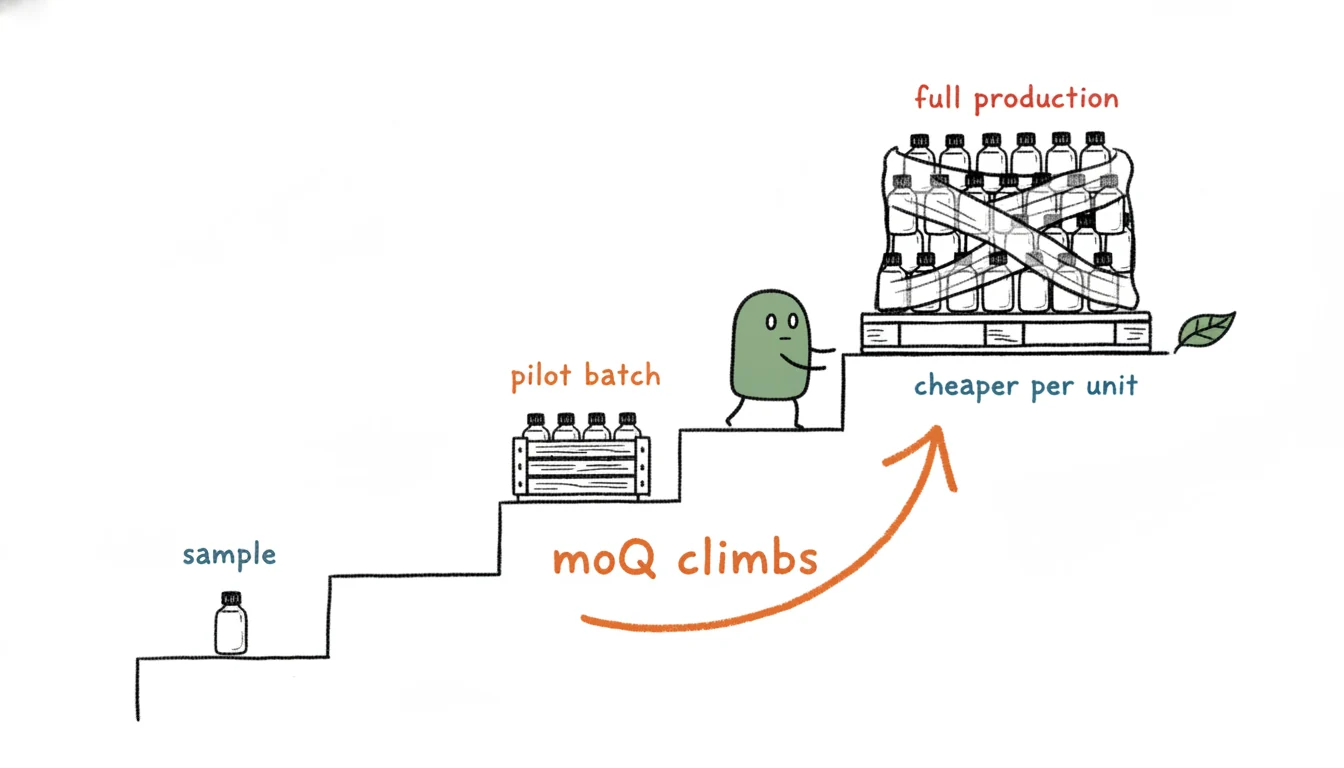
- Sample tier: A few bottles to judge glide, scent, after-feel, and packaging before anything else. Sampling speed is itself a supplier signal.
- Pilot tier: A smaller first run — often a few hundred to a thousand bottles — to test the market and your sales channel without tying up capital.
- Production tier: Custom-scent runs commonly start in the low thousands of bottles per scent, with per-unit pricing improving as volume rises.
Custom packaging and custom scent both raise the minimum, because the factory is committing a fragrance batch and a label run to your brand. Order what you can sell through in one season — oil has a shelf life, and a warehouse of oxidizing stock is a loss, not an asset.
Scent Strategy for a Private Label Massage Oil Line
- Launch narrow: One to three proven scents (lavender is the category anchor; jasmine and citrus broaden the shelf) beat eight untested ones — each scent multiplies MOQ.
- Always consider unscented: It serves sensitive-skin and prenatal clients, and many professional buyers default to it for treatment flexibility.
- Custom signature scent: The strongest differentiator for an established brand, at the cost of a higher minimum and a fragrance-development step.
- Keep scent consistent: Batch-to-batch fragrance drift erodes professional trust faster than almost any other defect — ask how the supplier verifies it.
Bottles, Closures & Formats
| Format | Best For | Notes |
|---|---|---|
| 8–16 oz pump bottle | Back-bar / treatment room | One-hand dispensing mid-treatment; the professional default |
| 4–8 oz flip-top or disc cap | Retail take-home | Label real estate carries the brand; travel-friendly sizes sell as gifts |
| Gallon / bulk refill | High-volume spa accounts | Lowest cost per ounce; pair with branded refillable pumps |
| Amber or opaque bottles | Premium & stability positioning | Slows light-driven oxidation and reads as apothecary-premium |
PET is lighter and survives freight; glass reads premium but raises shipping weight and breakage risk. Leak-testing matters more for oils than for any other spa product — confirm closure performance on your real shipping lane before a full run.
Reading a Private Label Massage Oil Quote
- Unit price by tier: Pricing at pilot and production volume, so you can model margin at each stage.
- What is included: Whether the price covers formula only, or scent work, bottle, closure, label application, and carton.
- Sample cost and lead time: Serious suppliers sample fast and often credit sample fees against a production order.
- Shelf life statement: The supplier should state expected shelf life and how packaging protects it.
- Freight terms: FOB, CIF, or DDP — oil is heavy; freight terms move real money in this category.
Landed Cost, Not Factory Price
Oil is one of the heavier spa products per retail unit, so freight and duties can erase a low factory price. Build retail pricing from landed cost: factory quote + freight + duties, then packaging, fulfillment, and target margin. Because a private label massage oil sells both in-service and as take-home retail, model the two margins separately — back-bar economics tolerate a higher landed cost than shelf retail does.
Reorder & Inventory Planning
Massage oil is a consumable with a predictable burn rate per treatment, which makes reorder planning straightforward: estimate bottles per account per month, hold a buffer covering production plus freight time, and consolidate scents into one purchase order to hit better volume pricing. Shelf life is the constraint — first-in-first-out rotation and realistic order sizing beat bulk discounts that age in the warehouse.
Range Extension
Once a massage oil line holds its reorder cycle, the natural extensions are body butter and scrubs under the same scent family — see the body butter MOQ guide — and gift programs that bundle oil with soaks and masks, covered in our spa gift set guide. For supplier selection, start with the massage oil manufacturer guide; for what goes in the bottle, see the carrier oils and blends guide.
Browse the wholesale massage oil range or a representative private label massage oil and request a quote with your target scent, bottle, and volume.
Frequently Asked Questions
What MOQ should I expect for private label massage oil?
Custom-scent production runs commonly start in the low thousands of bottles per scent, while pilot tiers of a few hundred to a thousand bottles are often available to test the market first. Custom packaging and custom scents raise the minimum.
How many scents should a new massage oil line launch with?
Start with one to three proven scents plus an unscented option. Each additional scent multiplies your MOQ commitment, and lavender, jasmine, and citrus cover most of the early demand.
Which bottle format is best for a spa brand?
Run two formats off one formula: an 8–16 oz pump bottle for the treatment room and a 4–8 oz retail bottle for take-home sale. High-volume accounts can add gallon refills with branded pumps.
Why is landed cost so important for massage oil?
Oil is heavy per retail unit, so freight and duties move real money. Compare suppliers on landed cost — factory price plus freight and duties — and model back-bar and retail margins separately.
How do I keep stock from going rancid?
Order what you can sell through in a season, rotate first-in-first-out, store away from heat, and prefer packaging that limits light and air exposure. A stated shelf life from your supplier is the planning baseline.



Leave A Comment