
The carrier system is the formula. When you brief a supplier on a private-label program, the choice of massage oil carrier oils determines glide, absorption, after-feel, shelf life, and cost — everything the fragrance sits on top of. This guide compares the workhorse oils, explains how blends are built for different treatment styles, and flags the stability pitfalls that ruin a launch.
The Workhorse Carrier Oils
Most professional formulas are built from a short list of massage oil carrier oils, each with a distinct role:
- Sweet almond: The classic massage base — medium glide, gentle absorption, soft after-feel, broadly liked by therapists. A safe default for a first program (note: tree-nut origin matters for allergy labelling).
- Grapeseed: Light, fast-absorbing, low odor, and economical — common in professional back-bar formulas where volume economics matter.
- Jojoba: Technically a liquid wax that mirrors skin sebum; very stable with a long shelf life, used at a percentage to enrich a blend rather than as the whole base.
- Fractionated coconut (MCT): Clear, odorless, extremely stable, non-staining relative to whole oils — a modern favorite for custom-scented programs because it lets the fragrance read cleanly.
- Supporting oils: Sunflower, safflower, and apricot kernel fill similar roles at different price points; richer oils like avocado appear at low percentages for after-feel.
Blending for Glide vs Absorption
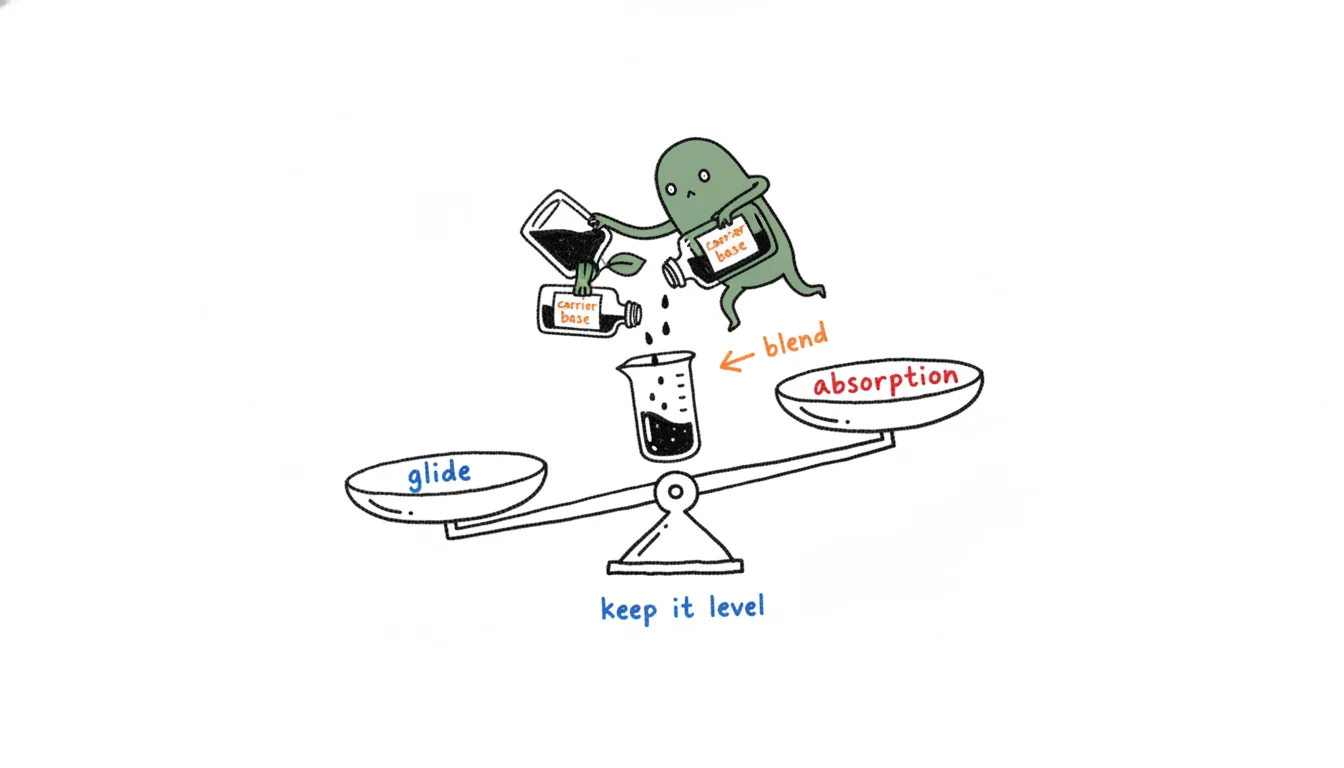
Professional massage styles need different working time on the skin, and blends of massage oil carrier oils are tuned accordingly:
- Long-glide blends (more almond, sunflower, or richer oils) suit Swedish and relaxation work where the therapist wants sustained slip without reapplying.
- Fast-absorbing blends (more grapeseed or fractionated coconut) suit sports and deep-tissue work and leave clients less oily afterward — also the better retail take-home profile.
- Balanced blends hedge both, which is why most stock formulas combine a light base with a slower-absorbing minority oil.
Specify the treatment style and after-feel you want; a capable supplier translates that into ratios.
Actives & Enrichment
On top of the carrier system, premium tiers add skin-conditioning actives: vitamin E (also a mild antioxidant for the oil itself), hyaluronic acid for a hydration story, and botanical extracts for positioning. These justify a higher retail price but raise cost — keep the base blend right first, because no active rescues a greasy or fast-rancid carrier system.
Stability: The Pitfall That Sinks Oil Programs
All massage oil carrier oils oxidize eventually, and rancidity is the single most common quality failure in this category:
- Oxidation-prone bases: High-polyunsaturated oils (grapeseed especially) go rancid faster; stable oils (jojoba, fractionated coconut) buy shelf life.
- Antioxidant system: Vitamin E or rosemary extract slows oxidation — ask what the supplier uses and what shelf life they will state.
- Packaging barrier: Dark or opaque bottles, tight closures, and minimal headspace all slow oxidation; heat in transit accelerates it.
- The smell test: A sample that smells flat, waxy, or crayon-like has already oxidized — reject it.
Scent Carriers & Fragrance Load
Fragrance sits on top of the base, so low-odor massage oil carrier oils (fractionated coconut, grapeseed) let a custom scent read cleanly, while characterful bases (unrefined oils) fight the fragrance. For a scent-led private-label line, brief the supplier on the scent first and let them recommend the base; for an unscented sensitive-skin line, base odor becomes the product, so the carrier choice is even more important.
Allergen & Labelling Notes
Tree-nut-derived oils (sweet almond, apricot kernel) and any botanical additions must be declared accurately for your market. Confirm your supplier provides a full INCI list per formula and keep marketing claims aligned with what is actually in the bottle — accurate labelling smooths retailer onboarding and protects the brand.
How to Brief a Supplier on a Carrier Blend
A precise brief gets an accurate first sample. Specify: treatment style (relaxation vs sports), desired glide and absorption, after-feel (rich vs dry-touch), scent direction or unscented, any actives, bottle format, and price target. For supplier selection and quality signals, see the massage oil manufacturer guide; for order sizing and packaging, see the MOQ and packaging guide.
Browse the wholesale massage oil range or a representative hyaluronic-acid-infused custom-scent oil to see carrier and scent options in practice, then request a quote.
Frequently Asked Questions
What are the best massage oil carrier oils?
The most used massage oil carrier oils are sweet almond, grapeseed, jojoba, and fractionated coconut. Almond gives classic glide, grapeseed is light and economical, jojoba adds stability and skin affinity, and fractionated coconut is extremely stable and lets custom scents read cleanly.
What is the difference between long-glide and fast-absorbing blends?
Long-glide blends use richer, slower-absorbing oils for sustained slip in relaxation massage, while fast-absorbing blends use lighter oils like grapeseed or fractionated coconut for sports work and a less oily after-feel.
Why do massage oils go rancid and how is it prevented?
Unsaturated oils oxidize over time, faster with heat, light, and air. Suppliers control it with stable base oils, antioxidants such as vitamin E or rosemary extract, and packaging that limits light and oxygen exposure.
Can hyaluronic acid really be used in a massage oil?
Yes — hyaluronic-acid-infused oils are a premium tier that adds a hydration story for retail positioning. The active rides on top of the carrier blend, which still determines the core glide and feel.
Do nut-based carrier oils cause labelling issues?
Tree-nut-derived oils like sweet almond must be accurately declared, and some brands choose nut-free bases such as grapeseed or fractionated coconut to simplify allergy positioning. Confirm the full INCI list with your supplier.






Leave A Comment