
If you buy single-use consumables for a salon chain, a spa group, a distribution catalog, or a private-label brand, non-woven disposable salon supplies are probably one of your most predictable recurring spend lines — and one of the easiest to get wrong on the first order. Face mask and foot mask carrier sheets, disposable towels, beauty bed covers and sheets, slippers, hair bands, capes and aprons, and foot bath pads are all made from non-woven fabric, and the fabric you specify decides how the finished product feels in a client’s hands. This guide walks B2B buyers through the technical fundamentals (web-bonding process, GSM, fiber choice), a category-by-category spec table, the questions to ask a supplier, eco-fiber options, and how private-label and OEM programs actually work — including realistic MOQ, lead time, packaging, and customization expectations. At NailLegend we run these as OEM and private-label programs, so the goal here is to make you a sharper buyer, not to hand you a stock list.
What “non-woven” actually means — and why it changes the finished product
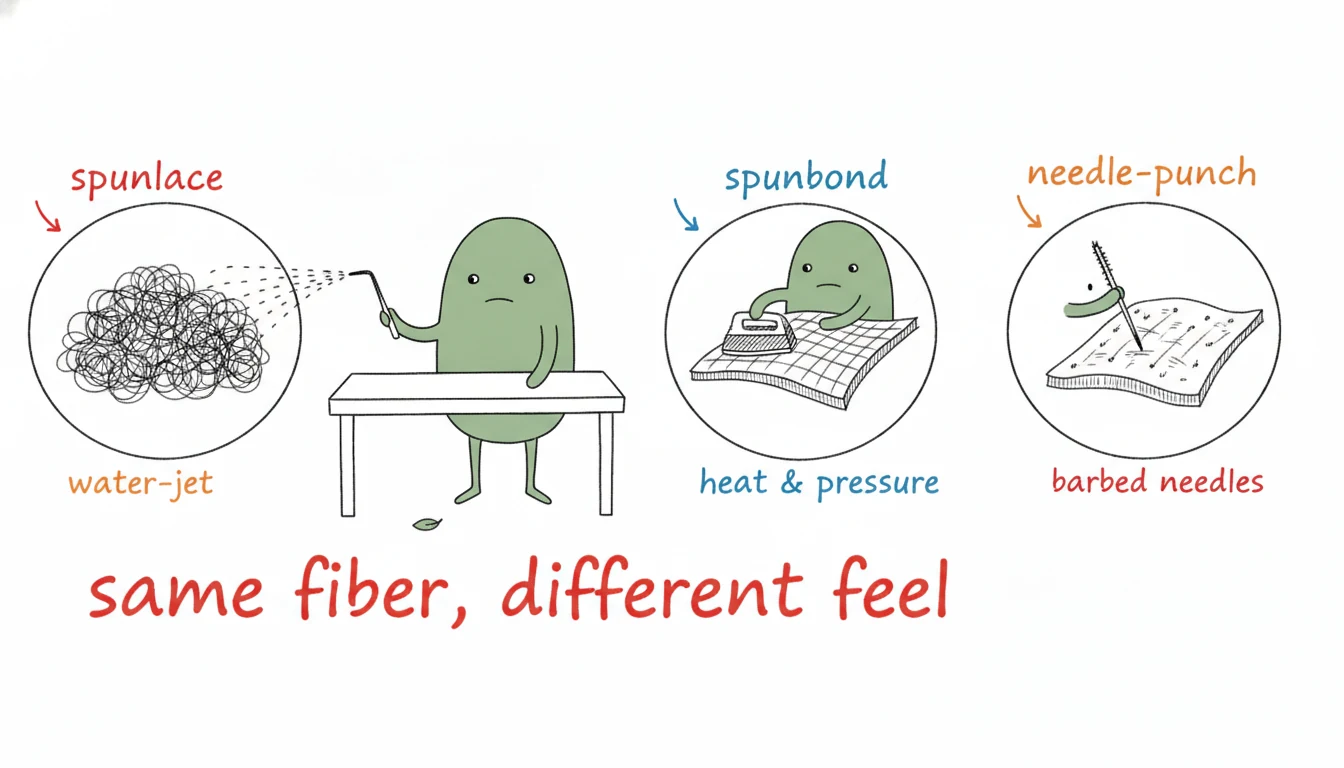
Non-woven fabric is not knitted or woven from yarn. Instead, fibers are laid into a web and bonded together mechanically, thermally, or with water jets. That bonding method is the single biggest driver of how the final disposable performs — its softness, strength, absorbency, lint behavior, and cost. Three processes cover almost everything you will source as a salon or spa consumable:
- Spunlace (hydroentangled / water-jet bonded). Fibers are entangled by high-pressure water jets, producing a soft, cloth-like, lint-low fabric with good wet strength and absorbency. This is the premium feel buyers associate with quality face/foot mask carriers, disposable facial towels, and skin-contact wipes. It costs more than spunbond at the same weight.
- Spunbond (thermally bonded continuous filament). Filaments are extruded, laid down, and heat-bonded. The result is strong, tear-resistant, breathable, and economical — ideal for structural single-use items like bed covers, slippers, aprons, capes, and hair bands where a soft skin-contact hand is less critical than coverage and durability.
- Needle-punch (mechanically bonded). Barbed needles interlock the fibers into a thicker, denser, often felt-like mat. Used where bulk, cushioning, or absorbency matters — foot bath pads, some heavier table protectors, and padding layers.
You will also see SMS (spunbond–meltblown–spunbond) layered fabrics used where a fluid barrier is wanted, for example in some disposable gowns and aprons. The takeaway for a buyer: when a sample feels wrong, the fix is almost always in the bonding process and the weight, not the color or the print.
GSM: the spec number that controls cost and perceived quality
GSM (grams per square meter) is the fabric weight. It is the number that quietly decides your unit cost and the “cheap vs. premium” impression a client forms in two seconds. Too low and the product feels flimsy, tears, or shows through; too high and you are paying for material the application does not need. A disposable facial towel might land around 40–60 GSM in spunlace, while a bed sheet or apron might use 30–45 GSM spunbond, and a foot bath pad needle-punch can run far heavier. Always confirm GSM in writing alongside the bonding process — “soft non-woven” without a number is not a specification.
Category-by-category spec table
Use this as a starting map when you brief a supplier. Exact numbers should be confirmed per product and per region; treat these as typical, sensible ranges rather than fixed rules.
| Disposable category | Recommended process | Typical GSM range | Key customization points |
|---|---|---|---|
| Face mask / foot mask carrier sheet | Spunlace (skin-soft, low lint) | 40–80 GSM | Fiber blend, cut shape, fold pattern, serum compatibility |
| Disposable facial / salon towels | Spunlace | 40–70 GSM | Size, emboss/mesh texture, perforation, dry vs. wet pack |
| Beauty bed covers / sheets | Spunbond (or SMS if fluid barrier) | 25–45 GSM | Width, face-hole option, elastic vs. flat, roll vs. sheet |
| Disposable slippers | Spunbond + foam/EVA sole | 40–60 GSM upper | Sole thickness, open/closed toe, printed strap, sizing |
| Hair bands / headbands | Spunbond, sometimes elastic-edged | 30–50 GSM | Width, stretch, color, logo print |
| Aprons / capes / gowns | Spunbond or SMS | 25–45 GSM | Length, tie style, fluid resistance, neck closure |
| Foot bath pads / liners | Needle-punch (absorbent) | Heavier, application-specific | Absorbency target, dimensions, packing count |
Many of these sit inside our disposable nail and salon supplies range, and they pair naturally with adjacent single-use kits — see the related wholesale disposable pedicure kit sourcing guide if you are building a complete consumable program rather than a single SKU.
The decision questions every buyer should ask a supplier
Before you approve a sample or sign a PO, get clear answers to these. They separate a supplier who controls the fabric from one who is reselling whatever roll is cheapest that month.
- What bonding process and GSM is this exact item? Get it in writing, per SKU, not as a general statement.
- What fiber blend? Polyester, viscose/rayon, cotton blend, or an eco fiber — this drives softness, absorbency, and biodegradability.
- How is in-house QC handled? Ask how they check weight consistency, tensile/wet strength, and lint. We run in-house QC on incoming web and finished lots rather than relying on a single spec sheet.
- Is the skin-contact item suitable for your market’s requirements? Confirm the material is appropriate for skin contact and ask for the documentation your destination market expects.
- What is the real MOQ for a stock spec vs. a customized one? These are usually very different numbers.
- What changes the lead time? Logo printing, custom packaging, and non-stock fabric all add days — know which ones apply to you.
- How is it packed for transit and shelf? Inner count, polybag vs. printed box, carton dimensions, and any moisture protection for wet-pack items.
Eco and biodegradable fiber options
If your brand story leans on sustainability, the fiber — not just the packaging — is where buyers increasingly want substance. Several non-woven fiber routes support a credible eco narrative:
- Cupro / cupra (cuprammonium). A regenerated cellulose fiber prized for a silky, gentle hand on facial carriers; cellulose-based and biodegradable under the right conditions.
- Tencel / lyocell. Wood-pulp cellulose fiber produced in a closed-loop solvent process; soft, absorbent, and a strong story for premium mask and towel lines.
- Bamboo-derived viscose. Soft and absorbent with a recognizable “natural” positioning; confirm the exact fiber description with your supplier so claims stay accurate.
- PLA (polylactic acid). A plant-based polymer alternative to conventional polyester for spunbond structures, supporting compostable-leaning claims in suitable formats.
Two practical cautions for B2B buyers. First, “biodegradable” and “compostable” mean different things and depend on real-world conditions — keep marketing claims aligned to what the fiber actually does. Second, eco fibers usually carry a higher unit cost and sometimes a higher MOQ, so build that into your pricing model early. When sustainability is part of your positioning, treat the fabric choice as a co-development conversation, the same way you would on any custom formulation through our OEM and private-label capabilities.
Private label and full OEM: MOQ, logo, packaging, lead time
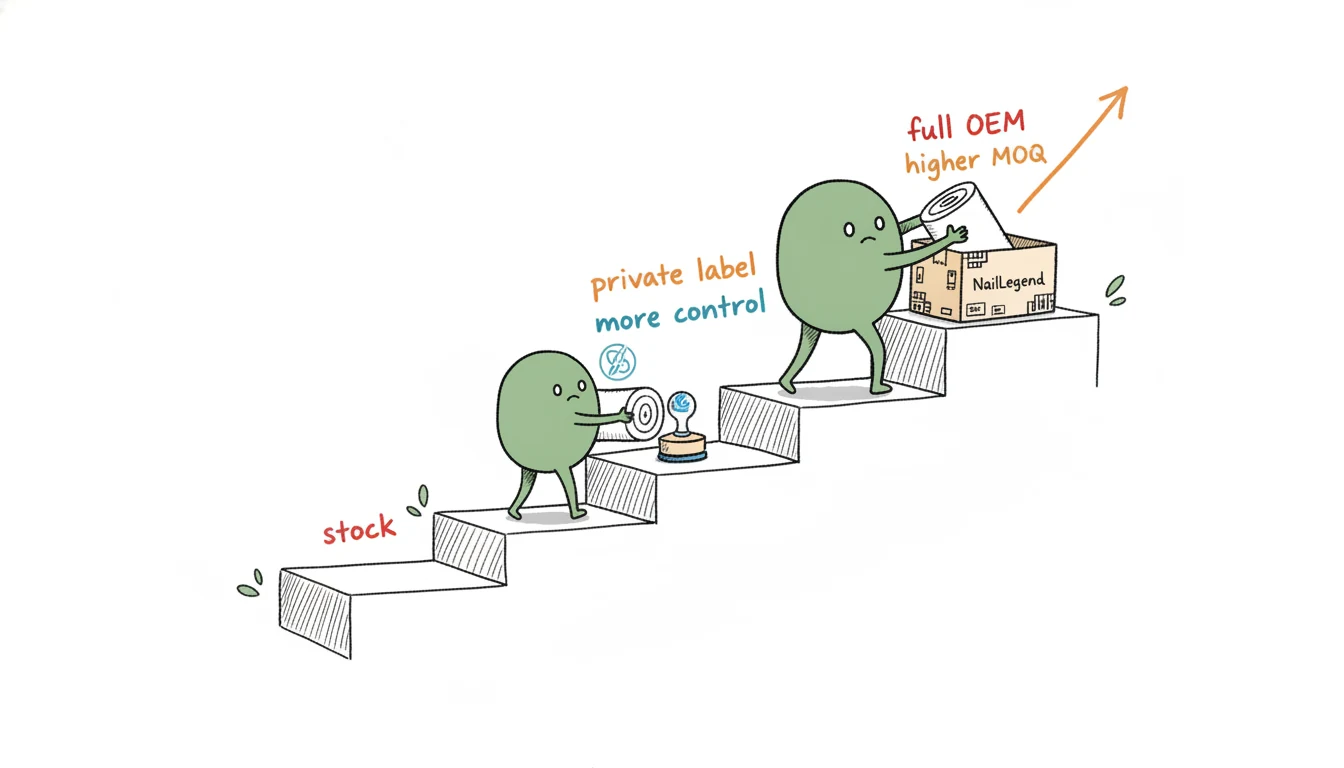
There are three ways to buy non-woven disposables, and choosing the right one for your stage matters as much as choosing the fabric.
1. Stock, unbranded
Lowest MOQ and fastest turnaround. Good for filling a gap, testing demand, or supplying a multi-brand reseller catalog. No logo, generic packing.
2. Private label
Your logo and branding on a proven base product. Customization typically covers printed straps, branded packaging, and inserts, while the fabric spec stays standard. Moderate MOQ, moderate lead-time addition. This is where most salon chains and distributors should start.
3. Full OEM / ODM
Custom fabric blend, GSM, cut shape, eco fiber, bespoke packaging structure — built to your spec. Highest MOQ and longest lead time, but it produces a genuinely differentiated product you control end to end.
Realistic expectations to plan around:
- MOQ. Stock specs carry the lowest minimums; private-label printing raises them; full custom fabric and packaging raise them further. Ask per scenario rather than for one blanket number.
- Lead time. Generally in the 20–45 day band depending on customization depth — stock-spec runs sit at the low end, while custom fabric, printed packaging, and eco fibers push toward the high end.
- Logo and print. Logos can go on straps, bands, individual polybags, and cartons; multi-color and registered prints add setup time.
- Packaging. Options run from bulk polybag to printed retail-ready boxes and dispenser packs; wet-pack items need moisture-protective formats.
A common first-order mistake is jumping straight to full OEM on an unproven product. Often the smarter path is to private-label a strong base spec, validate reorder velocity, then graduate the winners to custom fabric. If you are scaling a broad disposable assortment, the buyer logic in our bulk pedicure tub liners sourcing deep-dive applies almost directly to non-woven lines too.
FAQ
What is the difference between spunlace and spunbond non-woven?
Spunlace is bonded by high-pressure water jets, giving a soft, cloth-like, low-lint, absorbent fabric ideal for skin-contact items like mask carriers and facial towels. Spunbond is heat-bonded continuous filament — stronger and more economical, better for structural items like bed covers, slippers, aprons, and hair bands. Match the process to whether skin softness or durability matters most.
What GSM should I choose for disposable salon supplies?
It depends on the item. Facial towels and mask carriers often sit around 40–80 GSM spunlace; bed sheets and aprons commonly use 25–45 GSM spunbond; foot bath pads use heavier needle-punch fabric. Always confirm GSM and bonding process together in writing, since “soft non-woven” alone is not a usable spec.
What is the minimum order quantity (MOQ)?
MOQ varies by how customized the order is. Stock, unbranded specs have the lowest minimums; private-label printing raises them; full custom fabric and packaging raise them further. Ask for the MOQ on your specific scenario and request a quote so the number reflects your actual spec.
How long is the lead time?
Typically in the 20–45 day range. Stock-spec runs are fastest, while custom fabric, multi-color logo printing, eco fibers, and bespoke packaging push toward the longer end. Confirm the timeline against your specific customization list before committing.
Can I put my own logo and branding on the products?
Yes. Through a private-label or OEM program you can print logos on straps, hair bands, individual polybags, and cartons, and choose branded retail-ready packaging. Multi-color and registered prints add some setup time, which we factor into the quoted lead time.
Are biodegradable non-woven options available?
Yes. Cellulose-based fibers such as cupro, Tencel/lyocell, and bamboo-derived viscose, as well as PLA-based structures, support a credible eco narrative. These usually carry a higher unit cost and sometimes a higher MOQ, and any “biodegradable” or “compostable” claim should be matched to what the fiber genuinely does under real conditions.
Do you handle custom packaging for retail or distribution?
Yes. Packaging ranges from bulk polybag to printed boxes, dispenser packs, and moisture-protective wet-pack formats. Tell us your channel — salon back-bar, distributor shelf, or branded retail — and we will quote a packaging configuration that fits it.
Build your non-woven program with a manufacturer, not a middleman
The quality of non-woven disposable salon supplies is decided upstream — in the bonding process, the GSM, and the fiber — long before a logo goes on. Brief your supplier on those three first, validate with private label, then scale the winners to full OEM. If you want a clear answer on fabric spec, MOQ, lead time, and logo options for your specific assortment, Request a Quote or Contact Us, and Download our Catalog to see the full disposable range. To go deeper on supplier selection across adjacent single-use lines, see our guide to the top disposable manicure and pedicure kit manufacturers (2026).
By Lareina



Leave A Comment