
If you supply salons, run a spa chain, or build a private-label nail brand, a wholesale disposable pedicure kit is one of the easiest, highest-turnover SKUs you can carry. Single-use kits solve a real hygiene problem for salons, they reorder predictably, and they make an excellent vehicle for your own branding. But the gap between a good sourcing decision and an expensive mistake usually comes down to a handful of details most buyers only learn after their first shipment. This guide walks through those details — sourcing models, cost drivers, minimum order quantities, sampling workflow, packaging, and how to vet a supplier — so you can request a quote with confidence.
Quick answer for buyers: a quote-ready disposable manicure kit specification must name every component, file grit, component dimensions, foam grade, individual-bag material, logo method, carton quantity and inspection standard. A 3-piece manicure set commonly combines a nail file, mini buffer and orange wood stick; a 4-piece set adds pumice or another service-specific tool; a 5-piece pedicure set commonly adds a foot file and toe separator. This page covers the commercial RFQ and quality-control workflow. For component functions and configuration selection, use our component and configuration guide.
Use This RFQ Specification Sheet Before Requesting Prices
Do not ask suppliers to quote a “3-piece kit” or “5-piece kit” without a component schedule. The same piece count can describe materially different products, so a low quote may simply reflect a smaller file, lower-density foam, a different grit or thinner packaging. Put the following fields into one RFQ and require every bidder to answer against the same version.
| RFQ field | What to specify | Why it changes the quote |
|---|---|---|
| Configuration | Exact component list for each 3-, 4- or 5-piece SKU | Piece count alone does not define the set |
| Nail and foot files | Length, shape, core material and grit on each side | Affects abrasive life, handling and unit cost |
| Buffers and pumice | Dimensions, EVA density, surface grit and color | Controls feel, durability and brand presentation |
| Wood tools | Length, tip profile, finish and splinter tolerance | Controls usability and safety consistency |
| Primary packaging | PP/OPP bag dimensions, seal, print colors and warning copy | Separates back-bar stock from retail-ready private label |
| Case pack | Sets per inner and master carton, carton marks and barcode | Determines warehouse handling and landed-cost calculations |
| Approval standard | Signed reference sample, artwork proof and acceptable defect rules | Turns a subjective sample into a repeatable production standard |
Pre-Shipment QC for Nail File and Buffer Kits
Approve a “golden sample” only after checking the complete sealed kit, not isolated components. For production inspection, verify component count, grit labels, abrasive adhesion, buffer dimensions, foam recovery, wood-stick finish, print position, bag seal and carton quantity. Record defects by type so a missing component is not treated the same as a minor print shift. The purchase order should state who inspects, when inspection occurs, and what happens if the lot fails the agreed standard.
For a first private-label run, retain one approved sample with the buyer and one with the factory. Photograph the approved component layout and packaging proof, then attach them to the purchase order. This creates a practical reference for the first shipment and for every reorder that follows.
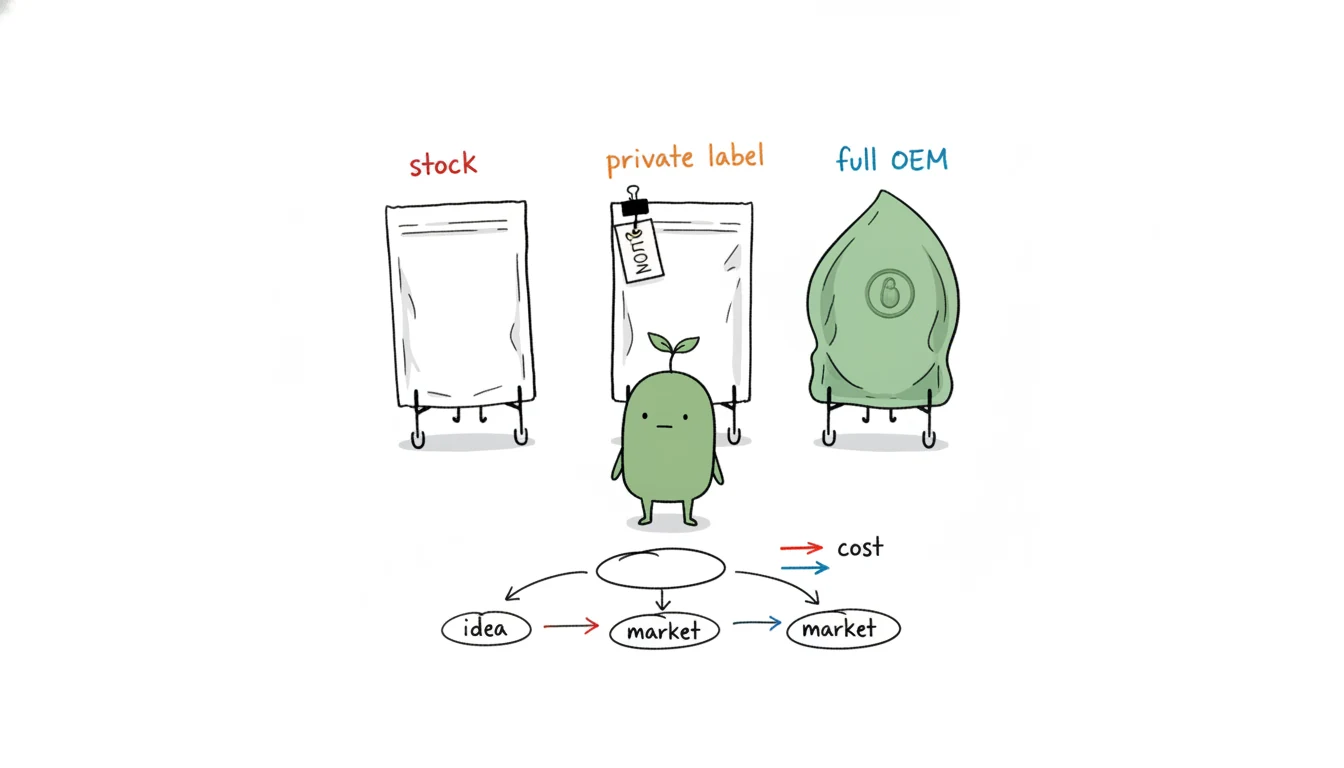
Three ways to buy: stock, private-label, and full OEM
Before you talk pricing, decide which sourcing model fits your business. The same factory can usually produce all three, but they carry very different cost, lead time, and minimum-order implications.
- Stock (unbranded) kits — You buy the supplier’s standard configuration in a plain or generic sealed bag. Fastest to ship, lowest minimums, no design work. Best for distributors who want to test demand or salons that simply need a reliable single-use consumable.
- Private-label kits — A standard kit, but the sealed bag carries your printed logo and any retail-facing copy you choose. You keep the proven component combination and only customize the branding surface. This is the sweet spot for most salon chains and emerging brands.
- Full OEM kits — You specify the component combination, foam color, file grit, and retail packaging from the ground up. Highest control, highest setup effort, and the model that lets you build a SKU no competitor can copy exactly.
| Factor | Stock | Private-label | Full OEM |
|---|---|---|---|
| Branding | None / generic | Logo-printed bag | Bag, components, packaging fully custom |
| Setup effort | Lowest | Low–moderate | Highest |
| Typical lead time | Shortest | Moderate | Longest (design + tooling) |
| Differentiation | Low | Medium | High |
| Best for | Demand testing, pure consumable | Salon chains, new brands | Established brands, retail SKUs |
A practical path many buyers take: start with a private-label run to validate the product and your packaging, then graduate to full OEM once the SKU proves itself. You can mix models too — for example, run a private-label bag now while you design custom components for a later production cycle.
What drives the per-kit cost
Because this is a quote-based product, exact per-unit pricing depends on your specific build. But the cost drivers are consistent, and understanding them lets you control your landed cost intelligently rather than guessing. When you request a quote, these are the levers you’re actually pulling:
Component count
The single biggest driver. A 3-in-1 pedicure kit and a 9-in-1 pedicure kit are very different cost structures. The range typically runs from a lean 3-in-1 up to a 9-in-1 that can include disposable slippers, a non-woven towel, and a nail brush on top of the core file, foot file, orange wood stick (cuticle pusher), mini buffer block, pumice sponge, and EVA toe separator. Every added component adds material and assembly cost. Match the count to the job — don’t pay for a slipper your retail buyer will never use.
Materials and foam grade
Kits in this category use wooden, EVA, and pumice components. The grade of the EVA foam (density and finish), the grit and backing of the nail and foot files, and the quality of the pumice all move the price. Higher-density foam feels more premium and survives shipping better; a finer file finish photographs better for retail. These are choices, not fixed costs — your supplier can quote a value tier and a premium tier so you can see the trade-off.
Branding
A logo-printed bag adds a one-time setup element plus a small per-unit print cost. The more print colors and the more complex the artwork, the more it adds. Across a 2,000-bag run the per-unit branding cost is usually modest — branding is rarely the line item that breaks a budget.
Packaging
Each kit is sealed in its own PP/OPP bag as standard. If you add a printed header card, a retail-ready box, or custom carton marking, each of those is an incremental cost. Retail packaging is where OEM budgets expand fastest, so decide early whether your kit ships as a back-bar consumable (simple sealed bag) or a shelf product (header card or box).
Order volume
As with any manufactured good, per-unit cost falls as volume rises. Setup costs (printing plates, packaging design) amortize across more units, and material purchasing improves at scale. This is why MOQ and your reorder cadence matter as much as the unit price itself.
MOQ and a smart trial-order strategy
The standard minimum order quantity for a customized run is 2,000 bags. That reflects the reality of setting up printing and assembly economically. If you’re not ready to commit to a full run, a lower trial quantity is negotiable — and using that is the smart move for a first-time buyer.
A sensible trial strategy looks like this: request samples first, then place a smaller trial order of your chosen configuration to confirm real-world performance with your salons or retail channel, and only then commit to a full 2,000-bag (or multiple-carton) run once reorders are proven. Kits pack roughly 200 sets per carton, so you can plan your purchase and your warehouse footprint in clean carton multiples. Buying in carton-aligned quantities keeps freight and storage tidy and makes reorders simpler to forecast.
Lead time and the sampling workflow
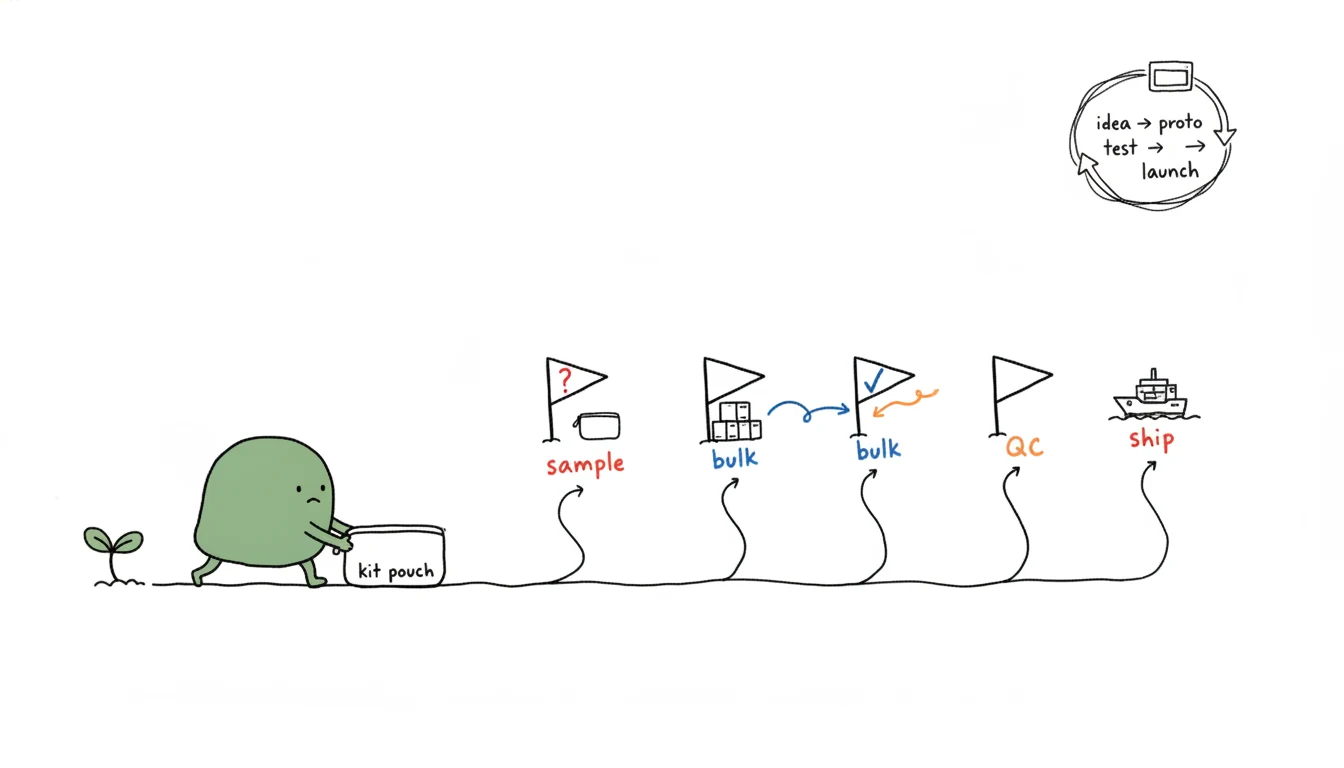
Setting expectations on time is where a lot of first orders go sideways. Production lead time for this product is typically 15–25 days after your order is confirmed; samples turn around faster, usually in 3–7 days. Build those windows into your launch calendar — especially if you’re timing a retail launch or a seasonal salon promotion.
The end-to-end sourcing workflow for a wholesale disposable pedicure kit follows a predictable sequence, and knowing it in advance keeps your project on schedule:
- Inquiry — You share your target configuration, branding intent, and rough volume.
- Quote — The supplier returns pricing tiers based on your component count, materials, branding, and packaging.
- Sample — You receive a physical sample (3–7 days) to verify materials, fit, and print quality. Sample cost is typically refundable on a confirmed order.
- PI (proforma invoice) — Once you approve, you receive a PI confirming specs, quantity, terms, and timeline.
- Production — Manufacturing runs over the 15–25 day window.
- QC — Quality checks before packing: component completeness, seal integrity, print alignment.
- Ship — Goods ship from Guangzhou or Shenzhen ports to your destination.
Treat the sample step as non-negotiable. A refundable sample is cheap insurance against a 2,000-bag run that doesn’t match your expectations.
Packaging options: bag, header card, carton
Packaging decisions shape both your cost and how the kit presents to the end customer. Think in three layers:
- Primary — the sealed bag. Every kit comes sealed in its own PP/OPP bag for hygiene and presentation. This is your main branding canvas in a private-label run: logo, brand name, and any usage copy print directly here.
- Retail — header card or box. If the kit will sit on a shelf, a printed header card or retail box turns it from a back-bar consumable into a sellable product. This is optional and adds cost, but it’s what lets you sell the kit at retail margins rather than wholesale.
- Shipping — the carton. Kits pack at roughly 200 sets per carton. Custom carton marking helps distributors with warehouse handling and inventory scanning.
Match the packaging to the channel. A salon buying for its own back bar wants a clean sealed bag and nothing more. A retailer wants shelf-ready packaging. Defining the channel first prevents you from over-spending on packaging the end buyer won’t pay for.
How to vet a supplier before you commit
Choosing the right manufacturer matters more than shaving a few cents off the unit price. Use these criteria to evaluate any supplier of wholesale disposable pedicure kits:
- Samples that match production. A great sample means nothing if the bulk run drifts. Ask how the supplier guarantees consistency between the approved sample and the production lot, and inspect your QC arrangements.
- Communication quality. Clear, prompt, specific answers during the quote stage usually predict how the relationship will run during production and reorders. Vague answers early are a warning sign.
- Capacity and lead-time honesty. Confirm the supplier can hold the 15–25 day window at your volume — and at your reorder volume. A factory that can make 2,000 bags but stumbles at 20,000 will limit your growth.
- Customization range. Confirm they can actually deliver what you need: logo-printed bags, foam color, file grit, component combinations, and retail packaging. The more of this is in-house, the smoother (and often cheaper) your project.
- Compliance for your market. Requirements differ by destination. Ask your supplier directly what compliance documentation they can provide for the markets you sell into, and confirm it meets your local rules before you commit to a full run.
A supplier that handles samples well, communicates clearly, holds its timelines, and offers genuine customization is worth more to your business than the lowest quote in your inbox.
Choosing configurations to match your channel
The range spans 2-in-1, 3-in-1, and 4-in-1 manicure kits and 3-in-1, 4-in-1, 5-in-1, and 9-in-1 pedicure kits — so the real skill is matching the build to how it gets used.
- Back-bar salon consumable — A lean 3-in-1 or 4-in-1 pedicure kit covers the essentials (file, pumice, toe separator) at the lowest cost per service. Ideal when the salon supplies the rest and just needs the single-use items.
- Premium spa or hospitality service — A 5-in-1 or 9-in-1 with slippers, non-woven towel, and nail brush turns the kit into a complete guest experience. Hospitality procurement teams value the all-in-one convenience.
- Retail SKU — Pick a configuration that tells a clear story on the shelf, then invest in the header card or box. The component count should feel generous enough to justify a retail price.
Map your kit to your salon menu or retail shelf before you finalize the spec. The right configuration is the one that matches the job — not the one with the most pieces.
Use the RFQ framework above with our 2026 nail file and buffer kit supplier comparison to build a practical shortlist.
Ready to source your own line?
Whether you want a fast private-label run on the sealed bag or a fully customized OEM build, Nail Legend produces the full configuration range with logo printing, foam color, file grit, and packaging options to fit your channel. Explore the disposable manicure & pedicure kit to see configurations and customization, browse related products in our disposable nail supplies category, and when you’re ready, request a sample and a quote for your own wholesale pedicure kits. Samples ship in days and the cost is refundable on confirmed orders — so the first step costs you very little and tells you everything.
Related guides
- The Disposable Manicure Pedicure Kit, Explained: A Component & Configuration Guide for Salons and Distributors
- Top Disposable Manicure & Pedicure Kit Manufacturers (2026)
— Lareina, Nail Legend


Leave A Comment