
For any salon chain, spa group, or nail-supply distributor, the math on reusable tools eventually stops working. Every metal file, every buffer that touches a client has to be cleaned, disinfected, and re-sterilized before it touches the next one — and that labor adds up across hundreds of services a week. This is the reason the disposable manicure pedicure kit has become a default line item in modern salon procurement: a single-use, single-client set of tools that goes out clean and gets thrown away after one service, with no re-processing loop in between.
This guide breaks down the disposable manicure pedicure kit the way a buyer should look at it — component by component, then configuration by configuration — so you can match the right spec to your service menu, your sales channel, and your margin target. Whether you are stocking a single location or building a private-label program, the goal here is the same: choose the kit that does exactly what your services need, and nothing you have to pay for but won’t use.
Why Salons and Distributors Choose Disposable
The case for going disposable comes down to three operational pressures that every service business feels.
Hygiene and client confidence. A sealed, single-use kit is a visible signal to the client that the tools touching their hands and feet have never touched anyone else. Opening a fresh bag at the start of a service is a small ritual that does a lot of reassurance work — and in a post-pandemic market, that reassurance is part of the product.
No re-sterilization labor. Reusable implements carry a hidden cost: the staff time and equipment cycles needed to clean and disinfect them between clients. Disposable tools remove that loop entirely. The technician finishes the service, discards the kit, and opens a new one for the next client. For a multi-chair, high-volume operation, eliminating that turnaround step is often the single biggest efficiency win.
Consistency. Reusable files and buffers wear down at different rates depending on how they have been used and cleaned. A fresh disposable kit performs identically every time — same grit, same surface, same feel — so the service experience is predictable from the first chair to the last.
For distributors, disposables also have a commercial advantage: they are a consumable. A salon that adopts disposable kits reorders on a predictable cycle, which turns a one-time tool sale into recurring revenue.
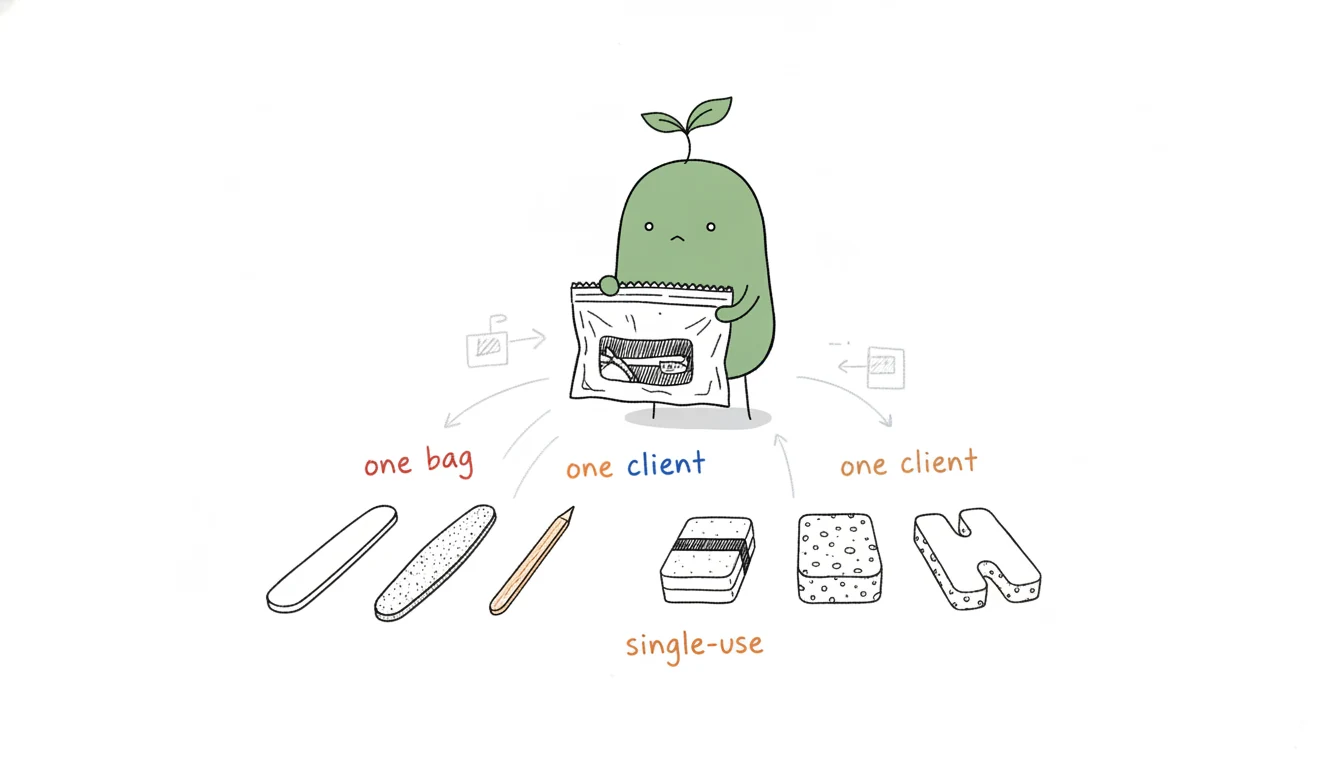
The 6 Core Components, One at a Time
Every configuration in the range is assembled from the same pool of six components. Understanding what each one is, what it is made of, and what job it does is the foundation for choosing — and for explaining the product to your own customers.
1. Wooden Nail File
The workhorse of the manicure side. Built from a wood core wrapped in abrasive paper, roughly 9 cm long and double-sided at 180/240 grit. The coarser 180 side shapes the free edge of the nail; the finer 240 side smooths it. This is the component that defines the shape and finish of the natural nail edge in a manicure service.
2. Foot File
The pedicure counterpart, larger and coarser. At roughly 13–14 cm with a coarse grit surface, it is built to remove hard skin and calluses from the foot. Its length gives the technician leverage and reach across the larger surfaces of the heel and sole.
3. Orange Wood Stick (Cuticle Pusher)
A pointed wooden stick about 11 cm long, used to push back cuticles and clean along the nail wall. It is the detail tool — the component that separates a basic file-and-buff from a more finished, full-service result. Because it is wood, it is gentle on the cuticle and entirely disposable.
4. Mini Buffer Block
A compact EVA-foam block with an abrasive surface, around 3.5 × 2.5 cm. Its job is to buff the nail surface smooth — knocking down ridges and creating an even finish before polish or as a natural shine. It appears in almost every configuration because buffing is common to nearly all manicure and pedicure services.
5. Pumice Sponge
An EVA-foam sponge embedded with pumice grit, roughly 6 × 3 cm, used to slough dead skin — primarily on heels and other rough areas during a pedicure. It is softer and more contour-friendly than the rigid foot file, so the two often work together: the foot file for the heavy calluses, the pumice sponge for the finishing smooth-down.
6. Toe Separator
A splittable pair of EVA-foam separators that hold the toes apart while polish is applied and dries. It is a pedicure-only component, and its presence is the clearest signal that a configuration is built for a full polish-finished pedicure rather than a basic foot tidy-up.
How the Configurations Scale: From 2-in-1 to 9-in-1
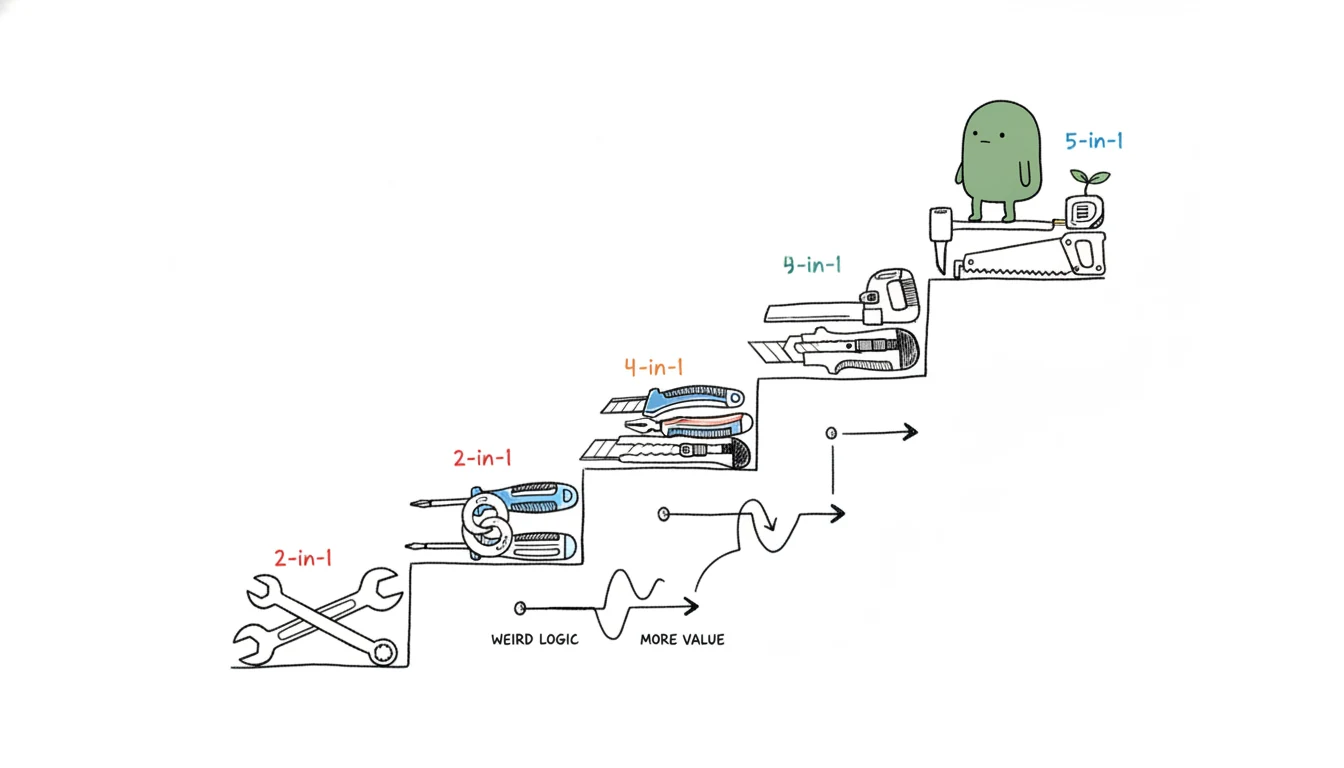
The same six components combine into a tiered range. Each step up adds capability for a more complete service. Here is the full ladder.
| Configuration | Components | Service Tier It Fits |
|---|---|---|
| 2-in-1 Manicure | Nail File + Buffer Block | Express / file-and-buff manicure |
| 3-in-1 Manicure | Nail File + Orange Wood Stick + Buffer Block | Standard manicure with cuticle work |
| 4-in-1 Manicure | Nail File + Orange Wood Stick + Buffer Block + Pumice Sponge | Premium manicure / hand-and-foot crossover |
| 3-in-1 Pedicure | Foot File + Buffer Block + Pumice Sponge | Express pedicure / foot refresh |
| 4-in-1 Pedicure | Foot File + Buffer Block + Pumice Sponge + Toe Separator | Standard polish-finished pedicure |
| 5-in-1 Pedicure | Foot File + Orange Wood Stick + Buffer Block + Pumice Sponge + Toe Separator | Full / premium pedicure |
| 9-in-1 Deluxe | Full set + disposable slippers, non-woven foot towel, nail brush | Spa / hospitality turnkey experience |
Reading the ladder from the bottom up tells the story. The 2-in-1 is the minimum viable manicure kit — shape and buff, nothing more. Adding the orange wood stick (3-in-1) brings cuticle work into scope. Adding the pumice sponge (4-in-1) extends the kit toward foot care. On the pedicure side, the progression moves from a basic foot refresh (3-in-1) to a polish-ready service with toe separators (4-in-1) to a full premium treatment that includes cuticle detailing (5-in-1).
The 9-in-1 deluxe sits in its own category. By adding disposable slippers, a non-woven foot towel, and a nail brush, it stops being just a tool kit and becomes a complete single-use spa experience in a bag — the kind of turnkey set a hotel spa or hospitality group hands a guest. The disposable manicure & pedicure kit range is designed so you can stock exactly the tier your services demand without paying for components you’ll never open.
For buyers who already know the component mix and need to compare MOQ, packaging, sampling and inspection terms, continue with the wholesale disposable manicure kit OEM sourcing guide.
For a current supplier comparison focused specifically on files, buffers and dry-tool sets, see our top nail file and buffer kit manufacturers and wholesale suppliers.
How to Choose Your Configuration
There is no single “best” kit — there is the kit that matches your operation. Three lenses make the decision straightforward.
Choose by Service Menu
Start with what you actually sell. If your menu is built around express manicures, the 2-in-1 or 3-in-1 manicure covers it. If you offer full pedicures with polish, you need toe separators, which means the 4-in-1 or 5-in-1 pedicure. If you run a high-end spa where the experience matters as much as the result, the 9-in-1 deluxe is the only configuration that delivers the full ritual. Map your top three services to a configuration and you have your core SKU.
Choose by Channel
Where the kit will be used shapes the right pick. A high-throughput salon chain wants a tight, consistent core configuration to keep training and restocking simple. A spa or hospitality group leans toward the premium and deluxe tiers, where presentation is part of the guest experience. A distributor serving many small accounts usually wants to carry a spread — an entry manicure tier, a standard pedicure tier, and one premium option — so they can meet different customers from a single catalog.
Choose by Margin
Finally, look at the unit economics of each tier. Lower-count configurations have a lower landed cost and suit price-sensitive, high-volume express services. Higher-count and deluxe kits carry more components and present a higher perceived value — which is exactly where a private-label brand can build margin, because the customer is paying for a complete experience, not a list of parts. Many distributors stock both ends: an entry kit to win the account and a premium kit to grow it.
A Note on OEM and Private-Label
Every configuration in this range is built for OEM and private-label programs, not just plain-stock resale. The customizable elements are the ones that matter for branding and fit: a logo-printed bag, the foam color of the EVA components, the file grit, and the component combination itself — so you can define a kit that exactly matches your service menu and carries your brand from the moment the client opens the bag.
The wholesale framework is built for programs at scale. The minimum order is 2,000 bags, with a production lead time of 15–25 days and samples available in 3–7 days. Each kit is sealed in its own PP/OPP bag for single-client hygiene, packed at roughly 200 sets per carton, and shipped from Guangzhou or Shenzhen. Components are made from wood, EVA foam, and pumice.
If you are scoping a program — whether that’s a single core SKU for a chain or a multi-tier catalog for a distribution book — the right starting point is the product page for the disposable manicure & pedicure kit, where you can request a quote on the exact configuration and customization you need. You can also browse the full disposable nail supplies category to see how this kit fits alongside the rest of the single-use range.
Get the components and the configuration right, and a disposable kit does more than save sterilization labor — it becomes a consistent, branded piece of every service you deliver.
Related guides
- Wholesale Disposable Pedicure Kit: A Buyer’s Sourcing Guide for Salons, Distributors & Private-Label Brands
- Top Disposable Manicure & Pedicure Kit Manufacturers (2026)
— Lareina, Nail Legend


Leave A Comment