
Note: We’ve folded this into our complete private label body butter guide — see the full picture (formulation, MOQ, packaging, vetting, compliance) here: Body Butter Private Label Manufacturing Guide.
Body butter looks like one of the simpler private-label categories — melt butters, cool, jar — and most launch failures come from underestimating four specific formulation decisions. Anhydrous vs water-containing changes preservation, regulatory file complexity, and shelf life. Whipped vs unwhipped changes shipping stability and consumer perception. The melt-point target changes which markets the SKU can safely ship to. The actives and preservatives chosen change which claim language is honest. This guide walks each decision with the trade-offs and the right answers for different launch profiles.
It’s the formulation-mechanics companion to the body butter base butters comparison (which butter to use), the pillar guide (the full B2B sourcing frame), MOQ guide (order economics), and vetting guide (partner selection). The parallel decision frame for a different category is in our bath bomb formulation guide.
Anhydrous vs Water-Containing — The First Lock
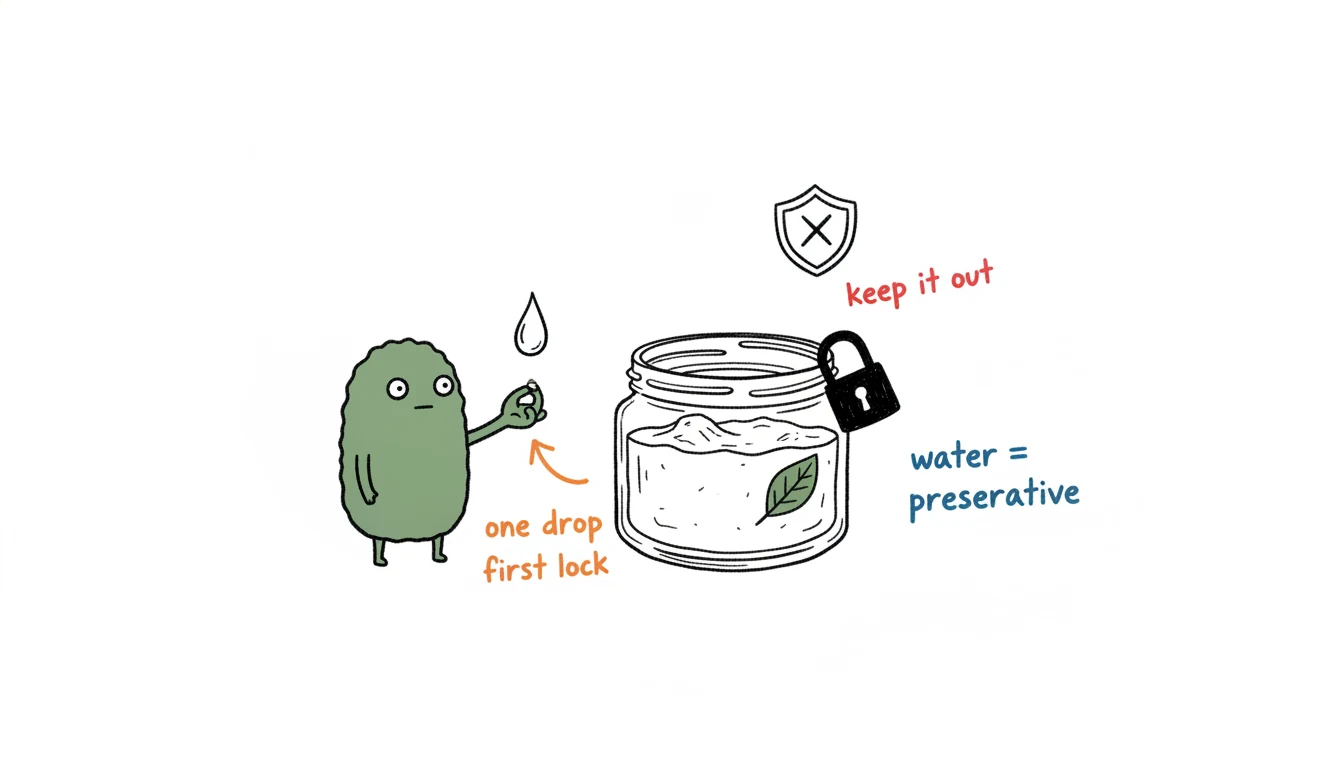
Almost every formulation decision downstream depends on this choice, so make it first.
Anhydrous (Water-Free) Body Butter
Built from base butters (shea, cocoa, mango, etc.), liquid oils (sweet almond, jojoba, squalane), oil-soluble actives (vitamin E, retinol esters, oil-soluble peptides), and fragrance — and nothing else. No water phase. The defining property: microbial growth requires water, so no water means no preservative system needed.
Strengths:
- No preservative required. An antioxidant (vitamin E, 0.1–1%) is all you need to slow oil oxidation. Simpler ingredient list, easier “clean beauty” claim language.
- Long shelf life. 18–36 months under proper storage — significantly longer than emulsions.
- Simpler regulatory file. No microbial challenge testing needed, simpler safety assessment (CPSR in EU is shorter for anhydrous), faster path to first PO.
- Lower MOQ floors. Most factories stock pre-validated anhydrous formulations as their volume tier.
Trade-offs:
- No water-soluble actives. Hyaluronic acid, niacinamide, glycerin (humectants), most peptide derivatives — they don’t work in an oil-only matrix. The label claim becomes weaker.
- Heavier feel. The full butter-and-oil load is sitting on skin until it absorbs. Some consumers prefer the lighter feel of an emulsion.
- Climate sensitivity. No water phase to buffer warm-climate softening — the formula softens or melts in the jar above the butter blend’s melt point.
Water-Containing Body Butter (Emulsion)
An emulsion — butters and oils dispersed in a water phase via emulsifier. Closer to a thicker body cream than a traditional body butter, but marketed as “body butter” for shelf-positioning reasons.
Strengths:
- Water-soluble actives work. Hyaluronic acid, niacinamide, glycerin, panthenol all function as intended. Strong support for “hydration” claim language.
- Lighter feel. The water phase softens the apparent richness; absorbs faster.
- Higher payload of marketing-active ingredients. Allows premium positioning around water-phase technology.
Trade-offs:
- Preservation required. Water = microbial growth risk. Need a broad-spectrum preservative system, microbial challenge testing, and stability validation.
- Shorter shelf life. 12–18 months typical, vs 18–36 for anhydrous.
- More complex regulatory file. EU CPSR is longer; some markets ask for additional stability data.
- Higher unit cost. Emulsifier + preservative + microbial testing all add to the cost-of-goods.
- Emulsion-stability risk. Bad batch can separate or destabilize during shelf life — a more nuanced manufacturing process.
When to pick which: default to anhydrous unless your hero claim requires a water-soluble active (and the marketing actually depends on it). For most launches at any tier, anhydrous wins on simplicity, shelf life, regulatory friction, and unit cost. Water-containing makes sense for premium “hyaluronic acid body butter” launches where the active is the marketing point.
Whipped vs Unwhipped — The Texture Decision
Once you’ve chosen anhydrous (which most launches do), the next decision is whether to whip.
Whipping mechanics: after the butter blend is melted and combined with oils and actives, the molten mixture is cooled while being aerated by a mechanical whisk. As the butter solidifies around the incorporated air, the texture turns fluffy — more apparent volume for the same weight, lighter scoop, faster melt on skin contact.
The retail-shelf reality of whipped vs unwhipped:
- Whipped. Default for premium retail body butter (~$18+ SRP). The jar looks fuller, the consumer perceives more value, the texture feels modern. Most Amazon-channel and DTC private-label brands ship whipped.
- Unwhipped. Default for pro-channel bulk tubs, spa amenity sizes, gift sets where the dense visual appeal is intentional, and natural/traditional positioning where the unwhipped “raw butter” feel is the marketing point.
The hidden trade-off: shipping stability. Whipped texture is less robust than unwhipped. If the jar is exposed to temperatures above the melt point of the butter blend during shipping (cargo container on a hot port apron, last-mile delivery van in summer), the whipped structure can collapse — the air escapes, the butter re-solidifies as a flat puck, and the customer opens the jar to find a product that doesn’t match the PDP photo. This is the most common shipping-stability complaint in the category.
For warm-lane shipping (Middle East summer, Florida summer, Australian summer), build the whipped blend with higher-melt base butters (cocoa, mango, with a percentage of kokum for structuring) and run warm-climate shipping simulation testing before signing the PO. The manufacturer should provide 40°C × 7-day stability data on whipped texture as part of the sample stage.
Preservation System — Anhydrous vs Water-Containing
What goes in the formula here drives the claim language you can use on the box.
Anhydrous Preservation (Antioxidant Only)
- Tocopherol (vitamin E) at 0.1–1%. The industry standard. Slows oil oxidation, doubles as a marketing-friendly antioxidant claim. Nearly universal.
- Rosemary extract / rosemarinic acid (0.1–0.5%). Natural alternative or supplement to tocopherol; preferred in “all-natural” positioning. Slightly more expensive.
- BHA / BHT (synthetic antioxidants). Effective but increasingly avoided in cosmetic launches because of clean-beauty positioning pressure.
That’s typically the whole preservation system for an anhydrous body butter. Total preservation load: under 1%.
Water-Containing Preservation (Full Broad-Spectrum)
Water-containing formulations need real preservation. Common parabens-free systems:
- Phenoxyethanol + ethylhexylglycerin (0.5–1%). Mainstream broad-spectrum. Widely accepted but increasingly contested in EWG-style “clean beauty” assessments.
- Benzyl alcohol + dehydroacetic acid (0.5–1%). Popular natural-positioned alternative. EWG-friendlier scoring.
- Potassium sorbate + sodium benzoate (1–1.5%). Food-grade preservatives, minimalist label, narrow pH window (need a buffered formulation).
- Levulinic acid + sodium levulinate. Increasingly popular in clean-beauty private-label.
- Honeysuckle extract (Lonicera japonica). Sometimes marketed as a “natural preservative” — efficacy data is contested; not a sole-preservative choice without supporting microbial challenge testing.
Microbial challenge testing (ISO 11930 or US PCPC method) is required to validate any preservation system in a water-containing formula. Reputable manufacturers run this as part of the sample-to-PO workflow and provide the report. If a manufacturer skips microbial testing on a water-containing formula, that’s a vetting red flag — the broader vetting framework is in our how to vet a body butter manufacturer guide.
Active Ingredients That Actually Earn Their Place
Beyond the base butter blend, three active layers commonly added to body butter — and which are honest claims vs marketing decoration:
Antioxidants and Vitamins
- Vitamin E (tocopherol). Already in every credible formulation as a preservation antioxidant. Doubles as a marketing claim.
- Vitamin A (retinyl palmitate). Oil-soluble retinoid ester. Mild activity, supports “anti-aging” claim language in some markets. Heat-sensitive; add post-cool-down.
- Vitamin C (ascorbyl palmitate, oil-soluble form). Less photostable than the water-soluble L-ascorbic acid but works in anhydrous. Supports “brightening” claim positioning.
Botanical Extracts
- Calendula, chamomile, arnica oil infusions. Soothing and calming positioning. Real but modest activity.
- Sea buckthorn oil. High in fatty acids and carotenoids. Premium positioning, natural orange tint.
- Argan, marula, baobab oils. Premium ingredient-deck additions. Brand-story heavy lifting.
Peptides and Premium Actives
- Oil-soluble peptides. Few peptides function in oil; specialized oil-dispersible versions exist at significant cost. Strong premium positioning material.
- Bisabolol. Anti-inflammatory and skin-soothing. Versatile across positioning.
- Coenzyme Q10. Oil-soluble antioxidant; supports “energy / vitality” claim language. Modest cost.
Rule of thumb: 2–5% total actives in an anhydrous body butter is plenty. Above 5%, the formulation gets crowded and the marketing claims start fighting for label space. Below 1%, the actives are decoration. Match the active load to the SRP.
Melt Point — How to Set the Target
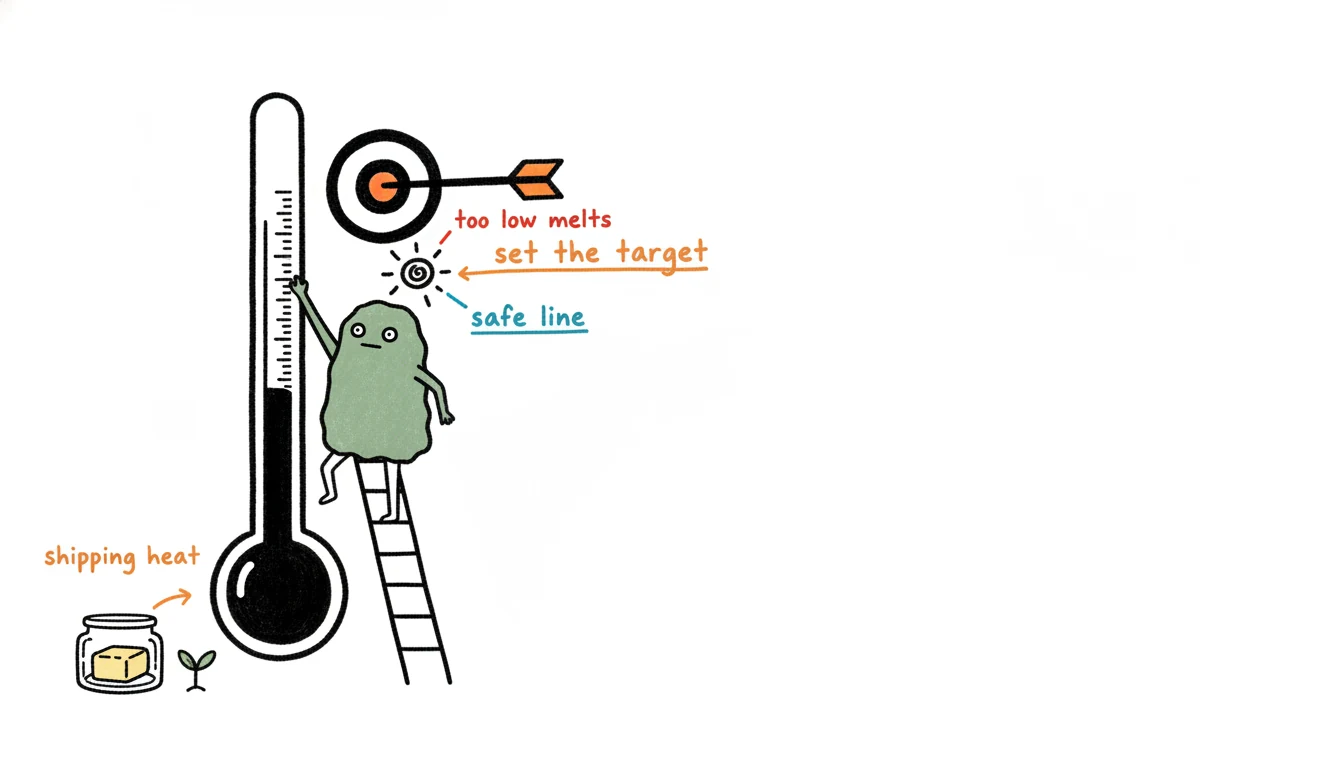
The finished product’s melt point sits in the 30–38°C band, and where you land within that band is set by:
- Base butter blend. The dominant butter sets the baseline. Shea (~32°C) is the workhorse; cocoa (~34°C) and mango (~35°C) push higher; kokum (~36–38°C) is the structuring agent for warm-lane runs.
- Liquid oil percentage. Every 1% of liquid oil drops the melt point ~0.2–0.5°C. A heavy liquid-oil load (10–15%) is part of why some “softer” body butters feel different.
- Optional waxes. Beeswax (non-vegan), candelilla wax (vegan), cetyl alcohol — raise the melt point and provide structure. Use sparingly; high wax content shifts the product into “balm” territory.
Shipping-lane targeting:
- Cool / temperate lanes (Northern Europe, North America winter, Canada): 30–32°C melt point is fine. Shea-dominant volume blend.
- Mixed lanes (US year-round, Western Europe summer): 33–35°C melt point. Shea-cocoa blend with a small mango or kokum percentage.
- Hot lanes (Middle East, Florida summer, Southeast Asia, Australian summer): 35–38°C melt point. Cocoa or mango-dominant blend with kokum structuring; consider seasonal packaging variants.
For multi-market launches, the simplest play is to specify one robust mid-range blend (~34°C) that works across most lanes, then add a seasonal “summer” variant for known hot-lane chains. The base butter decisions are in our body butter base butters comparison.
Packaging Compatibility
Body butter touches the jar for 12–36 months of shelf life. Compatibility matters more than buyers usually assume.
- Glass jars. Inert, premium positioning, longest shelf-life confidence. Heavy for shipping; breakable. Used for $25+ retail SKUs.
- PET (polyethylene terephthalate). Mainstream private-label choice. Lightweight, clear or frosted, broadly compatible with butter-and-oil formulations.
- PP (polypropylene). Common for tubs and larger spa formats. More opaque finish; suits “natural” positioning.
- HDPE (high-density polyethylene). Affordable; pro-channel bulk tubs.
- PVC and softer plastics. Can plasticize with high essential-oil loads, especially citrus. Avoid for premium / essential-oil-heavy launches.
Jar opening size affects perceived premium-ness and dispensing format. Wide-mouth jars suit thick unwhipped butter for finger-scooping; narrower deep jars suit whipped butter and showcase the fluffy texture; tub-and-spatula formats fit spa / pro-channel bulk SKUs. Compatibility testing across 90 days at three temperatures (4°C, 25°C, 40°C) should be part of the sample-stage workflow.
Variants Worth Considering
Sugar Scrub Butter
An anhydrous body butter base with sugar (typically 30–50% by weight) suspended in the butter matrix. Doubles as an exfoliating scrub during the bath / shower and as a moisturizer once rinsed. Premium gift-set positioning. The butter blend needs to be slightly firmer to suspend the sugar without separation; cocoa or mango-dominant works better than soft shea-only.
Body Souffle / Mousse Body Butter
Whipped to an extreme — even fluffier than standard whipped, sometimes incorporating gas-propellant-style aeration. Premium positioning, “modern texture” marketing. Trade-off: even more fragile in shipping than standard whipped.
Hair-and-Body Butter
Formulated with higher percentages of lauric-acid-rich butters (murumuru, ucuuba) for hair-conditioning crossover. Marketed as a dual-use SKU for curl-care and skin-care segments. Higher unit cost but enables two retail-channel positions.
Bar / Solid Body Butter (Lotion Bar Crossover)
Higher wax content (15–25% beeswax, candelilla, or cetyl alcohol) produces a solid bar that melts on body contact. Plastic-free / zero-waste positioning; gift-set and travel-format appeal. Tighter melt-point engineering required.
Regulatory File — What the Manufacturer Should Hand You
- Full ingredient declaration (INCI list, percentage ranges).
- Certificate of Analysis (CoA) per production batch — confirming butter / oil composition, fragrance load, antioxidant load, and any heavy-metal testing where required.
- Stability data — minimum 90-day accelerated stability at 25°C / 40°C / 4°C, plus shipping-simulation data for warm-lane SKUs. Whipped formulations should include compression / vibration testing.
- Microbial challenge test report — for water-containing formulations only. ISO 11930 or US PCPC standard.
- Cosmetic Product Safety Report (CPSR) — for EU / UK markets, prepared by a qualified safety assessor. Most reputable factories include this in the per-SKU formulation fee.
- CPNP / equivalent notification — confirm responsible-person arrangements at the quote stage.
- Vegan / cruelty-free / palm-oil-free certification documentation when applicable.
If a quote comes back without the CoA template and stability protocol, that’s a vetting red flag — see how to vet a body butter manufacturer for the full vetting framework.
Six Body Butter Formulation Mistakes B2B Buyers Make

- Defaulting to water-containing without a hyaluronic-acid-grade reason. Adds preservation complexity, regulatory friction, and unit cost. Default to anhydrous unless the claim depends on water-soluble actives.
- Whipping a soft shea-dominant blend for hot-lane shipping. Texture collapse in transit. Run warm-climate simulation before signing.
- Specifying “preservative-free” claim language on a water-containing formula. Water-containing formulations need preservation; “preservative-free” marketing is misleading and risks regulatory action.
- Overstacking the active layer. 5+ actives crowd the label, fight for marketing attention, and inflate cost-of-goods without clear consumer benefit. 2–3 hero actives at meaningful percentages beats 8 trace ingredients.
- Forgetting packaging compatibility testing. A formula that’s stable in glass can plasticize a PVC jar over 24 months. Test the actual production packaging at the sample stage.
- Treating melt point as one number. Melt point varies by lane and season. Design the blend for the worst-case lane, not the average.
From Formulation Lock to Launch
Standard private-label body butter timeline once formulation is locked: sample rounds (typically 2–3 before sign-off), stability and microbial testing in parallel, packaging compatibility validation, CPSR and regulatory file preparation, pre-production batch, full production, QC and shipping. 60–90 days for stock-blend anhydrous launches; 90–120 days for custom anhydrous or water-containing variants.
If you’re working through a private-label body butter launch — pilot or full retail — send your spec to our team with target retail price, base butter preference, whipped / unwhipped, anhydrous / water-containing, claim posture (vegan, palm-free, EWG-verified), target market and shipping lanes, and approximate monthly volume. We’ll come back within one business day with a quote that covers MOQ, unit cost at three volume tiers, sample timeline, and lead time.
Frequently Asked Questions
What’s the technical difference between anhydrous and water-containing body butter?
Anhydrous (water-free) body butter is built from butters, oils, and oil-soluble actives only — no aqueous phase. Microbial growth requires water, so anhydrous formulations don’t need a preservative system (only an antioxidant like tocopherol to slow oil oxidation), and they typically deliver 18–36 months of shelf stability. Water-containing body butter is an emulsion — typically a thicker version of body cream where butters provide texture and a water phase provides hydration. It requires a full preservative system (parabens-free options like phenoxyethanol, benzyl alcohol, sodium benzoate / potassium sorbate combinations), microbial challenge testing, and tighter shelf-life claims (12–18 months). Most private-label launches today are anhydrous because preservation, regulatory complexity, and stability testing are simpler.
Why is whipping body butter so popular — is it just marketing?
Partly marketing, partly real benefit. Mechanically, whipped body butter incorporates air during the cooling phase, producing a lighter texture that scoops easier, melts on contact faster, and feels less heavy on application. The marketing benefit: a whipped 8oz jar looks fuller than an unwhipped 8oz jar (same weight, more apparent volume), which consumers read as more product for the price. The trade-off: whipped texture is less stable in shipping — it can deflate in warm climates or under compression. For retail-channel SKUs, whipped is now standard premium positioning; for pro-channel bulk tubs and amenity sizes, unwhipped is fine.
Do I need a preservative in my body butter, and what should I use?
Anhydrous body butter doesn’t need a preservative (no water = no microbial growth). It does need an antioxidant — vitamin E (tocopherol) at 0.1–1% is the industry standard, sometimes supplemented with rosemary extract for natural-positioning. Water-containing body butter does need a preservative. Common parabens-free systems: phenoxyethanol + ethylhexylglycerin (0.5–1% combined, mainstream broad-spectrum), benzyl alcohol + dehydroacetic acid (0.5–1%, popular in natural-positioned brands), or potassium sorbate + sodium benzoate (1–1.5%, food-grade-style minimalist). Match the preservative system to your claim posture — ‘EWG verified’ or ‘clean beauty’ positioning narrows the acceptable list significantly.
What’s the target melt point for body butter, and why?
30–38°C (86–100°F) is the standard band for finished body butter. Below 30°C the product softens too much in warm climates and at non-air-conditioned retail; above 38°C it feels waxy on application instead of melting into the skin. The blend of base butters (shea ~32°C, cocoa ~34°C, mango ~35°C, kokum ~36–38°C) plus liquid oils (which lower the melt point) drives where you land. For tropical and warm-climate shipping lanes, lean toward higher-melt butters (cocoa, kokum) or add a small percentage of a higher-melt wax like cetyl alcohol. The base butter choice is covered in detail in our body butter base butters comparison.
Can I add water-soluble actives like hyaluronic acid to an anhydrous body butter?
Not in their water-soluble form. Pure hyaluronic acid needs a water phase to dissolve and function — adding the powder to an anhydrous oil-and-butter base just disperses it as a suspension, and the marketing claim on the label gets technical-but-not-functional. The workaround: an oil-soluble form (sodium hyaluronate as a fine micronized powder claims ‘hyaluronic acid’ on the label, but the consumer benefit is modest), or pivot the format to a water-containing body butter / body cream where HA can actually work. For genuinely ‘hyaluronic acid’ positioning, the water-containing variant is the honest choice.
What’s the most common shipping-stability problem with body butter, and how do I avoid it?
Warm-climate softening and texture collapse. Body butter in a cargo container sitting on a port apron in Dubai or Florida in summer can climb past 40°C — well above the formula’s melt point. The butter melts and re-solidifies; whipped texture deflates; the consumer receives a flat puck instead of the fluffy product photographed on the PDP. Avoidance: spec the blend with a target melt point of 35°C+ for warm-lane SKUs, run warm-climate shipping simulation (the manufacturer should offer 40°C × 7-day stability) before signing the PO, choose jar formats with tight seals to limit air ingress, and consider seasonal packaging variants for known warm-month launches.
How do packaging materials interact with body butter?
Several touchpoints. Glass jars are inert and the safest choice for stability, but heavy for shipping and breakable. PET is the most-common plastic choice — lightweight, clear, broadly compatible. PP and HDPE are also fine. PVC and softer plastics can interact with high-percentage essential oil formulations (citrus oils especially) over long shelf life. Wide-mouth jars suit thick unwhipped butter (consumer scoops with fingers or spatula); narrower-mouth deeper jars work for whipped butter (showcases the fluffy texture). Tub-and-spatula formats fit spa and bulk pro-channel SKUs. Compatibility testing across 90 days at multiple temperatures should be part of the sample-stage workflow.
How does formulation choice affect MOQ and unit cost?
Stock anhydrous formulations using volume-tier base butters (shea-dominant) and standard fragrance / vitamin E sit at the lowest MOQ and unit cost. Custom anhydrous blends with three or more specialty butters add 2–4 weeks to sample turnaround and a meaningful MOQ adder. Water-containing variants require preservative-system development, microbial challenge testing, and tighter manufacturing protocols — significantly higher unit cost and MOQ. Most launches start with a stock anhydrous formula and customize on the second SKU. See our body butter MOQ guide for the order-economics math, and our private label vs OEM vs ODM comparison for the sourcing-model decision.
Ready to source? Read the full body butter private label manufacturing guide, the base butters comparison for ingredient-choice decisions, and the MOQ guide for order economics, or contact our team for a formulation-locked private-label quote.



Leave A Comment