
Quick B2B brief. Bath bomb formulation is the single decision that locks a private-label line’s retail price, claim language, and reorder margin. This guide walks the full bath bomb formulation stack a B2B buyer needs to sign off on: 2:1 baking soda / citric acid base, 8–15% skin-conditioning payload (butters, oils, salts), binder choice, fragrance and color load limits, vegan vs dairy claim trade-offs, and the regulatory file a competent bath bomb formulation partner should produce.
The fizz is the show; the formulation is the brand. Two bath bombs that look identical on the shelf can be 4× different in skin-conditioning payload, 2× different in fragrance load, and built around completely different positioning — vegan-clean vs. fun-vibrant vs. luxe-spa. For a B2B buyer launching a private-label line, the formulation choices made at the start of a manufacturer relationship determine retail price point, claim language, regulatory complexity, and reorder margin for years. This guide walks the actual ingredient architecture, the trade-offs at each decision, and the B2B standards that separate a credible private-label run from a craft-fair recipe scaled up.
It’s the companion to two existing spokes: how to choose the right factory (best private label bath bomb manufacturer) and how the order economics work (bath bomb wholesale MOQ & packaging guide). The pillar with the full B2B sourcing context is the bath bomb manufacturer & supplier guide.
The Core Chemistry — and Why Ratios Matter
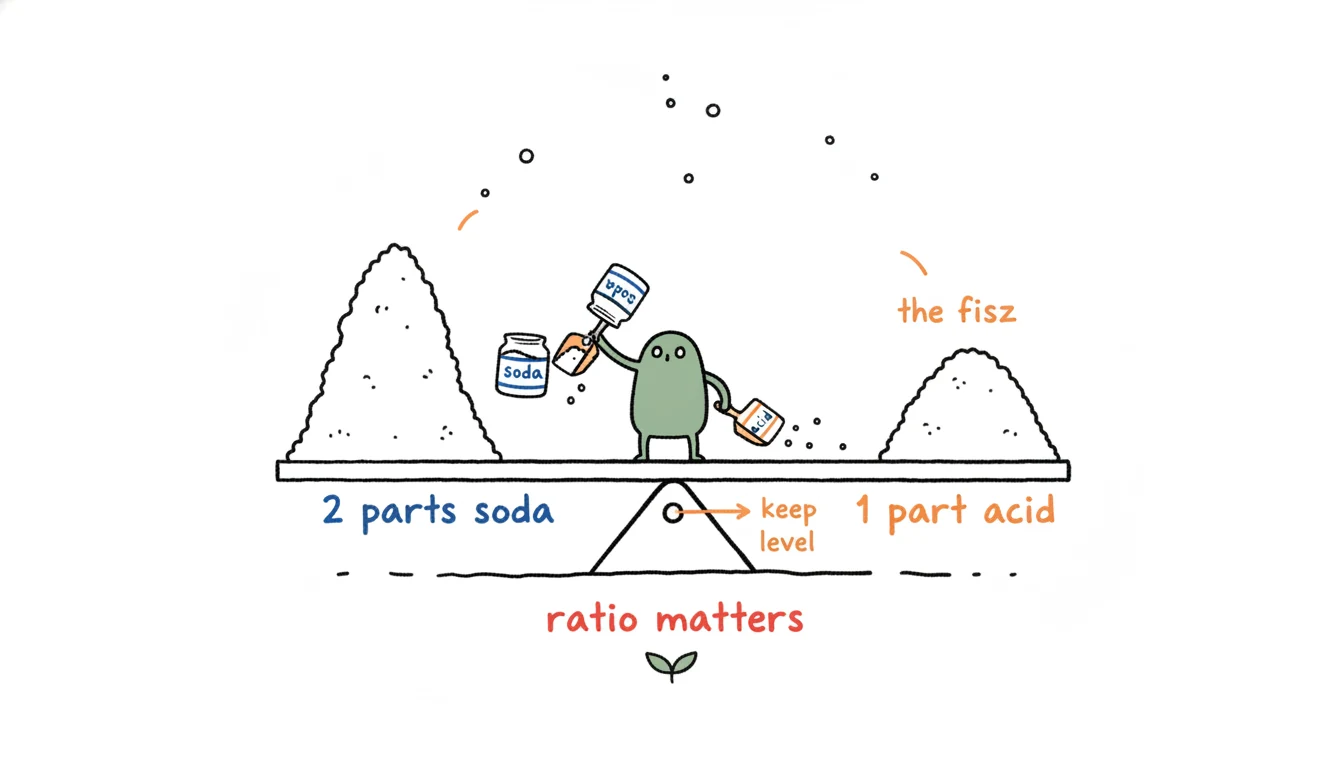
Strip everything else away and a bath bomb is a weak-base / weak-acid reaction triggered by water. Sodium bicarbonate (baking soda) is the base; citric acid is the acid. Drop them into water and they release carbon dioxide gas — the fizz. The reaction is straightforward chemistry; the formulation work is everything around it.
The dominant industry ratio is 2:1 baking soda to citric acid by weight. Variations exist:
- 2.2:1 (more baking soda): slower, longer fizz; slightly softer bomb; more forgiving in humid production environments. Good for “relaxing soak” positioning.
- 2:1 (balanced): industry standard. Most stock formulas land here.
- 1.8:1 (more citric): faster, more dramatic fizz; harder bomb; more visual impact on contact. Used in “fun fizz” SKUs and kids’ lines.
Whichever ratio you pick, the bigger B2B issue is consistency batch-to-batch. A credible manufacturer locks the ratio per SKU and proves it on a Certificate of Analysis (CoA) with each production run. The cottage-industry red flag is a “we adjust based on humidity” answer that means batches will vary on density, weight, and fizz duration. Stable production is what wins retail reorders.
The Skin-Conditioning Payload — Where Premium Lives
Past the fizz, 8–15% of a bath bomb’s weight is the part the customer actually feels on their skin. This is where the gap between a $3 and a $12 retail bath bomb opens up. The components:
- Salt base (5–15%). Epsom salt (magnesium sulfate) for muscle-relaxation positioning, sea salt for “mineral spa” positioning, dead-sea salt for premium. Salt does most of the bulk-filler work and provides positioning.
- Clay (1–5%). Kaolin (gentle, white, neutral), bentonite (detox positioning, darker color), pink clay (visual + Australian-clay marketing). Helps the bomb hold its shape and adds visual contrast for swirl designs.
- Butter (3–8%). Shea butter is the workhorse; cocoa butter for premium and aromatic interest; mango butter for lighter-feel positioning. Butter is what makes the bomb feel “moisturizing” rather than chalky.
- Liquid oil (2–5%). Sweet almond, jojoba, sunflower, coconut, or grapeseed. Acts as a binder for the powder mix and as a slip agent in water. Don’t confuse with the binder system below.
- Humectant or hydration claim ingredient (0.1–1%). Glycerin is standard. Sodium hyaluronate at trace levels for “hyaluronic acid” claim language. Polysaccharides for botanical positioning.
- Botanical extracts (trace). Oat, calendula, chamomile, rose extract — for premium positioning and label storytelling. Functional contribution is modest; brand contribution is significant.
If you’re spec’ing a private-label run: lock the total moisturizing payload between 8–15%. Below 8%, the bomb feels chalky and your retail reviews start mentioning “drying” within weeks of launch. Above 15%, the bomb cracks during production drying and the failure rate climbs.
This shea-butter payload is exactly what buyers are quoting when they ask for private label shea butter bath bombs or white label shea butter bath bombs — the naming convention (private label vs white label) describes who owns the formulation, not the ingredient itself, so either route can carry the same 3–8% shea-butter conditioning tier described above.
Binders — The Production Variable Most Buyers Don’t Know About
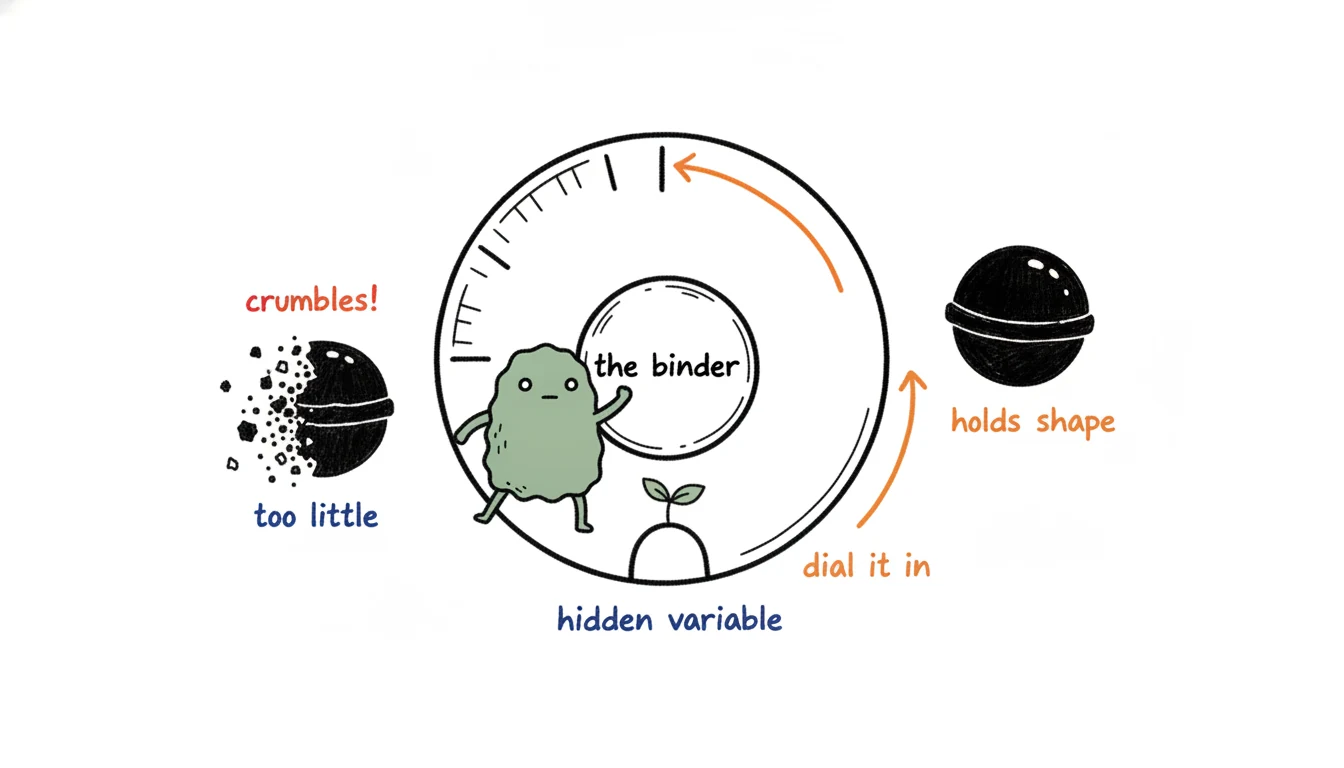
The binder is what holds the powdered ingredients together once the bomb is pressed. Two real options:
- Witch hazel (or water mist). Lightly moistens the powder, triggers just enough of the citric/bicarbonate reaction on the surface to crust-bind, and evaporates cleanly. Industry standard. Lower failure rate.
- Oil-only binding. Relies on the butter and liquid oil to bind. Produces a denser, harder bomb. Higher technical difficulty — the mix can be too oily and not press cleanly, or too dry and crumble. Some premium European brands use oil-only binding for the texture difference.
For B2B sourcing purposes: ask the manufacturer which binding system they use as their default and whether they can do the alternative. If you’re targeting a premium dense-feel SKU, oil-only matters. For a mass-market line, witch hazel is the right answer.
Fragrance & Color — Where Brand Identity Crystallizes
Fragrance: Oil vs Essential Oil
Two paths:
- Fragrance oils (synthetic or nature-identical): broad scent range including complex “perfume” profiles (Tuscan Vine, Black Currant Vanilla, Caribbean Beach), lower cost, more consistent batch-to-batch, easier to formulate for stability in the bath-bomb matrix. The volume product. Most mass-market and mid-market brands use fragrance oils.
- Essential oils: narrower scent range (limited to what plants actually produce), higher cost, premium positioning, supports “natural” and “aromatherapy” claim language. Volatility and stability vary by oil — some citrus and floral essentials don’t survive the production process well. Most premium-positioned natural brands use essential oils.
Most B2B private-label catalogs run a stock library of 20–40 fragrance oils and 8–15 essential oils. Stick to the library for fastest sample turnaround and lowest MOQ. Custom-blended scents are possible but add 2–4 weeks to the sample phase and a custom-blend fee.
Buyers sourcing the essential-oil tier specifically often search for private label essential oils bath bombs or white label essential oils bath bombs — both describe the same premium-positioned SKU built on essential-oil fragrance rather than fragrance oil, just under different ownership terms at quote stage.
Color: FD&C Dyes vs Mineral Pigments
- FD&C / D&C cosmetic dyes (and the corresponding aluminum lakes): vibrant, broad palette, can produce the saturated “unicorn” and “galaxy” colors the bath-bomb category is known for. Some specific lakes have restrictions in the EU and require alternative regulatory paths.
- Mica and mineral pigments: more natural-product friendly, narrower bright-color range, can transfer to the tub at high inclusion rates (“bath ring”). Most natural-positioned brands use micas with careful inclusion to avoid the tub-ring complaint.
Color decisions interact with claim language. “Naturally colored” or “no synthetic dyes” usually means restricting to micas plus a small palette of plant-derived colorants (annatto, beetroot, spirulina), which significantly narrows the achievable palette. Decide the claim posture before you finalize the color library.
The Claim Architecture — Vegan, Cruelty-Free, Palm-Oil-Free, More
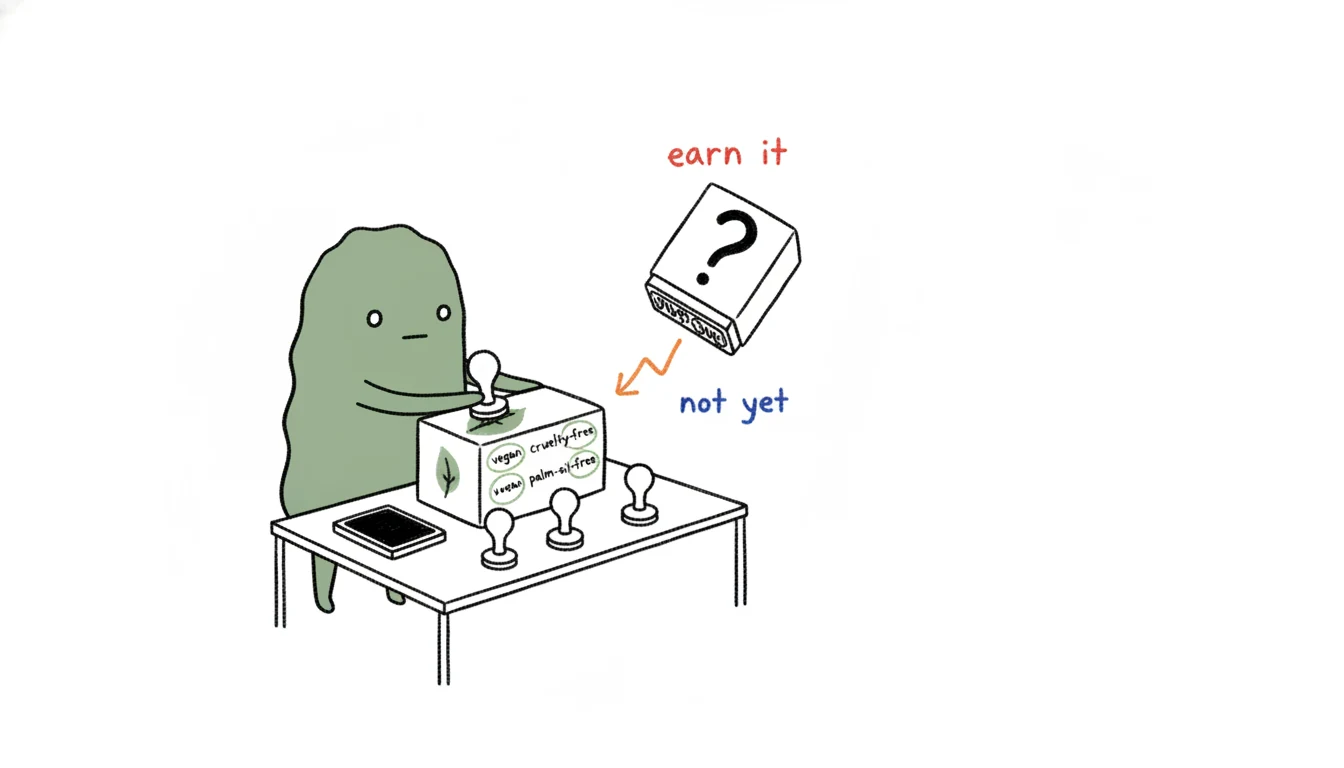
Three categories of claim language to consider at formulation lock:
- Animal-product claims. Vegan (no animal-derived ingredients — easy: check for honey, milk, beeswax). Cruelty-free (no animal testing — most B2B manufacturers can certify through Leaping Bunny or PETA). Both are now nearly table-stakes in millennial and Gen-Z segments.
- Sustainability claims. Palm-oil-free or RSPO-certified palm oil for EU markets; recyclable packaging; carbon-neutral production; locally-sourced botanicals. Each has a verification path the manufacturer either supports or doesn’t — confirm at quote stage.
- Sensitive-skin / chemistry claims. SLS-free (relevant only if you’re using a foaming surfactant variant), paraben-free (most bath bombs don’t use parabens anyway), phthalate-free (most modern fragrance oils are phthalate-free by default), sulfate-free, fragrance-free, dye-free. Use the ones that genuinely apply to your formula; don’t decorate with claim language the chemistry doesn’t support.
Claim language drives ingredient choice, regulatory file complexity, and retail-channel positioning. Plan it before formulation lock, not after. The broader sustainability/sourcing context is covered in our skincare contract manufacturing playbook.
Variants: Bubble Bath Bombs, Embeds, Layered, Filled
Beyond the basic fizzer, four variants drive premium positioning and gift-set appeal:
- Bubble bath bombs. Add a foaming surfactant (sodium lauryl sulfoacetate / SLSA, or sodium laureth sulfate / SLeS) at 5–15% to produce bubbles in the tub on top of the fizz. SLSA is the natural-product-friendly choice; SLeS is the cheaper mass-market choice. Either way, this is where the “sulfate-free” claim becomes relevant.
- Embeds. Inclusions visible on the surface or revealed mid-fizz — dried botanicals (rose petals, lavender buds, calendula), mini-bath-bombs (“baby bombs”), shimmer flakes, biodegradable confetti. Brand-storytelling premium. Adds production complexity and per-unit cost.
- Layered / two-tone. Two or more colors and scents pressed into a single bomb. Visual differentiation; production requires a layered press cycle so per-bomb cycle time roughly doubles.
- Filled / surprise core. Hollow shell with toy, jewelry, or message card inside. Heavily regulated in some markets (choking hazards, novel-product rules) — usually only viable as a seasonal or specialty SKU.
For first-launch private-label brands: start with one classic fizzer SKU and one bubble or embed variant. Three SKUs cover most retail position; six or more spreads inventory and marketing too thin in year one.
Theme-driven collections are a common gift-set request — a Valentine’s or anniversary “love” set is one of the most requested seasonal variants, so if you are quoting private label love bath bombs, lock the scent and color story at the same quote stage as any other variant above.
Regulatory File — What the Manufacturer Should Hand You
Bath bombs are cosmetics in most markets. A credible B2B manufacturer should provide, per SKU:
- Full ingredient declaration (INCI list, percentage ranges).
- Certificate of Analysis (CoA) per production batch — confirming the ratio, fragrance load, pH, and any heavy-metal testing where required.
- Allergen declaration — the EU’s 26-allergen fragrance list is the most stringent standard; complying with it covers most other markets.
- Cosmetic Product Safety Report (CPSR) — required for EU/UK, prepared by a qualified safety assessor. Most reputable factories include this in the per-SKU formulation fee.
- CPNP notification (EU) or equivalent (CPNP-UK, MoCRA registration US, Health Canada Cosmetic Notification) — the responsible person for these depends on the import structure. Confirm at quote.
- Vegan / cruelty-free / palm-oil-free certification documentation when applicable.
If a quote comes back without these — especially the CoA and CPSR — that’s a vetting red flag. Cosmetic regulation isn’t optional, and a manufacturer who hasn’t built the file isn’t ready for retail-channel B2B work.
How Formulation Affects MOQ & Unit Cost
Three formulation tiers from a B2B sourcing perspective:
- Stock formula at standard 2:1 ratio, mass-market fragrance oils, FD&C dyes: lowest unit cost, lowest MOQ, fastest sample turnaround. Most pilot launches start here.
- Lightly-customized stock (scent and color picked from library, vegan / palm-oil-free claim, moderate butter/oil payload): modest MOQ adder, 1–2 week sample turnaround, mid-tier unit cost. Where most established private-label brands sit.
- Custom OEM (custom ratio, premium actives, essential-oil scent panel, mineral-pigment palette, embeds, layered or bubble variant): significant MOQ commitment, 2–4 week sample turnaround, higher unit cost. Specialty brand builders and large chain accounts.
The general MOQ frame across beauty categories is in our MOQ for private label beauty products guide; the bath-bomb-specific math is in the bath bomb wholesale MOQ & packaging guide. Which sourcing model (stock / private label / OEM) fits your scale is covered in our private label vs OEM vs ODM comparison.
Six Formulation Mistakes B2B Buyers Make
- Optimizing for the lowest unit cost first. A budget formula with 4% moisturizing payload and bargain fragrance oil produces reviews about “smells weak, leaves the tub gritty” — and kills reorders. Lock the experience tier first, then negotiate cost within that tier.
- Skipping the claim-language audit. “Natural” on the front of the box with a formulation full of synthetic fragrance and FD&C dyes invites complaints and platform penalties. Match claim language to chemistry.
- Putting CBD or other novel actives in the hero SKU without market-by-market regulatory diligence. Allowed in some markets, banned in others, claim-restricted everywhere. Make novel actives a specialty SKU, not the launch hero.
- Choosing essential oils for a budget tier. Essentials cost 3–10× fragrance oils. Premium positioning has to support the premium ingredient — don’t tax the launch with essentials if the retail price point can’t carry them.
- Not asking for the CoA template at quote stage. If you sign without seeing the batch-testing format, you’re flying blind on consistency. Get the CoA template before the first PO.
- Treating embeds and layering as free upgrades. Every visual differentiator adds production cycle time and unit cost. Justify each one with a positioning reason — and pick a maximum of one or two for a launch SKU.
From Formulation Lock to Launch
Once formulation is locked, the rest of the launch sequence is mechanical: scent and color library confirmation, sample rounds (typically 2–3 rounds before sign-off), CPSR and regulatory file preparation in parallel, packaging artwork finalization, pre-production batch, production run, QC and shipping. Standard timeline is 60–90 days from quote sign to first carton landed, or 90–120 days for full-OEM custom runs.
If you’re working through a private-label bath-bomb launch — pilot or full retail — send your spec to our team with target market, retail price point, claim posture (vegan, palm-oil-free, fragrance type), scent and color preferences, and target volume. We’ll come back within one business day with a quote that covers MOQ, unit cost at three volume tiers, sample timeline, and regulatory file scope.
Frequently Asked Questions
What’s the basic chemistry of a bath bomb?
Two things fizzing together: a weak base (sodium bicarbonate / baking soda) and a weak acid (citric acid) react in water to release carbon dioxide gas. That’s the fizz. Around that reaction sit binders (witch hazel or oil) to hold the bomb together until water hits it, fillers and skin-conditioning agents (Epsom salt, sea salt, kaolin clay, butters and oils), fragrance, color, and any active or sensory additives (dried botanicals, foaming surfactants, embeds). The reaction is the show; everything else shapes the experience and the brand story.
What’s the standard ratio of baking soda to citric acid?
The dominant industry ratio is 2:1 baking soda to citric acid by weight. Some formulations push slightly toward 2.2:1 or 1.8:1 depending on hardness preferences, humidity in the production environment, and the fizz duration target. Lower citric (more baking soda) gives a slower, longer fizz and a slightly softer bomb; higher citric gives a faster, more dramatic fizz and a harder bomb. Reputable manufacturers stabilize to one ratio per SKU rather than mixing inconsistently across batches — consistency is what wins reorders.
Are bath bombs technically a cosmetic, and what regulations apply?
Yes, in most major markets bath bombs are regulated as cosmetics because they’re applied to and washed off skin. In the US, this means FDA cosmetic labeling rules and ingredient compliance (MoCRA registration applies for some manufacturers); in the EU and UK, full CPNP / SCPN cosmetic notification with a Cosmetic Product Safety Report (CPSR) prepared by a qualified safety assessor; in Canada, Cosmetic Notification Form; in Australia, NICNAS/AICIS for novel ingredients; in Japan, Pharmaceuticals and Medical Devices Act compliance. Manufacturers typically handle the CPNP-equivalent file for private-label customers selling into the markets they ship to — confirm at the quote stage which markets the manufacturer’s regulatory file covers.
Vegan, sulfate-free, palm-oil-free — which claims actually matter at retail?
All three are growing share. Vegan (no animal-derived ingredients — most bath bombs are already vegan unless they contain milk powder, honey, or beeswax) is now expected in the natural-products and millennial segments; certifying through Vegan Society or similar third-party gives the claim teeth. Sulfate-free (no SLS or SLES) matters for the foaming bath-bomb variant only — plain fizzers don’t contain sulfates to begin with, so the claim only adds value where you’re using SLSA/SLeS for bubble effect. Palm-oil-free (or RSPO certified) is increasingly demanded in EU markets and by retailers like Lush competitors targeting eco-conscious customers. For a B2B private-label launch in 2026, leading with vegan + cruelty-free + palm-oil-free (or RSPO) covers the broadest customer base.
What’s actually in the ‘skin-conditioning’ part of a bath bomb?
Beyond the fizz reaction, the moisturizing payload is what differentiates a premium bath bomb from a budget one. Standard components: Epsom salt or sea salt for muscle-relaxation positioning, kaolin or bentonite clay for skin-feel and visual swirl, a butter (shea, cocoa, mango) at 3-8% for moisturizing residue, and a liquid oil (sweet almond, jojoba, sunflower) at 2-5% for slip and binding. Premium tiers add botanical extracts (oat, calendula, chamomile), a polysaccharide (hyaluronic acid sodium salt) for hydration positioning, or a humectant (glycerin). The total moisturizing payload should sit at 8-15% of the formulation; below that, the bomb feels chalky; above that, it can crack during production.
How do I get specific scents and colors — and what’s the trade-off?
Scents come from fragrance oils (cheaper, broader range, complex profiles) or essential oils (premium positioning, narrower range, higher cost). Most B2B private-label production uses fragrance oils as the volume product and essential-oil variants as the premium SKU. Colors come from FD&C-approved cosmetic dyes (vibrant, broad palette, some markets restrict specific lakes) or mica/mineral pigments (more natural-product friendly, narrower bright-color range, may transfer to the tub). Trade-offs: vibrant unicorn-style colors usually need lake-based dyes; natural-positioned products with claim language often restrict to mineral pigments. Lock the color and scent library at quote stage because they materially affect cost per bomb and lead time.
What about CBD, melatonin, or ‘novel’ actives — can I include them?
Possible in some markets, complicated in most. CBD requires market-by-market regulatory checking (legal in US adult-use markets with state-level rules, allowed in some EU markets with strict THC limits, illegal in others); the claim language is even more restricted than the ingredient. Melatonin is regulated as a supplement in the US and a medicine in the EU and UK — generally not viable as a bath-bomb ingredient at scale. Other ‘novel’ actives (peptides, retinoids) face the same regulatory split. As a B2B buyer: ask the manufacturer which markets they can legally ship with each novel ingredient included, and which claims they can substantiate, before you commit to a launch with that active as the hero.
How does formulation affect MOQ and per-unit cost?
Significantly. A stock formula at standard 2:1 ratio with mass-market fragrance oils and FD&C dyes is the lowest unit cost and lowest MOQ. Custom formulations (different ratios, premium actives, essential-oil scent panel, mineral-pigment color palette, embeds) add formulation fees, longer sample rounds, and higher MOQ commitments because the run economics shift. Detailed cost mechanics are in our bath bomb wholesale MOQ & packaging guide; the broader OEM-vs-PL framework that determines who owns the recipe is in our private label vs OEM vs ODM comparison.
Ready to source? Read the full bath bomb manufacturer & supplier guide, the how to choose your manufacturer spoke, and the MOQ & packaging guide, or contact our OEM team for a formulation-locked private-label quote.


Leave A Comment