
Most B2B searches for wholesale pedicure liner suppliers end at one of three places: a single Amazon listing, a regional salon-supply distributor, or a direct factory contact form. The right answer depends on order volume, customization needs, and whether the buyer is sourcing for a salon network, a private-label brand, or a hospitality program. This guide compares the five real sourcing tiers — including the ForPro pedicure liner alternative route most direct-to-factory buyers eventually take — and the buyer profile each tier fits best.
Quick answer: Use a domestic beauty distributor for fast replenishment and low opening quantities; use a spa-channel wholesaler for curated professional supply; use a direct OEM manufacturer when custom size, color, carton or logo justifies a larger program. Marketplace listings require separate factory verification.
Methodology and evidence standard (reviewed 2026-08-07): Public evidence from manufacturer and product pages is used to establish category relevance. A public claim is a shortlist signal, not an audit. Legal manufacturer, facility, formula ownership, MOQ, lead time, capacity, certification scope and destination-market documents must be confirmed for the exact SKU in the RFQ.
Official pages checked: ForPro; Universal Companies; Nail Legend liners.
For broader pedicure-program sourcing context, see our Pedicure Kit Wholesale Buyer Guide. For the decision model behind direct-OEM versus distributor sourcing, see Private Label vs OEM vs ODM.
Pedicure Liner Supplier Tiers at a Glance
| Route | Best for | Main check |
|---|---|---|
| Large beauty distributor | Fast replenishment; lower opening order | Limited customization |
| Spa-channel wholesaler | Curated professional assortment | Brand and territory availability |
| Regional salon chain | Local access and account terms | Narrower selection |
| Direct OEM manufacturer | Custom size, color, pack and carton | Higher complete-unit MOQ |
| Marketplace factory route | Broad price discovery | Factory identity and documents |
Distributor Tier vs Direct Manufacturer Tier: The Core Decision
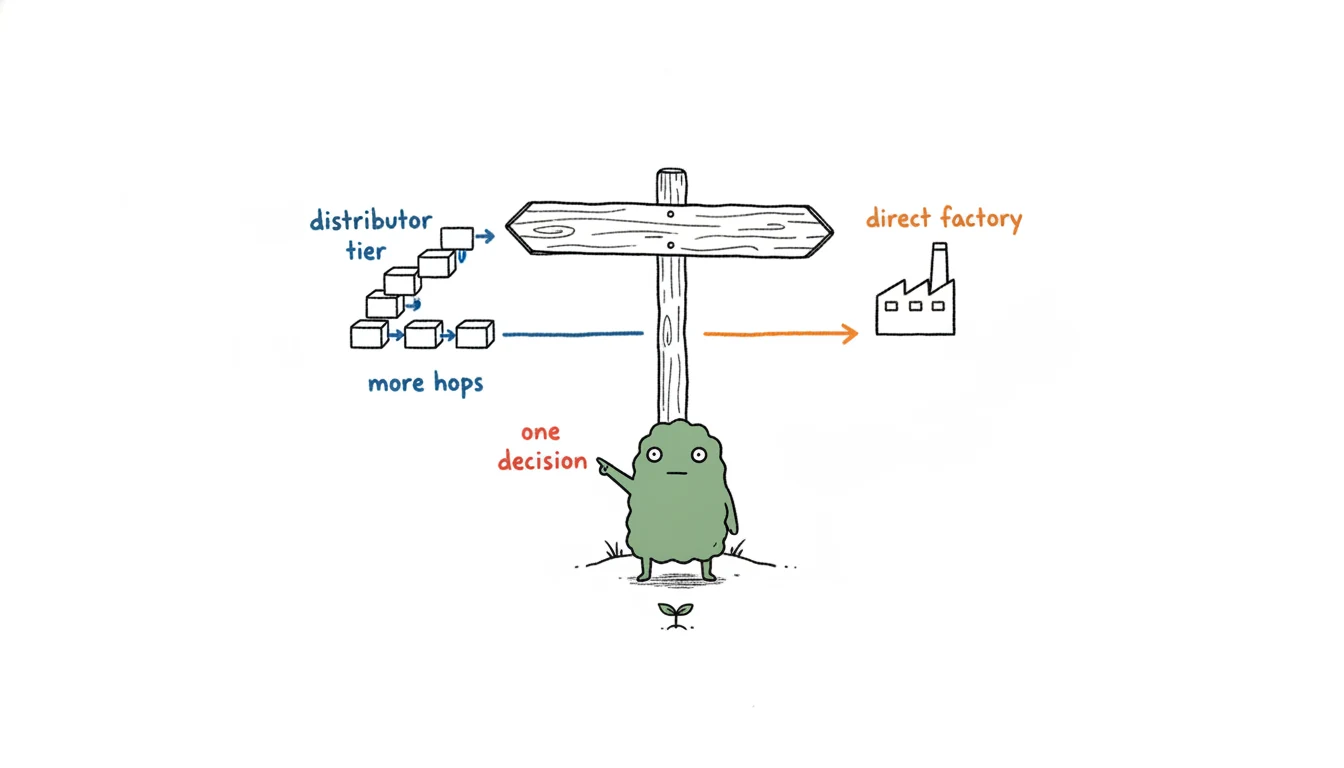
Pedicure liner sourcing splits into two fundamentally different supply chains. The distributor tier — Amazon-driven beauty groups, spa-channel wholesalers, and regional salon-supply chains — gives buyers a fast turnaround on small quantities, ready stock, and a familiar buying experience, but adds a 30-60% markup over factory cost and offers little to no real customization. The direct manufacturer tier — OEM factories selling B2B, plus marketplace-based factory sourcing — strips the markup, opens up private-label and custom-design options, and unlocks volume pricing that distributor tiers cannot match. The trade-off is longer lead times on first orders and a higher minimum order quantity.
The five tiers below are ordered from most-familiar (distributor) to most-direct (factory marketplace). The tier that fits a buyer is rarely the cheapest one on paper — it is the one that matches order velocity, cash position, and whether the buyer wants a branded SKU or a generic stock item.
1. Large Beauty Distributors (ForPro Beauty Group and Peers)
ForPro Beauty Group is the dominant pedicure spa liner distributor on Amazon and the default search result for North American spa supply buyers looking for ready-stock disposable liners. Large beauty distributors at this tier carry ready inventory, ship from US warehouses in 2-5 business days, and accept small reorder quantities — often single-case minimums. Pricing reflects the convenience: distributor markups typically run 30-60% over the underlying factory cost, with the highest markups on small case-pack quantities sold through marketplace channels.
Best fit: single-location salons replenishing back-bar supplies, mobile pedicure technicians, and any buyer whose monthly volume sits below one full pallet. Customization at this tier is effectively zero — the liners are stock-format, often in a single clear-blue strip design, with no branded options.
Why buyers eventually leave this tier: reorder velocity. Once a salon network or private-label brand crosses 5,000 units per quarter, the distributor markup compounds into a meaningful margin loss. That is the threshold at which ForPro alternative sourcing — direct OEM or marketplace factory — starts paying back the additional sourcing effort within the first reorder cycle.
2. Spa-Channel Wholesalers (Universal Companies and Equivalents)
Spa-channel wholesalers like Universal Companies are long-established B2B suppliers serving day spas, resort spas, and hospitality wellness programs. Compared with marketplace distributors, they offer broader category coverage (massage, esthetics, nail, and spa amenities under one account), volume-tier pricing for established accounts, and an order desk that handles purchase orders and net-30 terms rather than credit-card checkouts.
Best fit: multi-location spa groups, hospitality programs running pedicure as part of a broader wellness offer, and buyers who need consolidated invoicing across many product categories. Bulk pedicure tub liners are typically a small line item in a larger spa-supply order, which is why this tier rarely competes on liner price alone but wins on total-account economics.
Customization ceiling: low. Some wholesalers will run a private-label sticker program for an established account, but most carry stock-format liners only.
3. Regional Salon Supply Chains (Spilo Worldwide, Sally Beauty Pro, SalonCentric)
Regional chains — Spilo Worldwide on the wholesale side, Sally Beauty Pro and SalonCentric on the brick-and-mortar pro side — sit between Amazon distributors and dedicated spa wholesalers. They carry pedicure liners as part of a broader nail-and-salon catalog, offer brick-and-mortar pickup in many US metros, and run a pro-account program that unlocks tiered pricing for licensed salon professionals.
Best fit: regional salon chains whose buyers prefer to walk into a brick-and-mortar pro store, mid-volume nail salons rotating SKUs across multiple categories, and buyers in metro markets where a same-day pickup beats a 2-day Amazon shipment.
Why this tier is rarely the lowest-cost option: retail-channel overhead. The brick-and-mortar pro store model adds real estate and labor cost into the supply chain, which lands in the per-unit price. For pure online-replenishment salons, tier 1 or tier 4 is usually cheaper.
4. Direct OEM Manufacturers (Nail Legend and Specialist Factories)
Direct OEM manufacturers sell B2B from the factory, skipping every distributor layer between production and the buyer. For wholesale disposable pedicure liner sourcing, this tier offers three things the distributor tiers cannot: factory-direct pricing (typically 30-50% below distributor list), real customization (logo printing, bag size, embossing pattern, packaging carton design), and consolidated pedicure-supply sourcing — pairing liners with disposable buffers, files, slippers, toe separators, and pedicure kits in one PO.
Nail Legend operates as a direct OEM supplier in this tier, with a disposable pedicure spa liner SKU available in stock format and as a private-label OEM run for branded buyers. The full disposable nail supplies category covers the adjacent SKUs most pedicure-program buyers source alongside liners.
Best fit: private-label brands launching a spa or pedicure line, salon networks above 5,000 units per quarter, hospitality groups consolidating amenity SKUs under one supplier, and Amazon / Shopify sellers building a branded pedicure-supply catalog.
Realistic constraints: first-order MOQ is higher than distributor tiers (typically 1-3 cartons per SKU for stock-format, higher for custom-printed runs), and first-order lead time runs 3-5 weeks for stock-format liners and 5-8 weeks for custom-printed runs. Reorder lead times drop to 2-3 weeks once artwork and packaging specs are approved. Request a quote with target volume and customization scope for specific MOQ and lead-time numbers.
5. Marketplace-Based Direct Factory Sourcing (Alibaba and Equivalents)
The fifth tier is open marketplace sourcing — Alibaba, Made-in-China, Global Sources — where buyers contact factories directly without an intermediary. The pricing floor is the lowest of any tier, but the buyer assumes every layer of risk that distributors and OEM partners normally absorb: vendor vetting, sample evaluation, payment terms negotiation, freight forwarding, customs clearance, and dispute handling.
Best fit: high-volume buyers (10,000+ units per order) with in-house sourcing capability, freight-forwarder relationships, and the cash to absorb a bad first batch as a learning expense. Also fits experienced private-label operators sourcing across many factories who can spread vetting cost over multiple supplier relationships.
Hidden costs to budget for: sample rounds (2-4 typically), third-party inspection (1-2% of PO value), freight forwarder fees, customs duties, and the time cost of vendor diligence. For first-time pedicure-supply buyers, these hidden costs frequently erase the marketplace pricing advantage versus direct OEM tier 4 — which is why most experienced private-label brands ultimately consolidate at tier 4 once they have qualified one or two reliable factories.
How to Choose: Buyer Profile to Tier Mapping
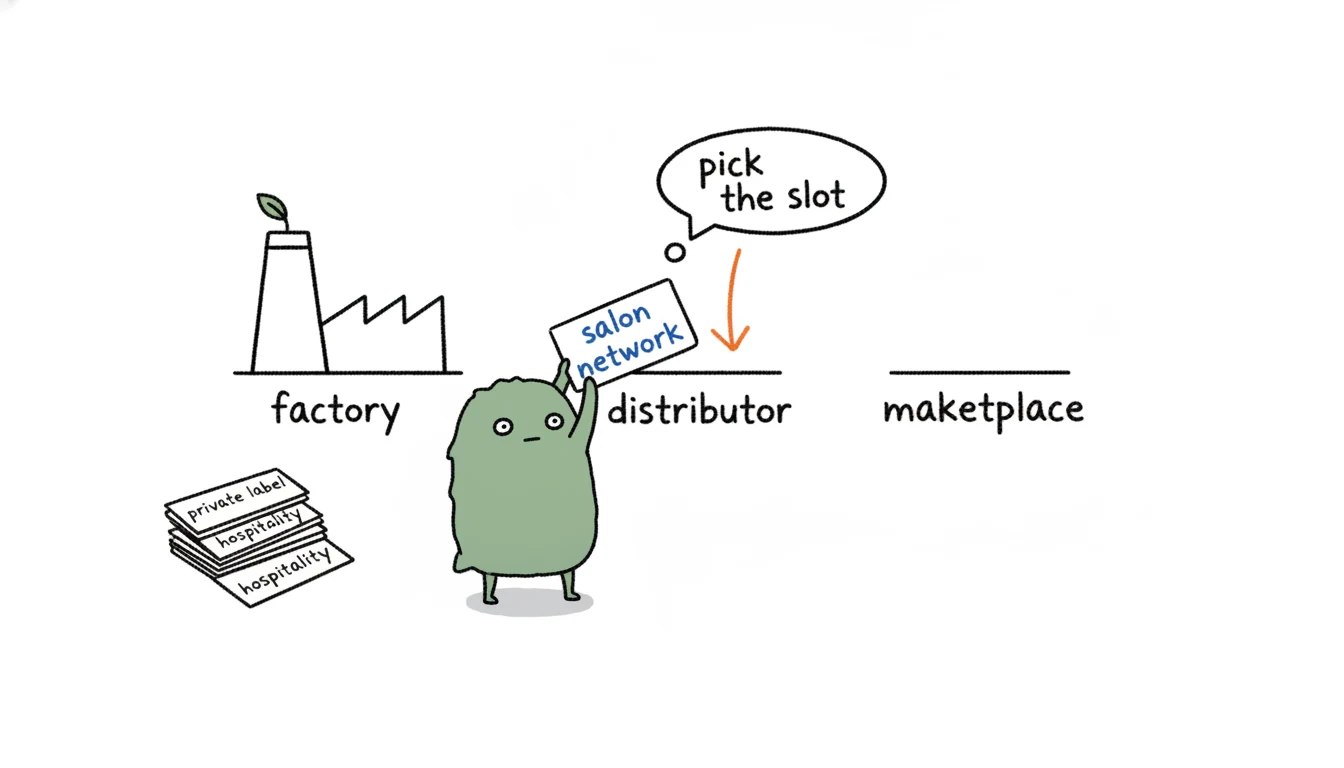
Quick mapping by buyer profile:
- Single-location salon, <500 liners/quarter: Tier 1 (Amazon distributor). Time cost of switching is not worth the unit-cost saving at this volume.
- Multi-location spa group, 1,000-5,000 liners/quarter across categories: Tier 2 (spa-channel wholesaler). Total-account economics beat per-line-item pricing.
- Regional salon chain with brick-and-mortar buying culture: Tier 3 (regional salon supply). Same-day pickup and pro-account terms.
- Private-label brand or salon network >5,000 liners/quarter: Tier 4 (direct OEM). Markup elimination + customization unlock both pay back within 1-2 reorder cycles.
- Sourcing-experienced buyer at 10,000+ units, in-house operations: Tier 5 (marketplace direct). Lowest unit cost, highest operational load.
The pattern across mature private-label spa and pedicure brands: start at tier 1 to validate demand, move to tier 4 once monthly velocity is established, and expand into tier 5 only after two or three years of sourcing experience and an in-house ops function. Tier 2 and tier 3 stay in the mix for adjacent SKU categories where consolidation matters more than per-unit cost.
What to Ask at Quote Stage (Any Tier)
Five questions that separate capable suppliers from order-takers, regardless of tier:
- Material composition — LDPE, HDPE, or PE-blend? Thickness in microns? Recyclable stream and disposal class for the destination market?
- Compatibility list — which pedicure spa chair models the liner fits without rolling or tearing (Footsie Bath, Mariana, ContinuumFootspas, etc.)?
- Carton-pack economics — units per inner bag, inner bags per carton, carton dimensions and weight, units per 20-foot container?
- Customization scope — logo print options, color matching, packaging artwork, custom carton labeling for distribution channels?
- Lead time on first order vs reorder — explicit numbers, not ranges. Reorder should be 50-60% of first-order lead time.
Suppliers that hesitate on any of these at quote stage are signaling either limited factory capability or a distribution-only business model masquerading as a manufacturer. The tier matters less than the specificity of the answers.
Adjacent pedicure-supply categories worth bundling under one OEM relationship: pedicure kits, disposable buffers and files, toe separators, and salon-grade slippers. Most direct OEM manufacturers in tier 4 will quote these as a consolidated PO with one freight booking, which compounds the per-unit savings versus splitting categories across distributors.
Frequently Asked Questions
Once You’ve Picked Your Tier: The Sourcing Mechanics
After deciding distributor-tier vs direct-OEM, our bulk pedicure tub liners sourcing deep-dive covers the film-thickness tiers, case-of-200 packaging math, three branding placements (case-level / per-unit film / full OEM), MOQ mechanics, FCL/LCL logistics, and the distributor-vs-direct cost gap.
Last reviewed: 2026-08-07. Supplier capabilities and commercial terms can change; reconfirm them for the exact SKU.



Leave A Comment