
Starting a private label skincare brand has never been more accessible. With the right manufacturer, you can go from concept to sellable product in 4–8 weeks — without a chemistry degree, a factory, or a six-figure budget. But “accessible” does not mean “easy.” The brands that succeed are the ones that get the fundamentals right before they place their first production order.
This guide walks you through every step: from choosing your niche to shipping your first order. We will cover the decisions that matter, the mistakes that cost money, and the shortcuts that actually work.
Step 1: Choose Your Niche and Target Customer
The skincare market is massive — and that is exactly the problem. “Skincare” is not a niche; it is a category. You need to go narrower. The most successful private label brands pick a specific intersection of:
- Product type: What do you actually sell? Cuticle and nail care, body butter and scrubs, bath bombs and spa products, or massage oils for spas?
- Customer type: Salon owners? Amazon shoppers? Hotel procurement managers? Gift buyers? Each has different expectations for packaging, price point, and MOQ.
- Brand angle: Organic/natural? Luxury spa? Budget-friendly bulk? Clinical/results-driven? Your angle determines packaging design, ingredient sourcing, and pricing.
Practical tip: Search Amazon and Etsy for your product idea. Look at the top sellers’ reviews — what do customers love and complain about? The complaints are your product development brief. If every cuticle oil review says “too oily, does not absorb,” there is your opportunity for a fast-absorbing formula.
Step 2: Understand Your Manufacturing Options
You have three paths to getting products manufactured: private label (use existing formulas), OEM (bring your own formula), and ODM (manufacturer develops a formula based on your brief). For most first-time brands, private label is the right starting point — it is the fastest and lowest-risk path to market.
We wrote a detailed comparison of all three models: Private Label vs OEM vs ODM: Which Fits Your Beauty Brand?
The key insight: you do not have to commit to one model forever. Start private label to validate your market, then upgrade your best-selling SKUs to ODM or OEM once you have revenue and customer feedback to guide formulation decisions.
The Three Contract Manufacturing Models in Depth
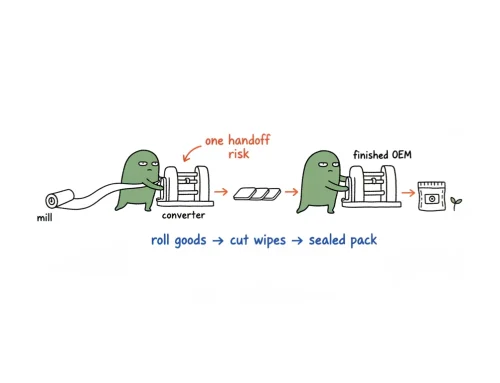
- Full-service contract manufacturing (turnkey). The factory owns or selects the formula, sources packaging, handles regulatory filings in its home market, produces, QCs, and ships to you. You provide the brand, the marketing, and the sales channel. Best fit: brand founders who are strong at go-to-market and do not want to own manufacturing IP. Capital efficient. Formula IP sits with the factory.
- Partial contract manufacturing. You own the formula (developed in-house or with a third-party formulator), and the factory produces against your spec. Packaging you own is sent to the factory or sourced separately. Best fit: mid-stage brands with unique formula positioning, or brands that have scaled past one factory’s capacity limit. Capital heavier — you own formula development cost. Formula IP sits with you.
- Toll manufacturing. You bring everything — formula, raw materials, packaging — and rent the factory’s production line, equipment, and labor for a per-batch fee. Best fit: large brands with complex or proprietary supply chains who need batching capacity in a new region without building a facility. Capital heaviest; operational control maximum. Formula, materials, and packaging IP all yours.
Most brand founders under $10M in revenue should be at full-service tier. Most between $10-50M should be evaluating partial tier. Toll tier starts making sense above $50M or when supply chain sovereignty is a strategic priority.
Step 3: Find and Vet a Manufacturer
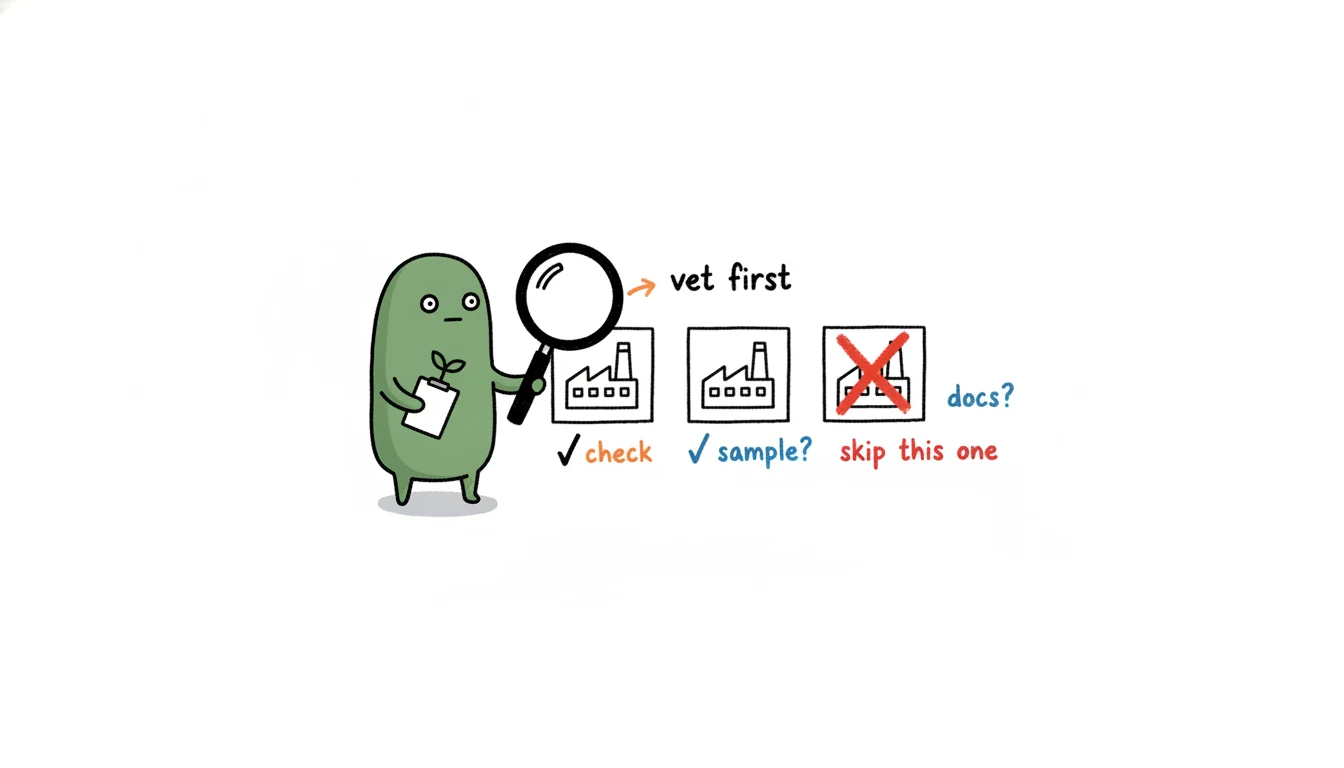
This is where most new brands spend too little time — and pay for it later. A bad manufacturer costs you more than money; it costs you launch delays, quality complaints, and customer trust.
Where to Find Manufacturers
- B2B directories: Alibaba, Global Sources, Made-in-China. Filter by “verified supplier” and “trade assurance.”
- Industry trade shows: Cosmoprof (Bologna, Las Vegas, Hong Kong), Beautyworld Middle East, CITE Japan. Meeting manufacturers in person accelerates trust-building.
- Manufacturer websites: Search Google for “your product type + private label manufacturer” or “your product type + OEM factory.” Companies like Nail Legend publish their full product catalog and manufacturing capabilities online.
- Referrals: Ask other (non-competing) brand owners in your network. The beauty community is surprisingly willing to share manufacturer contacts.
Vetting Checklist
- ✅ Certifications: GMPC, ISO 22716, FDA registration (if selling in US), EU CPNP capability (if selling in EU)
- ✅ Sample policy: Can you order samples before committing to production? Paid or free?
- ✅ MOQ flexibility: Does the manufacturer support pilot runs of 300–500 units? (Read our complete MOQ guide for negotiation tactics)
- ✅ Communication: Response time under 24 hours, English-speaking contact, proactive updates during production
- ✅ Documentation: COA (Certificate of Analysis), SDS (Safety Data Sheet), stability test reports — standard, not optional
- ✅ Packaging capability: In-house label printing, secondary packaging, export-ready palletizing
- ✅ References: Ask for 2–3 brand references (even anonymized product categories) to verify track record
Formulation IP: The Contract Clause That Matters Most
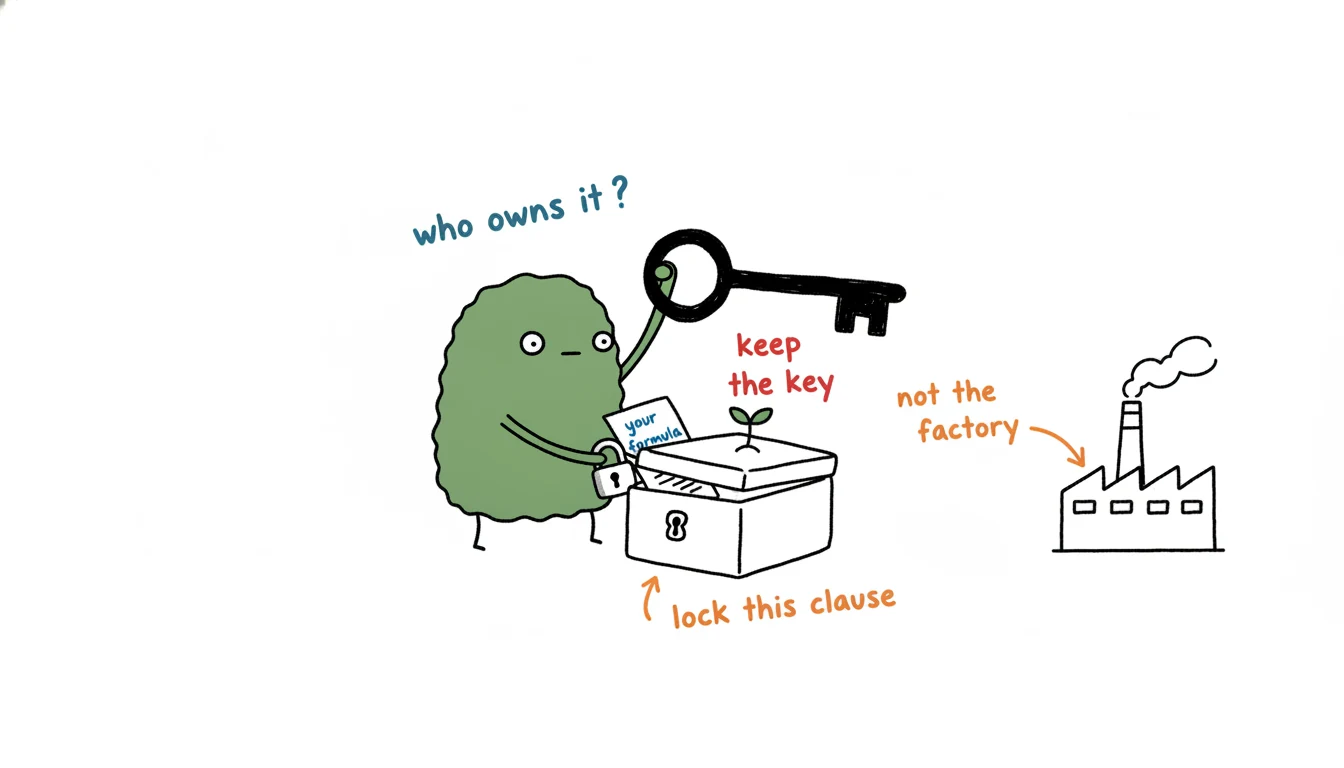
Every contract manufacturing arrangement has a formula IP question, and most first-time skincare brand founders discover it a year in when they try to switch factories. The three common postures:
- Factory owns everything (full-service default). You cannot take the formula to another factory. If the factory raises prices, discontinues a line, or goes out of business, you rebuild from scratch.
- Shared ownership, exclusive use (middle path). Factory retains the formula for its internal records; you have exclusive commercial use under named entity. Requires explicit contract language. Price: usually 10-15% premium on per-unit cost.
- You own outright (partial or toll tier). Formula developed under work-for-hire with a contract formulator; factory produces under license. Factory cannot produce it for anyone else. Most expensive, most protected.
Negotiate this clause before your first production run, not after. Retrofitting formula ownership into a relationship is near-impossible; the factory has no incentive to change terms once you are locked in.
Step 4: Select Products and Request Samples
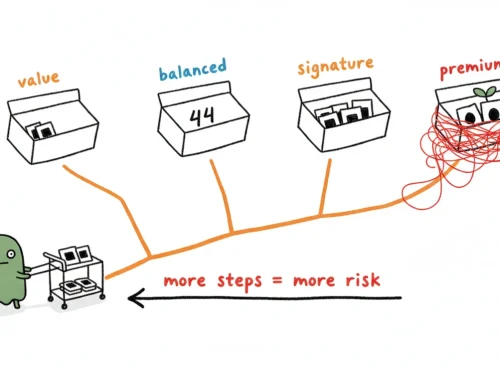
Do not launch with 20 SKUs. Start with 3–5 products that form a coherent collection. A focused launch lets you test market response, manage inventory, and keep your initial investment manageable.
Example starter collections:
- Nail care starter: Cuticle oil + cuticle softener + callus remover (3 SKUs from our cuticle and nail care line)
- Spa essentials starter: Bath bombs + soak salt + sugar scrub + soap flowers (4 SKUs from bath & spa essentials + body care)
- Massage/wellness starter: Massage oil + massage lotion + body butter (3 SKUs from massage oils + body care)
Order samples of every product you are considering. Test them yourself, have friends and family test them, and ideally get feedback from someone in your target market (a salon owner, a spa manager, a regular beauty consumer). Sample costs are typically $5–$20 per product plus shipping — a tiny investment compared to a failed production run.
Step 5: Design Your Brand Identity
Your brand identity covers four elements that must be consistent:
- Brand name: Check trademark availability (USPTO for US, EUIPO for EU) before you fall in love with a name. Also verify domain availability and social handle availability.
- Visual identity: Logo, color palette, typography, label template. Hire a designer with cosmetics packaging experience — beauty packaging has technical constraints (label size, bleed areas, regulatory text placement) that general designers miss.
- Packaging design: Your label must include: product name, ingredients list (INCI format), net weight, manufacturer/distributor info, batch number, expiration/PAO symbol, and any regulatory warnings. Your manufacturer can advise on market-specific requirements.
- Brand story: Why does your brand exist? What problem does it solve? This goes on your website, Amazon listing, and pitch decks for retail buyers. Keep it specific — “we make natural skincare” is not a story; “we created fast-absorbing cuticle oil for nail technicians who do 30+ clients a day” is.
Step 6: Place Your First Production Order
Once samples are approved and artwork is finalized, you are ready to order. Here is the typical workflow:
- Purchase Order (PO): Written confirmation of products, quantities, unit prices, packaging specs, delivery terms (FOB, CIF, DDP), and payment terms.
- Deposit: Typically 30–50% upfront, balance before shipping. Some manufacturers accept 100% after delivery for established relationships.
- Pre-production sample: The manufacturer produces 5–10 units with your final packaging for approval before full production begins. Never skip this step.
- Production: 2–4 weeks for private label, longer for OEM/ODM. Ask for progress photos and a production timeline.
- Quality inspection: Before shipping, review photos of finished goods and packaging. For large orders (5,000+ units), consider hiring a third-party inspection service (SGS, Bureau Veritas, TÜV).
- Shipping: Sea freight (cheapest, 15–35 days), air freight (fastest, 3–7 days), or express courier (DHL/FedEx, 5–10 days for samples and small orders).
Step 7: Handle Compliance and Regulations
Selling skincare products means complying with cosmetic regulations in your target market. This is non-negotiable — the penalties for non-compliance range from product seizure to six-figure fines.
| Market | Regulatory Body | Key Requirement |
|---|---|---|
| United States | FDA | Cosmetic product listing (MoCRA, effective 2024). No pre-approval needed, but labeling must comply with FD&C Act. Good manufacturing practice compliance. |
| European Union | European Commission | CPNP notification mandatory before placing product on market. Responsible Person required in EU. Product Information File (PIF) with safety assessment. |
| United Kingdom | OPSS | SCPN notification (post-Brexit replacement for CPNP). UK Responsible Person required. |
| Canada | Health Canada | Cosmetic Notification Form (CNF) required. Ingredients must comply with Cosmetic Ingredient Hotlist. |
| Australia | NICNAS/AICIS | Industrial chemical introduction requirements. Some ingredients need AICIS assessment. |
A good manufacturer will help with compliance documentation — COA, SDS, INCI ingredient lists, and stability test reports. Ask your manufacturer specifically which regulatory filings they can support before you finalize your contract.
Step 8: Build Your Sales Channels
Product in hand — now where do you sell it? For a new private label skincare brand, these are the most common launch channels:
- Amazon FBA: Fastest path to customers. High competition, but also the largest beauty buyer pool. Invest in A+ Content and keyword-optimized listings.
- Shopify / independent e-commerce: Higher margins, full brand control, but you drive your own traffic. Works best when combined with content marketing and social media.
- Etsy: Good for handmade-positioned and natural/organic products. Lower competition than Amazon for niche beauty categories.
- Wholesale to salons and spas: B2B channel with higher volume per order and recurring relationships. Requires sales outreach and potentially trade show attendance.
- Retail partnerships: Boutiques, specialty stores, hotel gift shops. Start local, build a track record, then approach larger retailers.
Budget reality check: Launching costs roughly $3,000–$10,000 for a 3–5 SKU private label brand. This covers samples ($100–$300), brand design ($500–$2,000), first production run ($2,000–$5,000 at 500-unit MOQ), and initial marketing ($500–$2,000). These are real numbers, not aspirational projections.
Common Mistakes to Avoid
- Launching too many SKUs: 3–5 products is enough. More SKUs = more inventory cost, more complexity, more risk of dead stock.
- Skipping samples: Never commit to a production run without testing samples. Even private label formulas vary between manufacturers.
- Ignoring packaging regulations: Missing INCI lists, wrong net weight declarations, or missing manufacturer information on labels will get your product pulled from Amazon and potentially detained at customs.
- Underestimating shipping costs: International freight, customs duties, and last-mile delivery to your warehouse or Amazon FBA can add 15–25% to your per-unit cost. Build this into your pricing from day one.
- Choosing the cheapest manufacturer: The lowest quote often comes with the longest delays, worst communication, and most quality issues. Vet on reliability and communication first, price second.
Your Launch Timeline
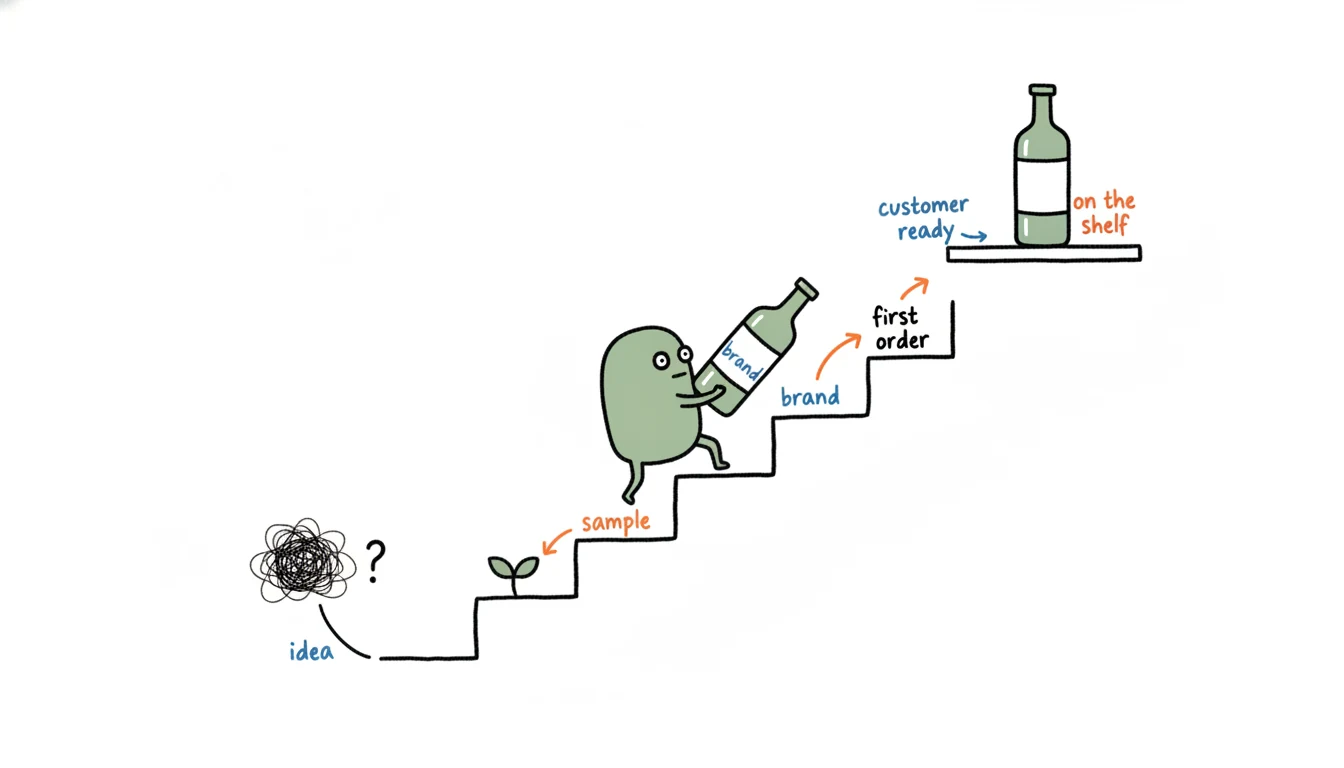
| Week | Milestone |
|---|---|
| 1–2 | Niche research, manufacturer shortlist, sample requests |
| 3–4 | Sample testing, manufacturer selection, brand design kick-off |
| 5–6 | Artwork finalization, packaging proof approval, PO placement |
| 7–10 | Production (private label: 2–4 weeks) |
| 11–12 | Shipping, Amazon/Shopify listing setup, first sales |
From first research to first sale in under 12 weeks is realistic for a private label launch. OEM and ODM add 4–8 weeks for formulation development.
Ready to Start?
Nail Legend supports beauty entrepreneurs at every stage — from private label pilot runs of 500 units to OEM programs for established brands. Explore our full product catalog covering cuticle and nail care, body care, bath and spa essentials, massage oils, and wax warmers. Contact our B2B team with your product concept and target market — we will recommend the right manufacturing model, MOQ, and timeline for your situation.
Frequently Asked Questions
How much does it cost to start a private label skincare brand?
A realistic budget for a 3–5 SKU private label brand is $3,000–$10,000. This covers samples, brand design, first production run at 500-unit MOQ, basic packaging, and initial marketing. OEM or ODM brands with custom formulations typically need $10,000–$25,000 to launch.
Do I need a license to sell skincare products?
In the US, cosmetic products (non-drug claims) do not require pre-market FDA approval, but you must comply with MoCRA product listing requirements and FD&C Act labeling standards. EU requires CPNP notification and a Responsible Person. Check your target market’s specific requirements — your manufacturer should help with documentation.
How long does it take to launch a private label skincare brand?
8–12 weeks from initial research to first sale for private label. This includes 2 weeks for research and samples, 2 weeks for branding and artwork, 2–4 weeks for production, and 1–2 weeks for shipping and channel setup. OEM and ODM add 4–8 weeks for formulation development.
Can I start a skincare brand from home?
Yes — with private label manufacturing, you do not need a production facility. The manufacturer handles formulation, production, and packaging. You manage branding, marketing, and sales from wherever you work. Many successful skincare brands started as one-person home-based operations selling on Amazon or Shopify.
Sourcing bath bombs at scale?
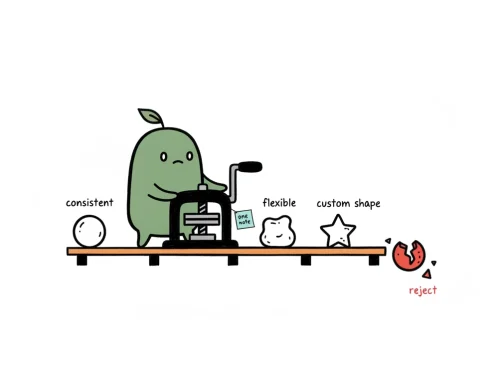
If you’re evaluating bath bomb wholesale and private label manufacturing for a retail line, gift set, or spa chain, our B2B Bath Bomb wholesale program covers 8 base scents, custom shapes and silk-screen printing, and MOQ from 100 jars at the quote stage. Request a Bath Bomb wholesale quote →


Leave A Comment