
One of the first questions every new beauty brand asks a manufacturer: “What is your MOQ?” Minimum Order Quantity determines how much capital you need for your first production run, how much inventory risk you carry, and whether a manufacturer is even willing to work with you at your current scale.
This guide covers real-world MOQ ranges for private label beauty products, what drives those numbers up or down, and practical negotiation strategies. Whether you are sourcing cuticle and nail care, body care, or bath and spa products, the MOQ dynamics follow similar patterns.
Not sure whether you need private label, OEM, or ODM? Read our complete comparison of all three models first — MOQ varies significantly depending on which path you take.
Typical MOQ Ranges by Product Type
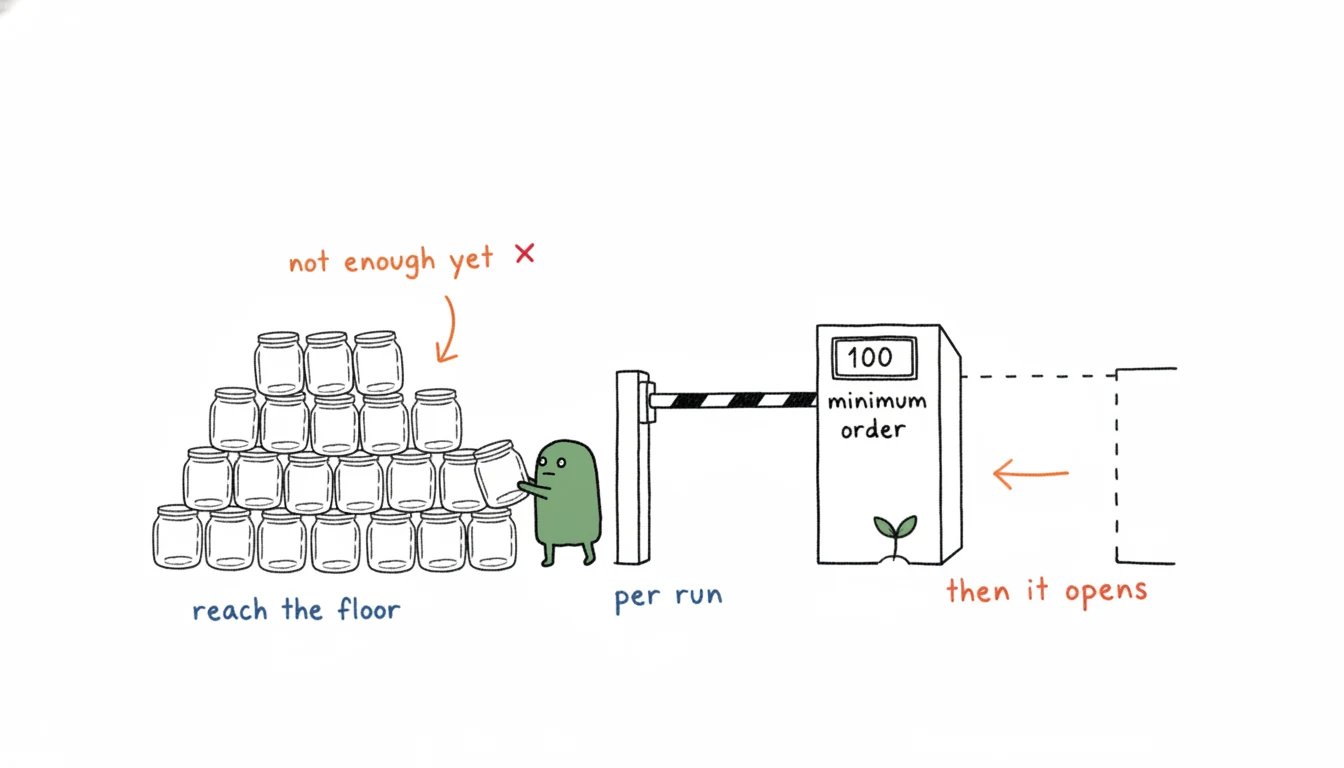
MOQ is not one number — it varies by product category, formulation complexity, packaging type, and whether the manufacturer offers pilot runs. Here are realistic ranges based on B2B manufacturing in the beauty and spa industry:
| Product Category | Private Label MOQ | OEM/ODM MOQ | Notes |
|---|---|---|---|
| Cuticle Oil | 500–1,000 bottles | 1,000–3,000 | Small fill volume (10–15ml) keeps unit cost low |
| Body Butter / Cream | 500–1,000 jars | 1,000–3,000 | Larger containers (200–500ml) may lower per-unit MOQ |
| Massage Oil / Lotion | 500–1,000 bottles | 1,000–5,000 | Bulk drum option available for spa refill programs (MOQ by weight: 200kg+) |
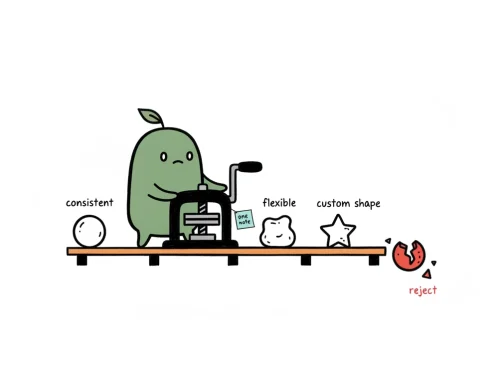
| Bath Bombs | 500–1,000 pieces | 1,000–3,000 | Custom molds may require higher MOQ (2,000+) |
| Soap Flowers | 500–1,000 pieces | 1,000–2,000 | Gift set assembly adds 1–2 days lead time, same MOQ |
| Soak Salt / Scrub | 500–1,000 bags/jars | 1,000–3,000 | Weight-based pricing common; 500g/1kg bags are standard |
| Wax Warmers (Equipment) | 500 units | 1,000–3,000 | Hardware MOQ driven by mold setup and component sourcing |
Key takeaway: For most private label beauty products, the realistic starting point is 500 units per SKU. If a manufacturer quotes you 5,000+ minimum for a standard private label product, they are either not set up for small-batch work or they are trying to push you toward a larger commitment.
What Drives MOQ Up or Down?
Factors That Increase MOQ
- Custom formulation (OEM): R&D costs need to be amortized across more units. A custom body lotion formula might require 2,000+ unit MOQ vs. 500 for the same product in private label.
- Custom packaging tooling: A unique bottle shape or jar mold can cost $2,000–$10,000. Manufacturers set higher MOQ to recover tooling investment.
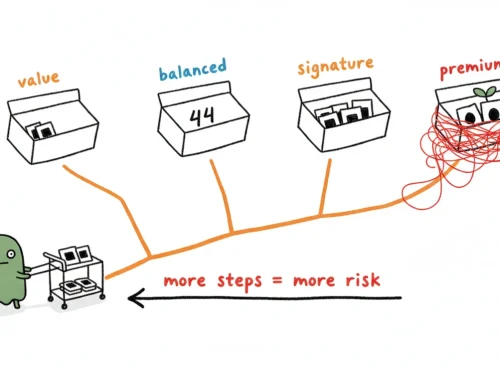
- Multi-component products: Gift sets with 3–5 items, custom boxes, tissue paper, and ribbon wrapping increase assembly labor — manufacturers prefer higher volumes to justify line setup.
- Regulatory requirements: If the manufacturer must file a new CPNP (EU) or FDA notification for your custom formula, they want enough volume to justify the compliance investment.
Factors That Decrease MOQ
- Using existing formulas (private label): No R&D overhead = lower MOQ threshold.
- Standard packaging: Stock bottles, jars, and tubes that the manufacturer already has in inventory. Custom labels on stock containers = lowest MOQ path.
- Pilot run agreements: Some manufacturers offer a one-time small batch (200–300 units) at a higher per-unit cost, specifically for market testing. Ask explicitly — not all factories advertise this.
- Repeat order commitment: Agreeing to a reorder schedule (e.g., quarterly orders of 1,000+) can get you a lower MOQ on the first run.
- Multi-SKU orders: Ordering 3–5 different products from the same manufacturer in one PO often unlocks lower per-SKU minimums because the total production volume justifies the setup.
How to Calculate Your First Order Size
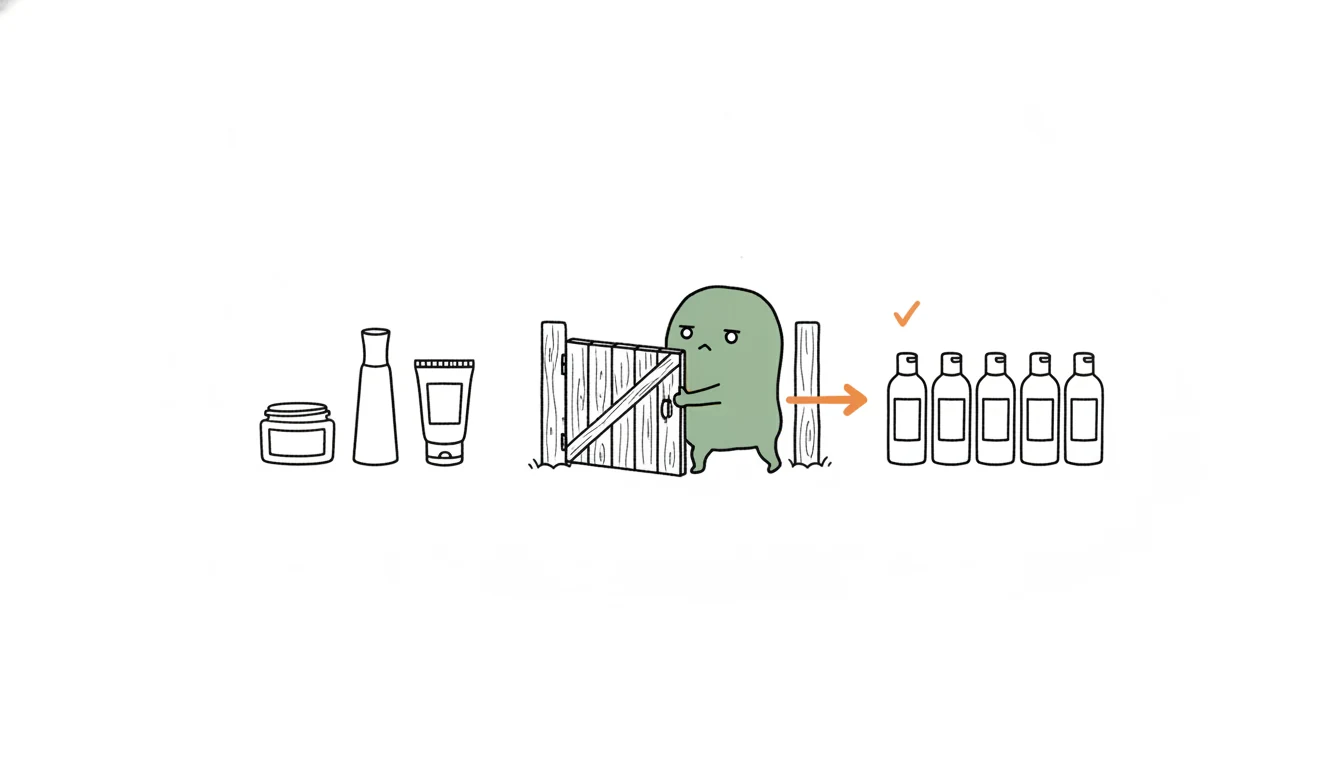
Do not let MOQ drive your order size blindly. Work backwards from your business plan:
- Estimate monthly sell-through: How many units will you realistically sell per month? For a new Amazon listing or Shopify store, conservative estimates are 50–200 units/month for the first 3 months.
- Target 3–6 months of inventory: Multiply monthly sell-through by 3–6 to get your target order size. This gives you a buffer for shipping lead time on reorders.
- Compare to manufacturer MOQ: If your 3-month target is 300 units but the manufacturer MOQ is 500, order 500 — the marginal cost of 200 extra units is usually less than the risk of stockout.
- Budget check: Multiply order quantity by per-unit cost (including packaging and shipping). If the total exceeds your budget, look for manufacturers with lower MOQ or start with fewer SKUs.
Negotiation Tactics That Actually Work
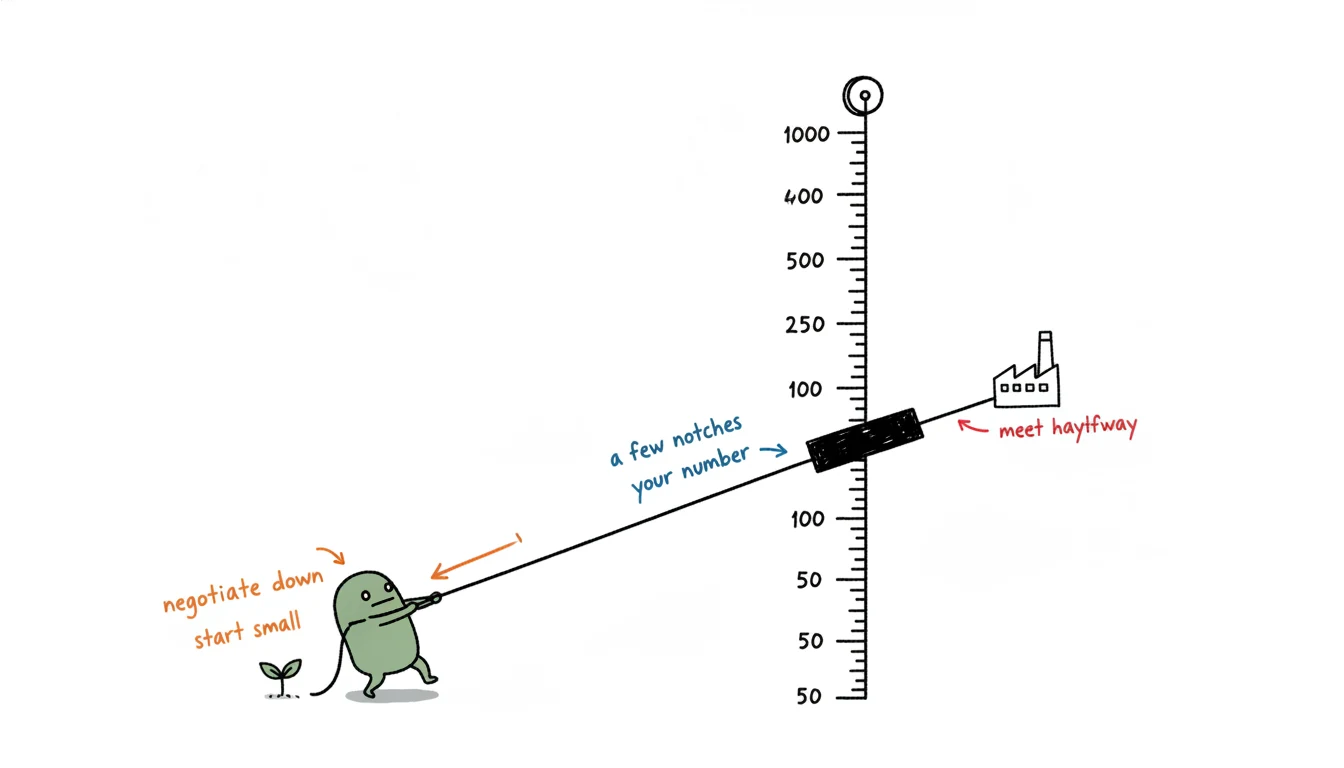
MOQ is not a fixed number — it is a starting position. Here are negotiation strategies that work with most beauty manufacturers:
- Ask for a pilot run: “Can we do a one-time 300-unit run at a higher per-unit cost to test the market before committing to your standard MOQ?” Many manufacturers will say yes if they see long-term potential.
- Offer a forecast: “Our first order is 500 units, but we plan to scale to 2,000 units per quarter within 6 months.” A growth narrative lowers perceived risk for the manufacturer.
- Bundle SKUs: “We want to order 300 units each of 3 products. Can we get the 500-unit MOQ pricing if our total order is 900 units?” This works because the manufacturer’s setup cost is partially shared across SKUs.
- Pay faster: Offering payment on delivery (rather than Net 30/60) or a larger deposit (50% vs. 30%) gives the manufacturer better cash flow, which they may reward with MOQ flexibility.
- Accept stock packaging: “We will use your standard 30ml dropper bottle instead of a custom shape if you can lower the MOQ to 300 units.” Packaging is often the bottleneck, not formulation.
Red Flags in MOQ Conversations
- “Our MOQ is 10,000 units and non-negotiable.” — For private label beauty products, this is unusually high. The manufacturer may not be set up for small-batch work, or they are prioritizing large accounts. Move on.
- “No samples until you commit to a production order.” — Legitimate manufacturers provide samples (paid or free) before you commit. Refusal to sample is a red flag.
- “We can do 100 units.” — Extremely low MOQ (under 200) for private label beauty products usually means the manufacturer is a trading company, not a factory. Quality control and lead time may suffer.
- No written MOQ policy. — If the MOQ changes every time you ask, the manufacturer does not have stable production capacity. Get everything in writing before placing a PO.
Start Small, Scale Smart
The goal is not to find the lowest possible MOQ — it is to find a manufacturer who matches your current scale and can grow with you. A good manufacturing partner will offer a realistic pilot path (500 units private label → 1,000 units ODM → 3,000+ units OEM) without forcing you into commitments you cannot support.
At Nail Legend, our private label MOQ starts at 500 units per SKU across our full product range — from cuticle oil to bath bombs and spa essentials. For pilot runs and multi-SKU bundles, contact our B2B team to discuss flexible arrangements.
Frequently Asked Questions
What does MOQ mean in beauty manufacturing?
MOQ stands for Minimum Order Quantity — the smallest number of units a manufacturer will produce in a single production run. It applies per SKU, not per order. If a manufacturer quotes MOQ 500 and you want 3 products, you need 500 units of each (1,500 total).
Why do manufacturers have MOQ requirements?
Production setup has fixed costs: machine cleaning, raw material preparation, quality testing, and packaging line changeover. These costs are the same whether the run is 100 units or 10,000. MOQ ensures the manufacturer covers setup costs and maintains profitability.
Can I order less than the MOQ?
Sometimes. Many manufacturers offer pilot runs below standard MOQ at a premium per-unit price (typically 20–40% higher). This is common for market testing before committing to full production. Ask specifically about “pilot run” or “trial order” pricing.
Does MOQ differ between private label and OEM?
Yes. Private label MOQ is typically lower (500–1,000 units) because the manufacturer uses existing formulas and standard production processes. OEM requires custom formulation and often dedicated production line setup, pushing MOQ to 1,000–5,000+ units.
Sourcing bath bombs at scale?
If you’re evaluating bath bomb wholesale and private label manufacturing for a retail line, gift set, or spa chain, our B2B Bath Bomb wholesale program covers 8 base scents, custom shapes and silk-screen printing, and MOQ from 100 jars at the quote stage. Request a Bath Bomb wholesale quote →


Leave A Comment