
Note: We’ve folded this into our complete guide — see the full, up-to-date picture here: Top Sugar Scrub Manufacturers 2026.
Quick B2B brief. This guide is the production hub for buyers sourcing a sugar scrub private label manufacturer at scale. Inside: carrier-oil base and grain-size choices a competent sugar scrub manufacturer should walk you through, MOQ ladders and lead-time tiers for both salon and retail formats, and the formulation grammar behind brown sugar scrub and coffee sugar scrub variants — the two highest-search positioning angles in 2026. Pricing and sample requests below.
Brand buyers building a body-care line in 2026 face three sugar scrub sourcing decisions before the first quote round even starts: sugar grain selection (white cane, brown cane, turbinado, demerara, coconut sugar), carrier oil base (coconut, sweet almond, jojoba, MCT), and packaging format (PET jar, glass apothecary, salon 1-gallon, distributor 5-gallon). This guide walks through every line item in a typical sugar scrub private label manufacturer RFQ so brand teams can build a clean spec sheet and compare quotes apples-to-apples.
Wholesale Sugar Scrub Pricing: Pilot, Standard & Scale Tier Reality
A wholesale sugar scrub price ladder typically compresses across four MOQ tiers: 200kg / 52-gallon pilot (entry validation), 1,000kg / 260-gallon standard (retail launch), 5,000kg scale (multi-SKU programme), and 20,000kg+ enterprise (annual restock contract). Per-unit cost drops 12–28% across these tiers depending on carrier oil base, sugar grain selection, and active ingredient additions (hyaluronic acid, vitamin E, AHA exfoliants).
For brands cost-modelling against a body scrub manufacturer short-list, the three most overlooked cost drivers in the first quote round are: (1) carrier oil base (coconut oil sits ~40% below jojoba at matching grade), (2) active ingredient additions (hyaluronic acid blend adds 15–25% per unit, AHA exfoliant adds 8–15%), and (3) jar selection (16oz amber glass apothecary jars cost ~3.5× the equivalent PET clear jar but carry the retail premium positioning). Bulk sugar scrub shipped in 5-gallon HDPE pails or 25kg plastic drums skips bottle and label entirely — useful for spa distributors and salon chains that re-pack into private SKUs at a domestic facility.
Sugar Grain Selection: White Cane vs. Brown vs. Turbinado vs. Coconut
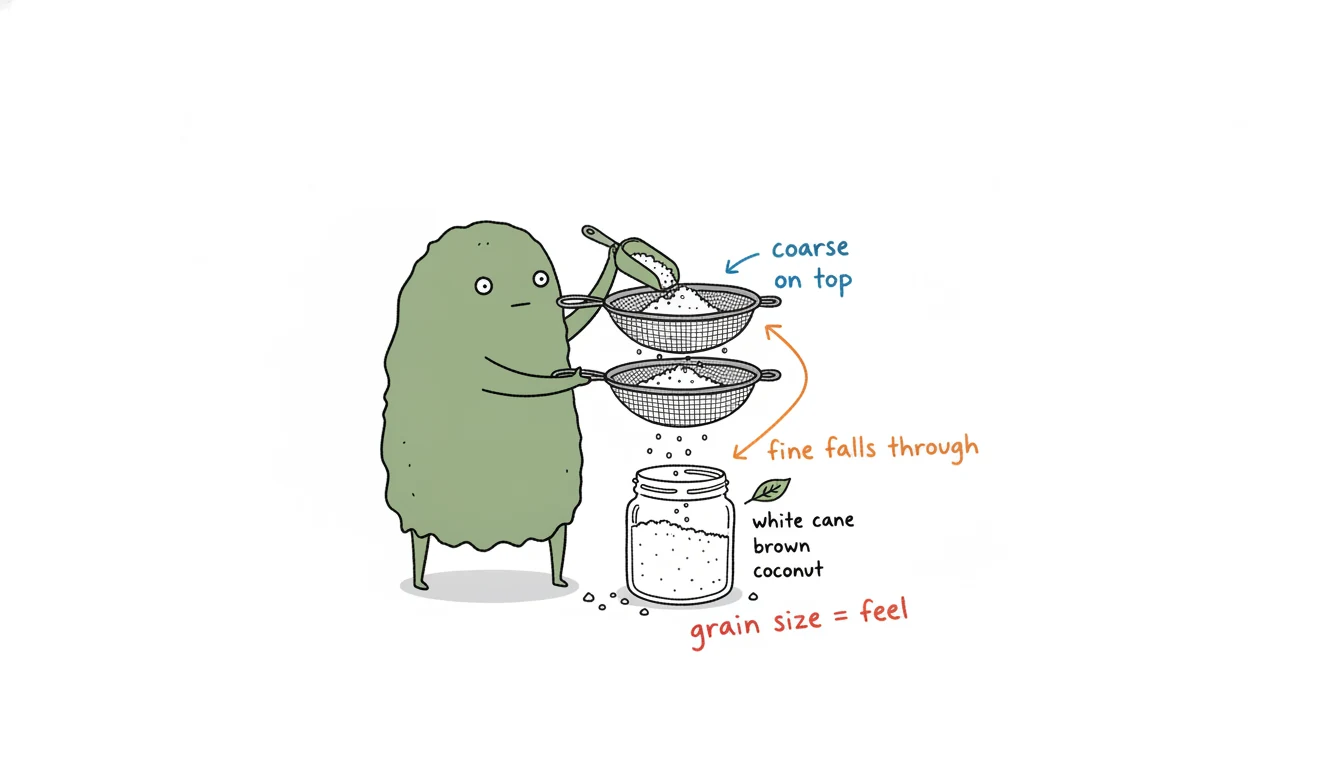
Sugar grain selection drives 25–40% of perceived product quality at retail and 100% of the abrasion profile:
- White cane sugar — finest grain, gentlest exfoliation, suits face-and-body multi-use SKUs. Lowest cost base, widely available.
- Brown / demerara cane sugar — medium grain, moderate exfoliation, molasses note adds warm caramel scent layer. Most retail-popular at the 8oz–12oz jar size.
- Turbinado raw cane — coarse grain, deep exfoliation, best for body and foot scrub. Higher visual appeal in clear jars.
- Coconut sugar — medium-coarse, low glycemic positioning for “natural” and “clean beauty” SKUs. ~30% premium over standard cane.
- Sea salt blend (salt scrub variant) — technically a salt scrub not sugar scrub, but often runs on the same production line. Coarser, more therapeutic positioning, common in foot and pedicure SKUs.
Carrier Oil Base: Coconut vs. Almond vs. Jojoba vs. MCT
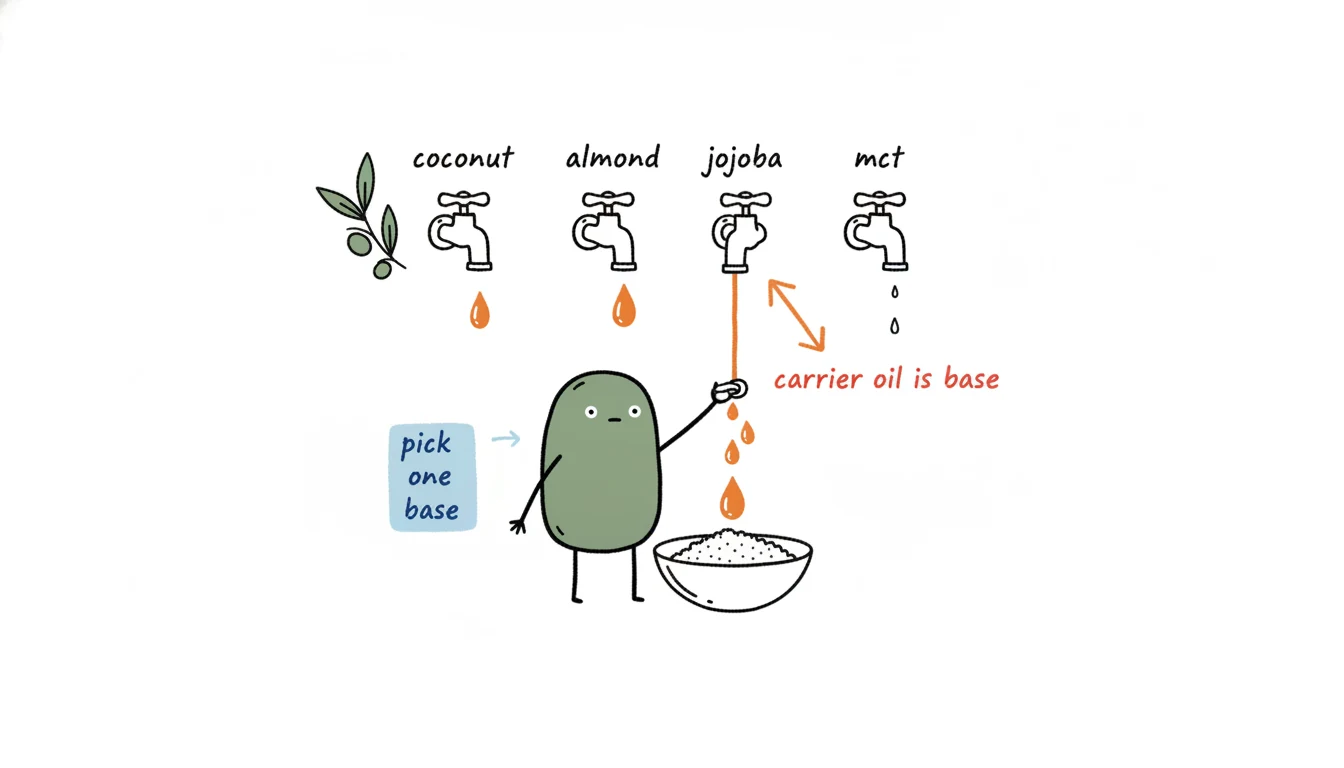
The carrier oil base drives 30–50% of the per-unit cost and most of the skin-feel and shelf-life characteristics:
- Coconut oil (fractionated or whole) — budget base, solidifies below 24°C (texture variability in cold climates), strong consumer recognition. Most common base in volume SKUs.
- Sweet almond oil — mid-tier cost, light skin feel, neutral scent. Reliable workhorse for retail-tier private label.
- Jojoba oil — premium tier (technically a wax ester), extends shelf life, supports “luxury” positioning. ~40–60% cost premium over coconut.
- MCT (medium-chain triglyceride) — clear, stable, no scent, no greasy after-feel. Used for clinical-positioning SKUs and “clean ingredient” launches.
- Shea butter blend — for whipped body scrub variants. See our body butter sourcing guide for the base butter selection logic.
Salon Sugar Scrub vs. Retail Sugar Scrub: Format & Spec Differences
A salon sugar scrub SKU is formulated for refill from bulk into smaller serving bowls during pedicure or body treatment, typically packed in 1-gallon round jars or 5-gallon pails. Grain coarseness skews medium-to-coarse for visible exfoliation in a service setting, fragrance load runs higher for in-treatment sensory impact, and the ingredient deck favours cost-efficient bases (coconut oil + brown cane sugar) since unit cost matters at salon-channel margins.
A retail body sugar scrub SKU, by contrast, optimises for jar shelf presence (8oz, 12oz, 16oz formats are dominant), grain consistency (consumers expect uniform texture not visible separation), fragrance refinement (top/middle/base note layering matters), and ingredient deck storytelling (hyaluronic acid, vitamin E, organic certification claims). Retail SKUs typically cost 2–3.5× per ounce vs. their salon-tier equivalents because of packaging, refined formula, and brand margin stack.
For pedicure-channel salon-grade scrubs that integrate with foot soak and cuticle treatment, see our deluxe spa kit 4-in-1 / 6-in-1 bundled SKU layout — the sugar scrub component there is engineered as part of a multi-step service workflow rather than a stand-alone SKU.
Sugar Scrub Private Label vs. White Label: When Each Lane Wins
White label sugar scrub uses a stock formula, stock fragrance, and stock packaging with only the brand label or sleeve changing. Lead time runs 15–25 days at 200kg pilot MOQ — the lowest-risk entry path for brands validating a body-care line for the first time. Sugar scrub private label in the strict sense means buyer-defined sugar grain, carrier oil, active ingredient deck, fragrance blend, jar shape, or label print. Tooling and matching takes 30–50 days lead time at 500kg–2,000kg MOQ depending on customisation depth.
The cost delta between white and private label at 1,000kg sits in the 15–28% band depending on active ingredient stack and fragrance customisation. Most brands start with a white-label run for first retail validation, then migrate to private label once a SKU proves sell-through — the same pattern we see across our body butter, bath bomb, cuticle oil, and soak salt RFQ pipelines.
Sugar Scrub Supplier vs. Contract Manufacturer: Sourcing Distinctions
A sugar scrub supplier — what we operate as — manufactures the blend, fills it, labels it, and ships direct on your PO under a private label master service agreement using a formula and compliance docket already on file. A sugar scrub contract manufacturer typically takes a buyer-supplied formula and runs it on contract, with the brand owning the formulation IP outright — useful for brands with an in-house formulator or a unique competitive formula.
For most brands launching a body-care line for the first time, a sugar scrub private label manufacturer arrangement is the lower-risk path because the formula, stability testing, MoCRA compliance, and ingredient certification are already on file with the supplier — only the scent, label, and jar configuration change per buyer. Contract manufacturing makes sense once a brand has a validated proprietary formula generating $1M+ annual revenue and wants formulation IP control.
Packaging Formats & Fragrance Customisation
Standard retail formats we run include: 8oz PET clear jar, 12oz PET amber jar, 16oz glass apothecary jar with metal lid, 1-gallon round HDPE jar for salon refill, 5-gallon HDPE pail for salon-channel bulk, and 25kg drum for distributor-tier wholesale. Each format carries a different cap, liner, label, and box SKU; small brands often spec the jar without realising the cap is a separate purchase order with its own MOQ floor.
Fragrance customisation typically offers eight stock scents (jasmine, rose, lavender, green tea, mint, cherry, honey, orange) at no premium for white label runs. Custom fragrance development for private label adds a 4–6 week IFRA-compliant scent brief cycle and a one-time matching fee of typically $500–$1,500 depending on complexity. Brand teams replicating a competitor SKU should provide a reference sample for back-matching rather than written brief alone — back-match runs are 30–50% faster and more accurate.
MOQ, Lead Time & Compliance Checklist for Sugar Scrub Sourcing
- Pilot MOQ: 200kg / 52-gallon per SKU for white label, 500kg per SKU for private label custom fragrance and active ingredient deck
- Standard tier: 1,000–2,000kg per SKU unlocks meaningful per-unit discount
- Lead time: 25–35 days for bulk and white label, 35–55 days for private label with custom fragrance, custom carrier oil, or active ingredient deck
- US compliance: MoCRA cosmetic product listing support included at standard tier and above; brand owns FDA registration as the responsible person
- EU/UK compliance: CPNP submission support and PIF (Product Information File) preparation per Regulation 1223/2009 at standard tier and above
- Stability testing: 12-week accelerated stability protocol on first private label SKU run; thereafter golden sample sign-off triggers production scheduling
- Scent IP isolation: written into master service agreement, preventing your custom blend from being resold to a second buyer for at least 18 months
How to Evaluate a Sugar Scrub Private Label Manufacturer
Five filters cut through most candidate lists when evaluating a sugar scrub private label manufacturer: (1) carrier oil base depth (coconut + almond + jojoba + MCT at minimum, plus shea butter for whipped variants), (2) active ingredient certification (hyaluronic acid grade, vitamin E source, AHA percentages), (3) IFRA-compliant fragrance development capability with documented back-match workflow, (4) MoCRA and CPNP submission depth, (5) packaging inventory across PET, amber glass, and HDPE jar/pail formats without container-side MOQ.
For brand buyers ready to move from RFQ to sample request, our Sugar Scrub category ships the catalogue of stock SKUs available for white label runs and serves as the baseline for private label modification briefs. The B2B sourcing pattern most brands follow is: white label pilot at 200kg in two scents → standard private label run at 1,000kg with one custom fragrance + one active ingredient addition → annual restock contract at 5,000kg+ with multi-SKU programme. Each transition typically takes 4–6 months as retail sell-through validates the SKU.
Body Sugar Scrub Wholesale: Bottling, Bundle & Per-Unit Reality
The term body sugar scrub wholesale often surfaces from buyers stocking a 6–12 SKU body-care line rather than a single-scent test. Bundled-run economics improve sharply when 1,000kg MOQ is amortised across 4+ scents sharing the same carrier oil and jar — the formulation, filling line, and label run share fixed cost; only the fragrance dose and label artwork change. Buyers running a body sugar scrub wholesale RFQ should price per-SKU MOQ and bundled-run MOQ side by side; the bundled price typically unlocks pilot-tier scenting at standard-tier per-unit cost.
For brand teams sourcing body sugar scrub wholesale for the first time, the most common cost surprise is the secondary packaging line (sleeve, carton, shrink-wrap) which adds 8–15% per SKU when retail launch needs full point-of-sale display readiness. A bundled body sugar scrub wholesale programme spanning 4–6 SKU usually amortises the secondary packaging tooling across the run, which is why brand buyers comparing wholesale sugar scrub quotes against single-SKU quotes often misread the cost structure on the first pass.
Related: Sugar scrub is also a core component of our private label spa & pedicure gift sets — see the 2026 spa gift set buyer’s guide for configurations and MOQ.


Leave A Comment