
The global cuticle oil market sits inside a beauty manufacturing ecosystem that grew past USD 380 billion in 2024 (Grand View Research, Cosmetics Market Report 2024), with nail care as one of the fastest-recovering segments post-pandemic. For B2B buyers — indie founders, salon distributors, Amazon sellers, and contract beauty brands — the question is no longer whether to launch a private-label cuticle oil line, but which manufacturer fits the volume, formulation depth, and certification profile they actually need.
Quick answer: Pravada, Lady Burd, Bulk Apothecary, Cosmetic Solutions and Cohere suit buyers prioritizing established US scale; LuxeFormula, Beauty Private Labels, DLAB, Nail Legend and CNC offer specialist or regional routes. Applicator compatibility and oxidation control are as important as the carrier-oil blend.
Methodology and evidence standard (reviewed 2026-08-07): Public evidence from manufacturer and product pages is used to establish category relevance. A public claim is a shortlist signal, not an audit. Legal manufacturer, facility, formula ownership, MOQ, lead time, capacity, certification scope and destination-market documents must be confirmed for the exact SKU in the RFQ.
The answer depends entirely on which side of the industry you sit on. Cuticle oil manufacturers split into two structurally different camps: enterprise-scale “Giants” built around large MOQs, regulatory infrastructure, and long-tenure brand customers; and boutique specialists built around small batches, faster custom formulation, and indie-brand handholding. Both can deliver excellent product. Neither is right for every buyer.
This guide compares 10 cuticle oil manufacturers in 2026 across both tiers — 5 established giants and 5 boutique specialists — with honest tradeoffs for each. If you have not yet decided whether you want a Giant or a Boutique, we built a complete 2026 cuticle oil private-label manufacturing guide that covers formulation, packaging, and supplier vetting end-to-end. For a deep dive on order sizing, see Cuticle Oil MOQ Explained.
Cuticle Oil Manufacturers at a Glance
| Company | Shortlist role | RFQ check |
|---|---|---|
| Pravada | Established-scale route | Confirm formula, applicator, MOQ and exact-SKU documents |
| Lady Burd | Established-scale route | Confirm formula, applicator, MOQ and exact-SKU documents |
| Bulk Apothecary | Established-scale route | Confirm formula, applicator, MOQ and exact-SKU documents |
| Cosmetic Solutions | Established-scale route | Confirm formula, applicator, MOQ and exact-SKU documents |
| Cohere Beauty | Established-scale route | Confirm formula, applicator, MOQ and exact-SKU documents |
| LuxeFormula Labs | Specialist or regional route | Confirm formula, applicator, MOQ and exact-SKU documents |
| Beauty Private Labels | Specialist or regional route | Confirm formula, applicator, MOQ and exact-SKU documents |
| DLAB | Specialist or regional route | Confirm formula, applicator, MOQ and exact-SKU documents |
| Nail Legend | Specialist or regional route | Confirm formula, applicator, MOQ and exact-SKU documents |
| CNC International | Specialist or regional route | Confirm formula, applicator, MOQ and exact-SKU documents |
How the Industry Splits: Giants vs Boutique Specialists
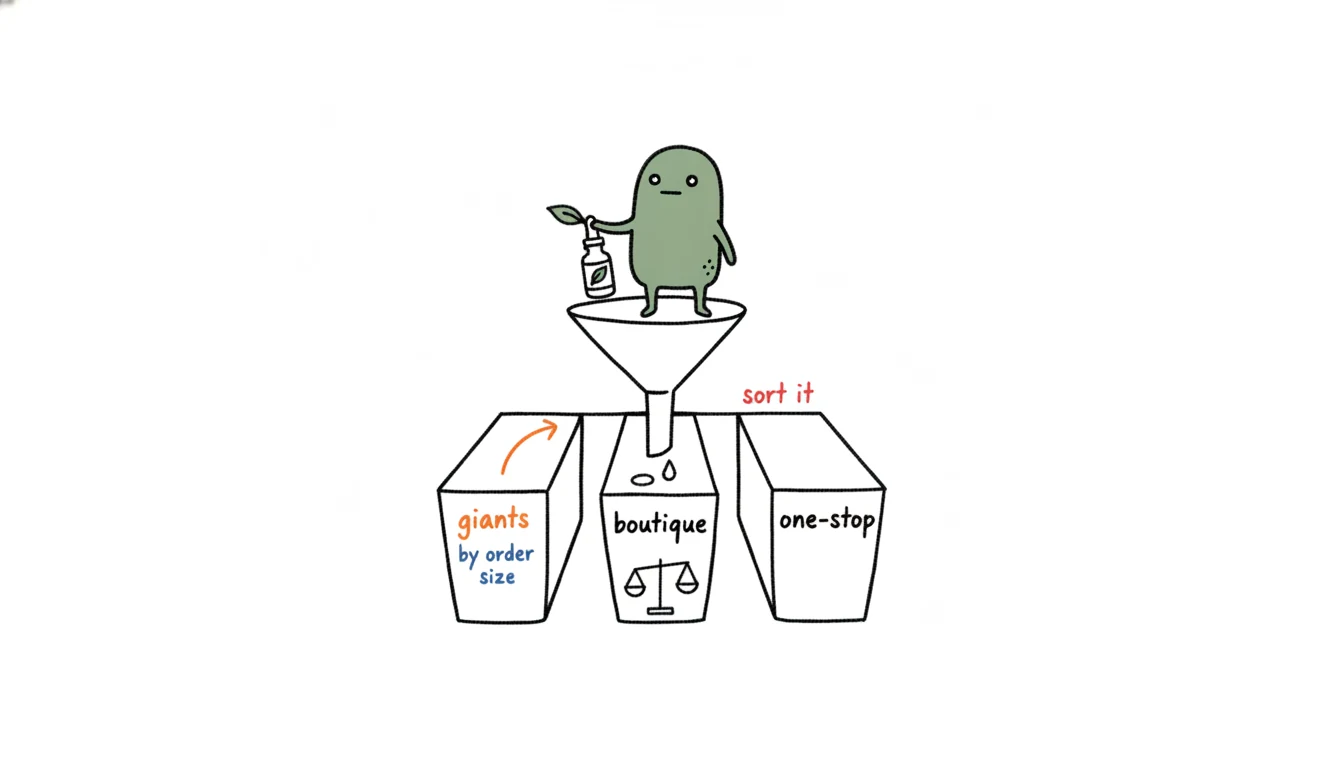
Beauty contract manufacturing is a barbell market. On one end, large CDMOs (Contract Development & Manufacturing Organizations) and full-service private-label houses run at industrial scale: tens of thousands of units per run, 5,000+ SKU catalogs, dedicated regulatory staff, and customer rosters that include Macy’s, Ulta, Costco, Coty, and Unilever. They are built for established retail brands moving real volume.
On the other end sit boutique specialists — smaller plants (often 50–500 employees), low MOQs starting at 100 units, and a single project manager who shepherds your formula from sample through first production. They are built for indie founders, DTC brands, Amazon-FBA sellers, and salon chains piloting a private-label line for the first time.
The gap between the two tiers is real. Giants will not quote a 200-unit pilot; boutiques cannot run a 50,000-unit Costco-launch order. Most buyers we see waste their first month asking the wrong tier for the wrong scope. Below is the honest breakdown — who each manufacturer is, what they do best, and where they hit a ceiling. For a parallel framework on supplier types, our cuticle oil wholesale supplier guide covers factory vs trader vs co-packer paths.
Part 1 — 5 Established Giants
1. Pravada Private Label (Florida, USA)
Profile: One of the most visible US private-label houses in the beauty space, Pravada operates a Florida facility with a transparent three-tier MOQ model — 50 units (sample tier), 250 units (pilot tier), 2,500 units (production tier). Customer roster on their site openly lists Macy’s, Ulta, Amazon, Nordstrom, Costco, Target, and TikTok Shop, which gives them an unusually strong trust signal for first-time B2B buyers.
Strengths: Three-tier MOQ ladder lets brands de-risk by stepping up from 50 → 250 → 2,500 within one supplier relationship. Sample-tier pricing transparent at $3.95 per unit. Skincare-led formulation team with proven SKU launches at major retailers.
MOQ: 50 / 250 / 2,500 units. Best for: Indie skincare brands stepping up to retail-ready production with a roadmap from pilot to scale. Limitation: Skincare-first DNA — cuticle oil and nail-care adjacencies are real but not their flagship category. Brands that need nail-native formulation depth (specific carrier oil viscosity, cuticle-bonding penetrants, low-tack finish) may find more depth at a nail-specialist boutique. Website: pravadaprivatelabel.com
2. Lady Burd Cosmetics (New York, USA)
Profile: Founded in 1972, Lady Burd is one of the oldest continuously operating private-label cosmetic manufacturers in the United States. Family-owned, NY-based, with a “Private Label Cosmetic Manufacturer” identity baked into every page of their site. They do full-service custom formulation, bottle/tube/jar fill, label design, and order fulfillment.
Strengths: 50+ years of regulatory and formulation institutional memory. End-to-end vertical integration — most production stays in-house including secondary packaging. Strong on color cosmetics with cuticle/nail oil as a steady adjacent SKU.
MOQ: From $150 / 50 units (depending on category). Best for: US-domiciled brands that want a “Made in USA” claim, predictable lead times, and a manufacturer that will not disappear in 18 months. Limitation: Onboarding is gated by a 12-field Get Started form requiring Tax ID and a 30-minute Calendly call — designed to filter out tire-kickers, but slows the sample loop for brands who want to compare 5 manufacturers in parallel. Pricing is private (no public quotes). Website: ladyburd.com
3. Bulk Apothecary (Ohio, USA)
Profile: Bulk Apothecary occupies a unique position — a 300,000 sq ft FDA-registered facility running both wholesale-bulk-ingredient sales (carrier oils, essential oils, packaging) AND finished-goods private label. Their cuticle oil program leverages this dual identity: they make the oil and they sell the raw materials.
Strengths: Aggressive transparency on pricing — you can see published tier-pricing at 1 / 6 / 24 / 96 units on their wholesale catalog without registering. cGMP-compliant facility with in-house QC labs.
MOQ: 2,500 units (private label) / 10,000 units (custom formulation). Best for: Established brands moving real volume who value supply-chain redundancy (you can buy ingredients OR finished goods from the same supplier). Limitation: Heavy emphasis on essential oils and aromatherapy, with cuticle oil as one of dozens of adjacent SKUs — formulation team is generalist, not specialist. Their B2B portal also lacks a structured inquiry form, so lead routing depends on generic email follow-up. Website: bulkapothecary.com
4. Cosmetic Solutions Innovation Labs (Boca Raton, Florida, USA)
Profile: Founded 1991 (35+ years), this is a 100,000-square-foot Innovation Campus running both R&D and finished-goods manufacturing for skincare and body-care brands. They market themselves on 300+ ready-to-use base formulas that customers can rebrand and modify. cGMP-compliant, ISO-certified.
Strengths: Efficacy-driven formulation with documented in-vitro and clinical studies on many of their base formulas — strong for brands who want to claim measurable benefits (penetration depth, hydration delta) on packaging. Strong project-management infrastructure for mid-market brands.
MOQ: Several hundred to a thousand units, depending on SKU complexity. Best for: Mid-market beauty brands ($1M–$50M revenue) who want efficacy data and ready-to-customize base formulas to compress time-to-launch. Limitation: Sample rounds are billed (not free), and the project-onboarding fee structure is steep enough that pre-revenue startups find the math hard. Cuticle oil is in the catalog but not a hero SKU — depth is moderate. Website: naturalskincare.com
5. Cohere Beauty (Multi-site USA — CDMO)
Profile: One of the largest contract beauty manufacturers in North America following multiple acquisitions. Three production sites, 200M+ units annual capacity. Customer base operates within the orbit of major retail brands run by Coty, Unilever, and similar Tier-1 buyers. ISO 22716 across sites with full cGMP infrastructure.
Strengths: True enterprise-scale production capacity. Regulatory infrastructure that handles US, EU, and APAC market entry simultaneously. Predictable for brands shipping to 20+ countries.
MOQ: Typical 5,000–10,000+ units; effectively no small-batch program. Best for: Established retail brands needing capacity expansion or a backup supplier with comparable QA infrastructure to their primary plant. Limitation: Not a path for indie or boutique brands. Lead times for new-customer onboarding (qualification audits, MSA contracts, regulatory review) typically run 4–6 months before first production. Cuticle oil specifically is part of broader liquid-fill capability rather than a focused R&D area. Website: coherebeauty.com
Part 2 — 5 Boutique Specialists
6. LuxeFormula Labs (Wyoming, USA + China dual-site)
Profile: A newer entrant operating dual-site production (Sheridan, WY in the US plus a partner facility in China). Publicly listed FDA FEI registration, ISO 22716:2007 GMP. Nail polish is the flagship category with cuticle oil as a structured adjacency.
Strengths: 100-bottle minimum — one of the lowest MOQs in the cuticle category from a US-domiciled supplier. FDA FEI number publicly displayed, which is a transparency signal most boutique manufacturers do not match. 4–6 week production turnaround.
MOQ: 100 units. Best for: Indie brands prioritizing FDA-registration transparency and US-domiciled identity at low MOQ. Limitation: Younger company without a long brand-customer roster — buyers who weigh tenure heavily may find the case studies thin. Nail-polish-led, so cuticle oil formulation depth is good but not their single most-developed category. Website: luxeformulalabs.com
7. Beauty Private Labels / Absonutrix (North Carolina, USA)
Profile: NC-based natural-positioning private-label house founded in the 2000s. Markets a “Natural Cuticle Oil” as a stock product line — fractionated coconut + vanilla + vitamin E base — that brands can rebrand without custom-formulation cost.
Strengths: Stock-formula path is fastest-to-market in this list (no formulation development, just label and bottle). Natural / minimal-ingredient story aligns with clean-beauty marketing. Lower price point than Giants.
MOQ: Lower tier — confirm by request. Best for: Amazon-FBA sellers and small natural-skincare brands who want a “natural cuticle oil” SKU live within 8 weeks at minimal upfront cost. Limitation: Catalog-style website with limited brand-case-study collateral; QC and regulatory documentation requires extra digging during onboarding. Not a path for brands wanting deeply custom formulations — the value prop is the stock formula. Website: beautyprivatelabels.com
8. DLAB Custom Cosmetics (USA + Europe dual-site)
Profile: ISO 22716-certified custom-cosmetics manufacturer marketing themselves explicitly as “startup-friendly”. Lip-gloss and skincare strong; cuticle oil is an adjacent category. EU-side operations carry CPNP compliance for European-market launches.
Strengths: 200-unit MOQ at the entry tier — competitive with US boutiques. EU-CPNP compliance under one roof for brands launching US + EU simultaneously, which most US-only manufacturers cannot offer.
MOQ: 200 units (basic) / 500+ (advanced custom). Best for: Multi-product startups (lip + skin + nail) wanting a single supplier across categories, especially with EU launch on the roadmap. Limitation: Not nail-native — formulation team’s primary expertise is lip and skincare. Brands prioritizing cuticle-specific viscosity and applicator-compatible engineering may find depth shallower than nail-specialist boutiques. Website: dlabcosmetics.com
9. Nail Legend (Shenzhen, China — Nail-native specialist)
Profile: Nail Legend is a 10+ year nail-native and spa-care manufacturer in Shenzhen, China, supplying private-label and OEM customers in 40+ countries. Single-pot in-house oil blending, dedicated cuticle-care formulation team, low-MOQ pilot programs designed for indie brands and salon distributors. Project-manager-led communication with a 24-hour response window and free initial sample evaluation on standard base formulas.
Strengths: Nail-native expertise — cuticle oil viscosity, carrier-oil ratios, vitamin-E loading, and applicator-compatible (brush / dropper / pen) fill all engineered for nail-care professionals rather than as adjacent SKUs. Low MOQ (100–200 units pilot) with clear scale-up path. Operates the B2B catalog hub with the cuticle oil category directly browsable, including the flagship private-label cuticle oil SKU.
MOQ: 100–200 units (pilot) / 500+ (custom formulation). Best for: Indie founders piloting a private-label cuticle oil line, salon distributors building a regional catalog, Amazon-FBA sellers needing low-risk first runs. Limitation: Cross-Pacific shipping adds 18–25 days lead time vs. US-based suppliers; brands with strict “Made in USA” marketing constraints will need a US-domiciled alternative. Smaller-scale than the Giants — buyers needing 100,000+ units annually should plan for capacity discussions early. Website: naillegend.com
10. CNC International (Belgium — EU specialist)
Profile: Belgian / EU-based manufacturer operational since the 1990s. Primary expertise is UV-cured nail gels, with cuticle oil as a configured adjacent SKU. EU CPNP-compliant for direct European market entry.
Strengths: 1L minimum order with no annual commitment — among the most flexible MOQs in the EU manufacturing landscape. Native EU CPNP compliance is a meaningful advantage for brands that would otherwise need a separate Responsible Person to enter the European market.
MOQ: 1L (effectively very small batch). Best for: EU-domiciled indie nail brands or US brands launching EU-first. Limitation: Logistics from Belgium to non-EU markets (especially North America) carry higher freight cost than equivalent US or Asia-based suppliers. Not optimized for high-volume cross-Atlantic dropship operations. Website: cncinternational.eu
Stock, White Label, Private Label, or OEM: Which Sourcing Model Should You Pick?
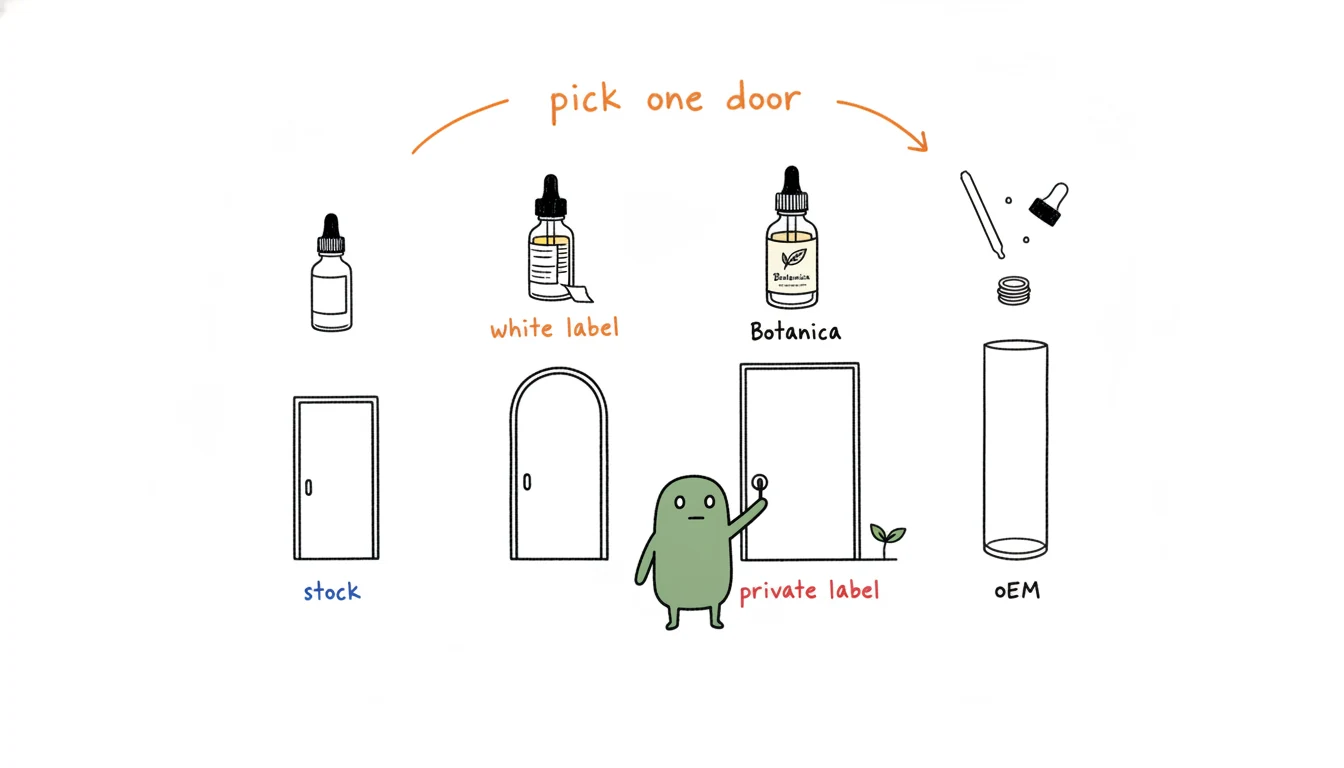
Before you sign with any of the manufacturers above, settle one decision the suppliers themselves rarely lead with: which sourcing model fits your stage. The same factory might quote you very differently for a stock-label SKU versus a private-label SKU versus a fully custom OEM build, and the wrong choice early can lock you into a 12-month contract that no longer fits when your monthly volume crosses 1,000 units.
Stock label (also called white label cuticle oil) means the manufacturer’s existing formula in their existing packaging, with your brand label applied. It is the fastest path — typically 18–25 days from artwork-locked to ready-to-ship. Most of the boutique specialists in Part 2 above offer white label cuticle oil as their entry tier; the giants in Part 1 sometimes offer it but require higher minimums (5,000+ units) because their plant is geared for full custom runs. Pick white label cuticle oil when you are validating a new channel within 60 days, when total annual volume is under 5,000 units, or when the cuticle oil SKU is a complement to a wider line where formula differentiation is not the brand story.
Private label is the dominant model for established indie brands. The factory starts from a stock base then customizes one or two attributes — scent, hero ingredient, viscosity, color tint — without going to full reformulation. Lead time stretches to 30–45 days, MOQ is similar to white label cuticle oil (500–1,000 units), and unit cost adds $0.15–$0.40. Most of the boutique specialists in Part 2 are excellent at this tier; some giants in Part 1 will only accept private label at 3,000+ units because the changeover overhead is not worth the margin below that. OEM (full custom) means a from-scratch formulation built to your brief — your IP, your differentiation, your liability. OEM costs a one-time $1,500–$5,000 development fee, takes 6–12 weeks to nail down, and only economizes when annual volume crosses 5,000–10,000 units. Of the manufacturers above, the Part 1 giants are built for OEM at scale; only two or three of the Part 2 boutiques have the chemist bench to do credible OEM work.
Practical rule: if you are reading this list for the first time and your monthly volume is under 1,000 units, default to white label cuticle oil with a Part 2 boutique specialist; the unit-cost difference versus private label is rarely worth the lead-time hit at low volume. Graduate to private label once you have channel data showing which scent and which carrier-oil base sell best. Reserve OEM for the moment your annual run-rate justifies the dev fee. For the full sourcing-model framework with pricing math at each MOQ tier, see our 2026 cuticle oil private label manufacturing guide.
How to Choose Your Match — 8 Decision Criteria
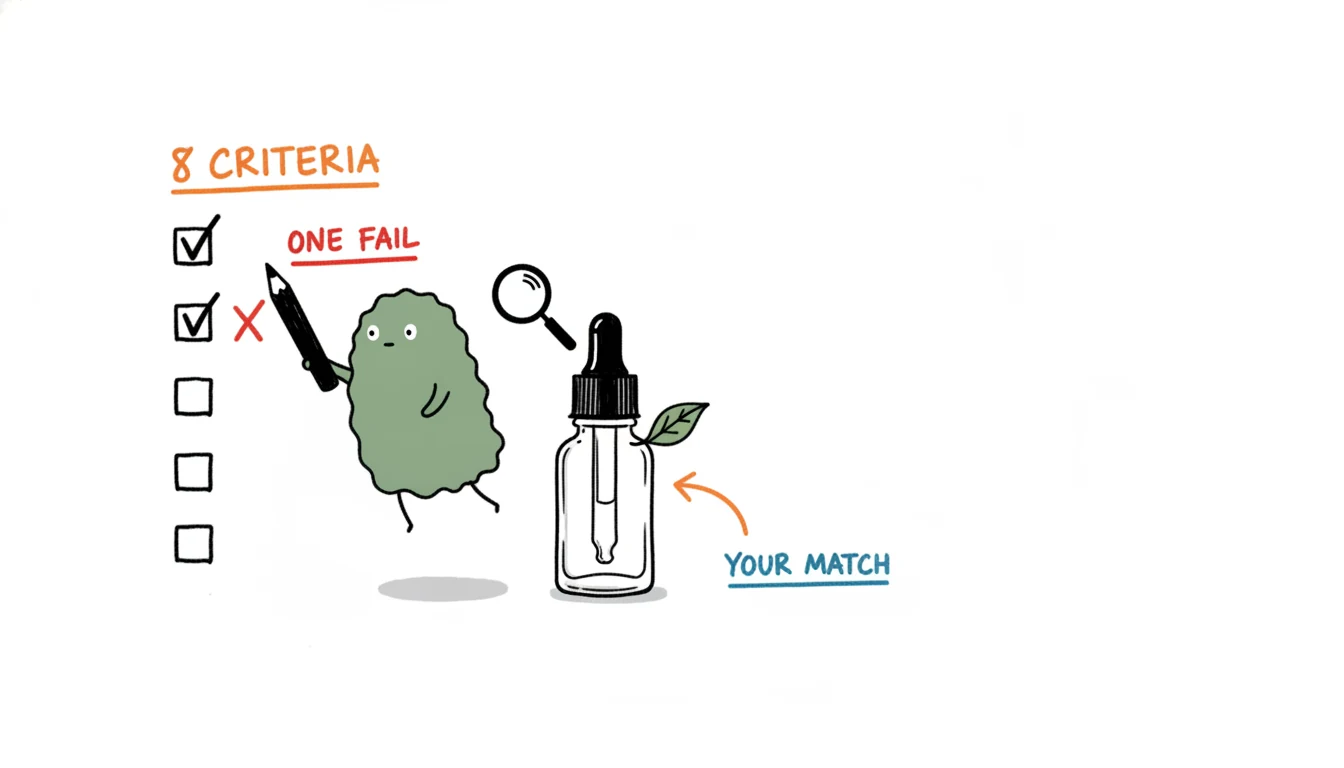
Pick the tier and the supplier together. Here is the decision framework we give B2B buyers when they ask us how to choose between Giants and Boutiques:
- Volume horizon (next 18 months). Under 5,000 units → Boutique. 5,000–25,000 → either tier with careful negotiation. Over 25,000 → Giant. See Cuticle Oil MOQ Explained for tier math.
- Formulation depth needed. Stock formula with rebrand → Boutique with stock library (Beauty Private Labels, or our own cuticle oil stock SKUs). Modified base formula → either tier. Ground-up custom (proprietary actives, performance claims) → Giant with R&D infrastructure (Cosmetic Solutions, Cohere) or a nail-native Boutique with senior chemists.
- Geography of your end market. US-only → US-domiciled supplier saves freight & customs. EU-launch → EU-domiciled (CNC, DLAB EU) or a global supplier with EU regulatory support. Multi-region → Giant with global infrastructure (Cohere) or a flexible Boutique willing to handle per-region paperwork.
- “Made in” marketing claim. If your packaging needs to read “Made in USA” or “Made in Italy” → US/EU supplier. If origin is a non-issue or a manufacturing-quality story (which most cuticle oil buyers’ end customers do not actually scrutinize) → cost and capability beat geography.
- Time-to-first-shipment urgency. Under 12 weeks → Boutique with stock formulas. 12–20 weeks → either tier. Over 20 weeks → Giant for higher-complexity custom work.
- Regulatory documentation expectation. Are you launching on Amazon, in retail, or DTC-only? Major retailers and platforms increasingly require structured supplier compliance docs. Giants have this institutionalized; Boutiques vary widely. See our supplier vetting framework for the 8 specific signals to check.
- Communication style fit. Giants run sales-process onboarding (forms, calls, contracts) which works for established brands but slows pilot loops. Boutiques run project-manager 1:1 which compresses cycles but depends on individual responsiveness.
- Capital risk tolerance. Giants typically require 50% deposit + 50% on shipment. Boutiques often work on smaller deposit structures. Plan working capital accordingly — see our comparison of cuticle oil wholesale supplier types for cash-flow tradeoffs.
Editor’s Recommendation
For most readers of this guide — indie founders piloting their first private-label cuticle oil line, salon distributors building a regional B2B catalog, or Amazon-FBA sellers expanding into nail care — the right starting point is a Boutique specialist with a clear scale-up path, not a Giant. The math is simple: at 100–500 units you will not get a Giant’s attention; at 500–5,000 units a nail-native Boutique will give you better cuticle-specific formulation than a generalist Giant; and most pilot lines never need a Giant’s capacity in years 1–3.
Once you cross 10,000+ units annually and need multi-region regulatory infrastructure, that is the moment to add (not replace) a Giant supplier as your scale partner. Most successful brands run a Boutique-primary, Giant-secondary supplier portfolio for the first three to five years.
If you want a no-pressure conversation about whether your cuticle oil program fits a Boutique pilot — including base formula recommendations, MOQ tiers, packaging options, and a free initial sample — request a quote or browse our cuticle oil catalog. We respond within 24 hours during business days.
Frequently Asked Questions
What is a typical MOQ for a private-label cuticle oil pilot run?
Boutique specialists start at 100–250 units; Giants typically start at 2,500 units. For first-time launches, a 100–500 unit pilot tier from a Boutique supplier minimizes capital risk before committing to scale-up volumes. For the full MOQ math, see our Cuticle Oil MOQ guide.
Are US-based cuticle oil manufacturers always more expensive than overseas suppliers?
Per-unit cost is typically 20–40% higher at US suppliers vs. China or EU equivalents at comparable formulation depth, but freight, customs, and lead-time advantages can offset that for US-only buyers. The gap narrows substantially for orders above 5,000 units.
What certifications should a serious cuticle oil manufacturer have?
Baseline expectations include ISO 22716 (GMP cosmetics) and cGMP compliance. EU-distributed product additionally requires CPNP notification with a Responsible Person. Manufacturers unable to produce these documents on request should be deprioritized.
Can a Boutique manufacturer scale with my brand if we grow past 25,000 units annually?
It depends on plant capacity. Some Boutiques have scaled customers from 100-unit pilots through 50,000+ annual production; others cap at 10,000–15,000 annual capacity. Confirm scale ceiling explicitly during initial supplier qualification — it is one of the 8 vetting signals we cover in our supplier vetting framework.
Last reviewed: 2026-08-07. Supplier capabilities and commercial terms can change; reconfirm them for the exact SKU.



Leave A Comment