
Note: We’ve folded this into our complete private label cuticle oil guide — see the full picture (formulation, packaging, MOQ, cost, regulatory, vetting) here: Private Label Cuticle Oil Manufacturing Guide.
The word “supplier” covers three very different businesses in the cuticle oil space, and knowing which one you are talking to changes every downstream decision — price, lead time, formula stability, and whether you can count on them two years from now. A factory is not the same as a trader, and a brand co-packer is not the same as a private label shop. This guide separates the archetypes, gives you the qualifying questions that expose which one you are dealing with, and walks through what to expect at each tier.
If you have already committed to running your own cuticle oil line and want the manufacturing fundamentals, start with our complete private label cuticle oil manufacturing guide. This piece is the step before — how to choose the right type of supplier in the first place. Once you have decided, the 8-signal vetting framework gives you the supplier-specific diligence checklist.
The Three Supplier Archetypes in Cuticle Oil
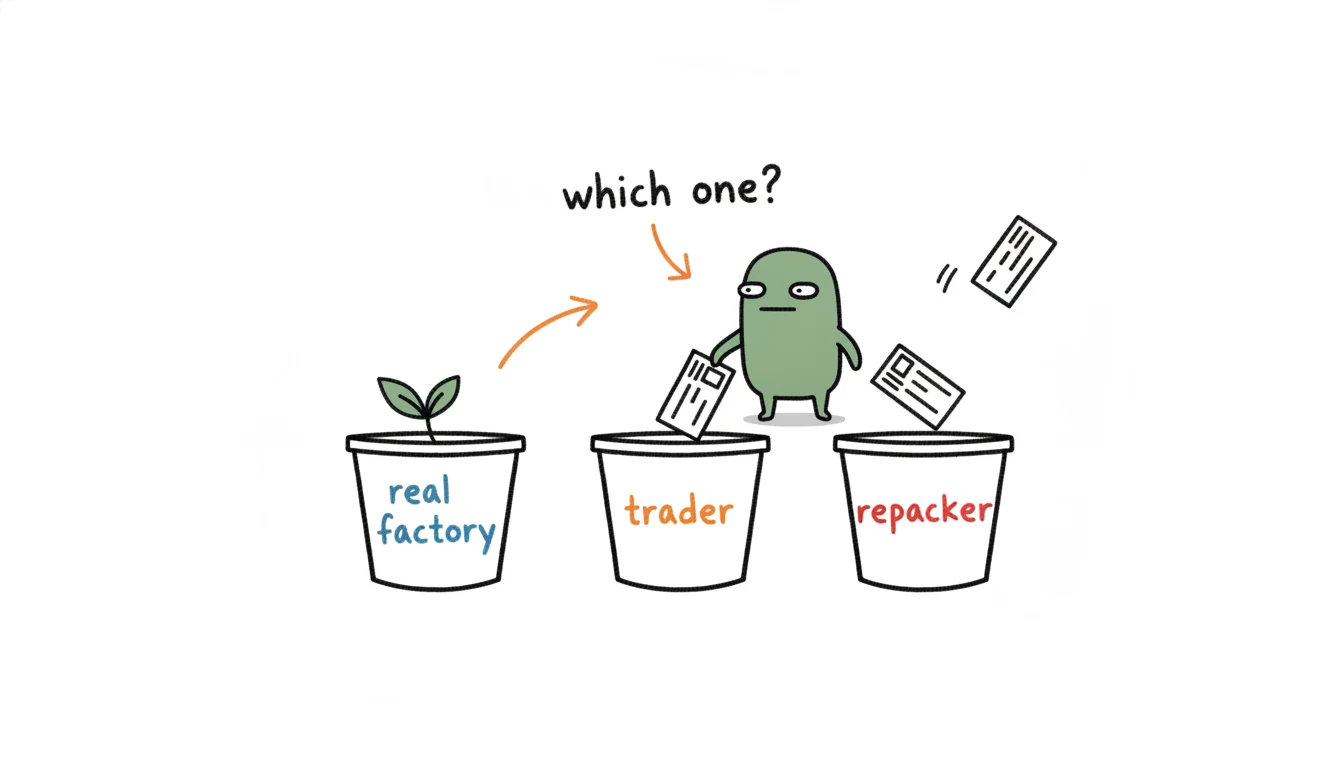
- Factory (direct manufacturer). Owns production equipment, raw material sourcing, and batching. Sells direct to B2B buyers. Lead time, pricing, and quality are factory-controlled. When you ask for a sample, it comes off the same line your production run will use. Best fit for B2B buyers who want cost efficiency and supply-chain visibility.
- Trading company (middleman / agent). Does not own production; sits between you and one or several factories. Adds a 10-25% margin on top of factory pricing, in exchange for simplified communication, bundled sourcing across categories, and sometimes inventory buffer. Quality depends on the factory they source from — which they may switch without telling you.
- Brand co-packer. Runs its own branded cuticle oil line and offers private-label services as a side business. Pricing usually reflects the retail economics of their primary brand; MOQ is often high because the co-packing slots around their own production schedule. Formula IP risk: the co-packer may know exactly what you are selling because they compete in the same shelf.
For most B2B cuticle oil buyers — retail brand operators, spa distributors, salon chain buyers — direct-factory sourcing is the right tier. It gives you the best unit economics and the most control over formula consistency. Trading companies make sense only when bundled sourcing across many categories saves enough operational overhead to offset the margin. Brand co-packers rarely make sense for competing beauty brands.
Questions That Reveal Which Archetype You Are Dealing With
The sales rep you are emailing will not volunteer this information. Ask directly:
- “Where is the production line, and can I schedule a video tour?” Factories say yes within 48 hours. Traders deflect with “we have multiple partner factories.” Co-packers show you a line shared with their own brand.
- “Who is responsible for formulation changes if I request them?” Factories have an in-house R&D lead with a name. Traders route the question back to the factory and lose days of response time. Co-packers may refuse custom formulation if it overlaps with their own IP.
- “Can you share the INCI ingredient list with percentages?” Factories say yes under NDA. Traders do not have the information. Co-packers may share a sanitized version that masks their formulation approach.
- “What is your batch size for a 1,000-unit order?” Factories answer in minutes: “300L tank, 10,000 bottle fill.” Traders ask the factory and report back. Co-packers may reveal they batch your order inside their own production run.
- “Who signs the export documentation?” Factories sign under their factory license. Traders sign under a trading company license. Co-packers sign under their brand entity. This is often the clearest archetype indicator.
Pricing and MOQ at Each Tier
- Direct factory pricing: Lowest per-unit cost. MOQ depends on container size — we ship 10oz and 1 Gal sizes at ~50-500 units entry, 5 Gal at ~10 units entry, bulk 200kg drums single-unit order. Lead time 25-35 days.
- Trading company pricing: Factory price + 10-25% agent margin. MOQ usually matches the underlying factory’s MOQ but sometimes higher if the trader bundles orders across multiple brands to hit factory MOQ. Lead time 30-45 days.
- Brand co-packer pricing: Varies widely. Can be competitive on small orders (200-500 units) because they use excess capacity; expensive on scale runs because their primary line takes priority. Lead time unpredictable.
Sample Policy: What to Expect and What Is a Red Flag
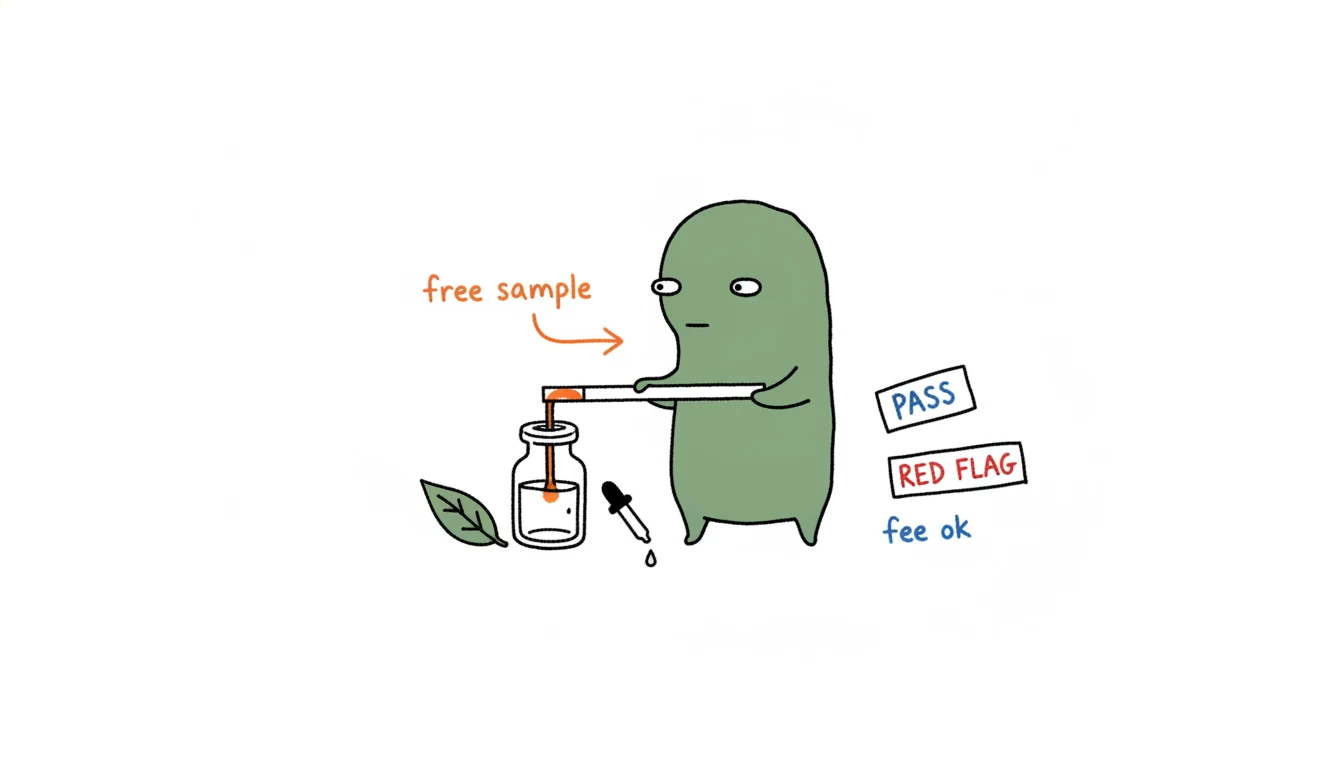
Every serious cuticle oil buyer asks for a sample before committing. What the sample policy tells you:
- Paid sample with credit against first order (factory standard). Green signal. Factory has real cost in sample production and expects serious inquiries. Credit clause aligns incentives for both sides.
- Free sample on request (common trader behavior). Yellow signal. Traders have low marginal cost to ship stock samples; free samples are a lead-gen tool, not a quality signal.
- Free sample plus aggressive follow-up (“we gave you free sample, when ordering?”): red signal. Traders chasing lead conversion, low alignment with your timeline.
- No sample available, only spec sheet: red signal. You cannot evaluate cuticle oil from a spec sheet. Scent, texture, absorption, and stability all require physical sample. A supplier that cannot produce one is not ready for production.
Lead Time Reality vs What Is Quoted
Quoted lead time and delivered lead time are often different numbers. The supplier’s quoted range is usually the best case; the delivered range includes QC, packaging coordination, and shipping. Real ranges for first cuticle oil orders:
- Direct factory: 25-35 days ex-works for standard packaging; add 7-10 days for custom carton artwork approval cycles
- Trading company: Factory lead time + 5-10 days agent coordination + packaging consolidation
- Brand co-packer: Schedule-dependent — could be 30 days if their line has capacity that week, 60+ days if not
Ask the supplier for their on-time delivery percentage over the last 12 months. Numbers over 90% are rare and worth a premium. Numbers below 75% mean the quoted lead time is aspirational.
Red Flags That Should End the Sourcing Conversation
- Refusal to show the production line on video or in person
- Evasive answers to INCI ingredient list requests (under NDA is fine; refusal entirely is not)
- Pricing significantly below cuticle oil raw material floor — jojoba and vitamin E have market prices, bottles have market prices; “$0.40 all-in for a 10ml bottle” is fiction
- Disclaimers like “we work with many factories, we pick the best one for your order” — means they will switch factories mid-relationship
- Claims to hold certifications (GMP, ISO 22716, CPNP) without producing the certificate within one business day
- Named account manager who does not exist on follow-up emails — sales handoff in the middle of a relationship is an operational warning sign
Our Operating Profile as a Cuticle Oil Supplier
For benchmarking against your supplier shortlist: we are a direct factory (not a trader), 10+ years in spa and body care production, 40+ countries shipped, 24-hour response on RFQs. Cuticle oil is one of our anchor SKUs — see the cuticle oil wholesale OEM listing for our spec, MOQ, and packaging options. We ship paid samples (credited against first order) in 3-5 days and can support custom-scent blending from 500-1,000 bottles per scent.
If you are still in evaluation mode, start with the full cuticle oil category page for spec visibility. When you have a shortlist and want tier-specific pricing, request a free quote with your target container size, MOQ, and destination market.
Frequently Asked Questions
How can I tell if a cuticle oil supplier is a factory or a trading company?
Ask for a video factory tour, the name of the R&D lead, the batch size for your order quantity, and who signs the export documents. Factories answer these directly within 48 hours; traders deflect, route to third parties, or sign under a trading company license. The export document signatory is often the clearest indicator.
What is a reasonable MOQ for a first-time cuticle oil wholesale order?
Depends on packaging format. For 10ml bottles with custom labels, 500 pieces per SKU is the practical floor at direct-factory tier. For 1 Gal jugs, 50 units. For 5 Gal drums, 10 units. Bulk 200kg drums can be single-unit orders. Smaller orders than these push per-unit cost into retail-equivalent pricing.
Should I pay for samples before ordering cuticle oil?
Yes. Paid samples signal a factory with real production cost and serious buyer expectations. A sample credit clause against your first production order keeps costs aligned. Completely free samples with pressure to order quickly are a trader lead-gen pattern, not a quality signal.
What should the sample evaluation look like?
Test for scent strength at week 1 and week 8, absorption rate on skin, clarity of the oil (no sediment), bottle and pump function (dropper / roller performance), and label durability. Keep a control sample refrigerated for 6 months to check stability. Real factories accept this evaluation cycle; unserious suppliers push to close before it completes.
📚 Related pillar: see our full Cuticle Oil private label & OEM sourcing guide for the broader sourcing frame, MOQ tiers, lead times, and decision framework.



Leave A Comment