
Note: We’ve folded this into our complete private label body butter guide — see the full picture (formulation, MOQ, packaging, vetting, compliance) here: Body Butter Private Label Manufacturing Guide.
Most body butter quality problems do not show up at the factory. They show up six weeks after fill, when a tub graining at room temperature, a scent flattening on the shelf, or a microbial spike in returned customer reports tells you the formulation was wrong from the start. By that point, your brand has shipped, your reviews are landing, and your inventory is sunk cost. The expensive part of body butter sourcing is not the production — it is choosing the wrong factory in the first place. This guide is the seven-question framework we use to score body butter suppliers before any first PO.
If you have not yet decided on formulation model, packaging, or scent direction, our Body Butter Private Label Manufacturer guide covers the upstream decisions. For a deep look at MOQ, pricing tiers, and negotiation levers, see Body Butter Private Label MOQ. This piece focuses on the supplier-vetting layer: the seven questions that separate a factory you can trust with your launch from one that will quietly cost you twelve months.
Question 1 — Show me 90-day accelerated stability data on the formulation you’d run for me
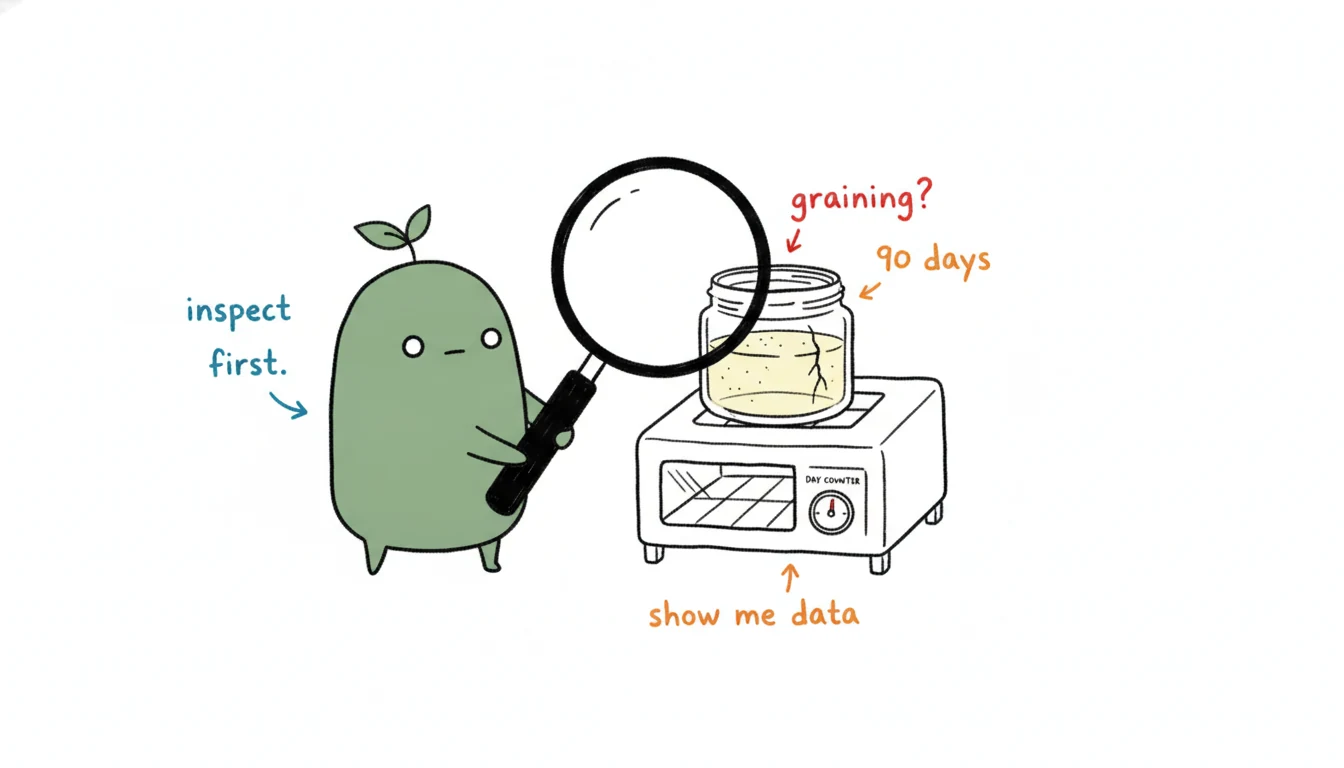
This is the single most diagnostic question in the entire vetting process. A factory with a real, vetted formulation will produce stability data in under 24 hours, typically a 1–2 page summary covering color, scent, viscosity, and microbial counts at 4°C, 25°C, and 45°C across the test window. A factory that hesitates, asks why you need it, or offers to “send a sample first and you can test yourself” is signaling that the formulation is undocumented — which means you would be paying to be the test subject.
What good looks like: a stability report on factory letterhead, dated within the last 24 months, showing no significant color shift (delta E < 3), no scent dropout, viscosity within ±10% across temperature points, and microbial counts well below pharmacopoeia thresholds. What concerning looks like: hand-typed numbers, no temperature gradient, microbial line that just says “passed,” or report dates older than 36 months for an active formulation.
Question 2 — How many distinct scent variants do you have on file, and how was the scent library built?
Body butter is a sensory product, and a factory’s scent library is one of the strongest signals of how seriously they take the category. A factory with 30+ vetted scent profiles built in partnership with a recognized fragrance house (IFF, Givaudan, Firmenich, Symrise, Mane, Robertet) is operating at a different level from one with five generic profiles bought from a regional fragrance compound supplier.
What to ask: “Who supplies your fragrance compounds, and can I see scent samples of your top 10 SKUs in this category?” A confident factory will send a physical sample box within 5–10 business days. The samples themselves tell you a lot — scents that smell muddy, fade fast on skin, or smell synthetic in a way that competitors don’t are telling you the fragrance procurement is the cost-floor option.
Question 3 — What is your real MOQ for this exact spec, and what changes if I shift any one variable?
The MOQ question is a confidence test, not a numerical one. A factory that quotes “MOQ from 100 units” without asking about packaging, scent count, label complexity, or payment terms is not actually building a quote — they are anchoring you with the lowest possible number, which will drift upward through the negotiation. A confident factory will ask 4–6 clarifying questions before quoting, then return a tiered quote showing how MOQ shifts with each variable.
The diagnostic version: “What’s MOQ for 12oz PET, single-note rose scent, hyaluronic acid base? And what changes if I switch packaging to glass, or add a second scent variant in the same PO?” The factory’s answer should be specific to each variable, not a flat number. Vague answers signal that the factory is winging it. For the full MOQ framework that pairs with this question, see our companion MOQ guide.
Question 4 — Walk me through your packaging compatibility testing process
Body butter packaging failures are quiet and expensive. PET tubs that work for low-viscosity lotions can fail with thicker body butter formulations — the lid threads strip, the tub deforms in heat, or the seal fails in transit. Aluminum tins that work for clean-beauty positioning can react with essential oils, leaving an off-note in the scent within 60 days. Glass jars are inert chemically but ship-fragile, and the wrong cushioning spec leads to 1–4% breakage in transit.
A serious factory will describe their packaging compatibility testing protocol in detail: viscosity-temperature sweep, scent migration test (especially for aluminum), mechanical drop and stack test, and shelf-life observation in the proposed packaging. A factory that says “we use the standard tub for this category, no problem” is telling you they have not actually tested your specific formulation in your specific packaging.
Question 5 — Can I have references from 2-3 buyers in my market and category?
References are a more reliable signal than certifications, audit reports, or factory tour videos. A factory with a real B2B body care book of business will offer references within 48 hours — typically buyers from a similar customer profile to yours (similar volume, similar geography, similar end-market). A factory that delays, deflects (“our customers prefer privacy”), or offers references only outside your category should be deprioritized.
When you call references, the diagnostic questions are: “How long have you sourced from this factory? How many POs? What was the first quality issue you experienced, and how did the factory handle it?” The handling-an-issue question is the most informative — every supplier eventually has a quality issue, and the difference between a factory you can grow with and one you cannot is entirely how they handle the first failure.
Question 6 — Will you accept a third-party pre-shipment inspection before B/L release?
Third-party pre-shipment inspection (PSI) is the standard B2B safeguard. SGS, Bureau Veritas, Intertek, and TUV all offer inspection services for cosmetics: quantity verification, packaging integrity check, label compliance check, and AQL-based defect inspection on a statistical sample. A confident factory will accept PSI as standard practice, often suggesting it themselves on first-time orders. A factory that resists, charges a high “inspection facilitation fee,” or wants to control which inspector you use is signaling something they do not want a third party to see.
Industry-standard AQL levels for body butter: 2.5 for cosmetic defects (label misalignment, minor packaging blemishes), 1.0 for functional defects (missing components, mis-labeled SKUs), and 0.65 or tighter for safety-critical defects (microbial contamination, ingredient mismatch). Cost is typically $300–$500 per inspection day — a tiny fraction of the cost of a contaminated container.
Question 7 — What’s your average inquiry response time, and who handles my account?
The boring, unglamorous signal that predicts most relationship outcomes. A factory that returns your initial inquiry inside 24 hours, with a real person whose name you know, is operating at a level of organization that translates into every downstream interaction — sample lead time, artwork iteration, production updates, post-shipment follow-up. A factory that takes 4–7 days to respond to your first email, then routes you through a generic info@ inbox, is forecasting how the relationship will feel for the next 12 months.
The diagnostic question to ask explicitly: “Who would be my dedicated account contact if I become a customer? How many other accounts do they handle? What’s the typical email response time?” A factory whose account managers handle 50+ accounts will struggle to give you the responsiveness a launch needs. 10–20 active accounts per manager is a reasonable benchmark.
Scoring the Seven Signals
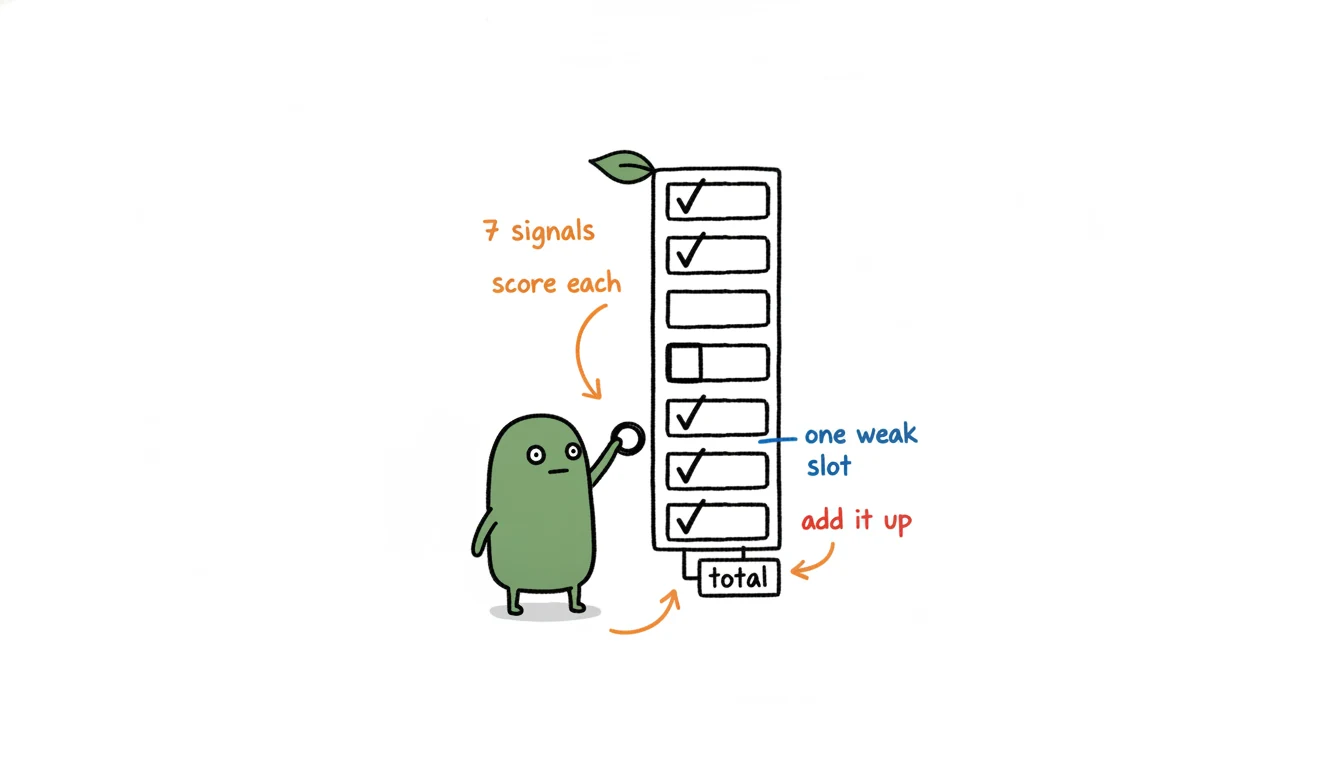
For each shortlisted factory, score each of the seven signals on a simple scale: strong (3) / acceptable (2) / weak (1) / fail (0). A factory scoring 18+ across the seven is one you can place a first PO with confidence. A factory scoring 13–17 is workable but needs targeted follow-up on the weak signals before scaling. Anything below 13 is below bar — the cost of switching factories two POs in is much higher than the cost of vetting a fourth option now.
Failing any single signal does not automatically disqualify a supplier — context matters. A new factory with strong stability data and packaging testing but a thin reference list might be scored down on Question 5, but worth a small trial PO if the other signals are strong. Conversely, a factory with deep references but no stability data is high-risk in a way that references cannot rescue.
Companion Reading
The vetting framework above pairs naturally with our other private-label sourcing pieces: Body Butter Private Label Manufacturer Guide for the upstream formulation and packaging decisions, Body Butter Private Label MOQ for the cost and order-economics layer, Cuticle Oil Private Label Manufacturing Guide for the adjacent category most B2B buyers source alongside body butter, and Private Label vs OEM vs ODM for the broader terminology framework.
If you would like to put any of the seven questions to us specifically, send an inquiry via our contact page. We respond inside 24 hours and will provide stability summary, scent library overview, and reference contacts on request. Our representative SKUs in the body butter category include the 12oz custom-scented base, jasmine + hyaluronic acid SKU, and honey flavor base.
Companion Reading: Formulation Deep-Dive
For the ingredient and formulation-mechanics decisions, see two new spokes: body butter base butters compared (shea vs cocoa vs mango vs murumuru vs kokum — cost, melt point, feel, brand-story, blends, SRP positioning) and body butter formulation guide (anhydrous vs water-containing, whipped vs unwhipped, preservation, melt-point targeting by shipping lane, packaging compatibility).
📚 Related pillar: see our full Body Butter private label & OEM sourcing guide for the broader sourcing frame, MOQ tiers, lead times, and decision framework.



Leave A Comment