
Note: We’ve folded this into our complete guide — see the full, up-to-date picture here: How to Start a Private Label Skincare Brand.
This is a sourcing playbook for brand owners and procurement teams choosing a skincare contract manufacturing partner — not a textbook. We map the three models (full-service OEM, private label, and toll manufacturing) against real MOQs, lead times, and packaging trade-offs, so you can brief a factory and shortlist quotes in days, not months.
The principles here apply whether you are sourcing cuticle oil, body butter, lotion, serum, face mask, or scrub. We will use concrete examples across categories and link to our product-specific guides where the sourcing economics diverge. For format-specific reading, see the cuticle oil private label manufacturing guide and private label vs OEM vs ODM comparison.
The Three Contract Manufacturing Models
- Full-service contract manufacturing (turnkey). The factory owns or selects the formula, sources packaging, handles regulatory filings in its home market, produces, QCs, and ships to you. You provide the brand, the marketing, and the sales channel. Best fit: brand founders who are strong at go-to-market and do not want to own manufacturing IP. Capital efficient. Formula IP sits with the factory.
- Partial contract manufacturing. You own the formula (developed in-house or with a third-party formulator), and the factory produces against your spec. Packaging you own is sent to the factory or sourced separately. Best fit: mid-stage brands with unique formula positioning, or brands that have scaled past one factory’s capacity limit. Capital heavier — you own formula development cost. Formula IP sits with you.
- Toll manufacturing. You bring everything — formula, raw materials, packaging — and rent the factory’s production line, equipment, and labor for a per-batch fee. Best fit: large brands with complex or proprietary supply chains who need batching capacity in a new region without building a facility. Capital heaviest; operational control maximum. Formula, materials, and packaging IP all yours.
Most brand founders under $10M in revenue should be at full-service tier. Most between $10-50M should be evaluating partial tier. Toll tier starts making sense above $50M or when supply chain sovereignty is a strategic priority.
How MOQ and Lead Time Scale by Model
- Full-service MOQ: Lowest. Stock formulas plus stock packaging makes 500-1,000 unit runs economic. Lead time: 25-40 days for first order from artwork approval.
- Partial contract MOQ: Medium. Custom formula locked at 3,000-5,000 units typically; formula reruns at 1,000-2,000 units. Lead time: 35-50 days when packaging coordination is in play.
- Toll MOQ: Highest. Batching minimums set by factory capacity, usually 10,000-50,000 units per production run. Lead time: scheduled to factory calendar, 30-60 days window.
Formulation IP: The Single Most Important Contract Clause
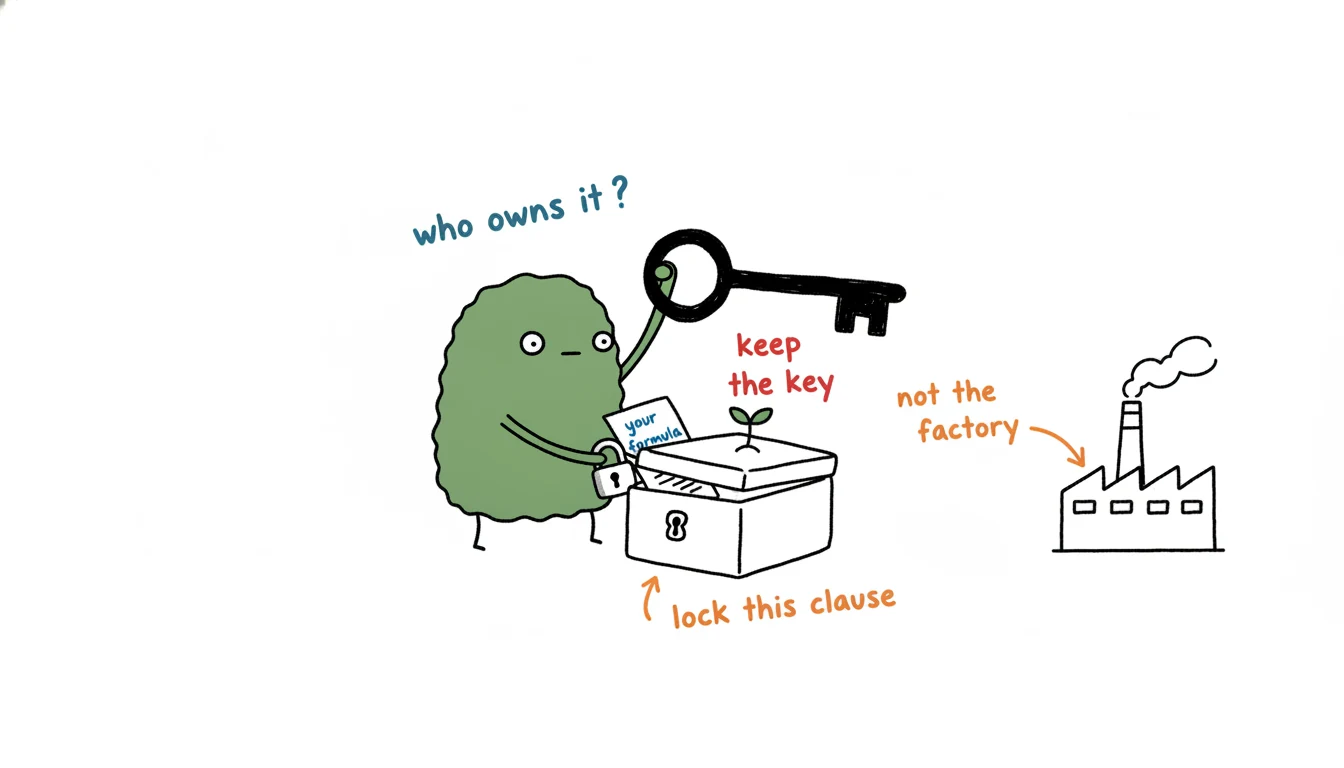
Every contract manufacturing arrangement has a formula IP question, and most first-time skincare brand founders discover it a year in when they try to switch factories. The three common postures:
- Factory owns everything (full-service default). You cannot take the formula to another factory. If the factory raises prices, discontinues a line, or goes out of business, you rebuild from scratch.
- Shared ownership, exclusive use (middle path). Factory retains the formula for its internal records; you have exclusive commercial use under named entity. Requires explicit contract language. Price: usually 10-15% premium on per-unit cost.
- You own outright (partial or toll tier). Formula developed under work-for-hire with a contract formulator; factory produces under license. Factory cannot produce it for anyone else. Most expensive, most protected.
Negotiate this clause before your first production run, not after. Retrofitting formula ownership into a relationship is near-impossible; the factory has no incentive to change terms once you are locked in.
Regulatory Path: Who Handles What
Skincare is regulated differently in every destination market. Your contract manufacturer may or may not assist with regulatory filings:
- EU: CPNP notification required before placing any cosmetic product on market. Responsible Person must be EU-based. Most Chinese factories will prepare the technical file in Chinese and a translated summary; the brand (or a third-party EU consultancy) files CPNP. Budget 800-2,500 EUR per SKU for the full regulatory process.
- US: FDA registration for OTC claims; for cosmetic-only claims, MoCRA (Modernization of Cosmetics Regulation Act) now requires facility registration and product listing. Factory registration is the factory’s job; product listing is yours.
- UK: Post-Brexit SCPN notification — similar to CPNP but UK-specific. Responsible Person must be UK-based.
- Southeast Asia, Middle East, Australia: Region-specific dossiers, each with their own requirements. Toll-level brands often centralize this under a regulatory consultancy; full-service and partial tiers typically delegate per-market.
Ask candidate factories explicitly: what documentation will they provide for your destination market’s regulatory filings? “We will help” is not an answer. You want a list: ingredient list with percentages, heavy metal test reports, microbial test reports, stability testing summary, challenge test results. If the factory cannot name the documents, you will hit regulatory friction.
Signals That Separate Good Contract Manufacturers
- Transparent stock formula library with INCI breakdowns — not “trust us, it works”
- Stability and challenge testing offered at reasonable cost ($200-800 per SKU) without making it a mystery
- Named regulatory contact who answers EU/US/UK filing questions confidently
- Factory tour available on video before the first order
- Published MOQ, lead time, and pricing tiers — not “email for quote”
- Willingness to sign a mutual NDA before sharing custom formula inquiries
- Existing brand clients (even anonymized case summaries) with multi-year engagement histories
Red Flags to Walk Away From
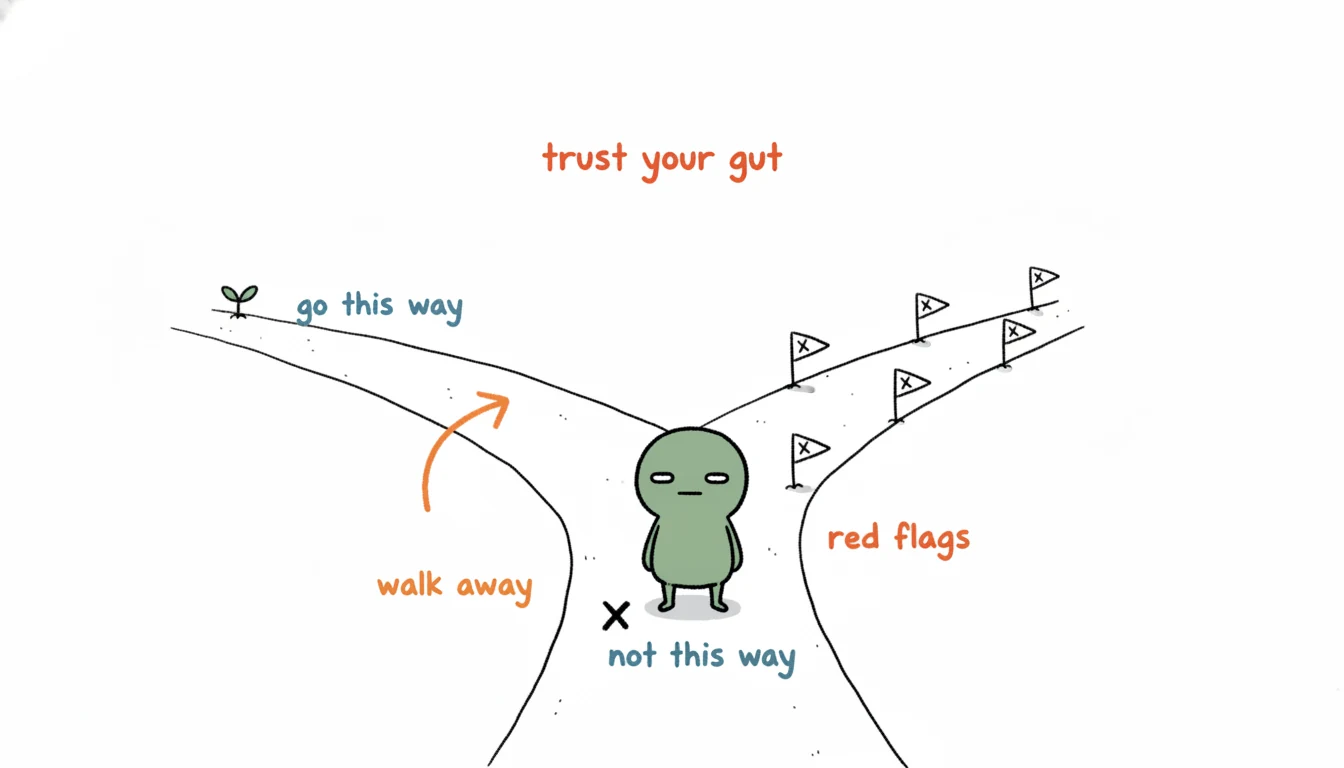
- “Yes we can do everything” without differentiated pricing by complexity — signals a trading company, not a factory
- Refusal to run stability testing at extra cost — real factories have stability chambers and charge for time, not refuse the service
- Vague regulatory capability (“we have experience”) without naming specific markets or document types
- Formula samples that change between batches — indicates loose QC or undisclosed subcontracting
- Pricing significantly below per-unit raw material cost on the INCI — the difference is coming from somewhere you cannot see
Our Operating Profile as a Contract Manufacturer
For benchmarking against your candidate list: we run full-service contract manufacturing for spa and body care across cuticle oil, body butter, lotion, cream, sugar scrub, bath bombs, and foot treatment categories. 10+ years in production, 40+ countries shipped, 24-hour response on RFQs. MOQ varies by category (see our category-specific guides such as MOQ for private label beauty products for breakdown). We also accept partial-tier engagements when brands bring their own formulas.
Representative categories and product pages: cuticle and nail care, body care and skincare, massage oils and lotions. Anchor SKUs include the cuticle oil wholesale OEM and body butter OEM.
Your Decision Framework in One Page
- Early-stage brand, < $2M revenue, first skincare SKU: full-service, prioritize MOQ flexibility and lead time
- Growing brand, $2-10M revenue, launching differentiated hero products: full-service with IP clause or partial tier with in-house formulator
- Mid-market, $10-50M revenue, multi-market distribution: partial tier, own formula, factory produces; dual-source critical SKUs
- Mature brand, $50M+, strategic supply chain needs: toll tier, potentially multi-factory footprint, dedicated regulatory team
Most sourcing mistakes happen when a brand picks a tier ahead of where they actually operate. Full-service at $10M revenue means you are still funding the factory’s IP; partial tier at $1M revenue means you are paying premium pricing you cannot yet amortize. Match tier to stage.
Next Steps
If you are evaluating contract manufacturers for a skincare brand, send us the details of your project — product type, target MOQ, destination markets, and whether you are full-service or partial tier. We will reply within 24 hours with tier-specific pricing and the regulatory documentation we provide for your market.
Frequently Asked Questions
What is the difference between contract manufacturing and private label?
Private label is one mode of contract manufacturing — specifically, full-service with a stock formula and light customization (logo, packaging). Contract manufacturing is the broader category that includes private label plus partial and toll tiers. Every private label deal is a contract manufacturing deal, but not every contract manufacturing deal is private label.
Who owns the formula in a typical contract manufacturing deal?
In full-service tier, the factory usually owns the formula and you have commercial use rights. In partial tier, you own the formula if developed in-house or under a work-for-hire arrangement with a contract formulator. In toll tier, you always own the formula. Clarify this in writing before the first order.
How long does skincare contract manufacturing take from RFQ to first delivery?
Typical timeline: 2-3 weeks from RFQ to quote, 1-2 weeks of sampling, 3-5 weeks of production, 2-4 weeks of shipping. Total 8-14 weeks first-order lead time, faster on reorders. Custom formulation adds 4-8 weeks upfront for formulation, testing, and stability validation.
What documentation should my contract manufacturer provide for EU or US market entry?
Standard technical file: full INCI ingredient list with percentages, stability testing report, challenge (preservative efficacy) test report, heavy metal and microbial test results, manufacturing batch records, and — for the EU — a Cosmetic Product Safety Report drafted by a qualified safety assessor. For the US, MoCRA-compliant facility registration and product listing.
Sourcing bath bombs at scale?
If you’re evaluating bath bomb wholesale and private label manufacturing for a retail line, gift set, or spa chain, our B2B Bath Bomb wholesale program covers 8 base scents, custom shapes and silk-screen printing, and MOQ from 100 jars at the quote stage. Request a Bath Bomb wholesale quote →


Leave A Comment