
Nail drill manufacturer selection is harder than the broader small-electrical category for two reasons specific to this product: motor type can be misrepresented (a “brushless” claim is easy to make, hard to verify visually), and battery certification is per-cell, not per-supplier. The 8-signal vetting framework here is designed to expose both. Run every prospective manufacturer through these signals before sample stage; if a vendor scores below 6 of 8, walk away.
For the broader category sourcing context, see our Nail Drill Wholesale Buyer Guide. For brushless flagship spec comparison, see Brushless Nail Drill UV-Series Comparison.
The 8 Vetting Signals
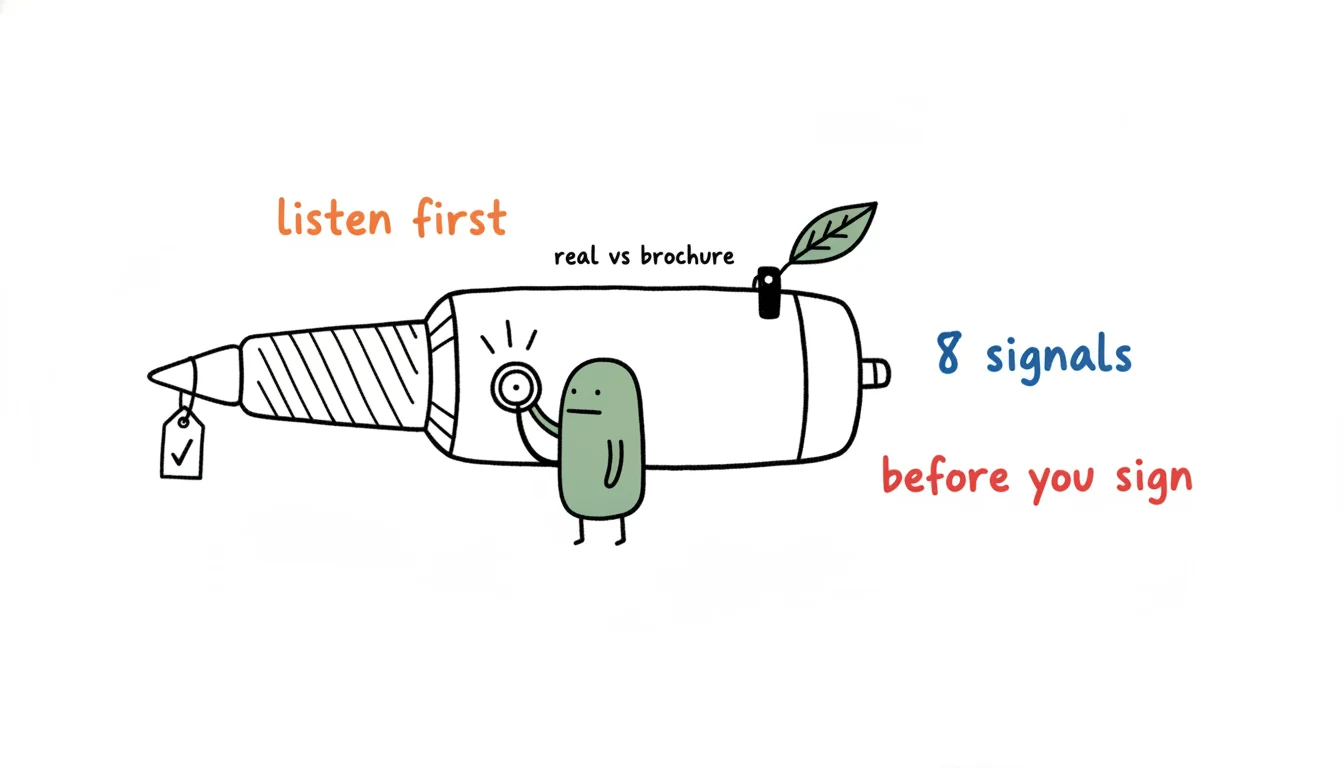
- Signal 1: Motor type proof. A “brushless” claim is verifiable only by looking at the motor itself. Ask the manufacturer to share a photo of the motor with the housing open, or include a teardown video in the sample package. Brushless motors have visible Hall-sensor wiring and no carbon brushes; brushed motors have carbon brush assemblies. Trust but verify.
- Signal 2: Battery cell UN38.3 certification. Required for any cross-border air freight on rechargeable models. The certificate must reference the specific battery manufacturer and cell model used in production — not a generic claim. Verify by checking the test report file against the cell printed on the actual battery.
- Signal 3: RPM accuracy at sample stage. Marketing claims of “40,000 RPM” need verification with a tachometer. ±5% accuracy at top RPM is reasonable; ±15% means the manufacturer is overclaiming. Sample-stage tachometer test takes 5 minutes and prevents production-run disappointment.
- Signal 4: Bit chuck spec compatibility. 2.35mm shaft is the universal standard. Verify that the chuck accepts standard 2.35mm bits with no wobble — chuck drift is a common production-shortcut signal. Test with carbide, diamond, and ceramic bits from multiple bit suppliers to confirm cross-compatibility.
- Signal 5: Warranty claim process and parts pipeline. Written warranty, claim process documented, replacement parts shipment SLA (we commit to 5 business days). For nail drills specifically, the components most likely to fail in service are the battery, the motor brushes (if brushed), the bearings (if brushless), and the chuck assembly. Ask the manufacturer “what happens at month 14?” — vague answers signal no parts pipeline.
- Signal 6: Spare parts availability for 24 months. Battery cells, brushless motors, chuck assemblies, control PCBs. A manufacturer holding 60-day component stock and committing to 2-year parts availability is operating at a higher tier than one without.
- Signal 7: Certification scope. FCC for North America, CE + RoHS for EU/UK, UN38.3 for any cross-border air freight on rechargeable models. Each certificate is per-model. Ask for the actual certificate files, not photos of stickers, not screenshots of summary pages.
- Signal 8: Manufacturing visibility. A real manufacturer can host a video factory tour or in-person visit. Trading companies brochure as factories — they will dodge factory tour requests with timing excuses. Insist on factory visibility before placing your first PO.
Bit Ecosystem Compatibility Test
Many nail drill manufacturers underspec the chuck assembly to save BOM cost, resulting in chucks that grip non-standard bit shafts loosely. The bit-chuck compatibility test is fast to run but rarely done in practice:
- Insert a 2.35mm carbide bit. Tighten chuck. Verify zero visible wobble at idle.
- Run at 35,000 RPM for 30 seconds. Verify bit stays seated, no walking.
- Repeat with diamond bits and ceramic bits from at least two different bit manufacturers.
- Loosen chuck. Insert a different bit. Verify chuck does not show wear after 5 bit changes.
A drill that fails any of these tests at sample stage will fail at higher rates in the field. We supply matching bit kits (carbide / diamond / ceramic) sourced from the same supply chain as the drill housing — bit-and-drill compatibility validated before shipment.
The Sample Order Decision Matrix
Once a manufacturer passes the 8-signal screen, run a sample order before committing to production. Inspect on arrival for:
- Power-on test: unit reaches max RPM, no shaft vibration
- RPM accuracy: tachometer reading vs spec, ±5% tolerance
- Battery runtime: charge to 100%, run continuously at 35,000 RPM, time to 80% capacity
- Noise profile: sound meter reading at 30cm, no-load and loaded
- Heat profile: continuous run for 30 minutes, motor housing temperature
- Bit chuck: install/remove 5 different bits, verify grip retention
- Documentation: certifications match order, voltage and battery spec match shipment region
If the sample passes inspection across all seven dimensions, you have a manufacturer worth scaling with. Request a quote with your target spec — sample units typically ship in 14–21 days with full test documentation.



Leave A Comment